
Reading options
What's inside (10 sections)
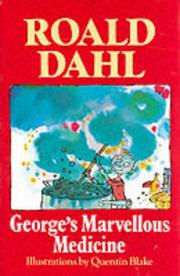
George's Marvellous Medicine is barely a novel. It is ninety-six pages, it has three characters and a chicken, and its plot can be told in a sentence: a boy makes a magic medicine, his grandmother drinks it, she grows enormous, and later she vanishes. I read it again as an adult, for the first time in perhaps thirty years, and found it sharper and stranger than the version I carried around in memory, which had been softened into a simple joke about a big grandma. The book is not simple. It is a very precisely engineered piece of revenge fantasy with a genuinely unsettling ending, and it is one of Dahl's purest demonstrations of how he thought children's literature should work.
The premise is the whole engine. George Kranky is eight years old, he lives on a farm, and on this particular morning he has been left in the care of his grandmother, who is the old-fashioned kind, the kind who sits in her chair telling a child how useless he is and keeping a little bottle of her own medicine on the side table as a nightly ritual of control. George decides he is not going to take it. Better than that, he decides he is going to make a better medicine, his own medicine, and he is going to make it out of whatever he can find. What follows is the most famous chemistry set in children's fiction.
The morning with Grandma
Dahl takes his time establishing the grudge, because the grudge is what makes everything that follows feel earned to a young reader. Grandma is not merely unkind. She is unkind in a bored, habitual, institutional way, the way of an adult who has decided that children exist to be corrected. She is not named anywhere in the book, which I had not remembered and which is a brilliant small decision. She is simply Grandma, an office the child has to deal with, and her namelessness turns her into every child's grudge at once.
George's decision to strike back has none of the moral complexity that Dahl sometimes builds into his heroes. He does not tell his parents. He does not wait for permission. He does not even quite know what he is trying to accomplish, beyond the desire to produce something that will show her. That innocence about consequences is the source of both the comedy and the horror, and it is the reason the book works differently for a child than for an adult reading it aloud.
Building the medicine
The construction scene is the section every reader remembers, and it earns the memory. George goes through the house and the farm buildings collecting ingredients, and the list has the cadence of a spell: toothpaste, washing powder, floor polish, shoe polish, flea powder, animal medicines, kitchen spices and sauces, a shot of gin, engine oil, antifreeze, grease, brown paint. The published ingredient list runs to about thirty-four items, and the joke in the detail is that almost everything on it is plausibly something a curious child could reach, arranged with the absolute confidence of someone who has never once considered what these things do when mixed.
Dahl writes the mixing as ritual, the stewing and stirring and the thickening color of the brew, and Quentin Blake's drawings do the rest, giving the kitchen a chaotic energy that makes the reader complicit. You are not being warned off. You are being handed the spoon. The book is doing something close to the opposite of what an adult would want a book to do, and it is counting on the fact that no child will actually follow a recipe written in a picture book, a faith that at least one medical review of the book has questioned with a straight face.
I should say plainly that the mixture is poison. Doctors who have analyzed George's recipe for the British Medical Journal note that in real life a combination of antifreeze, engine oil, flea powder and household chemicals would cause severe poisoning, not growth. The book does not need this disclaimer because the book is not a how-to guide, but it is worth recording, because the gap between the fantasy and the chemistry is part of the pleasure. Children are being trusted to understand that this is impossible, and that trust is itself a small part of what makes Dahl's work feel respectful of its audience.
What it did to Grandma
The first effect is vertical. Grandma drinks the medicine and begins to grow, and she keeps growing, up through the roof of the farmhouse, enormous and indignant, still complaining, still demanding to know what everyone is staring at. The image is the cover of most editions and it is exactly right: a furious face the size of a window, outraged rather than amazed, because even at eighty feet tall this woman's primary emotion is irritation at her family.
Dahl adds the demonstration immediately, George giving a dose to a chicken, which balloons as well, and the demonstration matters because it is what converts the event from a miracle into a product. George's father comes home, sees his wife's mother protruding through the roof of his house, and has what Dahl presents as the only appropriate response, which is a business plan. Giant animals. Imagine the eggs. Imagine the cattle.
There is a whole satire sitting in that reaction, the farming father who meets an impossible event by calculating its unit price, and Dahl is far too clever to editorialize it. Mr. Kranky simply starts talking about scale, hiring a crane to get his mother-in-law out of the house and installed in the barn, and the book's comedy at this stage runs on the adults' refusal to be surprised by anything for longer than one conversation.
The plan, and the second-rate medicine
The middle of the book is where the trouble starts, and it is the section I had completely forgotten. George's father does not want a miracle. He wants a repeatable miracle, so he puts his son back to work and asks him to brew the medicine again, at volume, for sale to farmers.
George cannot do it. The original medicine was made by accident, from a chaos of ingredients measured by eye, and the new attempts come out wrong. One batch gives a chicken legs of absurd length. Another stretches a neck. Another goes in the opposite direction and shrinks the animals. The farm becomes a laboratory of partial successes, and the boy who was a hero for one afternoon is now an employee whose product does not work.
This is Dahl at his most cynical about the adult world, and I did not appreciate it when I was eight. The father does not want to know what George did. He wants George to do it again, consistently, on schedule, and when the results stop being spectacular he keeps pushing anyway. The magic, in other words, has been absorbed into a business model within a single day, and the book's real target is not the grandmother at all. It is the grown-up assumption that anything of value should be reproducible on demand.
The last batch
Then comes the ending, which is the part of the book that is genuinely dark, and which every adaptation and retelling tends to soften. Grandma, furious about being exiled to the barn, seizes a cup that George is holding, believing it to be tea, and drinks the contents. It is one of the shrinking batches. She shrinks, and she keeps shrinking, and she does not stop, and by the time his parents come in she is gone.
Nobody brings her back. The book does not pretend she might come back. The final pages carry on without her, with Mr. Kranky's grand commercial scheme in ruins because the original formula is lost, and with George left holding something closer to a private knowledge than to a happy ending: that for one morning he touched a world where a child's mixture could change the shape of everything, and that the touching cannot be undone.
Reading it now, I was struck by how little comfort the conclusion offers. There is no apology from George, no reassurance from the adults, no magical restoration. Dahl trusts a child to sit with an ending where the boy got his revenge beyond anyone's intention and the household must simply continue around the hole Grandma left. That is a much more serious bet than people give this little book credit for.
The cruelty question
Every few years someone revisits Dahl's children's books and points out how mean they are, and George's is usually exhibit A, because the target of the joke is an old woman and the punchline is her disappearance. I understand the objection and I do not think it lands the way its holders expect, for two reasons.
First, the book never invites cruelty toward old people as a class. It invites fury at this specific tyrant, presented with the unmistakable outline of a child's nightmare rather than as a portrait of anything real. Children reading it are not learning contempt for the elderly. They are recognizing, with delight, the sensation of being powerless in a room with someone who enjoys it, and watching the power invert.
Second, the book quietly punishes everyone. The father's greed eats the miracle. The mother loses her mother. The boy loses the one thing he made that was extraordinary. Dahl's version of justice is not that the wicked suffer and the good are rewarded. It is that everybody is somewhat foolish and the magic escapes everybody's control, which is a bleaker and, for a certain kind of child, a far more satisfying arrangement.
How it reads aloud
This is a read-aloud book before it is a silent one, and the prose is built for the ear. Dahl's sentences in this period have a deliberate, hammering simplicity in the scenes of invention, ingredient after ingredient, stir after stir, and then a sudden long sentence when the effect arrives, so that the rhythm itself does the zooming-out. The comedy of the repeated failures is structured like a routine, each new chicken more ridiculous than the last, each excuse from George more feeble, until the reader is laughing in anticipation before the sentence is finished.
Parents who came to Dahl through Charlie and the Chocolate Factory sometimes find this one harder, because there is no factory, no moral instruction from the candy maker, no comforting eccentric genius at the center. There is a boy, a grudge, and a farm, and the moral instruction, such as it is, arrives by way of catastrophe. I would read it to a child who had already met Dahl's world and found it agreeable, and I would be quietly delighted when they asked what happened to Grandma, because the answer is the whole education.
Who it is for
It is for children somewhere between six and ten who have started to notice that adults are not always right, and who enjoy the sensation of a book that refuses to tidy up. It is for parents willing to do the voices and willing, at the end, to answer an awkward question honestly. And it is for adults returning to their own childhood reading, who will find, as I did, that the little book they remembered as a single gag contains a business satire, a satire about business, and an ending with more nerve than most novels twice its length.
I finished it in one sitting and then sat for a moment thinking about recipes, which is perhaps the strangest reaction a ninety-six page picture book has ever produced. George's crime, when you strip the fantasy out of it, is that he made something once and could never make it again, and his father's crime is refusing to believe that. There are worse morals to leave a child with than that some things are supposed to happen once.
FAQ
Is George's Marvellous Medicine safe to try?
No, and the joke depends on that. The recipe includes engine oil, antifreeze, flea powder and paint; doctors who have analyzed it for the BMJ note it would cause severe poisoning rather than growth.
What happens to Grandma at the end?
She grabs one of George's later batches by mistake, drinks it, and shrinks until she disappears. The book does not bring her back.
Is George's Marvellous Medicine part of a series?
No. It is a standalone Roald Dahl story, with the same mischievous tone and Quentin Blake illustrations as his other novels.
Similar books
Fantastic Mr. Fox
Mr. Fox raids three cruel farmers to feed his family, then outdigs tractors and a siege to host a feast underground.
2,910-word summary · 13 min read
Matilda
Brilliant Matilda Wormwood teaches herself to read, faces her crooked parents and the fearsome Miss Trunchbull, and finds Miss Honey.
2,296-word summary · 10 min read

Hard Luck
Rowley has a girlfriend, so Greg turns to a Magic 8 Ball, a family Easter hunt and the school yearbook for answers.
2,586-word summary · 11 min read
Beezus and Ramona
Nine year old Beezus tries to be a good older sister while four year old Ramona turns every ordinary day into a disaster, until a tenth birthday forces honesty.
2,062-word summary · 9 min read
Cabin Fever
Greg Heffley gets snowed in with his family before Christmas while dodging blame for school property damage.
2,221-word summary · 10 min read
The Ugly Truth
Greg faces puberty, a school lock-in and Uncle Gary's wedding while Mom returns to college in Wimpy Kid book five.
2,766-word summary · 12 min read
Tales of a Fourth Grade Nothing
Nine-year-old Peter Hatcher tries to get through fourth grade while his toddler brother Fudge steals every scene.
2,469-word summary · 11 min read
The Last Straw
Frank wants Greg toughened through sports while Greg dodges everything and military school looms.
2,020-word summary · 9 min read
Falling Up
Poems about falling up, messes that win and tender goodbyes in between.
2,055-word summary · 9 min read
Rodrick Rules
Greg Heffley starts a new school year hiding a summer secret with Rodrick, whose party, photos, and talent show chaos threaten to expose everything.
2,971-word summary · 13 min read
If You Give a Mouse a Cookie
A mouse gets a cookie and turns one small favor into a whole busy day.
2,560-word summary · 11 min read
A Light in the Attic
Silverstein's attic poems and line drawings turn chores, monsters, and homework into jokes and small rebellions.
2,998-word summary · 13 min read
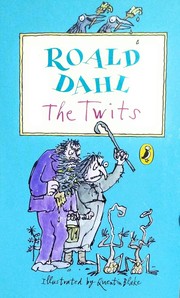
The Twits
Mr. and Mrs. Twit trade vile pranks and torment caged monkeys until the birds and monkeys flip the house on them.
2,864-word summary · 13 min read
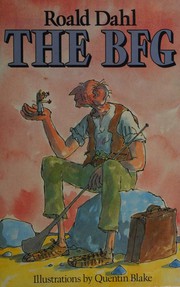
The BFG
Orphan Sophie is taken by the Big Friendly Giant, who blows happy dreams and eats vile snozzcumbers, and helps her stop nine man eating giants.
2,812-word summary · 12 min read
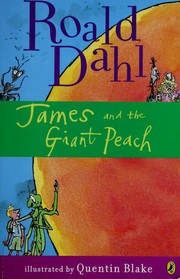
James and the Giant Peach
Lonely James escapes two cruel aunts inside a giant peach with huge insect friends, rolling to the sea and floating on gulls to New York City.
2,384-word summary · 11 min read
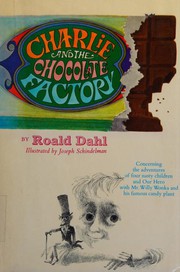
Charlie and the Chocolate Factory
Poor Charlie Bucket finds a golden ticket to tour Wonka's factory with four spoiled kids.
3,574-word summary · 16 min read

Make Way for Ducklings
A pair of mallards raise eight ducklings on the Charles River and lead them across Boston to the Public Garden, with a little help from a friendly policeman.
2,044-word summary · 9 min read

Little Town on the Prairie
In the spring after the Long Winter, fifteen-year-old Laura sews shirts, studies for a teaching certificate, and helps send her blind sister Mary to college.
2,071-word summary · 9 min read

Amelia Bedelia
A literal-minded housekeeper follows her employer's list to disastrous and funny effect in the 1963 picture book that made wordplay a children's staple.
2,038-word summary · 9 min read
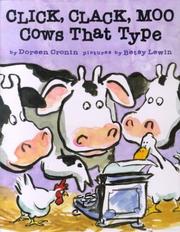
Click, Clack, Moo: Cows That Type
Cows learn to type, demand electric blankets, and go on strike in a deadpan picture book about negotiation and withheld labor.
2,617-word summary · 12 min read
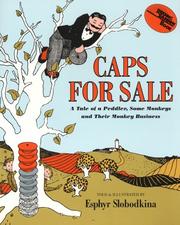
Caps for Sale
A peddler balances his caps on his head, naps under a tree, and wakes to find monkeys wearing his stock in this 1940 picture book.
2,787-word summary · 12 min read

Act Your Age, Eve Brown
Eve Brown crashes into a Lake District bed and breakfast, breaks the owner's arm, and talks her way into his kitchen. A grumpy-sunshine romance about work,…
2,474-word summary · 11 min read
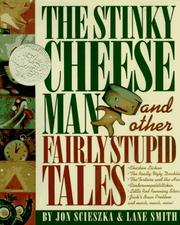
The Stinky Cheese Man and Other Fairly Stupid Tales
Scieszka and Lane Smith take nine fairy tales apart, joke by joke, while Jack, the narrator, keeps losing the pages.
2,206-word summary · 10 min read
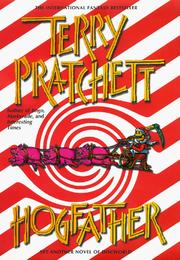
Hogfather
Death fills in for a missing Father Christmas, Susan Sto Helit hunts the Hogfather, and the twentieth Discworld novel turns Santa into a management problem.
2,871-word summary · 13 min read

2 States: The Story of My Marriage
A Punjabi boy from Delhi and a Tamil Brahmin girl from Chennai meet at IIM Ahmedabad, and turn a love marriage into a campaign to convince two families.
2,634-word summary · 12 min read
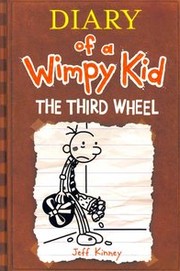
The Third Wheel
Greg tries to find a date for the Valentine's dance, ends up the third wheel in his own plan, and watches Rowley get the girl.
2,019-word summary · 9 min read
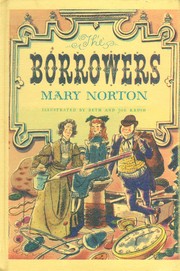
The Borrowers
A family of tiny people live under the floorboards of an English house, borrowing what they need until a lonely boy and a suspicious housekeeper change…
2,164-word summary · 10 min read
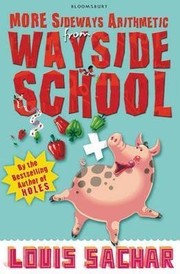
Sideways Stories from Wayside School
Thirty stories, one class per floor, and a teacher who turns students into apples: Louis Sachar's absurd school classic.
2,045-word summary · 9 min read
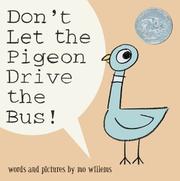
Don't Let the Pigeon Drive the Bus!
A bus driver leaves the reader in charge with one rule, and a very persuasive pigeon spends the rest of the book trying to break it.
2,084-word summary · 9 min read
The War That Saved My Life
Ten-year-old Ada has never left her London flat, hidden away because of her clubfoot. Wartime evacuation sends her to Kent, where a reluctant guardian and a…
2,252-word summary · 10 min read