

2 States: The Story of My Marriage
2,634-word summary 12 min read 269 pages in the book
- First published
- 2009
- Publisher
- Rupa & Co.
- Pages
- 269
- ISBN
- 9788129115300
Reading options
What's inside (13 sections)
I do not usually read love stories, and I picked up 2 States because a book about two people trying to convince their parents sounded like a problem worth watching being solved badly. What I found was a comedy set in the middle of the Indian arranged-marriage system, told by the groom, in his own voice, with the jokes landing before the heartbreak does. It is a small book and it is not a great novel, and it is also the most honest portrait of that particular negotiation I have read in English, because Bhagat wrote it about his own marriage.
Rupa and Co. published it in New Delhi on 8 October 2009. The edition I read runs 269 pages with the ISBN 9788129115300. It is Bhagat's fourth novel, after Five Point Someone, One Night at the Call Center and The 3 Mistakes of My Life. He wrote it after leaving a long career in investment banking, and it is his own marriage with the names changed. It is written in English, in the Indian English of people who code-switch in their own heads, and it was made into a Hindi film in 2014 with Arjun Kapoor and Alia Bhatt. The book itself opens with the reason it exists, printed as a frontispiece before the first page.
Love marriages around the world are simple: Boy loves girl. Girl loves boy. They get married. In India, there are a few more steps: Girl's family has to love boy. Boy's family has to love girl. Girl's family has to love Boy's family. Boy's family has to love girl's family. Girl and Boy still love each other. They get married.
A story told to a psychiatrist
The novel begins in a psychiatrist's office. Krish, the narrator, is on the couch, and he is not there because anything is wrong with his mind. He is there because a man named Bala, his manager at the bank, was worried about him and dropped him off at the clinic of a doctor named Dr Ram, Bala's cousin, who had asked to see him. Before the appointment, Krish has been drinking, has stopped sleeping, and has briefly considered the worst thing he could do to himself. He tells the psychiatrist that he does not have a problem. The psychiatrist gestures at the couch.
What follows is his story, told backwards to a stranger who asks him to keep going. The frame stays open the whole way through, with a few jumps back and forward, so you always know this is a man reconstructing his marriage for a stranger rather than a narrator moving forward through time. Several reviewers thought the frame was unnecessary. I found it fair. It tells you from page one that this story has been told so many times in his own head that it has worn smooth, and it explains why the jokes come out first.
IIM Ahmedabad
Krish Malhotra is a Punjabi boy from Delhi who has been raised by a volatile father and a mother who is frightened of what a wedding will cost. He is at the Indian Institute of Management in Ahmedabad to become the kind of man his family can quote at relatives. Ananya Swaminathan is a Tamil Brahmin girl from Chennai who is already the thing every boy on campus talks about.
They meet in the queue for lunch. Ananya is complaining about the quality of the food, and Krish decides, having never in his life been interesting, to agree with her about it. He gives her the two sweets from his own plate, and they sit down together. That is the whole courtship engine for a while: she is far more decisive than he is, and he spends most of the first part hiding how much he likes her.
She is also having a bad time. In a microeconomics class she cannot answer a question, a professor singles her out and humiliates her, and she cries in the back of the room where nobody can see. Krish notices. He starts tutoring her. They study in her hostel room in the evenings, and they fall into a relationship that is physical and funny and, at the time, entirely private.
Then he proposes. He does it during a job interview she is sitting, bursting into the room and kneeling by her chair, and she says yes while telling him to get out of her interview. They decide they want a love marriage with both families on side, which in practice means they have to run a campaign. On convocation day they introduce the parents, and the two mothers meet, and that is where the book stops being a campus novel.
Convincing Chennai
Krish's first target is Ananya's family, and he goes about it by taking a job at a Citibank branch in Chennai rather than anywhere else. That is the plan. Everything else he does follows from it.
He tutors Ananya's younger brother Manju for the IIT entrance exam, which is a favour with a long fuse attached, because Manju's grades are the family's standing argument with the world. He spends three patient hours with Ananya's father Swaminathan, who is stuck in the last century and has been asked by his own boss to make a PowerPoint presentation, and who cannot. Krish brings whisky and a plan and leaves with the man's resistance in tatters. Finally he finds Ananya's mother Radha a stage, arranging for her to sing at a concert organised by his bank. Radha has wanted to sing in front of an audience for years.
The Chennaites are not hostile so much as quiet, and Krish cannot stand the quiet. He writes about banana leaf plates, about Tamil men and lungis, about a house where nobody speaks and how a Punjabi house is never that silent even at night. He describes the classical music his host family plays as long wails, as if somebody were being slowly strangled, and he cannot get used to food that does not arrive with bread. By the time he has won them over he has been thoroughly changed by the place, which is one of the book's better jokes on itself.
Convincing Delhi
The second campaign is the mirror image, and it goes faster and better, which is part of the problem.
Ananya travels north to meet Krish's mother and the extended family in Delhi, who are openly suspicious of a South Indian girl, and who read the girl's skin colour first and her character later. She is given a separate room in the house, as guests are. She cannot get through.
What changes her position is not charm. It is a crisis at the wedding of Krish's cousin Minti, where the bride's family has promised a Hyundai Accent and delivered a Santro, a shortfall of about two lakh rupees, and the whole wedding is about to collapse over it. Ananya takes the bride's female relatives aside and gets them to pool their jewellery as security, then talks the groom's father into dropping his demand for the better car. She saves a wedding, in a culture she was not raised in, in front of people who had decided she did not belong. After that the mother changes her mind.
This is where the book's unfairness to Ananya becomes obvious. The groom's campaign against the south takes most of the book, with tutors, presentations, concert halls and long evenings. The bride's campaign against the north takes a handful of pages and one crisis. Krish gets the grovelling. Ananya gets one clever scene. She is the more capable character on the page, and she is the one we get to know least.
Goa, and the breakup
With both sets of parents nominally on side, the two families take a holiday together. The book puts this scene in Goa, and the scene goes the way a reader expects and the way the story has been dreading: the families meet, the mothers compare manners, and the meeting turns into a disaster. Krish's mother expects the other side to behave as the bride's family should, gifts and deference, and Ananya's father, a mild man, absorbs the criticism until his chest hurts.
Ananya then overhears something Krish says to his mother, and misreads it, and the misreading lands on top of everything else. The families decide they will never get along. Ananya breaks it off. She stops answering Krish's calls, her family's home turns into a wall, and her office receptionist starts lying for her. Krish goes back to work and stops sleeping and starts drinking.
This is the least satisfying stretch of the book. The break-up arrives almost entirely because of a misunderstanding engineered out of a conversation, and the reconciliation that follows leans on two plot devices rather than on anything anyone does. What saves it is the comedy, which is still running: the same characters keep being themselves in their grief, and the readers who came for the jokes are the ones who keep going.
The father, the wedding, the twins
Two things bring the couple back. The first is a guru in Pondicherry, who Krish visits on the advice of a friend, and who teaches him that forgiving someone does not make the person who hurt you feel better, it makes you feel better. The second is Ananya's father.
Krish and his father have not spoken properly for years. There is a history of a strict, hard man and a son who once hit him. Then Ananya calls at five in the morning to say that Krish's father has travelled down to Chennai on his own, sat with her parents for a day, and apologised for his wife. That is the hinge of the book. The families agree to the wedding, and the father and son are reconciled in the same stroke.
The wedding happens in Chennai, in the Tamil way, which means the whole north Indian contingent arrives expecting a party and is instead roused out of bed before dawn for ceremonies none of them understand. The muhurtam, the hour the wedding is blessed, was set for half past six, with guests expected an hour earlier. A guest asks whether this is a marriage or torture. Krish's father, who had said he would not come, comes anyway and lands at the last minute.
The epilogue jumps a couple of years ahead. Ananya is in a hospital, and Krish is asking about the progress of the book he is writing, and the doctor comes in with the news that there are two boys. The nurse asks which state the twins belong to, and Krish says they belong to a state called India. Bhagat and his wife have twin sons of their own, so the last joke in the book is also the truest detail in it.
What works and what does not
The book's subject is genuinely interesting and Bhagat is unusually honest about it. This is a novel about how the decision to marry somebody is really a decision made by about forty other people. He does not treat the parents as obstacles to be outwitted. Some of them are reasonable, some are not, and the ones who are not are usually reasonable about something else, which is worse.
The voice is the other great success. Krish narrates with a self-deprecating humour that is honest enough to be useful. He admits when he is being a coward, he notices his own bad habits, and he is much funnier about his own family than about anybody else's. The comedy about a wedding car that is not the car that was promised, and about a meal that arrives without bread, lands because it sounds like something a person has actually said.
The jokes arrive too early
The complaint I keep coming back to is structural. Bhagat front-loads the comedy, and the emotional consequences arrive after the laugh has already happened. A scene that should be devastating gets a joke attached to it before the reader has finished registering the pain, and by the time the pain arrives the book has moved on to the next gag. This is why the Goa section feels thin and the ending feels overdetermined. The novel is often funny on the exact beat where it should be tender, and tender on the beat where it should be funny.
The frame makes this worse. Because the psychiatrist is sitting there, we know the ending, and the book spends most of its length walking toward a conclusion we can already guess at.
The conflict as easy material
The north-south friction is played mostly for laughs, and the laughs come at the expense of the people inside the joke. The mothers are caricatures with regional accents attached. The dowry sequence and the caste and colour asides are funny and dated and are treated as weather rather than as things to be examined. Bhagat's own defence, printed at the front of the book, is that he is only teasing the people he loves, which is fair as a rule but does not undo the effect. One of the sharper reviews of the book put it well: sometimes making fun of communities is great humour, but when a story is an overdose of stereotypes it tires the reader.
The irony is that Bhagat can write the serious version of this story when he wants to. The father and son material in the middle chapters is not a joke and it is not a stereotype. It is a genuinely painful account of a boy growing up in a house where the loudest man wins, and it is the best writing in the book.
Krish and Ananya
The male lead is likable and thin. He is funny and passive, impulsive and unable to say what he means, and the book makes a virtue of that passivity rather than treating it as a flaw to be outgrown. By the end we have watched him grow by about two degrees. Ananya gets much less interiority. She is decisive, funny, unusually brave about her own body and life, and largely opaque, and the whole book is told from inside a man who is watching her rather than inside her. Readers who like the heroine often say exactly this, and readers who prefer her to him tend to be the ones who complain loudest about it.
Readers love it or they loathe it
The split on this book is not about the writing. It is about whether you want a book about India to be a subject or a mood. Bhagat is very clear that he is not writing literature. The novel is a mirror held up to middle-class India: the pressure on children to perform, the fuss over skin colour, the price of weddings, the IT boys and their arrested adolescence. Read that way it is honest and funny and hard to argue with. Read it as a novel about two people and their interior lives, it is thin, and the characters are types doing types.
My own verdict is that it is a good book for what it is and a poor one for what it is usually sold as. It is not a romance with a social message attached. It is a comedy with a marriage inside it.
If you want to read 2 States, go in knowing that the story is funny before it is moving, and that the last page is the only one that tells you what the whole thing was for. It is worth it for the frontispiece and the epilogue alone, and for the reminder that a love marriage in India is a project with a client list.
FAQ
Is 2 States a true story?
It is autobiographical with the names changed. Bhagat based it on his marriage to Anusha Suryanarayan, whom he met at IIM Ahmedabad, and they have twin sons. He wrote it after leaving his career in investment banking.
Is 2 States a romance or a comedy?
Both, in that order. It is a campus romance with a family campaign in the middle and a short epilogue with the twins. Readers who want a romance with two deep interior lives will be disappointed.
Is the book written in English?
Yes, in Indian English. The 2014 film adaptation is the Hindi one, directed by Abhishek Varman, with Arjun Kapoor and Alia Bhatt playing Krish and Ananya.
Similar books

Act Your Age, Eve Brown
Eve Brown crashes into a Lake District bed and breakfast, breaks the owner's arm, and talks her way into his kitchen. A grumpy-sunshine romance about work,…
2,474-word summary · 11 min read
Two by Two
Sparks's twentieth novel turns from first love to a marriage breaking up: Russell Green loses his wife and his job, then rebuilds his life around his…
2,192-word summary · 10 min read

At First Sight
Jeremy and Lexie are married and expecting a baby when anonymous emails tell him the child may not be his.
2,317-word summary · 10 min read
The Marriage Bargain
A bookstore owner marries a billionaire friend's brother for a year to save home and company.
2,092-word summary · 9 min read
Mr. Wrong Number
After a fire and a wrong-number text, Olivia falls for a stranger who is closer than she thinks in this funny Omaha rom com.
2,248-word summary · 10 min read
Austenland
A New York graphic designer obsessed with Mr. Darcy inherits a trip to a Jane Austen theme park, where the fantasy of Regency romance collides with the men…
2,030-word summary · 9 min read

Ricochet
Lily Calloway tries to stay celibate for ninety days while Loren is in rehab, leaning on Rose, Connor, and Ryke as therapy forces her to face her childhood.
2,575-word summary · 11 min read
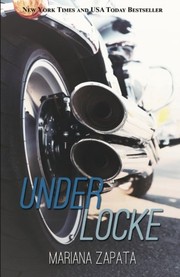
Under Locke
Iris Taylor moves to Austin broke and wary, takes a front-desk job at a tattoo shop, and spends the book learning that Dex Locke’s blunt cruelty and unexpected…
2,591-word summary · 12 min read
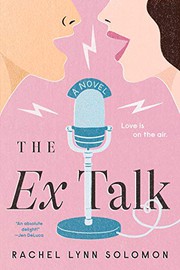
The Ex Talk
Two rival public radio producers pretend to be exes for a dating show, then fall for each other while the lie grows.
2,389-word summary · 11 min read
Bet Me
A sharp actuary agrees to dinner with a charming serial bettor, then spends the next month pretending the wager does not matter.
2,710-word summary · 12 min read

This Time Next Year
Two women give birth minutes apart on New Year's Day 1990, and one takes the other's lucky name. Thirty years on, their children meet again.
2,194-word summary · 10 min read

Marriage for One
Rose marries a cold lawyer to save her coffee shop, then discovers the arrangement was never only business.
2,032-word summary · 9 min read

Delilah Green Doesn't Care
Delilah returns to Bright Falls to photograph her stepsister's wedding and falls for Claire, a bookstore owner and single mother, while a cruel bet threatens…
2,315-word summary · 10 min read

Beautiful Stranger
After a betrayal, Sara Dillon moves to New York and starts a no-strings affair with a British stranger, only to find that control and intimacy are harder to…
2,015-word summary · 9 min read
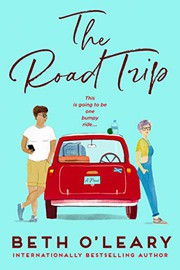
The Road Trip
Two exes squeeze into one small car for the drive to a Scottish wedding, with four years of history and one photograph between them.
2,418-word summary · 11 min read
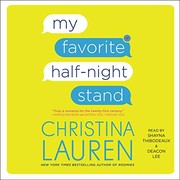
My Favorite Half-Night Stand
Millie, a criminology professor who has always been one of the guys, invents a secret dating profile and matches with her best friend Reid.
2,362-word summary · 10 min read
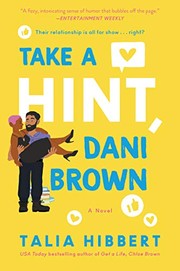
Take a Hint, Dani Brown
A viral rescue video turns a PhD student and a grumpy security guard into internet couple goals, and the fake relationship they build to keep the attention…
2,005-word summary · 9 min read
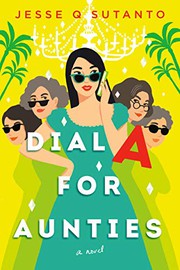
Dial A for Aunties
A wedding photographer accidentally kills her blind date, and her mother and three aunties help her hide the body during the biggest wedding of their careers.
2,076-word summary · 9 min read

The Roommate
Uptight Clara shares a flat with porn star Josh and teams up to build ethical adult films for women.
2,362-word summary · 10 min read
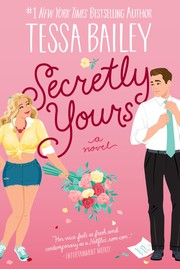
Secretly Yours
A bubbly Napa gardener sends anonymous love letters to her grumpy professor neighbor in this steamy small-town rom-com.
2,504-word summary · 11 min read
My Killer Vacation
A teacher and a bounty hunter share a Cape Cod rental with a corpse and a growing attraction.
2,625-word summary · 12 min read

Vision in White
Wedding photographer Mac Elliot does not believe in lasting love. Steady teacher Carter Maguire plans to change her mind. First in the Bride Quartet.
2,167-word summary · 10 min read

The Last Letter
Ella trades letters with soldier Chaos, then her brother Ryan death brings Beckett to Telluride with a hidden name, sick Maisie, and a love tested by truth.
2,559-word summary · 11 min read
The Hypnotist's Love Story
A hypnotherapist falls for a widower whose ex keeps watching from the shadows.
2,490-word summary · 11 min read

The Wedding
Wilson Lewis courts his own wife again with Noah's help as daughter Anna plans her wedding.
2,076-word summary · 9 min read
It's in His Kiss
Julia Quinn's seventh Bridgerton novel pairs sharp tongued Hyacinth with Gareth St. Clair as an old Italian diary leads them toward hidden jewels and Lady…
2,908-word summary · 13 min read
The Henna Artist
In 1950s Jaipur, a henna artist to rich women rebuilds her life until the sister she never knew arrives.
2,104-word summary · 9 min read

The Choice
A settled Beaufort veterinarian falls for his taken neighbor, then faces an impossible hospital decision eleven years later.
2,150-word summary · 10 min read
Let's Pretend This Never Happened: A Mostly True Memoir
The Bloggess turns a strange Texas childhood and anxious adult life into a funny, warm memoir about family.
2,479-word summary · 11 min read
King of Greed
Billionaire Dominic fights to win back Alessandra after work obsession breaks their ten year marriage.
2,548-word summary · 11 min read