
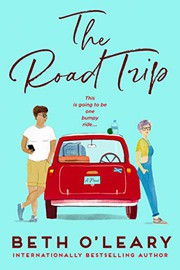
The Road Trip
2,418-word summary 11 min read 400 pages in the book
- First published
- 2021
- Publisher
- Berkley
- Pages
- 400
- ISBN
- 9780593335024
Reading options
What's inside (8 sections)
I read this one because The Flatshare made me laugh on public transport, and the cover of The Road Trip promises more of the same: bright, breezy, a Mini full of idiots. What nobody told me is that the bright cover is a disguise. Beth O'Leary published the novel in 2021, Quercus in the UK and Berkley in the US, where the paperback runs 400 pages and carries ISBN 9780593335024. It was a Sunday Times top five bestseller, and it later became a Paramount+ series, which tells you how many people wanted the cover's promise to be true. The setup is a second-chance romance built on a car crash. Addie Gilbert and her sister Deb are driving to a wedding in rural Scotland when a Mercedes rear-ends their Mini, and the driver turns out to be Dylan Abbott, Addie's ex, who she has not spoken to in two years. His passenger is Marcus, his best friend. The Mercedes is wrecked, the wedding is far, and everyone piles into the Mini. Four hundred miles in a small car with your ex, your ex's hostile best friend, your sister, and a near stranger you met on Facebook. It goes about as well as you would expect, which is to say badly, and also better than any of them deserve.
Five people, four hundred miles, one Mini
The five passengers each bring a different kind of pressure. Addie is a primary school teacher who has spent two years rebuilding herself, and her haircut has gone silver, which Dylan notices within the first mile. Deb is her older sister, blunt, protective, and the mother of a baby son she has left at home, a detail she did not bother sharing with Dylan back when he and Addie were together. Marcus is Dylan's oldest friend, recently out of rehab, and he treats Addie with a contempt that reads as personal from the very first rest stop. Rodney is a large, earnest man who found the group through a wedding Facebook group and talks about the bride with an intensity nobody questions until it is far too late. And Dylan is a poet and part-time master's student who has been cut off by his father, which means the fancy car he just destroyed was not even his.
The present-day chapters, labeled Now, cover roughly a day and a half, while the Then chapters reach back four years. The book runs four strands in total, Addie Now, Addie Then, Dylan Now, and Dylan Then, and the switches come quickly enough that some readers find the rhythm choppy and others find it keeps the tension tight. That scarcity is the engine. There is no room in the Mini for a private conversation, so every secret gets an audience. A broken-down car leads to Kevin, a burly lorry driver who becomes the closest thing the book has to a guardian angel. A night at a budget hotel leads to the scene where everything detonates. The road trip set pieces are genuinely funny in places, including a stop where Rodney becomes convinced Deb has drowned in a river, but the comedy is butter over a bruise, and O'Leary knows it.
Then: a summer at Villa Cerise
The past chapters, labeled Then, begin four years earlier in Provence, which is where the book does its best work. Addie, twenty-one, is spending the summer as caretaker of Villa Cerise, a sprawling house owned by Cherry, the friend whose wedding they are all trying to reach. Dylan arrives alone, though the family villa had been booked under the Abbott name, and he is looking for a woman named Grace, someone he and Marcus have both been tangled up with. Addie drives him around the local villages, they argue about music and speed limits, and at some point she strips down to a bikini to win a bet about whether the drive can beat the old church bells. It is the kind of scene that sounds contrived in a summary and works completely in the prose, because both characters are so obviously delighted to be ridiculous together.
They get a week, maybe a little more, before the rest of the villa fills up with Cherry and friends. In that week Dylan reads Addie a love poem he wrote for her, she shows him the model trains she builds with her father back home, and they fall for each other in the specific, unglamorous way people do on summer jobs, by noticing. Marcus arrives uninvited and immediately announces to Dylan that he wants Addie, which Dylan refuses as flatly as it deserves. Marcus then takes Addie aside and tells her she is too complicated for Dylan, implying she belongs with someone more like himself. She shuts him down. From that moment he is cold, and the novel quietly files this away for later.
There are also friends around, including Dylan's brother Luke and Grace herself, who befriends Addie and privately confesses that her whole history with Dylan was never about Dylan. It was a way to hold Marcus's attention. So by the time the summer ends, one thing is clear: Marcus is the kind of friend who loves by owning, and everyone around him has learned to arrange their lives around his moods. On their last night together, Dylan tells Addie he loves her. She panics, recovers, says it back for the first time in her life, and tells him to finish his travels and come find her.
Then: the slow collapse in Chichester
Dylan goes traveling through Southeast Asia and starts falling apart in a way the book renders with real dread. His father keeps calling about the family business. Dylan ignores it and grows more anxious. Meanwhile Addie begins her first teaching term and learns to read his vague messages as evasion. He finally turns up on Guy Fawkes Night and announces he is moving to Chichester for her, which sounds romantic right up until Marcus persuades him to live in a cabin on the family estate instead of with Addie's family. When Addie and Dylan finally rent a flat together, Marcus moves to Chichester too, drinks heavily, sends Addie hostile messages, and expects Dylan to manage it. Dylan spends their relationship on call for Marcus, and the imbalance is the point. The romance does not die of one wound. It dies of a thousand small absences.
Addie's head teacher is a man named Etienne, and he starts to show her attention. She recognizes what is happening, admits to herself that she enjoys it, and tries to keep it contained, because Dylan has no bandwidth left. Two days before the Christmas break, Etienne asks her to his office for wine, and when she tries to leave he shuts the door and forces himself on her. She knees him, escapes, and runs home until her feet bleed. Deb finds her, cleans her up, and takes her to the police. That same evening, Marcus sends Dylan a photograph he took from outside the school, one that shows Etienne's hand on Addie's thigh, with a message implying she is cheating. Dylan confronts Etienne, who lies and says Addie pursued him all term. Dylan believes the lie, comes home, refuses to hear Addie's side, and leaves.
A week later Deb tells Dylan the truth. He is sick with horror and sits on Addie's doorstep weeping, and she asks him to stop contacting her. She understands why he left. She cannot do the rest. Dylan slides into a severe depression, starts therapy, and agrees to it only if Marcus also gets help. He cuts Marcus off for almost a year. The material is heavy, and I want to be honest about it here rather than bury it, because the novel is marketed like a romp. Sexual assault, alcoholism, depression, and an emotionally abusive parent are all on the page, and a reader should walk in knowing that.
Now: the truth in a hotel bathroom
All of that context detonates in the present. At the budget hotel, Cherry calls with alarming news. Rodney Wiley is not invited to her wedding. He became fixated on her after a Christmas party and invited himself along through the Facebook group, and he is on his way north to try to stop the ceremony. Addie and Deb decide to keep him close and watch him rather than confront him, which turns the Mini into a babysitting job with worse seating.
Then comes the bathroom scene, the pivot of the whole novel. Addie and Dylan steal a few minutes alone upstairs, and she falls apart. She says she forgave him long ago, but she cannot forgive herself, for the flirting, for the crush, for the night itself. Marcus walks in and starts raging, accusing her of hurting Dylan all over again, and Deb finally says the plain truth out loud: Addie did not force herself on anyone. Marcus breaks down. He confesses, in a hotel bathroom, that he was in love with Addie the entire time, and that watching Dylan have the life he wanted, while hating himself for wanting it, is what drove him to try to destroy the relationship. It explains every hostile message and every sabotaged plan, without excusing a single one. Dylan later says that understanding Marcus's love for Addie was the thing that finally let him forgive him. That sentence will strike different readers very differently, and I suspect that is deliberate.
Addie climbs into Dylan's bed that night, and they fall asleep holding hands like teenagers. The next morning, Kevin the lorry driver, who helped them earlier, drives the entire group to Scotland in his cab. It is a ridiculous image and the book sells it completely.
The wedding and the after
The wedding is held at a castle, and before the ceremony Dylan's father, Miles, approaches across the lawn, which gives Marcus the best moment of his arc. He calls Miles a spineless, bigoted bully, declares that Addie is a better person than either of them could ever be, and quits the job Miles had offered him, all in one go. Addie tells Miles they will not be seeing much of each other and leads Dylan away. Meanwhile the group intercepts Rodney in the bridal suite, where he is pleading with Cherry not to marry Krish. Cherry tells him calmly that she never loved him, the group restrains him, and the wedding proceeds. The novel's own verdict, handed to Cherry near the end, is that nobody is irredeemable, and it means the line to cover Marcus and Rodney both. Dylan's brother Luke turns up with the news that their mother has finally left Miles, which lands like a door opening in a stuffy room.
In a quiet corridor, Addie and Dylan have the conversation the book has been building toward. She admits the crush, and the guilt that has been eating her, and he tells her that what matters is what she actually did: she said no, and she walked away. He asks her to try again and admits he never stopped loving her. She says she never stopped either. Deb, who has spent the whole book holding her sister up, gets the last word on family when she shrugs off Addie's apology with a version of, isn't that how this sister thing works. It is a small moment, and it is the one I thought about afterward. They agree to start slowly, deliberately not with the physical side but with everything else, which is the correct order given how much was skipped the first time. Cherry and Krish marry in an adapted Hindu ceremony on the castle roof. Grace, healthy now and out of rehab, lets Marcus deliver the apology she has waited years for. And on the dance floor Dylan asks Addie where she stands on kissing, and she answers by closing the distance. The book calls it their second first kiss.
What works and where it stumbles
The Then timeline is excellent. O'Leary is very good at the texture of a relationship's slow decline, and the Provence section has warmth without being saccharine. Deb is the best supporting character, funny and furious and loyal, and Kevin the lorry driver is a gift. The assault aftermath is handled with more care than I expected, particularly the way Addie's shame is separated from her actions. The book never implies she was at fault for surviving.
The Now timeline is shakier. Reviews at the time argued about this, and I land in the middle: the whiplash is real, and twenty-four hours in a Mini is a thin container for a reconciliation this large. Dylan and Addie spend most of the past chapters apart or fighting, so the present-day chemistry is doing a lot of unearned work. Marcus is exhausting in a way the book intends but sometimes cannot channel, and some readers will finish unconvinced that he has earned his second chances. Rodney's subplot is divisive too. Some find him a sweet sad oddball, and others find the whole thread a detour that pays off late. Both camps are right, depending on how much you enjoy a comic wedding crasher in a novel that elsewhere is about recovery.
Two notes for the right reader. First, if you loved The Flatshare and The Switch for their lightness, calibrate expectations downward. This one is heavier, and honest trigger warnings are the kindest thing a reviewer can hand you. Second, if you want your second-chance romances tidy, with the misunderstanding cleared up in a chapter, this will frustrate you, because the misunderstanding here has a body count of sorts, and the repair is slow. Readers who dislike unlikeable characters should know that half this cast spends most of the book in that category.
What stuck with me is the photograph. A man hiding in the dark outside a school, taking a picture of a woman's worst moment, and sending it to the person she loves most. O'Leary builds the entire back half of the novel on that image, and when the truth finally lands, it lands because everyone is finally willing to say what the picture did not show. The wedding, the lorry, the castle, the second first kiss, all of it works because the book refuses to let the photograph speak last. I would hand this to someone who wants their romance with teeth, and I would warn them to buckle up.
FAQ
Is The Road Trip a sequel to The Flatshare?
No. It is a standalone. Beth O'Leary's books share a style and a publisher tradition but not characters or a timeline.
Where do Addie and Dylan meet?
They meet in Provence, where Addie spends the summer as the caretaker of Cherry's family villa and Dylan arrives as a guest. Four years later they are exes sharing a Mini.
Is The Road Trip as light as Beth O'Leary's earlier books?
No. It deals with sexual assault, alcoholism, depression, and a toxic friendship, so it reads heavier than The Flatshare or The Switch.
Similar books

Bet Me
A sharp actuary agrees to dinner with a charming serial bettor, then spends the next month pretending the wager does not matter.
2,710-word summary · 12 min read

The Roommate
Uptight Clara shares a flat with porn star Josh and teams up to build ethical adult films for women.
2,362-word summary · 10 min read

Austenland
A New York graphic designer obsessed with Mr. Darcy inherits a trip to a Jane Austen theme park, where the fantasy of Regency romance collides with the men…
2,030-word summary · 9 min read

My Dark Romeo
A debutante ball kiss traps Dallas Townsend in a marriage to Romeo Costa, a man who wants her as leverage in a war against his father and her fiance.
2,530-word summary · 11 min read

The Ex Talk
Two rival public radio producers pretend to be exes for a dating show, then fall for each other while the lie grows.
2,389-word summary · 11 min read

Act Your Age, Eve Brown
Eve Brown crashes into a Lake District bed and breakfast, breaks the owner's arm, and talks her way into his kitchen. A grumpy-sunshine romance about work,…
2,474-word summary · 11 min read
One to Watch
A plus-size fashion blogger takes the lead role on a reality dating show to prove she belongs on television, and finds she might want what the cameras offer.
2,478-word summary · 11 min read

This Time Next Year
Two women give birth minutes apart on New Year's Day 1990, and one takes the other's lucky name. Thirty years on, their children meet again.
2,194-word summary · 10 min read

Big Swiss
A transcriptionist for a sex coach falls for one of his clients, the tall Swiss gynecologist she calls Big Swiss, in a funny novel about work and secrets.
2,523-word summary · 11 min read

2 States: The Story of My Marriage
A Punjabi boy from Delhi and a Tamil Brahmin girl from Chennai meet at IIM Ahmedabad, and turn a love marriage into a campaign to convince two families.
2,634-word summary · 12 min read
Wedding Night
Lottie marries an old flame days after a breakup, then flies to a Greek island while her sister quietly works to sabotage the honeymoon. A farce about memory,…
2,213-word summary · 10 min read
My Favorite Half-Night Stand
Millie, a criminology professor who has always been one of the guys, invents a secret dating profile and matches with her best friend Reid.
2,362-word summary · 10 min read
Take a Hint, Dani Brown
A viral rescue video turns a PhD student and a grumpy security guard into internet couple goals, and the fake relationship they build to keep the attention…
2,005-word summary · 9 min read
The Marriage Bargain
A bookstore owner marries a billionaire friend's brother for a year to save home and company.
2,092-word summary · 9 min read
The Bromance Book Club
A Nashville pitcher joins a secret romance book club to save his marriage after his wife Thea asks for divorce. He trades pride for listening, chores, and…
2,932-word summary · 13 min read

Ghosts
At 32, food writer Nina Dean faces ghosting by Max and her father's dementia in London.
2,677-word summary · 12 min read

Something Wilder
Lily Wilder runs staged treasure hunts in Utah until her first love Leo returns and the old legend turns dangerous.
2,556-word summary · 11 min read

Secretly Yours
A bubbly Napa gardener sends anonymous love letters to her grumpy professor neighbor in this steamy small-town rom-com.
2,504-word summary · 11 min read
My Killer Vacation
A teacher and a bounty hunter share a Cape Cod rental with a corpse and a growing attraction.
2,625-word summary · 12 min read
Mr. Wrong Number
After a fire and a wrong-number text, Olivia falls for a stranger who is closer than she thinks in this funny Omaha rom com.
2,248-word summary · 10 min read

King of Sloth
Party heir Xavier chases publicist Sloane who refuses to fall in forced job.
2,017-word summary · 9 min read

Below Zero
Stranded at an Arctic station, NASA engineer Hannah is rescued by rival Ian, and a storm forces them to face old grudges and attraction.
2,555-word summary · 11 min read

Vision in White
Wedding photographer Mac Elliot does not believe in lasting love. Steady teacher Carter Maguire plans to change her mind. First in the Bride Quartet.
2,167-word summary · 10 min read

The No-Show
Three women are stood up on Valentine's Day by the same man, but the timeline is not what it seems. O'Leary's warmest book with a knife in it.
2,127-word summary · 9 min read

The Flatshare
Two strangers share one bed on opposite shifts and fall in love through notes left around the flat.
2,793-word summary · 12 min read

Size 12 Is Not Fat
Former teen pop star Heather Wells investigates two dorm elevator deaths while juggling her ex, her crush, and a size-12 wardrobe.
2,805-word summary · 12 min read

First Grave on the Right
Charley Davidson is a private investigator in Albuquerque and the grim reaper. When three murdered lawyers come back as ghosts, her two jobs collide.
2,770-word summary · 12 min read

Dumplin'
Willowdean Dickson enters her town's beauty pageant as a protest and discovers that confidence is harder to keep once she lets someone close.
1,922-word summary · 9 min read

Lick
Evelyn wakes up married to the lead guitarist of Stage Dive after a Las Vegas birthday she cannot remember, and the annulment gets complicated.
1,989-word summary · 9 min read

Hard Luck
Rowley has a girlfriend, so Greg turns to a Magic 8 Ball, a family Easter hunt and the school yearbook for answers.
2,586-word summary · 11 min read