

First Grave on the Right
2,770-word summary 12 min read 320 pages in the book
- First published
- 2011
- Publisher
- St. Martin's Press
- Pages
- 320
- ISBN
- 9780312662752
- Series
- Charley Davidson (#1)
Reading options
What's inside (8 sections)
I bought a pink paperback with a cartoon grim reaper on the cover because it cost three dollars and I needed something for a flight. The back cover promised a private investigator who was also the grim reaper, a sexy supernatural entity, and a murder case, which sounded like Stephanie Plum, Ghost Whisperer, and a Hot Topic clearance rack in a blender. I bought it anyway. By page four, a dead lawyer named Patrick Sussman the Third was standing at the foot of Charley Davidson's bed at 4:34 in the morning, apologizing for the intrusion, and I was laughing in the terminal.
First Grave on the Right came out in 2011 from St. Martin's Press. It is 320 pages, ISBN 9780312662752, and the first book in the Charley Davidson series. The premise is a gimmick. The voice is not. Charley narrates like a woman who decided that if she has to deal with the dead, the universe owes her a few jokes.
The Grim Reaper Has a Landlord
Charley is 27, a private investigator in Albuquerque, and the only grim reaper on the payroll. She is a portal. Ghosts see her as a bright, sparkly beacon, they come to her, and when they are ready they pass through her into whatever comes next. She can see them, touch them, and talk to them. They cannot smell coffee, which becomes a running joke. She remembers her own birth, including the moment her mother died and crossed through her. She has been helping the dead since she was five.
Her life is strange in ways that feel lived in. She works out of an office above her father's bar. Her father, Jean, is a retired cop. Her uncle Bob is a homicide detective and her main contact on the living side. Her best friend, Cookie Kowalski, lives across the hall and runs the office. Her apartment comes with Mr. Wong, a small gray ghost who hovers in the corner and never speaks. Her dead sidekick is Angel Garza, a thirteen-year-old gangbanger with a mouth on him. Her living nemesis is Garrett Swopes, a skip tracer with silvery eyes and a deep commitment to not believing her.
The case starts with three lawyers. Patrick Sussman III is the polite one with the round glasses. Jason Barber refuses to get out of his body bag at the crime scene and argues that possession is nine-tenths of the law. Elizabeth Ellery is found behind the bushes at her sister's house, still carrying a present for a nephew whose birthday she missed. All three were partners at the same firm, all three were shot twice in the head with a suppressed nine millimeter, hours apart, and none of them saw the shooter. Their unfinished business is a client named Mark Weir.
Weir is in prison for killing a homeless teenager named James Barilla. The body was found in Weir's backyard. Weir says it was planted. He is calm in a way that makes Charley believe him, and his nephew Teddy is missing. The lawyers had new evidence that Weir was innocent. The informant who brought them that evidence is also dead. That is the shape of the mystery: a wrongful conviction, a missing boy, and a law firm that got too close to something.
The dead lawyers bicker about whether they can smell barbecue, and the comedy is how Charley keeps from falling apart. She gets beaten up, she makes jokes, and the jokes are how she keeps her head above water.
The Case Under the Case
The lawyers' deaths lead to Benny Price, who owns a chain of strip clubs called the Patty Cakes Clubs and runs something much worse underneath them. Price trafficks children. His scouts look for homeless kids, kids who will not be missed, and he ships them out of the country. The dead lawyers were trying to free Mark Weir and expose Price at the same time, which is a good way to get shot twice in the head.
The plot is grim, and the book knows it. Father Federico, a priest who runs a mission for runaways, has been hiding Teddy Weir in his warehouse. Teddy is sixteen and furious. He tells Charley how he and James Barilla played detective, snuck into one of Price's warehouses, and got separated. James was killed. Teddy got away. A scout named Carlos Rivera switched sides after the killing and started working with the priest. Father Federico has shipping records, invoices, buyers' addresses, and a basement where he hides kids. When he disappears, Charley has one more reason to move.
The book cares less about proof than survival. She visits Mark Weir in prison. She visits Rocket, a ghost who knows the name of every person who has ever died, and he gives her James Barilla's full name. She falls through a skylight at the warehouse after Teddy punches her in the jaw, and the Big Bad appears as she falls. She gets a client killed. That last one matters.
The client is Rosie Herschel, a woman leaving an abusive husband named Zeke. Charley gets her to the airport, or thinks she does. Zeke kills Rosie before she can leave and then comes after Charley. The Big Bad severs Zeke's spinal cord without breaking the skin. Charley survives, Rosie does not. The supernatural has a body count, and Charley's gift cannot fix everything. It also raises the question the series will spend years answering: what is the thing that keeps saving her, and why does it kill so easily?
The mystery itself is the weakest part. The lawyers are a great hook, but they spend most of the book as exposition devices. Charley does not solve the case so much as she gets pointed at Price by the ghosts, gets a confession through a sting, and lets the police do the rest. If you come for a fair-play puzzle, you will be disappointed.
The Man in the Dreams
The other plot is what the book actually cares about. For a month, Charley has dreamed about a man who appears out of smoke and shadows and does things she wakes up thinking about. He is not a ghost. Ghosts are cold. This man is heat. He never speaks, until one morning in the shower when he whispers one word: "Dutch."
Only one person has ever called her that. Twelve years ago, when Charley was fifteen, she and her sister Gemma were in a rough part of town for a school project. Charley saw a seventeen-year-old boy being beaten by his father, Earl Walker. She intervened. The boy, Reyes Farrow, got her out of there by threatening her. He grabbed her, threatened her with sexual violence, and told her to leave before she got hurt. Then he called her Dutch. It was not romantic. It was a frightened, angry kid trying to protect her from a world that had already done terrible things to him.
The book knows this is the origin of the romance and does not do enough with it. Reyes is the dream lover, the Big Bad, and the man in the coma. The Big Bad has been with her since birth, a black-robed figure with a scythe who appears when she is in danger and leaves before she can ask questions. She has been terrified of him her whole life. Now she starts to suspect that the thing she fears and the man she wants are the same person. That is a great idea for a romance. It is also a great idea for a horror story, and the book sometimes forgets the difference.
Reyes is in a coma at a long-term care facility in Santa Fe. He was shot in the head during a prison riot, and a corrections officer who owes him his life keeps watch over him. The state plans to take him off life support in three days. Charley visits him, kisses him, and faints. She sees memories that are not hers: his father beating him, his own anger, a cup at her mouth, a wet towel at her head. She wakes up on the floor with a nurse asking if she is okay. It is funny and creepy at once, which is the book's sweet spot.
She tracks down Reyes's sister, Kim Millar, who has a different last name and a promise to keep. Reyes made her swear to stay away so that his enemies would not find her. Kim has kept it for years, and she is not sure she can break it now. Their conversation fills in the childhood: the abuse, the things Reyes did to protect Kim, the reason he went to prison for killing Earl Walker even though Earl, somehow, is still alive. The series will chew on that for a long time.
The romance is the engine, and the thing most likely to divide readers. Charley never gets to know Reyes in any ordinary way. He is a force: protective and possessive, and he withholds almost everything. The dream sequences are explicit, and the power imbalance is enormous. He has been watching her since birth. He knows what she is before she does. He can kill with a thought. She is mortal, with a smart mouth and a bad habit of getting kidnapped. The book wants you to find that hot. Sometimes it is. Sometimes it is just unsettling, especially when the narrative asks you to forget how they met.
The Sting
The human case comes to a head in a strip club office. Charley walks into Benny Price's club and pretends to be a paralegal from the dead lawyers' firm. She calls herself Violet Magenta. She has a video camera, a fake flash drive, and a story about ten people who will go to the police if she does not come back. Price is a smirking man with a goatee and a pocket square that does not match his tie. He is a trafficker and a murderer, and arrogant enough to admit it.
The scene works because Charley is terrified and keeps going anyway. Price takes the bait. He admits he had the lawyers killed. He tells her he has men for that kind of thing. Then he puts his hands on her, and the scene turns. He starts to choke her. The tactical team is supposed to be outside, but they are not fast enough. Reyes appears in the black robe, and the room fills with something between a fight and a rescue. The team comes through the door. Price goes down. Charley gets out.
They find Father Federico in a storage room, alive but battered. Teddy is safe. The shipping records are enough to blow the trafficking ring open. Mark Weir's conviction falls apart. The three lawyers finally get to cross. Charley helps them go, and the book gives her a moment of quiet.
A woman is nearly strangled to death by a child trafficker, and the book still finds room for a joke about her outfit. Sometimes that works, because the humor is a survival mechanism and the contrast makes the violence feel real. Sometimes it does not, because the joke arrives too soon and lets the reader off the hook. This is a debut, and it shows in moments like that.
The Son of Satan
The supernatural plot ends in Charley's apartment, with Reyes finally explaining himself. He is more than a man with a strange gift. He is the son of Satan. Before he was human, he was a general in hell, second only to his father, created from the heat of a supernova and sent to find a portal to heaven. He found Charley instead. She was a light made of spun gold, one of a thousand portals, and he fell for her before he ever knew what she was. Then his father found him, and everything got worse.
The reveal is a lot. It arrives late and fast and changes the genre from snarky PI with ghosts to cosmic war between heaven and hell. I can see why some readers throw up their hands. The mystery was small, and so was the romance, in its way. Now there is a fallen angel general and a portal to heaven and a father who wants God's throne.
But it also gives the series somewhere to go. Reyes warns her that if the demons find her, they get access to everything holy, and he will have to kill her to close the portal. He says it plainly: "I will have to kill you." Then he disappears. The next morning, Charley races to the care facility with an injunction that is too late. Reyes is gone. The security footage shows him waking up, looking around, smiling at the camera, and vanishing in a glitch of static. The monitor goes black, then a single word appears with a cursor blinking after it: Dutch.
The case is closed enough. Price is caught. Mark Weir is free. The lawyers are at peace. But Reyes is out there, his body is missing, and the thing that has protected Charley since birth might have to end her. She feels him brush across her mouth, and she knows her life will never be the same. It is a hell of a hook.
What Works, What Doesn't
The voice is the reason to read it. Charley is funny in a specific way, not just quippy. Her jokes come from the gap between what she knows and what everyone else refuses to believe. She is exhausted, horny, underpaid, and underestimated, and she narrates it with enough self-awareness to keep from being annoying. Cookie is a great foil, practical and warm. Uncle Bob is the heart of the book, a cop who loves his niece enough to accept the impossible in pieces. The Albuquerque setting feels specific: the desert heat, the bar, the cheap apartment, the long drive to Santa Fe.
The mystery is thin. The lawyers are a great hook, but they fade into a chorus, and Charley does not solve the case so much as she walks into a room and records a confession.
The romance is the biggest question mark. Reyes is compelling in the way a storm is compelling. He is a dream intruder who withholds information, a man who has watched Charley since birth, and a person who first met her by grabbing her and threatening her. The book frames all of that as protective and asks the reader to swoon. Some readers will. Some will find it disturbing, and they are not wrong. Later books do more work on the consent, but this one wants you to feel the heat and not ask questions. The love triangle with Garrett is half-hearted. He is set up as a rival, then spends most of the book being angry and helpful, and the book never makes a real case for him.
The worldbuilding is a pilot episode. The rules of the reaper, the nature of the Big Bad, the politics of hell, and the purpose of the portal are all teased. Some of it pays off later, but in book one it feels made up as it goes, because it is. That gives the book a loose energy, but it also means the climax carries a lot of exposition, and the exposition lands with a thud in the middle of a romantic scene.
Who will like it? If you like Stephanie Plum, Sookie Stackhouse, early Anita Blake, or any heroine who talks back to danger, this is your book. If you want a paranormal romance with a genuinely scary love interest and a lot of steam, it delivers. If you want a mystery that plays fair, a romance with a clean power balance, or a fantasy world with consistent rules, you will be frustrated. The RITA for Best First Book in 2012 makes sense. Mystery readers may wonder why the corpse in the backyard gets less attention than the man in the dream.
I finished it on the plane and looked up the second book before we landed. Not because the case was clever, but because I wanted to know what Reyes was and whether Charley would ever get a week without someone trying to kill her. That is the trick of a good series opener. It leaves you with a voice in your head and a door cracked open. The door here is a black robe, a scythe, and a man who calls her Dutch.
FAQ
Is First Grave on the Right the first book in a series?
Yes, it is book one of the Charley Davidson series, which runs to more than a dozen novels.
What does Charley Davidson do for a living?
She is a private investigator in Albuquerque and also a grim reaper, a doorway for the dead who need help moving on.
Who is Reyes Farrow?
He is the man who has appeared in Charley's dreams since childhood. In this book he is in a coma in a prison hospital, and his connection to Charley is stranger than she first understands.
Similar books
More from Charley Davidson first, then related titles.
Paranormalcy
A teenage agent who can see through glamour falls for a shape-shifter and learns the agency she works for is hiding her true nature.
2,041-word summary · 9 min read

Size 12 Is Not Fat
Former teen pop star Heather Wells investigates two dorm elevator deaths while juggling her ex, her crush, and a size-12 wardrobe.
2,805-word summary · 12 min read

River Marked
Mercy and Adam's honeymoon on the Columbia River turns into a fight with an ancient river devil, and Mercy finally learns the truth about her father.
2,008-word summary · 9 min read

Magic Burns
A magic flare hits Atlanta, and mercenary Kate Daniels must recover stolen maps, find a missing witch, and keep a teenage girl alive while Celtic gods try to…
2,021-word summary · 9 min read

Masquerade
After Cordelia's death, Schuyler flies to Venice to find her exiled grandfather, then returns to the Blue Bloods as they prepare for a masked ball and a hidden…
2,543-word summary · 11 min read
Fearless Fourteen
Bounty hunter Stephanie Plum babysits a teenager, guards a fading singer, and hunts nine stolen million dollars under her boyfriend's basement.
2,466-word summary · 11 min read
Circus of the Damned
A rogue master vampire arrives in St. Louis and Anita Blake is caught in an undead turf war, with a science teacher in the crossfire.
2,757-word summary · 12 min read
Lean Mean Thirteen
Stephanie Plum's ex-husband disappears after she attacks him, leaving her suspected of murder and chasing a forty-million-dollar secret through Trenton.
2,100-word summary · 9 min read
The Evolution of Mara Dyer
Back in Miami after the asylum collapse, Mara Dyer is treated at Horizons while Jude, who should be dead, stalks her. Noah stays close as the experiments…
2,577-word summary · 11 min read
Twelve Sharp
Stephanie Plum is stalked by a woman claiming to be Ranger's wife, and when Ranger's daughter is kidnapped, Stephanie becomes both bait and target.
2,064-word summary · 9 min read
Dreamfever
With the walls between worlds down and Mac broken by the Fae, Dreamfever is the darkest volume of the Fever series, and the one that changes everything.
2,007-word summary · 9 min read

Dial A for Aunties
A wedding photographer accidentally kills her blind date, and her mother and three aunties help her hide the body during the biggest wedding of their careers.
2,076-word summary · 9 min read

Bitten
Elena Michaels is the world's only female werewolf, and keeping that world away from her human life in Toronto works fine until the Pack calls in a favor.
2,039-word summary · 9 min read
Silver Borne
Mercy hides a Fae book while Samuel slips and the fae close in.
2,571-word summary · 11 min read
Shadowfever
Mac Lane hunts the Sinsar Dubh in Dublin as Fae walls fail and Barrons secrets surface.
3,016-word summary · 13 min read
One Foot in the Grave
Cat hunts vampires with Bones while her Sire plots from the grave.
2,200-word summary · 10 min read

Cry Wolf
Omega Anna joins Charles to hunt a rogue werewolf in Montana.
2,463-word summary · 11 min read
Bloodfever
Mac hunts the Sinsar Dubh in Dublin while Barrons tests her.
2,124-word summary · 9 min read
My Killer Vacation
A teacher and a bounty hunter share a Cape Cod rental with a corpse and a growing attraction.
2,625-word summary · 12 min read
Halfway to the Grave
Half vampire Cat hunts rogues to atone until Bones captures her and pulls her into vampire politics and love.
2,995-word summary · 13 min read
Dead in the Family
Sookie shelters fairy kin and a telepathic boy while pack murder and Eric's vampire kin close in.
2,412-word summary · 11 min read
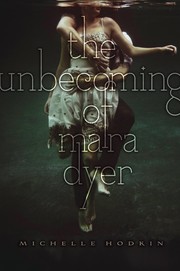
The Unbecoming of Mara Dyer
Sole survivor of a collapse that killed her friends, Mara Dyer moves to Miami, where visions that come true suggest her grief hides something darker.
2,152-word summary · 10 min read
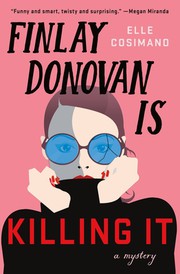
Finlay Donovan Is Killing It
A broke single mom novelist is mistaken for a hitwoman over lunch and takes the job. Funny crime caper, first in the series.
2,538-word summary · 11 min read
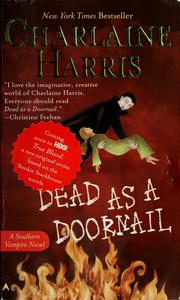
Dead as a Doornail
Sookie tracks a sniper hunting shifters as Jason faces his first panther change and pack justice looms.
2,440-word summary · 11 min read
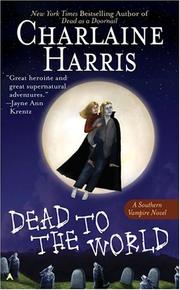
Dead to the World
Sookie hides a blank Eric for Christmas while hunting the witch who cursed him and finding Jason.
1,997-word summary · 9 min read
Silence
Nora wakes in a cemetery with five months missing and a stranger called Jev who feels familiar.
3,615-word summary · 16 min read
Crescendo
Nora and Patch survived book one, but distance, Marcie Millar, and a letter about her father's killer pull them apart.
2,980-word summary · 13 min read

Layla
Leeds brings Layla back to the bed-and-breakfast where they met after a shooting changes her, then a new guest named Willow blurs every line he trusted.
2,211-word summary · 10 min read