
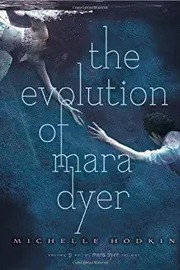
The Evolution of Mara Dyer
2,577-word summary 11 min read 544 pages in the book
- First published
- 2012
- Publisher
- Simon & Schuster Books for Young Readers
- Pages
- 544
- ISBN
- 9781442421790
- Series
- Mara Dyer (#2)
Reading options
What's inside (8 sections)
The second book in a trilogy usually has to keep the lights on while the first book's promise is cashed in. The Evolution of Mara Dyer, published in 2012 by Simon & Schuster Books for Young Readers, picks up right after the police station scene that ended The Unbecoming of Mara Dyer. Mara has just seen Jude, her supposedly dead ex-boyfriend, standing alive in a Miami police station. She freaks out, says too much, and ends up in a psychiatric ward. The novel runs 544 pages, and most of them are spent on visions, therapy sessions, family dinners, and a romance that keeps trying to be normal while the world around it gets less normal by the chapter. It is also genuinely creepy in places, which is why I kept reading.
The girl who saw a dead boy
The book opens with Mara in a hospital bed. Dr. West explains that Mara has been telling people she caused the collapse at the abandoned asylum in Rhode Island and that she killed her friends. Mara remembers the collapse. She remembers Rachel and Claire dying. She remembers Jude attacking her. What she does not accept is that Jude is dead. She saw him at the station.
Her family wants to believe her and cannot. Her mother is frightened. Her father is steady in the way of a man who has decided to be calm. Her older brother Daniel is practical and protective. Her younger brother Joseph is too young to understand why his sister has changed. Daniel tells Mara that the rescue workers found Jude's hands in the rubble. That detail is meant to settle the question. It does the opposite. If Jude's hands were found, how is he walking around Miami?
Mara's mother also tells her something new about the family. Mara's grandmother, her mother's mother, had hallucinations and nightmares. She killed herself when Mara was three days old. The implication is clear: mental illness runs in the family, and Mara may be repeating it. Mara does not want to be a case study. She wants a boyfriend, a curfew, and a normal school year. The book makes you feel how badly she wants that, which is why the horror works.
Noah Shaw visits the ward. He is the wealthy British boy from book one, the one who can heal. He believes Mara about Jude. He also has a habit of making problems disappear with money and charm, and that habit becomes a larger issue as the book goes on. When Mara is released, she starts at Horizons Outpatient Program, run by a doctor named Kells.
Horizons
Horizons is a bright, modern building in a strip mall. It has art rooms, group therapy, and a cheerful admissions counselor named Mr. Robins. It also has Dr. Kells, who is calm, attentive, and too interested in Mara's memories. The program is full of teenagers with problems that do not quite fit their diagnoses. Mara's friend Jamie is there, which is a relief. Jamie is funny and loyal and gives the book some of its best comic lines. Phoebe Reynard is also there. Phoebe is strange, watchful, and hostile in a way that feels personal before it has any reason to be.
The first sign that something is wrong at home is a dead cat outside the back door. The second is a message written in blood on the bathroom mirror: FOR CLAIRE. Claire was Jude's sister, one of the friends who died in the collapse. The blood is cleaned away and everyone tries to treat it as a symptom. Mara knows it is a message.
At Horizons, Phoebe hands Mara a photograph. It shows Mara asleep in her own bed, her eyes scratched out. Phoebe admits to scratching the photo but says she did not take it. Her boyfriend did, or someone she calls her boyfriend. The photograph is one of the most effective scares in the book because it turns Mara's bedroom into a place that can be watched. The novel is full of small violations: a missing doll, a note in a journal, a photograph taken while she slept.
Dr. Kells asks Mara about the night at the asylum. Mara blacks out during the session. The blackout is not a polite fade. It is a gap in the narration, and Hodkin uses those gaps well. Mara is not a reliable narrator because she genuinely does not know what she has done. She is also not a passive victim. She lies, hides things, and tries to protect Noah and her family from what she suspects about herself.
The doll, the charm, and the photograph
Mara starts having visions of India. This is where the book's mythology opens up. The visions are not random. They show a girl, a family, a doll, and an old woman who screams Mara's name. Mara's grandmother's doll is in her room, and then it is not. She throws it out. It comes back. She burns it, and in the ashes she finds a small charm that matches the one Noah wears around his neck and never takes off.
Noah found his charm in his mother's belongings. Mara's charm came from her grandmother. The two families have a connection neither of them understood. Noah and Mara find a photograph of Noah's mother and Mara's grandmother together. The women are young, smiling, and clearly close. The photograph raises more questions than it answers, but it changes the story. Mara's visions are not only symptoms. They are memories, or something like memories, passed down through a family line.
Noah has a theory. He can heal because he can manipulate cells. Mara can kill because she can manipulate events. He thinks their abilities are two sides of the same coin, and he thinks the asylum collapse was not an accident. Mara wants to test the theory. She tries to move a pill bottle with her mind. Nothing happens. The scene is almost funny, and it is a useful corrective to the idea that Mara is a superhero. She is a frightened teenager with a frightening capacity she cannot control.
There is a carnival, a fortune teller named Madam Rose, and a warning: leave Noah, or she will love him to ruin. Noah later bribes the woman, whose real name is Roslyn, and learns that a man paid her to deliver the warning. The man is not named. The implication is that someone is manipulating them, and the someone may be connected to Noah's father, David Shaw.
Noah's family history is a shadow over the romance. David Shaw is a wealthy businessman with ties to biotechnology. Noah does not talk about him much. The book starts to suggest that Noah's money and his father's connections are not separate from Mara's condition. Dr. Kells's program may be part of a larger experiment. The gene chart at the end confirms it, but the clues are there earlier: the surveillance, the records, the way the adults talk around the truth.
The kidnapping
Mara finds her missing Horizons journal in Daniel's room. She did not leave it there. Inside, in her handwriting, is a single line: Help me. She calls Noah. Before they can figure out what it means, Jude takes her.
The kidnapping sequence is the novel's best sustained piece of horror. Mara is drugged, though she does not realize it at first. She thinks she is at home, watching footage from the night of the asylum collapse. Then she understands that she is in the back of a car, tied up, and that the footage is a screen someone has set up for her. Jude is there. He takes her to the water, makes her cut her own wrists, and leaves her in a marina full of dead fish. The cuts are horizontal, not vertical. He does not want her to die. He wants her to be found, and he wants everyone to think she tried to kill herself.
That is the cruelest part of the plan. Mara wakes in a hospital with her family around her. They are relieved she is alive, but they also believe she tried to die. They send her to Horizons Residential Treatment Center. She cannot explain what happened without sounding insane. Jude has turned her own mind into a trap.
Noah gets himself admitted to the residential program. He does it for her, and it costs him. His presence is a comfort and a complication. Mara is supposed to be getting better. Instead she is sneaking through the halls at night, trying to find out what Dr. Kells knows. Phoebe is her roommate. Phoebe is either a victim, a spy, or both. The line between patient and guard at Horizons is not clear.
The music room and the files
Mara and Noah meet in the music room at one in the morning. He is angry at himself for not being there when Jude took her. He tells her he saw it happen, or felt it, even though he was on a plane. Their connection is more than romantic. It is psychic, or something close to it. That scene is also one of the few places where the book lets them be teenagers. They are tired, scared, and glad to see each other. Hodkin writes the romance with real warmth, which makes the horror worse when it interrupts.
With Jamie's help, Mara and Noah break into Dr. Kells's office. They find files. Kells has been recording Mara's house for weeks. There is footage of Jude in Mara's room. The implication is that Kells knew Jude was alive and did nothing. She may have invited him in. The files also contain information about the other teenagers in the program, their families, and their abilities. The experiment is bigger than Mara.
Then they find Phoebe dead in her bed, her wrists cut. The doors lock. The adults are gone. Most of the other students are missing. Mara and Noah go outside and find Jude in the garden with a group of teenagers tied up. Stella, a girl from the program, is one of them. Jude starts hurting her to make Mara come to him.
Stella can read minds. She tells Mara what Jude believes: Mara can bring back the dead, and Dr. Kells promised him that if he brought Mara to Horizons, Claire would come back. Jude has been tormenting Mara for weeks to make her afraid enough to use her power. He thinks fear is the trigger. He is not entirely wrong about the fear. He is wrong about the resurrection.
Noah attacks Jude. The fight is brutal and satisfying, but it does not end the threat. Mara notices that when Jude is hurt, the other captives weaken. Jude can drain life from them to heal himself. That ability makes him almost impossible to fight. Mara offers to go with him if he lets the others go. She tells him the truth: she cannot raise the dead. He does not believe her.
She starts to leave with him. Then she looks at Noah and changes her mind. She pulls the building down. The ceiling, the walls, the whole structure comes apart. She feels Noah beside her as it happens. Then she blacks out.
The chart
Mara wakes in a bed. She cannot move. Dr. Kells is there with an IV and a calm voice. She shows Mara a chart. It lists teenagers from Mara's school, including Mara and Noah, with a genetic marker that Kells says gives them their abilities. Next to Noah's name is the word deceased.
Kells tells Mara that Noah died in the collapse. She also tells Mara that she has been given truth serum, and she asks questions designed to make Mara agree with her version of events. Mara is drugged enough to answer, but not enough to believe. She knows Noah is alive. She can feel it. The book ends with her vowing that Kells will pay.
That cliffhanger is frustrating in the way second books often are. It withholds the reunion the reader has been waiting for and turns the love interest into a question mark. It also works. The final image of Mara trapped in a bed, being told that the boy she loves is dead, is a strong closing beat. The sequel has somewhere to go.
What I liked most about the book is the way it handles Mara's fear. She is not afraid of monsters. She is afraid of herself. Every time she blacks out, she wakes up to evidence that she has done something terrible. The novel lets the reader share that uncertainty. Did Mara kill Claire? Did she cause the collapse? Is Jude real, or is he a projection? The answer turns out to be both more ordinary and more disturbing than either option. Jude is real. Mara's power is real. The adults who should be protecting her are running an experiment.
What I liked less is the pacing. The middle is full of therapy sessions, family scenes, and romantic interludes that repeat the same emotional beat. Mara is scared. Noah is supportive. Mara's family is worried. Dr. Kells is suspicious. The novel is 544 pages, and it feels every page of it in the stretch between the kidnapping and the residential program. The horror sequences are strong enough to carry the book, but the connective tissue sags.
The romance is also a matter of taste. Noah is devoted, wealthy, and mysterious, and he spends a lot of the book solving problems with money or access. He is a fantasy boyfriend, and the book knows it. Readers who want a grounded relationship may find him too convenient. Readers who came for the gothic romance will probably be satisfied. The balance between the two is better than in the first book, but it is still a balance.
The mythology is ambitious and occasionally confusing. The gene chart, the experiments, the family photographs, the charms, and the visions all point toward a larger conspiracy, but the book does not explain how the pieces fit. That is intentional. It is also a lot of withheld information. By the end, I understood Mara's power better than I understood the people studying it. The sequel has to do the heavy lifting.
Who is this for? Readers who finished The Unbecoming and want to know what happens next. Readers who like young adult horror with a strong romantic thread. Readers who can tolerate a slow middle and a cliffhanger. It is not for readers who want a self-contained story, a fully explained magic system, or a romance without a body count. It is also not for anyone who needs every adult in a young adult novel to be competent. The adults here are either useless or dangerous, and that is the point.
I came away with the same feeling I had after the first book: Hodkin can write a terrifying set piece, and she can write a kiss, but she has trouble deciding which one she is writing at any given moment. When the two collide, the book is hard to put down. When they separate, it drags. The Evolution of Mara Dyer is a middle book that behaves like a middle book. It raises the stakes, deepens the mystery, and then stops on a cliff. I am glad I read it, and I am glad I had the third book ready.
FAQ
Is The Evolution of Mara Dyer the second book in the series?
Yes. It is book 2 of the Mara Dyer trilogy, following The Unbecoming of Mara Dyer and preceding The Retribution of Mara Dyer.
What is Mara's ability in The Evolution of Mara Dyer?
Mara can cause death and destruction with her mind, often without meaning to, while Noah can heal. The novel links both abilities to a genetic marker Dr. Kells is studying.
Does The Evolution of Mara Dyer end on a cliffhanger?
Yes. Mara wakes drugged at Horizons, learns that Noah is marked deceased, and vows revenge on Dr. Kells.
Similar books
More from Mara Dyer first, then related titles.
The Unbecoming of Mara Dyer
Sole survivor of a collapse that killed her friends, Mara Dyer moves to Miami, where visions that come true suggest her grief hides something darker.
2,152-word summary · 10 min read
Paranormalcy
A teenage agent who can see through glamour falls for a shape-shifter and learns the agency she works for is hiding her true nature.
2,041-word summary · 9 min read
Born at Midnight
Kylie Galen is sent to a camp for troubled teens and discovers it is a haven for vampires, werewolves, and witches, and that she may be something stranger…
2,310-word summary · 10 min read
The Diviners
In 1920s New York, Evie O'Neill's ability to read objects pulls her into an occult investigation that awakens something far older and more dangerous.
2,045-word summary · 9 min read
The Reckoning
Necromancer Chloe Saunders and her gifted friends raid Edison labs in the Darkest Powers finale, chasing rescue and freedom together as hidden powers break…
2,955-word summary · 13 min read
Silence
Nora wakes in a cemetery with five months missing and a stranger called Jev who feels familiar.
3,615-word summary · 16 min read
Crescendo
Nora and Patch survived book one, but distance, Marcie Millar, and a letter about her father's killer pull them apart.
2,980-word summary · 13 min read
Hush, Hush
Nora Grey's new biology partner Patch is gorgeous, infuriating, and hiding wings he was never meant to keep.
2,137-word summary · 9 min read
First Grave on the Right
Charley Davidson is a private investigator in Albuquerque and the grim reaper. When three murdered lawyers come back as ghosts, her two jobs collide.
2,770-word summary · 12 min read
Anatomy: A Love Story
In 1817 Edinburgh, a noblewoman who wants to be a surgeon disguises herself to study anatomy and falls for the grave robber who supplies her with bodies.
2,031-word summary · 9 min read
Masquerade
After Cordelia's death, Schuyler flies to Venice to find her exiled grandfather, then returns to the Blue Bloods as they prepare for a masked ball and a hidden…
2,543-word summary · 11 min read
The Awakening / The Struggle
A popular high school girl falls for a vampire, then discovers that his dangerous brother wants her too, in the first two books of the Vampire Diaries series.
2,660-word summary · 12 min read
Cross My Heart and Hope to Spy
Cammie Morgan returns to Gallagher Academy for a second year of spy training, only to fall for a boy from a rival spy school and hunt a mole in her own school.
2,567-word summary · 11 min read

I Kissed Shara Wheeler
Shara Wheeler kisses her rival Chloe Green at prom and disappears, leaving a scavenger hunt that forces Chloe to rethink everything she knew about her.
2,083-word summary · 9 min read
Demonglass
Sophie Mercer spends the summer at the Council's English estate, where two new demons, a suspicious host, and Archer's return complicate her plan to remove her…
2,771-word summary · 12 min read
Origins
Stefan's diary of 1864 and 1888: how he and Damon fell for Katherine, became vampires, and went looking for a killer in London.
2,056-word summary · 9 min read
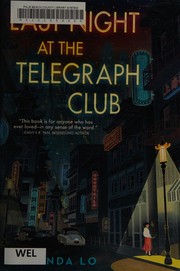
Last Night at the Telegraph Club
The 2021 National Book Award winner follows Lily Hu, a Chinese American teenager in 1954 San Francisco, as she falls for Kath and learns what it costs to be…
2,336-word summary · 10 min read
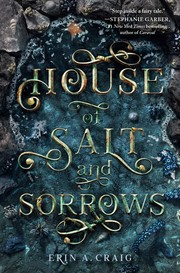
House of Salt and Sorrows
Annaleigh Thaumas investigates her sister's death in a cursed island manor where the balls are illusions and the sea god is always listening.
2,025-word summary · 9 min read
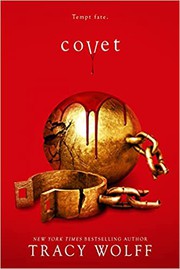
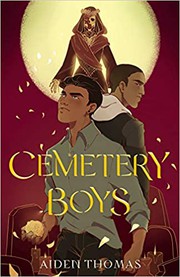
Cemetery Boys
A trans brujo in East Los Angeles summons the ghost of a boy who refuses to move on, and together they uncover a murder hidden beneath Día de los Muertos.
1,997-word summary · 9 min read
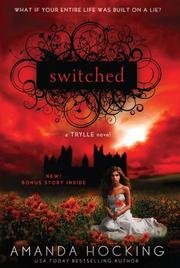
Switched
A Minnesota teenager who can make people obey her discovers she is a changeling troll princess, and the hidden kingdom she came from wants her back.
2,131-word summary · 9 min read
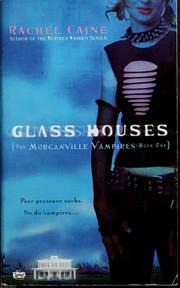
Glass Houses
Claire Danvers moves off campus to escape a bully and lands in a house where the roommates know Morganville's real secret: the town belongs to vampires.
2,345-word summary · 10 min read

The Indigo Spell
Sydney Sage hunts an aging witch, learns forbidden magic, and finally admits she loves Adrian, while the Alchemist tattoo on her cheek may be controlling her.
2,604-word summary · 12 min read
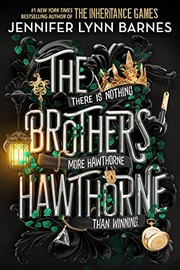
The Brothers Hawthorne
Jameson infiltrates an underground London gambling club for the father he never knew while Grayson protects his half-sisters in Phoenix from a dead man's…
2,019-word summary · 9 min read
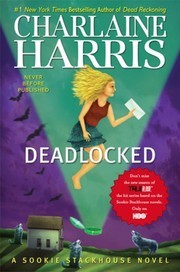
Deadlocked
A dead woman on Eric's lawn starts a murder investigation, a vampire queen wants Eric as her consort, and the fairies in Sookie's life close in.
2,885-word summary · 13 min read
Beautiful Chaos
Ethan Wate is losing himself piece by piece as the broken Order of Things demands a sacrifice, and the answer may be the last person anyone expected.
2,068-word summary · 9 min read
This Savage Song
Monster hunter Kate meets August, a monster who plays violin.
2,574-word summary · 11 min read
Half-Blood
Half-blood Alex trains at the Covenant while gods stir and rules close in.
2,601-word summary · 12 min read
Dreams of Gods & Monsters
Karou and Akiva unite chimera and seraphim against empires invading Earth.
2,179-word summary · 10 min read
The Awakening
Chloe Saunders flees Lyle House with Derek, Simon and friends while her necromancy wakes fully and the Edison Group hunts them.
2,428-word summary · 11 min read