
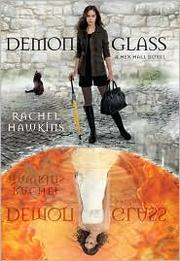
Demonglass
2,771-word summary 12 min read 359 pages in the book
- First published
- 2011
- Publisher
- Hyperion
- Pages
- 359
- ISBN
- 9781423121312
- Series
- Hex Hall (#2)
Reading options
What's inside (8 sections)
The first Hex Hall book ends with Sophie Mercer learning that the monster in her family tree is her. Demonglass begins with her nearly drowning in a pond that can sense it. I read it in two sittings, which is the right speed for a book that ends with a burning house.
That is a good joke for a series about a girl who just wants to be normal, and Rachel Hawkins tells it with a straight face. The 2011 Hyperion hardcover runs 359 pages and is the second of three Hex Hall novels. It assumes you have read the first one. It also assumes you remember who betrayed whom, which is a lot to ask of a reader who spent the last year thinking about something else.
The pond that knew what she was
Hecate Hall is still on Graymalkin Island, still full of witches, shifters, faeries, and one vampire, and still the last place Sophie wants to be. The opening set piece is a class exercise at a magically protected pond. The water is supposed to test the students. It tests Sophie by trying to drown her. Her demon side comes out, she breaks free, and a man is standing on the pier.
That man is James Atherton, her father, the head of the Prodigium Council, and a person she has never met face to face. He has come to make a deal. Sophie wants the Removal, the ritual that would strip her powers and, she hopes, the part of her that could turn into Alice. It could also kill her. Her father offers a summer at the Council's headquarters in England. If she still wants the Removal at the end, he will allow it.
Sophie agrees, with conditions. Jenna comes. Cal comes too, which is the first sign that her father has been arranging things without asking. Cal is the groundskeeper and healer from Hecate, nineteen, quiet, and kind. He is also Sophie's betrothed, a fact she learns in front of an audience. The betrothal is an old Prodigium custom, arranged by families, and neither Sophie nor Cal pretends to be happy about it. They agree to treat it as a formality. The book spends the next three hundred pages making that agreement harder to keep.
Before they leave, Sophie sees Elodie's ghost. Elodie looks at her and nods. Ghosts at Hecate are not supposed to see the living, which makes the moment a warning and a mystery. On the ferry, Sophie has a premonition that the three of them will not come back together. Hawkins is not subtle about the foreshadowing, but the image is effective. A summer in England should feel like a holiday. It feels like a countdown.
Thorne Abbey and the people who smile too much
The Council's temporary headquarters is Thorne Abbey, a country estate with too many rooms and a history that everyone mentions but nobody explains. The Council is down to five members. The Eye, the demon-hunting organization that shot up Sophie's life in the first book, burned the London headquarters two months earlier and killed seven people. The survivors are staying in a house that belonged to a family of dark witches, which is either a practical arrangement or a bad joke.
Sophie meets the remaining Council members in a receiving line. Lara Casnoff is Mrs. Casnoff's sister and the Council's second-in-command, charming in a way that makes Sophie's skin crawl. Kristopher is a shifter. Roderick is a faerie. Elizabeth is a werewolf. None of them are developed enough to be suspects, which is its own kind of clue. The book wants you to watch Lara, and Lara is worth watching.
Then there are Nick and Daisy, two teenage demons who are living at the abbey because someone has tried to kill them and they have nowhere else to go. Sophie has spent months believing she was the only demon her age. Now there are three of them, and the other two have no memory of how they were made. Daisy is sharp and fragile. Nick is charming and angry. Their existence is proof that someone is still performing the ritual that turned Alice into a demon, and that someone has access to the grimoire of Virginia Thorne.
The grimoire is the book's central object. It sits in the library under a glass case, full of dark magic and family history. Virginia Thorne used it to transform Alice during the last war with the Eye. James Atherton treats it as a teaching tool, or a warning. He explains that demons have godlike power and human minds, and that the human side has to stay in control. Alice did not stay in control. Alice killed people. Alice is the reason Sophie wants the Removal.
The training scenes are the best part of the middle. James teaches Sophie to anchor her magic to a human memory or emotion, something small and specific that can hold her in place while the power moves through her. The idea is neat, and it gives Hawkins a way to write magic that is about character rather than rules. Sophie's power is not a video game meter. It works like a temper, and her father is teaching her to breathe through it.
The father-daughter material is the emotional spine of the book. James is formal, distant, and clearly out of his depth with a teenager. He has spent years protecting Sophie from a distance, and now he has to do it in the same house. He is also hiding things. The book lets Sophie notice the gaps without letting her solve them too early. Their conversations in the library have the awkward rhythm of two people who share a bloodline and almost nothing else.
Jenna gets less to do, but what she gets is good. She is still the vampire in pink, still wearing her bloodstone, still making jokes about being the only sensible person in a house full of magical aristocrats. She also has a girlfriend, and she wants to become human, or at least to stop being the kind of monster that needs a stone to stand in the sun. Her fear is quieter than Sophie's, and it is easy to miss in a book this busy. Hawkins does not give it enough room.
London, the Eye, and the coin
The abbey has a portal in an abandoned corn mill. The portal is called the Itineris, and it lets the characters travel to London for a night out at a Prodigium club. The club is a good set piece: loud, crowded, full of creatures who are trying to have a normal Saturday while a war builds outside. Then the Eye raids the place.
The raid is chaos. Sophie uses her power to clear a path, and in the alley she runs into Archer Cross, the boy who betrayed her in the first book and the reason she has spent months trying to hate him. Archer is still working with the Eye, or he is working against it, or he is doing both. He shields her from another hunter, presses a gold coin into her hand, and tells her he will find her. Then he is gone.
Sophie keeps the coin and tells no one. That decision is the engine of the second act. The coin pulses with a vision of Archer waiting at the mill. She chooses not to go, because her father is finally trusting her and she does not want to throw that away. The choice is mature, and it costs her.
The birthday party is where the book turns. Sophie turns seventeen, the abbey throws a party, and a gift explodes. Demonglass, the only substance that can kill a demon, embeds itself in her shoulder. Archer is at the party, disguised as a waiter. He tells her he has information about Nick and Daisy, and they agree to meet after her father leaves on a trip.
The meeting is the best sequence in the novel. Archer takes her through the Itineris to the far side of Graymalkin Island, where they find a crater carved with symbols from the grimoire and trees scorched by dark magic. Six students have disappeared from Hecate over eighteen years, and their parents have been under memory spells. The crater is proof that someone is raising demons at the school, which means the Council's own territory has been compromised.
Three ghouls attack. Sophie discovers she can command the dead by pushing her magic into the earth. The power is new, and Hawkins does not explain it much beyond the moment. The scene works because it is frightening and because Sophie is frightened. She tries something desperate, and it works, and she has no idea what it means.
Then Archer kisses her, and the book remembers it is a romance. He says the kiss was not an assignment. Sophie believes him, or wants to. She goes home and tells her father about the crater, but she leaves Archer out of the story. That lie is small, and that kind of small lie gets people killed.
The Casnoffs
The villain reveal is not a surprise, and the book knows it. Lara Casnoff has been too calm, too helpful, and too interested in Sophie's power since the first dinner. When Daisy loses control and attacks Sophie, Lara stops her with a single word. That word is not a spell. The word is a command, and it proves that Lara made Daisy what she is.
Sophie's father cannot arrest her. The Council operates on blood oaths, and without proof he cannot move against a member. The book uses that rule to keep the plot moving, but it also makes the adults look slow. Sophie has been telling them for chapters that something is wrong. They listen, nod, and wait for a warrant that cannot exist.
Elodie's ghost provides the push. She writes a warning on Sophie's mirror: Nick is at the corn mill, and Archer is in danger. Sophie teleports there and finds Archer dying from Nick's attack. She cannot heal him, so she brings Cal. Cal saves Archer's life, then admits he is in love with Sophie, which is the least surprising confession in the book and also the most awkwardly timed.
The Council arrives, having traced Cal's healing magic. The hearing is a mess of politics. Archer is sentenced to execution. Sophie is sentenced to the Removal, ostensibly for working with the Eye, actually for being too powerful to control. Her father tries to save her by claiming he ordered the investigation, then gives up his seat to Lara. The sacrifice buys nothing.
Then Lara explains the family history, and the pieces finally fit. The Casnoffs have been engineering demons for generations. Lara and Anastasia's father, Alexei, orchestrated Alice's transformation. He manipulated Sophie's grandmother Lucy into killing her husband, then disposed of Lucy. The goal was to weaponize the Atherton bloodline, and Sophie is the latest result. The demon army is not a rumor. The army is a project, and Sophie's family is both its raw material and its alibi.
That reveal is the strongest thing in Demonglass. It turns Sophie's personal horror into a political one. She has spent the whole book asking whether she is a monster. The answer is that other people have been making monsters, and her family has been their laboratory. It also explains why her father is so protective and so secretive. He has been trying to keep her out of a war that started before she was born.
The fire
The last fifty pages are a collapse. Sophie's father undergoes the Removal and loses his powers permanently. Sophie is taken to undergo her own. Then Nick transforms fully and kills nearly twenty people. The Eye attacks Thorne Abbey. Kristopher is killed. The house catches fire.
Sophie finds Jenna's bloodstone shattered on the floor. The book does not stop to confirm what that means, which is crueler than a death scene. Elodie's ghost leads Sophie through a secret passage to the garden, where the abbey is burning and Cal is waiting. He tells her to use the Itineris to find Aislinn Brannick, the leader of the Brannick hunters, because Sophie's mother is with them. Then he kisses her and runs back into the house to save her father and Archer.
Sophie walks to the mill, picks up Archer's abandoned sword, and feels a certainty that she will see him again. She puts on the necklace he gave her and steps into the portal. That is the ending. No rescue, no explanation, no quiet chapter to let the dust settle. Just a girl with a sword and a family in flames.
As a cliffhanger, it works. As a novel, it leaves a lot unresolved. The book is the middle volume of a trilogy, and it behaves like one. It sets up a war, kills a few people, reveals a conspiracy, and then stops. Readers who want a complete story should know that going in. Readers who are already invested will find plenty to carry them to the next book.
What the middle book does well, and what it doesn't
The voice is still the best reason to read Hawkins. Sophie is funny without being cute, and her sarcasm is a defense mechanism that the book understands. She makes jokes about her own death because she is scared, and the contrast between her narration and the actual danger is the tone the series does best. The supporting cast is sharper too. Lara is a better villain than the Eye ever was, because she is polite and because her plan has a family history behind it.
The father-daughter relationship is the other strength. James Atherton could have been a distant authority figure who exists to explain the plot. Instead he is a man who has made bad choices for good reasons and is running out of time to fix them. His Removal is the emotional climax of the book, more than any of the fights. He gives up the one thing that made him special to keep his daughter from becoming a weapon.
The weaknesses are built into the structure. The mystery is not mysterious. Lara is obviously the villain from her first scene, and the book does not offer another serious suspect. Cal's feelings for Sophie appear when the plot needs a third corner, not because the previous books earned them. Sophie's decision to hide Archer is treated as a tragic mistake, but the book never gives her a convincing reason to make it beyond the need for a second act.
The demon rules are also loose. Sophie can teleport, throw raw force, and command the dead, and the book adds abilities as the set pieces require them. That is not fatal in a YA fantasy, but it does mean several set pieces are resolved by a new ability rather than by a choice the character has been building toward. The same goes for the Council. They are supposed to be the governing body of the Prodigium world, and they spend most of the book being outmaneuvered in their own house.
Jenna's storyline is the biggest missed opportunity. She starts the book with a clear want, to stop being a monster, and the plot mostly uses her as a hostage and a symbol. Her shattered bloodstone is a shocking image, but it is also a cheap one if the next book does not give her the space to survive it. The same could be said for Nick and Daisy, who are introduced as people and then become plot devices.
None of this makes Demonglass a bad sequel. It makes it a fast, funny, uneven one. It improves on Hex Hall in scope and in emotional seriousness, and it loses some of the first book's clean pleasure in a single location and a single mystery. The cliffhanger is a commercial choice, but also an honest one. Sophie's life is not tidy at the end of this book, and Hawkins does not pretend otherwise.
If you have not read Hex Hall, start there. If you have, Demonglass is the book where the series grows up, or at least starts to. It gives Sophie a family, a history, and a reason to be afraid of herself that has nothing to do with teenage angst. The last image, a girl with a sword stepping into a portal while her home burns, is the one that stays. Not a happy ending, then, but a promise that the next one will cost something.
FAQ
Do I need to read Hex Hall before Demonglass?
Yes. Demonglass opens shortly after Hex Hall and assumes you know how Sophie learned she was a demon, how Alice died, and why Archer's betrayal matters.
What is the Removal in Demonglass?
The Removal is a ritual that strips a Prodigium of their powers. Sophie wants it because she fears becoming like Alice, but the process could kill her.
Does Demonglass end on a cliffhanger?
Yes. It closes with Thorne Abbey in flames and Sophie entering the Itineris to find Aislinn Brannick, while several characters' fates remain unresolved until Spell Bound.
Similar books
More from Hex Hall first, then related titles.

Hex Hall
A witch who ruins prom with a love spell is sent to Hex Hall, where a vampire roommate and old family secrets wait.
2,991-word summary · 13 min read

The Indigo Spell
Sydney Sage hunts an aging witch, learns forbidden magic, and finally admits she loves Adrian, while the Alchemist tattoo on her cheek may be controlling her.
2,604-word summary · 12 min read
Kingdom of the Feared
Kerri Maniscalco's finale retold: Emilia's lost memories, her marriage to Wrath, and the fight for balance in the Underworld courts.
2,938-word summary · 13 min read
Kingdom of the Cursed
Emilia follows Wrath into Hell to break his curse and learn what Vittoria really chose.
2,564-word summary · 11 min read
Kingdom of the Wicked
Twin witch Emilia summons demon prince Wrath to hunt her sister's killer in 19th century Sicily.
2,633-word summary · 12 min read

Born at Midnight
Kylie Galen is sent to a camp for troubled teens and discovers it is a haven for vampires, werewolves, and witches, and that she may be something stranger…
2,310-word summary · 10 min read
Cemetery Boys
A trans brujo in East Los Angeles summons the ghost of a boy who refuses to move on, and together they uncover a murder hidden beneath Día de los Muertos.
1,997-word summary · 9 min read
Switched
A Minnesota teenager who can make people obey her discovers she is a changeling troll princess, and the hidden kingdom she came from wants her back.
2,131-word summary · 9 min read
This Savage Song
Monster hunter Kate meets August, a monster who plays violin.
2,574-word summary · 11 min read
Half-Blood
Half-blood Alex trains at the Covenant while gods stir and rules close in.
2,601-word summary · 12 min read
Dreams of Gods & Monsters
Karou and Akiva unite chimera and seraphim against empires invading Earth.
2,179-word summary · 10 min read

The Golden Lily
Sydney Sage guards Jill at Amberwood Prep in Palm Springs, studies forbidden magic, favors Adrian over Brayden, and faces Alchemist custody in this second…
2,988-word summary · 13 min read
Unearthly
Part-angel Clara moves to Wyoming to fulfill a vision of a boy and a forest fire.
2,241-word summary · 10 min read
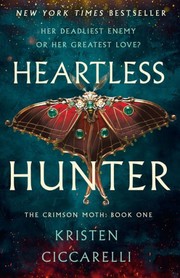
Heartless Hunter
A witch hiding as a socialite courts a witch hunter for secrets, while he courts her back on suspicion, in this romantic fantasy opener.
2,366-word summary · 11 min read
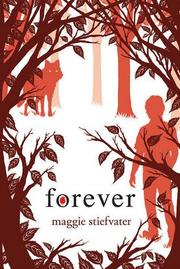
Forever
Grace turns wolf, Sam scrambles for a cure, and Mercy Falls votes to hunt the pack in trilogy end.
2,217-word summary · 10 min read
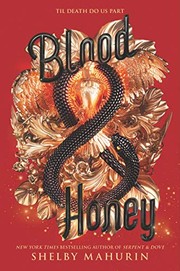
Blood & Honey
Married witch Lou and hunter Reid flee church and coven while dark magic tempts Lou to save them.
2,280-word summary · 10 min read
Finale
Nora Grey must lead the Nephilim while her bond with Patch is tested by old vows and looming war over Coldwater. Hank's shadow still drives hate from beyond…
2,898-word summary · 13 min read
Serpent & Dove
A runaway witch is forced to marry a witch hunter in Cesarine, hiding her magic as old enemies close in.
2,962-word summary · 13 min read
Midnight Sun
Twilight retold by Edward Cullen: a silent mind, singer blood in Forks, and restraint tested to the edge.
3,824-word summary · 17 min read

Evermore
Ever Bloom survives the crash that kills her family and meets Damen, whose touch quiets the psychic noise in her head.
3,604-word summary · 16 min read
City of Heavenly Fire
Clary and Jace face Sebastian's dark army while Emma and Julian's story begins in Los Angeles.
2,039-word summary · 9 min read
Shiver
Grace Brisbane loves yellow eyed wolf Sam, human in summer, as winter cold threatens to take him back for good in small town Mercy Falls.
2,408-word summary · 11 min read
Clockwork Princess
Tessa chooses between Jem and Will as Mortmain's clockwork army closes on the London Institute.
3,289-word summary · 15 min read
City of Lost Souls
Clary leaves the Institute to stay close to a bound Jace while Alec, Izzy, Simon and Magnus search for a cure in New York.
2,782-word summary · 12 min read
Clockwork Angel
Tessa Gray finds Shadowhunters in Victorian London while the Magister hunts her.
3,288-word summary · 15 min read
City of Glass
Clary follows Jace to Alicante in Idris where Valentine plans to use the Soul-Sword on Shadowhunters and the Clave splits under pressure.
3,645-word summary · 16 min read
City of Ashes
Clary risks the Clave trial while Valentine raises demons and Jace pulls away in New York.
4,684-word summary · 21 min read