
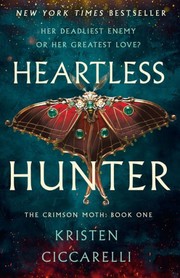
Heartless Hunter
2,366-word summary 11 min read 416 pages in the book
- First published
- 2024
- Publisher
- Wednesday Books
- Pages
- 416
- ISBN
- 9781250866905
- Series
- The Crimson Moth (#1)
Reading options
What's inside (7 sections)
I picked up Heartless Hunter because a friend would not stop talking about the setup, and the setup really is that good. A witch hiding in plain sight decides to seduce a witch hunter for information. He decides to seduce her right back because he suspects her. Both of them think they are the one running the trick. I love a romance where both people are lying and both people know the other person might be lying, and this book lives in that tension for hundreds of pages. It is the first book in The Crimson Moth duology by Kristen Ciccarelli, published in 2024 by Wednesday Books, 416 pages in the hardcover first edition. It was an instant bestseller, and reading it, I could see why. The pace is quick, the chapters flip between the two leads, and every conversation has a second meaning.
The world needs a quick sketch before the plot. Years before the book starts, there was a revolution. Witches used to rule, with a queen and a whole cruel hierarchy, and then the common people rose up with the help of witch hunters and tore that order down. Now the republic hunts the remaining witches. Witches still have magic, worked through blood and old words, but using it leaves marks and costs them, and getting caught means hanging or worse. Rune Winters, our heroine, lost family in the bloodshed of those nights. She is a young noblewoman with ships and money and a reputation for being silly and vain about dresses and parties. That reputation is armor. At night she is the Crimson Moth, a masked figure who smuggles hunted witches out of the city and off to safety. By day she pretends she cannot think about anything but balls and beaux. Gideon Sharpe, our hero, is one of the most feared witch hunters in the republic. He is serious, disciplined, and cold on the surface, a man who believes witches are poison because of what the old regime did. He hunts with his brother Alex, and the two of them have a whole wounded family history behind their badges.
Rune by day, the Crimson Moth by night
The best parts of the early chapters are the contrast between Rune's two lives. At a ball she is all smiles and gossip, letting people think she is empty headed, steering conversation away from anything real. Then she goes home, puts on the mask, and risks her life guiding a terrified witch to one of her ships. Ciccarelli makes both halves convincing. You believe men underestimate Rune at parties, because the book shows you exactly how she trains them to. And you believe she is brave, because the rescue scenes are scary in a concrete way. Dogs, patrols, informers, a wrong turn meaning death for everyone involved.
Rune does not work alone. She has a best friend, Verity, who knows her secret and helps cover for her, and a small network of helpers who move witches along the escape routes. I liked Verity a lot. She is sharp and loyal, and her presence means Rune has someone to be honest with, which keeps the book from getting too lonely. Rune also carries grief that she does not talk about at parties. The revolution took people she loved, and her night work is part guilt, part duty, part refusal to watch it happen again. The book does not excuse the old witch regime. Rune knows witches did terrible things when they held power. She just does not think the answer is hanging every girl who can light a candle with a word.
One thing to know going in is that this is a young adult book that leans older. The leads talk like adults, the violence is real, and the romance gets heated without going explicit. The age range on the publisher page is 13 to 18, and that feels about right, though plenty of adult romantasy readers have picked it up. If you need your magic systems explained down to the last rule, this may frustrate you. The magic here runs on blood and need and old songs more than on charts. Casting costs the witch, strong workings leave scars and weakness, and Rune has to weigh every spell against her body and her cover. I found that vagueness worked for the story, because the point is fear and cost, not puzzles. But readers who love hard rules should adjust expectations.
Gideon Sharpe and the fake courtship
The plot engine starts when one of Rune's rescues goes wrong. Someone sees too much, or a thread leads back toward her ships, and Rune realizes the hunters are getting closer. Her answer is bold. She will get close to Gideon Sharpe himself, the hunter least likely to be fooled, and learn what he knows while throwing him off her trail. So she sets out to catch his eye, playing the silly socialite to perfection, showing up where he will be, laughing at the right moments. It is a fun sequence, because Rune is acting and we know she is acting, and watching a smart person play dumb on purpose is always enjoyable.
Then comes the turn that makes the book. Gideon is not fooled, or at least not fully. He has noticed that the Crimson Moth's escapes keep touching Rune's shipping business, and he decides the best way to watch her is to enter her circle and pretend to court her back. He tells himself it is only duty. He dislikes everything she seems to be, the vanity, the parties, the wealth built on trade while ordinary people struggle. But courtesy visits turn into real talks, and real talks turn into the slow shock of finding someone funny and kind under the performance. The chapters from his point of view are where the book won me over. He is rigid and judgmental at first, and watching that rigidity crack, one conversation at a time, feels earned rather than rushed.
The double courtship structure lets Ciccarelli write scenes that work three ways at once. On the surface it is a handsome hunter calling on a rich girl, with chaperones and drawing rooms and gossip. Under that it is two spies trading for information, each hoping the other slips. And under that it is two lonely young people who keep accidentally telling the truth. A walk in a garden is also an interrogation. A dance is also a search for tells. I kept thinking I knew which one was winning, and I kept being wrong. The dialogue sparkles without sounding modern in a bad way. It is a secondary world with carriages and blood magic, but the teasing sounds like real people, not costumes talking.
The middle game of secrets
The middle of the book is a long exchange of near misses, and I mean that as praise. Rune sneaks out to move a witch the same night Gideon is watching the docks. Gideon asks a casual question at dinner that tells Rune exactly how much he knows. Rune feeds him a true sounding lie built around a real fact, the best kind. He tests her with a story about a captured witch and watches her face. She tests him back by asking what he would do if the person he hunted turned out to be someone he cared about. Nobody gives anything away cleanly, and both of them feel sick about lying to the one person who has started to feel like a friend.
Family history keeps raising the stakes. Gideon and Alex lost their mother to witch cruelty back when the witches ruled, or so the republic story goes, and Gideon has built his whole identity on that loss. To admit a witch could be good would mean rebuilding himself from the ground up. Rune knows the old queen's rule was bloody, she saw what power did to her own kind, but she also knows the republic's justice has curdled into its own cruelty, with purges and show trials and neighbors informing on neighbors. The book is at its strongest when it lets both leads be partly right. Gideon is right that unchecked witch power hurt ordinary people. Rune is right that hunting girls for what they are instead of what they have done is its own evil. Neither of them can say that out loud to the other, and the silence hurts.
There are strong side plots to break up the two hander. Verity has her own romance troubles and her own sharp read on Gideon that Rune refuses to hear. Alex, Gideon's younger brother, is warmer and less certain than Gideon, and his kindness toward Rune complicates everything, because being kind to a suspect is dangerous for all of them. The hunter leadership presses Gideon for results, which squeezes him between duty and doubt. And the witches Rune is hiding are not all innocent waifs. Some are angry and want revenge on the republic, which forces Rune to face the question of what her rescue network is really building. I liked that the book did not make every rescued witch a saint. It made Rune's choices harder and more interesting.
If I have a criticism of the middle, it is that the pattern repeats a few times too many. Rescue, close call, ballroom scene, close call, midnight meeting. Around page 250 I could feel the structure, and one subplot about a particular informer took longer to pay off than I wanted. But the character work is strong enough that I did not mind much. Every repeated beat changes the feelings underneath, so even when the moves look the same, the cost goes up.
Blood magic and the cost of hiding
Let me talk about the magic, because it shapes the whole ending. Witch power in this book comes from blood, and big workings take a lot of it. Rune bears the marks of her own spells, and she has to hide weakness and scars the same way she hides everything else. There is a price logic to it that I found grim and effective. She cannot just blast her way out of trouble. Every spell is a choice about how much of herself to spend, and hunters know how to read the signs. This is why her double life is so hard to keep. Courtship means skin on show, dancing, late nights, and a tired body that will not answer questions well.
The theme underneath is performance. Rune performs silliness to survive. Gideon performs certainty to do his job. Both of them are good at it and both of them are exhausted by it. The book keeps asking what happens when the mask becomes the face, when you play the fool so long that people stop believing you could be anything else, or play the hard man so long that mercy starts to feel like betrayal. There is a scene where Rune realizes her own friends at court truly think she is empty, and the pain of it surprised me. She chose that armor and it works, but it still wounds. On the other side, Gideon has a moment where he understands that his reputation for heartlessness, the thing that keeps him safe among hunters, is exactly what keeps him from the life he might want. The title cuts both ways, and I liked that.
I should note the violence and tone for anyone handing this to a younger teen. People are hanged, throats are cut in rescues gone bad, and the revolution memories include mobs and burning. It is not gory for the sake of it, but it does not look away either. The romance stays at the level of kisses and longing and heated talk rather than explicit scenes. The balance felt right for the story. The danger makes the tenderness matter more.
The ending and who this is for
The last hundred pages move fast, and I read them in one sitting. Rune's cover starts to tear in ways she cannot stitch back up. A rescue goes badly wrong. Someone she trusted makes a choice that exposes her. Gideon gets proof, or close enough to proof that duty says act, and the man who has been falling for Rune has to decide what kind of hunter, and what kind of man, he is. I will not spoil the final reveals, because the pleasure of this book is watching each lie collapse in order, but I will say the cliffhanger is real. This is firmly book one of two, and it ends with lives and loves in danger and a big reversal that reframes the courtship. The second book is Rebel Witch, and you will want it nearby.
How does it hold up as a romance. Very well, for my taste. The enemies to lovers arc is the high stakes kind, where love does not just embarrass you but could get you killed, and both leads have real reasons for their positions instead of a misunderstanding that a ten minute talk would fix. Do they forgive too fast at points. Maybe once or twice I wanted one more hard conversation before a tender scene. But the final choices feel true to who they are, not just to what the plot needs, and that is rarer than it should be in this genre.
Who should read it. If you like romantic fantasy with spies and secrets, Sarah J. Maas style tension without the explicit content, or the Scorpio Races style mix of danger and yearning, come here first. If you want your fantasy without any romance, this is not your book. The love story is the engine, not the decoration. My fair knocks are the repeating middle pattern, a magic system that stays soft, and an ending that demands the sequel. Against that, the double courtship is a delight, Rune and Gideon are both easy to root for even when they are lying, and the last act pays off the slow build. I finished it, sat quietly for a while, and then went looking for everything else Ciccarelli has written, which tells you what you need to know.
FAQ
When was Heartless Hunter published and is it part of a series?
Heartless Hunter was published in 2024 by Wednesday Books and runs 416 pages in the hardcover first edition. It is book 1 of The Crimson Moth duology, followed by Rebel Witch.
Who are the two main characters in Heartless Hunter?
Rune Winters, a young noblewoman who secretly rescues hunted witches as the masked Crimson Moth, and Gideon Sharpe, a feared witch hunter who suspects her.
Is Heartless Hunter young adult or adult?
It is shelved as young adult for ages 13 to 18, with violence and hangings but romance kept to kisses and longing. Adult romantasy readers pick it up widely too.
Similar books
More from The Crimson Moth first, then related titles.
Serpent & Dove
A runaway witch is forced to marry a witch hunter in Cesarine, hiding her magic as old enemies close in.
2,962-word summary · 13 min read
Demonglass
Sophie Mercer spends the summer at the Council's English estate, where two new demons, a suspicious host, and Archer's return complicate her plan to remove her…
2,771-word summary · 12 min read

The Indigo Spell
Sydney Sage hunts an aging witch, learns forbidden magic, and finally admits she loves Adrian, while the Alchemist tattoo on her cheek may be controlling her.
2,604-word summary · 12 min read
These Hollow Vows
Brie trades with the Unseelie to save her sister and steals for a prince.
2,384-word summary · 11 min read

The Winner's Curse
An aristocratic girl buys a slave who is secretly a prince plotting rebellion.
2,124-word summary · 9 min read
Blood & Honey
Married witch Lou and hunter Reid flee church and coven while dark magic tempts Lou to save them.
2,280-word summary · 10 min read
Hex Hall
A witch who ruins prom with a love spell is sent to Hex Hall, where a vampire roommate and old family secrets wait.
2,991-word summary · 13 min read
Dance of Thieves
Queen's thief Kazi infiltrates Ballenger lands while young leader Jase plays her right back.
2,005-word summary · 9 min read
Kingdom of the Cursed
Emilia follows Wrath into Hell to break his curse and learn what Vittoria really chose.
2,564-word summary · 11 min read
Kingdom of the Wicked
Twin witch Emilia summons demon prince Wrath to hunt her sister's killer in 19th century Sicily.
2,633-word summary · 12 min read

Vow of Thieves
Kazi and Jase return to Tor's Watch to find it occupied, and their marriage is tested by captivity, betrayal, and a war for the town of Hell's Mouth.
2,059-word summary · 9 min read
The Lost Sisters
Taryn Duarte writes a letter to her twin, Jude, explaining how she fell for Locke and why she stayed silent while he used them both.
1,914-word summary · 9 min read
Blood Bonds
Oleander is chained in a Resistance camp, and her five Bonds have to find her before Silas Davies finishes what he started in this third Bonds that Tie book.
2,018-word summary · 9 min read

Archenemies
Nova steals for the Anarchists while Adrian hides his Sentinel identity, and a serum that erases prodigy powers puts them both at risk.
2,485-word summary · 11 min read

The Siren
Saved from a shipwreck in 1930, Kahlen becomes a siren who sings men to their deaths for the Ocean, until a boy in a college library makes her want a life she…
2,369-word summary · 11 min read
Cruel Beauty
A girl raised to kill the demon prince who rules her cursed land instead falls in love with him, in a retelling that mixes Beauty and the Beast with Bluebeard…
2,669-word summary · 12 min read
Born at Midnight
Kylie Galen is sent to a camp for troubled teens and discovers it is a haven for vampires, werewolves, and witches, and that she may be something stranger…
2,310-word summary · 10 min read

The Rose & the Dagger
Shahrzad is pulled from her Caliph husband and left in a desert camp of rebels, needing to break his curse and end a war before it ends her.
2,520-word summary · 11 min read

We Hunt the Flame
In a fractured Arabia-inspired world, a disguised huntress and a prince-assassin race to find a magic-restoring book and confront an ancient evil.
2,195-word summary · 10 min read
Stars Above: A Lunar Chronicles Collection
Nine Lunar Chronicles stories fill in the histories of Cinder, Wolf, Thorne, Cress, Winter, and Jacin, and end with a wedding after the war.
2,230-word summary · 10 min read

Lore
Lore Perseous, the last of a hunted bloodline, is pulled back into the Agon when a wounded Athena offers her revenge against the god who killed her family.
2,188-word summary · 10 min read
House of Salt and Sorrows
Annaleigh Thaumas investigates her sister's death in a cursed island manor where the balls are illusions and the sea god is always listening.
2,025-word summary · 9 min read
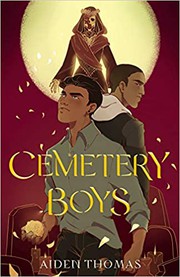
Cemetery Boys
A trans brujo in East Los Angeles summons the ghost of a boy who refuses to move on, and together they uncover a murder hidden beneath Día de los Muertos.
1,997-word summary · 9 min read

Blue Moon
Ever Bloom tries to save her immortal boyfriend, Damen, from a mysterious illness while a new student named Roman quietly takes control of her school and her…
1,998-word summary · 9 min read
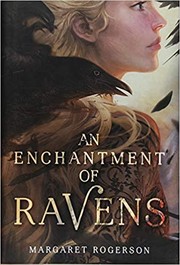
An Enchantment of Ravens
Isobel, a mortal artist in the fairy town of Whimsy, paints a portrait of the autumn prince and falls in love with him, breaking the laws of her craft.
2,087-word summary · 9 min read
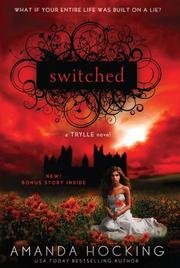
Switched
A Minnesota teenager who can make people obey her discovers she is a changeling troll princess, and the hidden kingdom she came from wants her back.
2,131-word summary · 9 min read
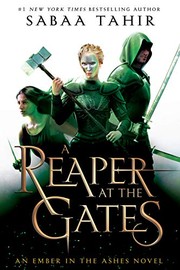
A Reaper at the Gates
The Martial capital falls to an army of ghosts, Elias becomes the Soul Catcher, and Laia and Helene pay brutal prices as the Nightbringer moves to free the…
1,991-word summary · 9 min read
Savage Bonds
Oli's deadly gift is out in the open, her Bond runs the show, and the Resistance is closer than ever in the second Bonds that Tie novel.
2,431-word summary · 11 min read
Fable
Abandoned on a lawless island at fourteen, Fable spends four years diving for gems to buy passage off it, straight into the cutthroat trade of the Narrows.
2,320-word summary · 10 min read