
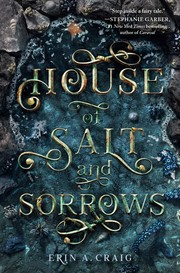
House of Salt and Sorrows
2,025-word summary 9 min read 416 pages in the book
- First published
- 2019
- Publisher
- Delacorte Press
- Pages
- 416
- ISBN
- 9781984831927
- Series
- Sisters of the Salt (#1)
Reading options
What's inside (11 sections)
I picked up House of Salt and Sorrows because I am a sucker for a Twelve Dancing Princesses retelling, and because the cover promised something darker than the fairy tale usually gets. The novel delivers on that promise. Erin A. Craig takes the familiar image of sisters sneaking out to dance and turns it into a story about grief, gaslighting, and a family that has been told so many times that it is cursed that it has started to believe it.
The book was published in 2019 by Delacorte Press. The hardcover runs 416 pages, and it is the first in the Sisters of the Salt series. It is set on the Salann Islands, a fictional archipelago where the sea god Pontus is part of daily life and where the Thaumas family has more money than luck. Duke Ortun has twelve daughters. By the time the novel begins, four of them are dead, and the remaining eight are trying to survive their father's grief and their stepmother's plans.
The family at Highmoor
The novel opens with the funeral of Eulalie, the eldest sister. She fell from the cliffs at night, and the family accepts the death as another accident in a long line of accidents. Annaleigh, who is eighteen, does not accept it. She remembers the other deaths too clearly. Ava died of plague. Octavia fell from a library ladder. Elizabeth drowned in a bathtub. Their mother, Cecilia, died giving birth to the youngest sister, Verity, who is six.
The villagers whisper that the family is cursed. The Thaumas sisters are rich, beautiful, and unlucky, which is the kind of combination that makes people tell stories. Annaleigh does not believe in the curse at first. She believes in evidence. She asks the fishermen who found Eulalie's body what they saw. She looks for a lover, a quarrel, a reason. What she finds is a family that has learned to explain away its own pain.
The arrival of Morella, the stepmother, changes the temperature of the house. Morella is young, pregnant, and eager to end the mourning period. She convinces Ortun to throw a ball for the triplets' sixteenth birthday. The ball is supposed to announce that the family is ready to rejoin the world. Instead, it announces that the family is not ready at all. None of the local young men want to dance with the cursed Thaumas girls.
Annaleigh's suspicion of Morella is one of the novel's best engines. Morella is not a cartoon villain. She is charming, practical, and genuinely interested in making the household run. That makes her harder to read. Annaleigh is never sure whether her unease is intuition or resentment, and the book keeps that ambiguity alive for a long time.
The door and the dancing
The central fantasy element arrives through Fisher, the son of the family's servant Hanna and an apprentice lighthouse keeper. Fisher is an old friend of Annaleigh's, and he is in love with her. He tells the sisters a local legend about a door that can lead to other places, a door the gods use when they want to move between worlds. The sisters find the door during a scavenger hunt, and it takes them to a glittering ball in a province called Pelage.
The sisters begin dancing every night. They come home exhausted, with worn-out shoes and no memory of how they got there. Their father notices the shoes and demands an explanation. The sisters cannot give one. The dancing is an escape from the mourning house, from the whispers, from the future that the curse has made seem impossible.
Craig writes the ball scenes with a lot of sensory detail. The music is too sweet, the lights are too bright, the partners are too attentive. The reader knows something is wrong before Annaleigh does. The pleasure is in watching her catch up.
The fairy tale structure gives the novel a shape, but Craig is not interested in a straight retelling. In the original story, the princesses are dancing with enchanted princes, and the mystery is solved by a soldier with a cloak of invisibility. In this version, the dancing is a symptom of something larger. The sisters are not sneaking out to meet boys. They are being fed an illusion by a god who wants something from their stepmother.
Murder and the clockmaker
Annaleigh's investigation into Eulalie's death leads her to Edgar, the local clockmaker. Edgar admits that he was Eulalie's lover. They were planning to run away because Eulalie had discovered a secret. Edgar saw someone push her from the cliffs. Shortly after he tells Annaleigh this, Edgar is found dead in the town square. The official story is that he jumped from his shop window.
The murder plot is the novel's mystery spine, and it works well enough to keep the pages turning. The suspects are limited, the clues are fair, and the reveals are staged with a good sense of timing. The solution, when it comes, is less surprising than the atmosphere that surrounds it. I guessed part of it early, but I did not mind. The book is more interested in the experience of suspicion than in the puzzle itself.
What makes the mystery effective is that it is tied to the family's history. The question is not just who killed Eulalie. It is why the Thaumas sisters keep dying, and why no one has stopped it. The answer involves a bargain, a god, and a woman who wanted a life she was not supposed to have. The supernatural explanation is also a domestic one. The monster is in the house.
Verity and the ghosts
Verity, the youngest sister, is the novel's most unsettling character. She draws pictures of the dead sisters. She says they visit her at night and steal her blankets. The adults dismiss this as a child's imagination. Annaleigh does not. She starts to see the ghosts too, or thinks she does.
The ghost story is where Craig's prose is strongest. The dead sisters are not scary in a jump-scare way. They are sad and persistent. They appear at the edges of rooms, in mirrors, in the snow. They are a reminder that grief does not stay in the past. It comes back when you are least prepared.
Verity's drawings also function as clues. She draws Eulalie's injuries even though she never saw the body. She draws the sisters who died before she was old enough to remember them. The novel does not fully explain how Verity knows what she knows, and that is fine. Some mysteries are better left as mysteries.
The ghost plot also sets up the book's central twist. Annaleigh is not losing her mind. She is being manipulated. The difference between those two things is the difference between a haunting and a gaslighting campaign, and Craig makes the distinction matter.
Cassius
Cassius is the love interest, and he is also the novel's most useful piece of worldbuilding. He appears as a handsome stranger with an interest in Annaleigh. He is charming, attentive, and a little too good to be true. He is also the son of Versia, the Night Queen, which makes him a demigod. His aunt is Kosamaras, the Harbinger of Madness and Nightmares.
The romance is fast. Annaleigh and Cassius meet, share a few charged conversations, and are soon confessing their feelings. Readers who want a slow burn will be disappointed. I was not bothered by the speed, because the romance is not really the point. Cassius is the character who helps Annaleigh see that the world is larger and stranger than her father's house. He is also the character who proves that she is not crazy.
The best Cassius scenes are the ones where he talks about the dead sisters. He can communicate with them, and they have told him about Annaleigh. That detail could have been creepy in a bad way. Instead, it is tender. The dead are still part of the family. They still have opinions.
The truth about Morella
The final act reveals that Morella is the source of the bargain. Years earlier, she was one of Cecilia's midwives. She poisoned Cecilia so that she could marry Ortun. She then made a deal with Viscardi, a trickster god of bargains, to become Ortun's wife and bear him a son. Viscardi gave her the husband and the castle, but the price was the deaths of the daughters. Morella killed Eulalie because Eulalie recognized her.
The reveal is crowded. There is a lot of exposition in the last hundred pages, and some of it arrives in dialogue that feels more like a summary than a scene. The pregnancy, the stillbirth, the dragon baby, the fire, and the return of Cassius all compete for space. The book is trying to do too much at once, and the ending is weaker than the middle.
Still, the emotional logic works. Morella is not just a villain. She is a woman who made a terrible choice and then spent years living with it. When she gives her life to end the bargain, it is not a redemption. It is a recognition that she cannot undo what she has done. The sisters survive, but they do not forgive her. That feels right.
What the book gets right
House of Salt and Sorrows is very good at atmosphere. The sea is always present. The house is cold. The food is strange. The sisters are always in each other's way. Craig writes the texture of a large family well, the way privacy is impossible and affection is mixed with irritation. The scenes where the sisters are getting ready for a ball, or arguing over a dress, or trying to protect Verity, are more convincing than the action sequences.
The book is also good at the specific pain of being a girl in a family that has decided its daughters are unlucky. The Thaumas sisters are not allowed to be ordinary. Their beauty is a threat. Their grief is a spectacle. Their father loves them, but he does not know how to protect them. The novel understands that a curse can be a story people tell about you until you start to live inside it.
Where it creaks
The pacing is uneven. The first half is slow, the middle is repetitive, and the last hundred pages are a rush. The romance between Annaleigh and Cassius is underdeveloped. The deaths of the sisters are used as plot points, and some of them feel gratuitous. The book is also not as scary as it wants to be. The ghosts are sad, not frightening, and the horror elements are more atmospheric than visceral.
The prose occasionally reaches for a line that lands with a thud. Craig is good at description, less good at dialogue that is supposed to be clever. Some of the banter between Annaleigh and her sisters feels modern in a way that breaks the spell. The novel is set in a secondary world, but the voices are contemporary.
None of this stopped me from reading it in two days. The book has a strong hook, a compelling narrator, and a mystery that is satisfying enough to carry the weaker sections. It is a good example of a fairy tale retelling that uses the source material without being trapped by it.
Why it stays with me
What stays with me is not the romance or the mystery. It is the image of the sisters dancing in their rooms, wearing out their shoes, convinced they are somewhere else. That image is a perfect metaphor for grief. You are going through the motions, and you think you are escaping, but you are still in the same house. The only way out is to wake up and look at what is actually there.
House of Salt and Sorrows is not a perfect novel. It is a memorable one. It takes a familiar story and makes it feel like a family secret. It understands that the scariest thing in a haunted house is often the person who is still alive.
FAQ
Is House of Salt and Sorrows a retelling?
Yes, it is a dark retelling of The Twelve Dancing Princesses, set on the fictional Salann Islands.
Is it part of a series?
It is the first book in the Sisters of the Salt series, though it works as a standalone.
Is the book scary?
It is more gothic and eerie than violent, with ghosts, illusions, and a mounting sense of dread.
Similar books
More from Sisters of the Salt first, then related titles.
The Hazel Wood
Alice Proserpine has spent her life running from bad luck. When her mother vanishes, she follows a trail of fairy-tale clues to her grandmother's estate and…
2,064-word summary · 9 min read
Anna Dressed in Blood
Ghost hunter Cas meets Anna, the ghost who kills back.
2,622-word summary · 12 min read
Belladonna
Poison-immune orphan Signa Farrow hunts a gothic killer at Thorn Grove with Death as ally and suitor, while cousin Blythe fades and her ghost mother asks for…
2,868-word summary · 13 min read
Lord of Shadows
Emma and Julian face faerie war and forbidden love as the Cohort rises.
2,496-word summary · 11 min read
Guilty Pleasures
Animator Anita hunts a vampire killer while Jean-Claude pulls her close.
2,136-word summary · 9 min read
Blue Bloods
At an elite Manhattan school, Schuyler Van Alen learns she is a forbidden half-vampire as someone starts killing her kind.
2,725-word summary · 12 min read
Stalking Jack the Ripper
Lord's daughter Audrey Rose studies corpses in secret while the Ripper works Whitechapel beside Thomas.
2,030-word summary · 9 min read
Lady Midnight
Emma and Julian hunt killer echoing old murders while parabatai love grows.
1,982-word summary · 9 min read
A Curse for True Love
Evangeline wakes married with no memory of Jacks while Apollo and Jacks hunt.
2,287-word summary · 10 min read
The Ballad of Never After
Evangeline hunts four missing Arch stones with Jacks to free a cursed Apollo and learns what his rescue will cost.
3,690-word summary · 16 min read
Once Upon a Broken Heart
Evangeline trades three kisses with the Prince of Hearts to stop a wedding and dooms herself instead.
2,839-word summary · 13 min read
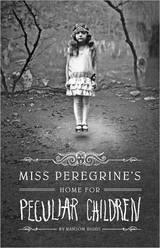
Miss Peregrine's Home for Peculiar Children
Jacob Portman finds his grandfather dead in the woods, follows a cryptic letter to a ruined orphanage in Wales, and meets children living inside a repeating…
2,331-word summary · 10 min read

Inkdeath
The final Inkworld novel sends Mo into the land of the dead, leaves Meggie choosing between two boys, and ends the Adderhead's immortality with three written…
2,062-word summary · 9 min read

Anatomy: A Love Story
In 1817 Edinburgh, a noblewoman who wants to be a surgeon disguises herself to study anatomy and falls for the grave robber who supplies her with bodies.
2,031-word summary · 9 min read

Vow of Thieves
Kazi and Jase return to Tor's Watch to find it occupied, and their marriage is tested by captivity, betrayal, and a war for the town of Hell's Mouth.
2,059-word summary · 9 min read

The Lost Sisters
Taryn Duarte writes a letter to her twin, Jude, explaining how she fell for Locke and why she stayed silent while he used them both.
1,914-word summary · 9 min read

Archenemies
Nova steals for the Anarchists while Adrian hides his Sentinel identity, and a serum that erases prodigy powers puts them both at risk.
2,485-word summary · 11 min read

The Siren
Saved from a shipwreck in 1930, Kahlen becomes a siren who sings men to their deaths for the Ocean, until a boy in a college library makes her want a life she…
2,369-word summary · 11 min read

Cruel Beauty
A girl raised to kill the demon prince who rules her cursed land instead falls in love with him, in a retelling that mixes Beauty and the Beast with Bluebeard…
2,669-word summary · 12 min read
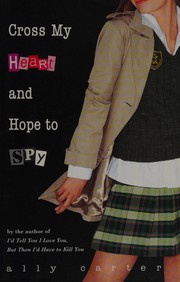
Cross My Heart and Hope to Spy
Cammie Morgan returns to Gallagher Academy for a second year of spy training, only to fall for a boy from a rival spy school and hunt a mole in her own school.
2,567-word summary · 11 min read
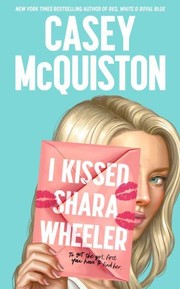
I Kissed Shara Wheeler
Shara Wheeler kisses her rival Chloe Green at prom and disappears, leaving a scavenger hunt that forces Chloe to rethink everything she knew about her.
2,083-word summary · 9 min read
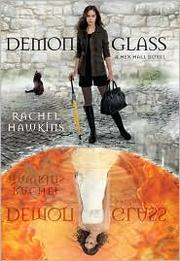
Demonglass
Sophie Mercer spends the summer at the Council's English estate, where two new demons, a suspicious host, and Archer's return complicate her plan to remove her…
2,771-word summary · 12 min read
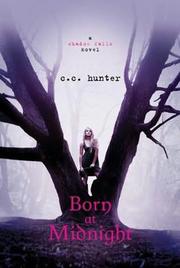
Born at Midnight
Kylie Galen is sent to a camp for troubled teens and discovers it is a haven for vampires, werewolves, and witches, and that she may be something stranger…
2,310-word summary · 10 min read

The Rose & the Dagger
Shahrzad is pulled from her Caliph husband and left in a desert camp of rebels, needing to break his curse and end a war before it ends her.
2,520-word summary · 11 min read

Last Night at the Telegraph Club
The 2021 National Book Award winner follows Lily Hu, a Chinese American teenager in 1954 San Francisco, as she falls for Kath and learns what it costs to be…
2,336-word summary · 10 min read
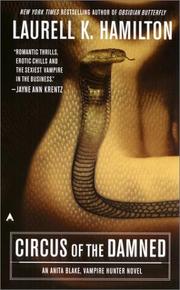
Circus of the Damned
A rogue master vampire arrives in St. Louis and Anita Blake is caught in an undead turf war, with a science teacher in the crossfire.
2,757-word summary · 12 min read

We Hunt the Flame
In a fractured Arabia-inspired world, a disguised huntress and a prince-assassin race to find a magic-restoring book and confront an ancient evil.
2,195-word summary · 10 min read

Stars Above: A Lunar Chronicles Collection
Nine Lunar Chronicles stories fill in the histories of Cinder, Wolf, Thorne, Cress, Winter, and Jacin, and end with a wedding after the war.
2,230-word summary · 10 min read
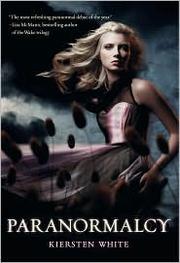
Paranormalcy
A teenage agent who can see through glamour falls for a shape-shifter and learns the agency she works for is hiding her true nature.
2,041-word summary · 9 min read

Lore
Lore Perseous, the last of a hunted bloodline, is pulled back into the Agon when a wounded Athena offers her revenge against the god who killed her family.
2,188-word summary · 10 min read