
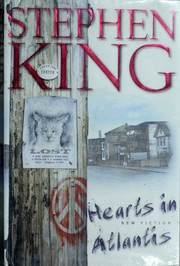
Hearts in Atlantis
2,402-word summary 11 min read 528 pages in the book
- First published
- 1999
- Publisher
- Scribner
- Pages
- 528
- ISBN
- 9780684853512
Reading options
What's inside (9 sections)
Hearts in Atlantis is not a horror novel, although it has a monster or two. It is a book about the 1960s, about the people who lived through them, and about the way memory turns a decade into a story. Stephen King published it in 1999, and it is made up of two novellas and three short stories that share characters and move forward in time. The first story is set in 1960, the second in 1966, and the last in the present of the late 1990s. The book is loosely autobiographical. In an author's note, King says the places are fictionalized, but the sixties actually happened.
Scribner published the first edition on September 14, 1999. It runs 528 pages and carries the ISBN 9780684853512. The collection is not a novel, but it is more unified than most story collections. The stories are linked by the town of Harwich, Connecticut, by the Garfield family, by Carol Gerber, and by the Vietnam War. The book is also linked to King's Dark Tower series, though you do not need to know that to read it. The connections are there for readers who want them.
Low Men in Yellow Coats
The first and longest story is "Low Men in Yellow Coats." It is 1960, and Bobby Garfield is eleven years old. He lives in Harwich with his mother, Liz, a widow who is struggling to keep the household together. Bobby is a lonely boy with a good heart and a bad temper. He spends his days with his friends Carol Gerber and John Sullivan, and his nights reading comic books and dreaming of a different life.
A new tenant moves into the apartment upstairs. His name is Ted Brautigan, and he is an old man with a quiet manner and a secret. Ted has psychic abilities. He can read minds, move objects, and sense things that other people cannot. He is also being hunted by the low men, strange figures in yellow coats who drive garish cars and leave signs that only certain people can see. Ted hires Bobby to read the newspaper to him and to watch for the signs. Bobby agrees, and the two become friends.
Ted is the father figure Bobby does not have. He talks to Bobby about books, about courage, and about the importance of paying attention. He also asks Bobby to do something dangerous: tell him when the low men appear. Bobby promises, but when the signs start showing up, he says nothing. He is afraid of losing Ted. His silence is the first moral failure of the book, and it is a failure born of love.
Carol is beaten by three bullies with a baseball bat and left in a grove of trees. Bobby finds her and takes her to his apartment. Ted has to remove her shirt to set her dislocated shoulder. Liz comes home and assumes that Ted has been molesting Carol. The misunderstanding is resolved, but the damage is done. Liz has already been through a violent assault of her own at a real estate seminar, and she is not thinking clearly. She reports Ted to the authorities, or at least she does not protect him. Bobby suspects that his mother has told the low men where Ted is.
The low men come for Ted. Bobby catches up with them just as they are about to take him away. Ted is given a choice: Bobby can come with him, or he can stay. Bobby stays. He despises himself for it. The story ends with Bobby leaving Harwich with his mother, spending time in juvenile detention, and receiving an envelope from Ted filled with red rose petals. The petals mean that Ted is free again, at least for now.
"Low Men in Yellow Coats" is the best story in the collection. It is a portrait of childhood that is both tender and cruel. Bobby is not an innocent. He lies, he keeps secrets, and he fails the person who needs him most. Ted is not a saint. He is a man on the run who uses a child to protect himself. The story is about the cost of love and the way fear can make a person silent. It is also about the low men, who are genuinely frightening. They are not explained. They do not need to be.
The hearts game
The second story, "Hearts in Atlantis," is set at the University of Maine in 1966. Peter Riley is a freshman. He is away from home for the first time, and he is not ready for the freedom. He falls in with a group of students who spend their nights playing hearts in the dorm. The game becomes an addiction. The boys play for hours, skipping classes, ignoring the draft, and telling themselves that they are just having fun.
The draft is the background threat. The students have deferments, but the war is escalating, and the deferments will not last forever. The hearts game is a way of avoiding the future. It is also a way of avoiding the self. Riley is smart enough to know that he is wasting his time, but he cannot stop. The game gives him a sense of belonging, and belonging is what he needs.
Carol Gerber arrives at the university. She is the same Carol from the first story, now a young woman. She is involved in student activism, and she is in love with Riley. They sleep together, and the next morning she leaves him a note warning him to stop playing hearts. The note is a gift. It is also a judgment. Carol sees what Riley is doing to himself, and she refuses to pretend that it is harmless.
The turning point comes when Stokely Jones, a disabled student activist, slips and falls in the rain. The other boys laugh, and Riley is disturbed by their cruelty. He realizes that the game has made him callous. He resolves to turn his grades around. Shortly afterward, Jones is accused of spraying graffiti on a campus wall. Riley and the other students point out that they have all been carrying peace signs, and the accusation collapses. The scene is a small victory, but it is a real one.
Riley barely passes his classes. Carol leaves school. She sends him a newspaper article about a protest she attended. The story ends with Riley alone, changed, and uncertain about what comes next. The hearts game is over. The war is still coming.
"Hearts in Atlantis" is the weakest story in the collection, or at least the most uneven. The hearts game is a clever metaphor for addiction and avoidance, but the story takes a long time to make its point. The romance between Riley and Carol is sweet but thin. The campus politics are dated. The story is saved by its ending, which is quiet and honest. Riley does not become a hero. He just grows up a little.
Blind Willie and Why We're in Vietnam
"Blind Willie" is a short story about Willie Shearman, one of the boys who beat Carol Gerber in the first story. Willie is now a Vietnam veteran living in Connecticut. Every day he sits on a sidewalk in downtown New York City and pretends to be blind. He collects money from strangers. His blindness comes and goes, and he believes it is a form of penance. He writes apologies to Carol in notebooks. He keeps a scrapbook about her life.
Carol has become an activist, and her group has become more militant. A man named Raymond Fiegler is her mentor, and the group is responsible for a bombing at a recruiting office. Carol is nicknamed Red Carol. She is believed to have died when the group's headquarters was raided and the building caught fire. Willie does not know whether she is alive or dead. He keeps begging, and he keeps writing.
"Why We're in Vietnam" is about John Sullivan, another childhood friend of Bobby's. Sully is a veteran, and he attends the funeral of a third friend. He meets a man named Dieffenbaker, and they talk about the war. The conversation turns to an incident in Dong Ha, where Ronnie Malenfant, another character from the hearts story, nearly caused a massacre. Malenfant stabbed a woman with a bayonet, and Dieffenbaker had to shoot a soldier to stop the killing. Sully was wounded and airlifted out. He has been haunted by the image of the woman ever since.
On the drive home, Sully is caught in a traffic jam. He begins to hallucinate. Objects fall from the sky: cordless phones, a piano, appliances, and a long yellow coat. He is struck by an object and picks it up. It is Bobby Garfield's old Alvin Dark baseball glove. The woman from Dong Ha appears, glowing, and tells him she will keep him safe. Then she is gone. Sully puts on the glove, closes his eyes, and dies of a heart attack.
These two stories are darker than the first two. They are about guilt, penance, and the long shadow of violence. Willie's fake blindness is a performance of remorse, but it is also a way of hiding. Sully's hallucination is a vision of grace, or maybe a symptom of a heart attack. King does not resolve the ambiguity. He lets the reader decide.
Heavenly Shades of Night Are Falling
The final story brings Bobby Garfield back to Harwich for Sully's funeral. Bobby is middle-aged now. He visits the park where Carol was beaten, and he finds Carol there. She is alive, scarred and burned, and she goes by the name Denise Schoonover. She has been hiding for years.
Bobby has a gift for her. Sully's probate lawyer sent him his old baseball glove, and inside the glove was a copyright page from a 1960 edition of Lord of the Flies. The page is still new. Ted has written a message on it: "Tell her she was as brave as a lion." The page also contains the equation Carol wrote for Riley in the second story: a heart plus a peace sign equals information.
The ending is a reunion, but it is not a simple one. Bobby and Carol have both been damaged by the past. They have both lost people. They have both survived. The message from Ted is a reminder that courage was noticed, even if it was not rewarded. The story ends with the two of them together, in the park, holding the evidence of their shared history.
The Dark Tower connection
Hearts in Atlantis is part of King's larger fictional universe. Ted Brautigan is a Breaker, a psychic who is forced to help the Crimson King destroy the Beams that hold up the Dark Tower. The low men are agents of the King. The red rose petals are a reference to the field of roses that surrounds the Tower. These connections are not necessary to understand the book, but they add a layer of dread. Ted is not just a man on the run from strange pursuers. He is a piece in a cosmic war.
The Dark Tower elements are light enough that a reader who does not know the series will not feel lost. They are also heavy enough that a reader who does know it will see the stories differently. The low men become more frightening. Ted's fate becomes more tragic. The rose petals become a sign of hope in a story that is otherwise about loss.
What the book is about
Hearts in Atlantis is about the 1960s, but it is not a nostalgic celebration. It is a book about the cost of the decade. The children of the first story are shaped by adults who are failing them. The college students of the second story are avoiding a war they cannot stop. The veterans of the third and fourth stories are carrying wounds that will not heal. The final story is about the possibility of reconnection, but it is also about how much has been lost.
The book is also about addiction. The hearts game is an addiction. Willie's begging is an addiction. Sully's memories are an addiction. King is interested in the ways people use routines and rituals to avoid facing their lives. The rituals are not always bad. They can be a way of surviving. But they can also become a prison.
The title comes from the second story, and it refers to a song, a place, and a state of mind. Atlantis is a lost civilization, and the 1960s are a lost civilization in King's imagination. The book is an attempt to recover something that cannot be recovered. It is elegiac without being sentimental. It knows that nostalgia is a story we tell ourselves, and it tells the story anyway.
Reception and criticism
The collection was published to strong reviews. Charles de Lint called it the Great American Baby Boomer Novel, and praised King for being provocative and inspired. Other critics were more mixed. Some found the title novella too long and the hearts game too repetitive. Some found the final story too neat. The book is uneven, and it is not one of King's most popular works. It is, however, one of his most personal.
The film adaptation, released in 2001, stars Anthony Hopkins as Ted Brautigan and Anton Yelchin as Bobby. It adapts "Low Men in Yellow Coats" and "Heavenly Shades of Night Are Falling," but it removes the Dark Tower references and changes many details. The film is a decent coming-of-age story, but it loses the darkness that makes the first story memorable. The book is better, and it is better because it refuses to explain everything.
I read Hearts in Atlantis in the fall, which is the right season for it. The book is full of autumn light, cold evenings, and the sense that something is ending. It is not a horror novel, but it is a book about fear: the fear of losing a friend, the fear of being sent to war, the fear of being forgotten. It is also a book about courage, which is usually small and quiet and unnoticed. Ted's message to Carol is the heart of the book. She was as brave as a lion, and someone remembered. That is the consolation the novel offers, and it is enough.
FAQ
Is Hearts in Atlantis a novel or a short story collection?
It is a collection of two novellas and three short stories linked by recurring characters and set in roughly chronological order.
Do I need to read The Dark Tower to understand it?
No. The Dark Tower connections add depth for fans, but the stories work on their own.
What is the book about?
It is about childhood, memory, guilt, addiction, and the lasting damage of the 1960s and the Vietnam War.
Similar books
Everything's Eventual: 14 Dark Tales
Fourteen Stephen King stories shuffled by the deal of a card deck, from the haunted room of 1408 to quiet tales of grief that sting as much as the monsters.
2,000-word summary · 9 min read

If It Bleeds
Holly Gibney faces an outsider plus three more tales of dread.
2,219-word summary · 10 min read
Four Past Midnight
Four novellas about a plane lost in time, a writer haunted, and horrors small and large.
2,584-word summary · 11 min read
Skeleton Crew
King's 1985 collection pairs The Mist with The Jaunt, The Raft, and Survivor Type: 22 stories of Maine dread.
3,209-word summary · 14 min read
Night Shift
King's first story collection moves from haunted mills to killer cornfields, twenty early tales where ordinary places turn evil.
2,488-word summary · 11 min read

Different Seasons
Four novellas: prison hope, a boy and an old Nazi, kids chasing a body, and a club that grants wishes with teeth.
1,974-word summary · 9 min read
It
Seven friends in Derry face a shape shifting evil as kids in 1958 and again as adults in 1985.
2,229-word summary · 10 min read
The Diamond Age: Or, A Young Lady's Illustrated Primer
A stolen nanotech primer raises a poor girl in 22nd-century Shanghai, and Neal Stephenson turns her education into an argument about class, freedom, and who…
2,055-word summary · 9 min read
Olive, Again
Elizabeth Strout returns to Crosby, Maine, as Olive Kitteridge marries Jack Kennison, confronts her son, and faces old age, grief, and small-town judgment.
2,333-word summary · 10 min read

Stories of Your Life and Others
Eight stories about language, time and choice, including the tale behind Arrival.
2,402-word summary · 11 min read
Men Without Women
Seven stories about men living after women leave, die, or stay distant.
2,673-word summary · 12 min read
Haunted
Writers lock in for three months and trade worse stories as food runs out.
2,576-word summary · 11 min read
Ham on Rye
Henry Chinaski grows up rough in Depression Los Angeles and finds writing.
2,244-word summary · 10 min read
The Call of Cthulhu and Other Weird Stories
Seventeen tales from Dagon to Innsmouth, led by Cthulhu, the Colour, and the Whisperer, in S. T. Joshi careful Penguin edition with notes and corrected texts.
2,593-word summary · 12 min read
The Call of Cthulhu
A professor's papers link a sculptor's dreams, a Louisiana cult raid, and a sailor's voyage to a sleeping god under the sea.
2,530-word summary · 11 min read
Demian
Hesse's 1919 German classic of Emil Sinclair, from Kromer blackmail to Demian, Abraxas, Beatrice and Frau Eva, ending in war: a short, strange guide to growing…
2,510-word summary · 11 min read
The Queen's Gambit
Orphan Beth Harmon rises in chess while pills and drink threaten to take her.
2,027-word summary · 9 min read

The Girls' Guide to Hunting and Fishing
Seven linked stories follow Jane Rosenal from fourteen to her thirties through family rows, publishing jobs, and dating manuals toward steadier love.
2,166-word summary · 10 min read
About a Boy
An idle London bachelor invents a toddler son to meet women, then builds a real friendship with a lonely twelve year old.
2,750-word summary · 12 min read
The Extraordinary Life of Sam Hell
Sam Hill, born with red eyes and mocked as Sam Hell, leans on his mother, his friend Ernie, and his faith to face bullying and forgive. A warm coming of age…
3,060-word summary · 14 min read

The House on Mango Street
Esperanza Cordero grows up on Mango Street in Chicago, watching neighbors closely while dreaming of a house of her own.
2,567-word summary · 11 min read
Where the Heart Is
Pregnant teen Novalee Nation is abandoned at a Sequoyah, Oklahoma Wal-Mart, where she gives birth to Americus and rebuilds life with town help.
2,352-word summary · 10 min read
Remember Me?
Lexi wakes after an accident missing three years, with a polished new life and a husband she does not recall, and must work out which parts she wants to keep.
2,390-word summary · 11 min read
The Things They Carried
Alpha Company humps through Vietnam carrying rifles, letters, and guilt. O'Brien's linked 1990 collection asks what a true war story really tells.
2,877-word summary · 13 min read
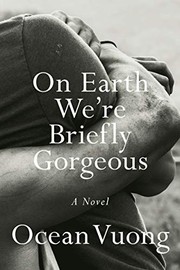
On Earth We're Briefly Gorgeous
A son writes to the mother who cannot read him: war, migration, first love, and loss in one Vietnamese American family in Hartford.
3,113-word summary · 14 min read
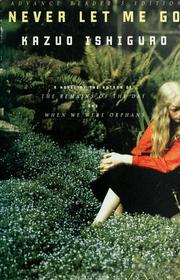
Never Let Me Go
Kathy looks back on Hailsham, the English school where she and her friends were raised for an unspoken purpose.
2,102-word summary · 9 min read
The Catcher in the Rye
J. D. Salinger's The Catcher in the Rye explained: Holden's weekend in New York, the phony adults, Phoebe's carousel, and why readers keep coming back to him.
2,477-word summary · 11 min read
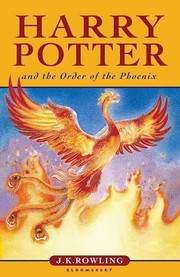
Harry Potter and the Order of the Phoenix
Harry Potter and the Order of the Phoenix explained: the D.A., Umbridge's regime, the Department of Mysteries, and the loss that changes the series.
2,249-word summary · 10 min read
Harry Potter and the Half-Blood Prince
Harry Potter and the Half-Blood Prince explained: the Pensieve, Tom Riddle's past, Slughorn's memory, and the ending that sets up the last book.
2,018-word summary · 9 min read
Harry Potter and the Goblet of Fire
Harry Potter and the Goblet of Fire explained: the Triwizard Tournament, the graveyard, Bertha Jorkins, and the point where the series stops being a school…
2,199-word summary · 10 min read