
The Call of Cthulhu
2,530-word summary 11 min read
- First published
- 1928
Reading options
What's inside (7 sections)
I came to this story late, after hearing the name Cthulhu tossed around in games and jokes for years. I expected a monster tale with tentacles on the cover. What I got was stranger and slower, a pile of papers inside papers, and a feeling that stayed with me after the last page.
That is the odd power of this short story. It is only some forty pages in most reprints, yet it feels big. It does not hand you horror straight on. It makes you piece it together from notes, police reports, and a sailor diary, until the shape in the middle starts to show.
The narrator is Francis Wayland Thurston. He inherits a box of papers from his grand uncle, George Gammell Angell, a professor of Semitic languages at Brown who died in the winter of 1926. At first Thurston thinks the papers are the hobby clutter of an old scholar. Then he reads them and finds two threads that will not fit together, except in a way he does not want to accept.
Angell died after a fall on a Providence street, jostled by a sailor-looking man who vanished. The police called it an accident. Thurston is not so sure by the end, and neither was I.
The professor's papers and the thing in the clay
Angell left behind notes on a strange event from 1925. A young sculptor named Henry Anthony Wilcox came to him in March of that year with a bas-relief made in his sleep, or so he claimed.
Wilcox was twenty three, thin, a little restless, living in Providence. He had been seized by feverish dreams in late February and early March. He made a small clay plaque showing a crude figure with a squid-like head, a bloated body, narrow wings, and blocks of unknown writing beneath. He said he had dreamed of a cyclopean city of wet stone and heard words he could barely repeat. Angell, who knew a great deal about old scripts, could make nothing of the carving. He questioned the young man closely and decided Wilcox knew no history or anthropology that could explain it. The boy was sincere, or a very good liar.
What chilled Angell, and chilled me when I lined up the dates, was that Wilcox was not alone. Angell started asking around. He learned that poets, artists, and other sensitive types in Boston, London, Paris, and elsewhere had suffered vivid dreams in the same weeks. Visions of strange architecture. Sounds like the flapping of vast wings. A feeling of being called. Then, around the end of March and into early April, the dreams stopped as suddenly as they began.
Thurston at first treats this as coincidence or a passing fever of the mind. He almost throws the whole file away. What stops him is the second half of the box, an older manuscript marked with a warning that the reader should not open it unless ready.
That manuscript takes him back to 1907 and 1908.
What Inspector Legrasse carried out of the swamp
In 1908, Inspector John Raymond Legrasse of New Orleans brought a small stone statuette to a meeting of the American Archaeological Society in St. Louis. He wanted someone, anyone, to identify it.
The idol had been seized the year before in a police raid south of New Orleans. Legrasse and a party of officers had pushed into the woods after reports of drums and chanting. They found a clearing on an island, a fire, a stone slab, and a ring of worshippers, some Black and Creole locals, some sailors of mixed origin, all moving around something hung from a tree. The police fired into the crowd. Most fled. A few were taken. The dead included participants, and the officers later spoke of the rites in low voices.
The prisoners talked about a being called Cthulhu, though they pronounced it in ways no English mouth could settle on. They said it waited in a dead city under the sea. They said the stars would one day be right again, and then it would rise. One old prisoner named Castro, a seaman with a long memory, gave the fullest account. He spoke of great ones who came from the sky long before men, who built a city called R'lyeh, and who now slept in death that was not death. He repeated phrases the cult used in worship, which translators could only render in rough English about dwelling and waiting.
Legrasse kept the idol. It matched nothing the professors knew. One archaeologist thought it showed Egyptian or Phoenician influence but admitted the stone was unfamiliar and the workmanship wrong for any known school. Only one man at that meeting, a professor named Webb, had seen anything like it before. Webb had picked up similar ideas from an Eskimo or Inuit group in Greenland years earlier, talk of a sleeping god in the ice and rites meant to hasten its waking.
Angell had kept careful notes of all this. Thurston reads them and sees the link. Wilcox in 1925 dreamed of a city and a shape that matched the idol Legrasse found in 1907. Neither man could have known of the other. That is the cold spot at the center of the story. Two separate witnesses, eighteen years apart, describing the same impossible thing.
I found this middle section the strongest part. It moves like a police file crossed with a travel account. You can smell the swamp water and hear the officers blundering through brush. Lovecraft is often accused of keeping everything at arm's length, but here the action is concrete. Men row boats. Men get lost. Men fire guns and wish they had not gone in.
The sailor's diary and the city that rose
The last third belongs to Gustaf Johansen, a Norwegian sailor. Thurston tracks down his account through newspaper cuttings from Australia and a long manuscript left with Johansen's widow in Oslo.
In 1925 Johansen served as second mate on a yacht called the Emma out of Auckland. In March of that year, the Emma met a strange derelict vessel called the Alert in southern waters. The Alert's crew acted hostile. A fight followed. The Emma's captain and others were killed. Johansen and one companion took the Alert and sailed on, driven by curiosity and by something like a pull in their compass readings.
They found an island where no island should be. A storm or volcanic action had thrust part of the sea floor upward. Black stone stretched in all directions, slick with mud and slime, carved with angles that hurt the eye. Johansen wrote of geometry that seemed wrong, surfaces that sloped in ways that confused the sense of near and far. Walking there was hard. The stones were huge, loose in places, and covered with markings no sailor could read.
Then they opened a door. Or rather, they found a vast carved portal and managed to shift it. What came through is the passage everyone remembers. A bulk, green and reeking, with a head of feelers and wings half spread, moving with a kind of oozing weight. One sailor was taken at once. Others died in the scramble back to the ship. Johansen turned the yacht around at the last moment and drove its bow straight through the thing, bursting it like a bladder. The shape scattered, then began to knit itself back together on the water behind them. Only Johansen survived to tell it, and he did not live long after reaching home.
Thurston goes to Oslo and talks, as best he can, with the widow. He reads Johansen's fuller diary. He learns Johansen died suddenly not long after his return, with talk of a heart failure and papers clutched in his hands. The dates line up again. The island rose in late March 1925, when Wilcox dreamed and when artists across the world woke sweating. It sank again after the storm of early April. The thing that walked there sank with it, still dreaming.
That image, a city that bobs up for a week and then goes back under with its sleeper, is what stayed in my head. It makes human history feel thin, like paint over a door that opens from the other side.
Thurston closes his own account in fear. He has connected Angell, Wilcox, Legrasse, and Johansen into one pattern. He understands now that the cult survives in lonely places, that more believers wait for the stars to align, and that his own inquiries may have marked him. He writes that he knows too much and that Cthulhu still lives. He hopes no one will ever join these scattered pieces as he has done.
A short story that escaped from Weird Tales
This was not a novel. It was a short story, first published in Weird Tales in the February 1928 issue. Lovecraft had written it in 1926. He placed it with the pulp magazine that carried much of his best work, alongside stories of ghosts, mad scientists, and sword fighters.
The publication history has a curious footnote. Some later printings note a dedication to George Henry Weiss, a fellow Weird Tales writer who worked under the name Francis Flagg. Weiss had written to Lovecraft with praise, and Lovecraft answered with a dedication in print. Whether that dedication appeared in the original pulp pages or was added in a later reprint is still argued among collectors. I mention it because the user prompt for this page raised it, and I do not want to pretend the record is cleaner than it is. What is certain is the core fact: Weird Tales, early 1928, a short story, not a book.
Lovecraft earned little from it. He earned little from almost everything in his lifetime. He died in 1937 in Providence, poor and largely unknown outside pulp circles. Friends like August Derleth kept his work in print through Arkham House. Slowly the stories spread. By the 1960s and 1970s, paperback editions put him in college bookstores. By the 1980s, role playing games and horror anthologies made Cthulhu a shared reference point even for people who had never read a page of Lovecraft.
That afterlife is now called the Cthulhu Mythos. Other writers added to it. Derleth systematized it. Robert E. Howard, Clark Ashton Smith, Robert Bloch, and later Stephen King, Neil Gaiman, and many others borrowed its gods, books, and place names. The forbidden volume called the Necronomicon, mentioned in this story and others, became a fictional book so famous that real fake editions were printed to meet demand. R'lyeh, Arkham, Miskatonic University, Deep Ones, Nyarlathotep, all grew from seeds planted here and in neighboring tales.
Reading the story now, you can see why it seeded so much. It offers a method, not just a monster. Find scattered records. Line up dates. Notice the same shape in unconnected places. Let dread build from research. Countless horror stories, films, and games since have copied that structure. The found footage craze owes it more than it admits.
It also offered a bleak idea that fit the twentieth century. Human beings are not central. Older powers slept before us and may wake after us. Science does not save Thurston. Faith does not save Johansen. Knowledge only makes the danger clearer. That note of cosmic indifference hit hard in the years after the First World War, and it still hits in a time of climate reports and pandemics.
How it is written, and where it drags for me
Lovecraft writes in a thick, old fashioned style, full of adjectives and long sentences that pile clause upon clause. He loves words like cyclopean, antediluvian, and eldritch. He loves architecture. Doors, angles, bas-reliefs, and stonework get more attention than faces.
Sometimes this works beautifully. The R'lyeh pages have a queasy music to them. The slow layering of documents feels right for the plot, because you are reading a man reading men who read other men. The distance becomes part of the fear. You never get a clean look at Cthulhu, only glimpses through frightened witnesses, and that keeps it larger in the mind.
Sometimes the style gets in its own way. The opening pages are heavy going, with abstract talk about the inability of the human mind to correlate its contents. Paragraphs run long. Names and dates stack up. If you bounce off the first five pages, you are not alone. I had to restart once, and on the second try I read slowly and let the rhythm settle.
The characters are thin. Thurston has almost no personality beyond curiosity and growing fear. Wilcox is a type, the sensitive young artist. Legrasse is brave and decent but sketched fast. Johansen comes closest to feeling real, because his diary includes practical details about sails, bearings, and hunger, but even he fades beside the city he finds. You do not read this for people. You read it for the pattern and the place.
There is a harder criticism that should be stated plainly. Lovecraft held racist views, and they show in his work, including here. The cult in Louisiana is described through the prejudices of its time and of the author, with language about mixed blood and primitive peoples that modern readers will rightly find ugly. The police raid reads as heroic, while the worshippers are painted as degraded. A modern reader can still follow the plot while seeing how the story codes fear of the outsider as fear of the monster. I found those passages the most dated part of the tale, and they pulled me out of the mood in a way the dense sentences did not.
There is also the matter of women. There are almost none in the story. A widow hands over a manuscript. That is about it. If you need rounded human ties to care, this will feel empty.
And yet I kept turning pages. The structure carries you. Each section answers one question and opens a worse one. Why did Wilcox dream? Who was chanting in the swamp? What did Johansen see? By the time Thurston puts it together, you have put it together a half step ahead of him, and that half step is delicious and awful at once.
If you pick it up, I suggest reading it in one sitting, late in the evening, with a map nearby. Look up where the Emma sailed. Notice how Lovecraft uses real ports, Auckland and Dunedin and Oslo, to anchor unreal events. Notice how little blood there is compared with modern horror, and how much dread comes from suggestion. Then, when you finish, step outside and look at the sky. The story wants you to do exactly that, and to feel small under it.
That smallness is the point Lovecraft returns to in tale after tale. We are briefly here. Other things were here longer. They may still be here, asleep, waiting for a shift in the sea or the stars. Thurston wishes he had never connected the pieces. The reader feels glad he did, and a little sorry, because now we carry the same knowledge home.
FAQ
Was The Call of Cthulhu a novel or a short story?
Yes. It is a short story, first published in Weird Tales in February 1928 after Lovecraft wrote it in 1926.
Where was The Call of Cthulhu first published?
Weird Tales, the American pulp magazine that carried much of Lovecraft's best work, in its February 1928 issue.
Do I need to read other Mythos stories first?
No. Start with this story, then try The Dunwich Horror and The Shadow over Innsmouth for the same Mythos in longer form.
Similar books
The Call of Cthulhu and Other Weird Stories
Seventeen tales from Dagon to Innsmouth, led by Cthulhu, the Colour, and the Whisperer, in S. T. Joshi careful Penguin edition with notes and corrected texts.
2,593-word summary · 12 min read
The Lottery
In Jackson's 1948 story, a village draws lots to keep the corn heavy, and the chosen person is stoned by her neighbors.
3,080-word summary · 14 min read
Everything's Eventual: 14 Dark Tales
Fourteen Stephen King stories shuffled by the deal of a card deck, from the haunted room of 1408 to quiet tales of grief that sting as much as the monsters.
2,000-word summary · 9 min read

If It Bleeds
Holly Gibney faces an outsider plus three more tales of dread.
2,219-word summary · 10 min read
Four Past Midnight
Four novellas about a plane lost in time, a writer haunted, and horrors small and large.
2,584-word summary · 11 min read
Skeleton Crew
King's 1985 collection pairs The Mist with The Jaunt, The Raft, and Survivor Type: 22 stories of Maine dread.
3,209-word summary · 14 min read
Dream Country
Four Sandman shorts on muses, cats, Shakespeare, and a veiled heroine.
2,001-word summary · 9 min read
The Legend of Sleepy Hollow
A lanky schoolmaster courts a farmer's daughter in a haunted Dutch valley until a midnight ride by the Headless Horseman ends at the bridge.
2,968-word summary · 13 min read
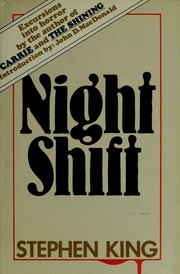
Night Shift
King's first story collection moves from haunted mills to killer cornfields, twenty early tales where ordinary places turn evil.
2,488-word summary · 11 min read
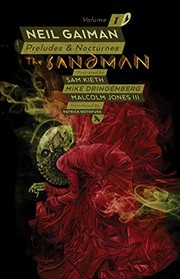
Preludes & Nocturnes
Dream escapes a 70 year prison, hunts his lost tools, faces Hell, and learns care from Death.
2,047-word summary · 9 min read

The Yellow Wallpaper and Other Stories
A young mother confined for her health fixates on yellow wallpaper, plus 39 other Gilman stories on marriage and work.
2,989-word summary · 13 min read
Pet Sematary
Doctor Louis buries Church and then Gage in ground that returns them wrong, learning dead is better.
2,158-word summary · 10 min read
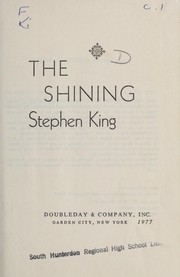
The Shining
The Shining retold: Jack winters at Overlook with Wendy and Danny, REDRUM, hedge maze chase.
2,011-word summary · 9 min read
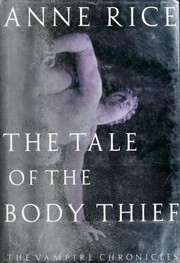
The Tale of the Body Thief
Lestat trades bodies with a psychic thief for one day of mortality and ends up trapped, sick, and hunting his own vampire body.
2,069-word summary · 9 min read

The Only Good Indians
Four Blackfeet men who killed a pregnant elk are hunted by her spirit a decade later, and the only person who can end the cycle is a teenage girl who was not…
2,010-word summary · 9 min read
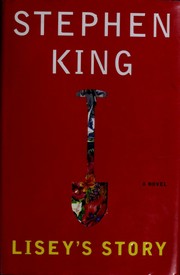
Lisey's Story
Two years after her novelist husband dies, Lisey Landon follows a trail of clues into his childhood and the other world that made him a writer.
1,998-word summary · 9 min read
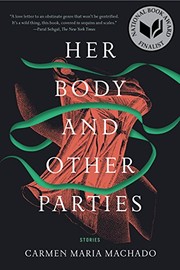
Her Body and Other Parties: Stories
Eight stories where bodies, medicine and old fairy tales get taken apart, with a green ribbon running through the whole book.
2,997-word summary · 13 min read

The Gift of the Magi
A young couple with almost no money each sells the thing they treasure most to buy a Christmas present for the other.
1,978-word summary · 9 min read
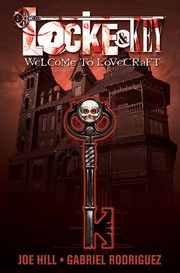
Locke & Key, Vol. 1: Welcome to Lovecraft
After their father is murdered, the Locke children move into a haunted family estate where keys unlock doors to ghosts, other places, and dangerous secrets.
2,019-word summary · 9 min read
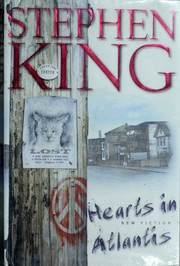
Hearts in Atlantis
Five linked stories follow Bobby Garfield, Carol Gerber, and their friends from a haunted childhood in 1960 to the long aftermath of Vietnam.
2,402-word summary · 11 min read
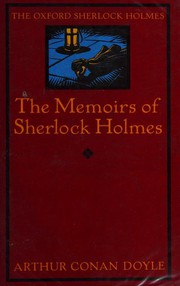
The Memoirs of Sherlock Holmes
Doyle's second Holmes collection gathers twelve Strand stories, including the early case of the Gloria Scott and the confrontation with Moriarty at Reichenbach…
2,390-word summary · 11 min read
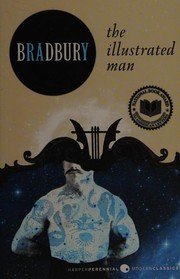
The Illustrated Man
A tattooed drifter's moving pictures retell eighteen Bradbury stories of children, rockets, Mars and the last night of the world.
2,791-word summary · 12 min read
Lullaby
A reporter discovers that a poem in a children's book kills anyone who hears it, and his attempt to destroy every copy turns into a road trip through grief,…
2,147-word summary · 10 min read
Galatea
The statue brought to life narrates her own story: a jealous sculptor, a locked hospital room, a daughter to protect, and one last plan to escape.
1,972-word summary · 9 min read
This Present Darkness
A pastor and reporter face demons over Ashton while angels answer prayer.
2,384-word summary · 11 min read
The Epic of Gilgamesh
Gilgamesh loses Enkidu, then seeks endless life past the flood.
2,246-word summary · 10 min read
The Day of the Triffids
Blinded survivors flee carnivorous plants after a meteor shower.
2,171-word summary · 10 min read
The Complete Fairy Tales
Mermaids, snow queens and tin soldiers in the full Andersen collection.
2,414-word summary · 11 min read
Haunted
Writers lock in for three months and trade worse stories as food runs out.
2,576-word summary · 11 min read
Full Dark, No Stars
Four novellas about revenge where ordinary people do terrible things and live with it.
2,646-word summary · 12 min read