
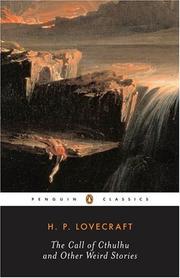
The Call of Cthulhu and Other Weird Stories
2,593-word summary 12 min read 420 pages in the book
- First published
- 1999
- Publisher
- Penguin Books
- Pages
- 420
- ISBN
- 9780141182346
Reading options
What's inside (8 sections)
I bought this book because I kept meeting Lovecraft secondhand. A game mentioned Rlyeh. A podcast mentioned Innsmouth. A friend said his horror was slower, more about dread than shocks. I wanted the source, and the Penguin edition edited by S. T. Joshi seemed like the sensible place to start. It came out in 1999 from Penguin Books, runs 420 pages, and carries ISBN 9780141182346. Joshi supplies an introduction, notes on the stories, and careful texts based on his work with the manuscripts.
What surprised me was the shape. This is not a novel. It is seventeen stories written across about fifteen years, from Dagon to The Haunter of the Dark. Some are short and sharp. Three are long enough to feel like small novels. Reading straight through gave me a clear sense of a writer finding his obsessions, then pushing them as far as they would go.
A quick note on scope. The core of the volume is the run of famous tales from the late nineteen twenties and early thirties. The Call of Cthulhu, The Colour out of Space, The Whisperer in Darkness, The Shadow over Innsmouth, The Haunter of the Dark. Around those sit earlier pieces such as Celephais, The Picture in the House, The Outsider, The Rats in the Walls, The Festival, He, and Cool Air, plus Nyarlathotep and the Herbert West serial. Readers often group The Dunwich Horror and Dreams in the Witch House with this set because they belong to the same burst of Mythos writing and appear in the companion Penguin volumes. I talk about them here as well, since most people meet them alongside these stories.
A Penguin door into Lovecraft
Joshi opens with biography and context, and I was glad he did. Lovecraft was born in Providence, Rhode Island in 1890 and spent most of his life there. He published poems and essays early, then turned hard toward horror after the pulp magazine Weird Tales began in 1923. He never saw real book success in his lifetime. He died in 1937. Much of his reputation was built afterward by friends, by Arkham House, and later by scholars like Joshi who sorted out the texts.
That editorial angle matters. Lovecraft typed fast, revised in margins, and saw his stories mangled in pulp typesetting. Joshi spent years comparing typescripts and magazine appearances. The Penguin texts follow those corrected versions, with a few extra fixes. The notes explain New England place names, literary nods, and publication history without fuss. You can see when a story was written versus when it finally saw print, which explains why ideas seem to arrive out of order.
The mix shows range. Early stories lean on Poe and on Dunsany style fantasy. Middle stories settle into Providence, Arkham, Dunwich, Innsmouth, and the Miskatonic University area. Late stories widen outward to Vermont hills, to the Pacific, to strange mathematics. I read the book in order and liked watching the confidence grow. The horrors get less visible. By the end the fear is less about a monster jumping out and more about learning that human life sits on a thin ledge.
If you want the hits first, start with The Call of Cthulhu, then The Colour out of Space, then The Shadow over Innsmouth. Then loop back to Dagon and The Rats in the Walls. That path keeps momentum up through the slower early experiments.
The Call of Cthulhu and the papers that build it
The title story is built like a file box. Francis Wayland Thurston inherits papers from his grand uncle, Professor George Gammell Angell of Brown University, who died in the winter of 1926 after being jostled on a Providence street. Among the papers are two inquiries that should have nothing to do with each other.
The first dates to 1925. A young sculptor named Henry Anthony Wilcox brings Angell a clay bas relief made after feverish dreams. It shows a part human, part octopus, part dragon figure crouched on a stone block covered in marks. Wilcox speaks of dreaming about a wet stone city and a voice that was not a voice. Angell finds no learning in the young man that would explain the design. Then he finds that artists and poets elsewhere had similar dreams in the same weeks, from Boston to London, all stopping around early April. Nothing attacks anyone in this stretch. The wrongness is in the timing.
The second inquiry goes back further. In 1908 Inspector John Raymond Legrasse of New Orleans brought a small stone figure to an archaeology meeting in St Louis and asked for help. It had been seized the year before during a raid on a gathering in the swamps south of the city. Police found drums, a fire, a slab, and a ring of worshippers chanting. The prisoners spoke of a being asleep under the sea in a city called Rlyeh, waiting until the stars came right. An old sailor named Castro gave the fullest story, telling of vast beings who came down long before people and who now lie in a death that preserves them.
Thurston links the threads through newspaper cuttings and a sailor diary. That diary belongs to Gustaf Johansen, whose crew found an island thrust up in the South Pacific in 1925, all wrong angled masonry and carvings to match the statuette. Something vast stirred there. Most of the crew died in panic. Johansen drove their small yacht into the loosened bulk of the thing and escaped, only to die later in a harbor brawl that Thurston suspects was arranged.
The power here is indirection. We never get a straight monster scene until the last pages, and even then it is brief and foggy. Three independent records point to one shape. A professor dies after asking questions. A sailor survives and then does not.
Blight and bloodline: The Colour out of Space and The Dunwich Horror
The Colour out of Space is my favorite here, and the least like the others. An engineer planning a reservoir near Arkham meets Ammi Pierce, an old farmer who will not drink the valley water and who finally tells him about the Gardner place.
In 1882 a meteor fell on Nahum Gardner farmland west of Arkham. Professors from Miskatonic chipped samples, found odd behavior in the glass, then watched the samples shrink away. After that the farm failed in stages. Fruit turned bitter. Animals changed shape and temper. The well water tasted strange. A grey brittleness spread across plants and then across the family. Nahum wife Nabby went strange in the attic. Sons Thaddeus and Zenas wasted or wandered. At night a faint light moved in the woods, the same tint as the meteor glow, a shade the narrator can only call a colour with no place in our spectrum.
Ammi end is grim. He and neighbours go to the farm and find the house half eaten by that light, the family past help, something moving in the well. What rises and leaves when the place burns is a column of that same off colour, breaking apart in the sky. I admired how physical this is. Rot, taste, smell, brittle grass. No cults, no books of lore. Just earth poisoned from the sky while decent people watch and fail to stop it.
The Dunwich Horror belongs beside it because it is also about a family and a place, though its full text sits in the companion Penguin volume rather than this one. Lavinia Whateley of decayed Dunwich bears two sons by a father she will not name. Wilbur grows unnaturally fast, learns to read old books young, and travels to Miskatonic to consult their Necronomicon. His brother stays hidden on the farm, bigger and less formed. When old Whateley dies and Wilbur is killed by a guard dog while trying to steal the book, the hidden twin gets loose. It moves through the hills unseen, crushing barns and leaving huge prints. Librarian Henry Armitage pieces together the rite and climbs Sentinel Hill with colleagues to fight the thing with powder and spoken formulae. It is one of the few moments where Lovecraft allows spectacle, and it lands because he held back so long.
One story starves you of answers. The other gives you a fight on a hilltop. Both leave a stain. The Gardner farm stays barren. Dunwich stays mean and inward.
Innsmouth and the fear of belonging
The Shadow over Innsmouth is the longest piece here and the most plotted. A young man traveling in New England saves money by taking a bus through Innsmouth rather than by train. In Newburyport he learns the town has a bad name. Once a clipper port, it fell and then revived under Captain Obed Marsh through trade that locals call sinister. People mention the Esoteric Order of Dagon, a chapel taken over by a strange congregation, and a federal curiosity that never quite turned into action.
He goes anyway. Innsmouth is half empty, roofs sagging, streets smelling of fish. Many residents have wide set eyes and skin that seems rough at the neck. He meets old Zadok Allen, who drinks enough to talk. Zadok tells of Marsh bringing back worship and breeding arrangements from South Sea islands during lean years, with promises of gold and full nets. The things from the reef, called Deep Ones, would mate with townsfolk and the children would change over time and go down to live in the sea city. The Order enforced the bargain. Those who resisted vanished.
The middle is pursuit horror done well. The narrator takes a room at the Gilman House hotel, finds himself locked in after dark, escapes across roofs, hides in a church, then runs for the railway line while the town hunts him. He gets out and the government later raids Innsmouth with submarines aimed at the reef. That should be relief. Instead the last pages turn inward. Researching his family tree, the narrator finds an Innsmouth grandmother and feels the change begin in himself. He dreams of splendid cities under water. The final turn reframes flight as return.
I read this as Lovecraft closest brush with tragedy. The narrator is not sorting papers. He is a body learning its own history. There are ugly period prejudices baked in, especially in how it links blood and degeneration, and I come back to that below. Even so, the craft holds. Bus schedules, grocery warnings, hotel lies, tide tables. The mundane scaffolding makes the underwater ending hit harder.
Witch House, Whisperer, Haunter: late Lovecraft at full stretch
Dreams in the Witch House is another companion volume story worth knowing. Student Walter Gilman rents a garret in an old Arkham house where a witch named Keziah Mason once hid. Keziah escaped jail in 1692 by using angles and lines in ways Gilman half grasps through his mathematics. Gilman dreams of following her through tilted space with a small ratlike familiar called Brown Jenkin. His dreams leave traces, bites, mud on his feet. When a kidnapped child vanishes on May Eve, Gilman tries to intervene in the dream and pays for it. The ending is unusually violent for Lovecraft, a struggle in a cramped room rather than a distant glimpse.
The Whisperer in Darkness uses the same method at larger scale. Professor Albert Wilmarth argues in print against belief in strange bodies found in Vermont rivers after floods. Farmer Henry Akeley of Townshend writes with photographs, recordings, and an invitation. Akeley claims crab like winged miners from a far planet keep bases in the hills and carry off selected people in metal cylinders that preserve the brain. Wilmarth visits, finds Akeley ill and whispering in the dark farmhouse, hears reassuring talk of a trip, then flees when he finds proof of imposture. It is long and the letters slow the pace, but the payoff lands because Wilmarth is so reasonable. He wants sources. He gets them. He wishes he had not.
The Haunter of the Dark closes the arc. Writer Robert Blake moves to Providence and fixates on an empty church on Federal Hill. He breaks in, finds a strange angled stone in the steeple, the Shining Trapezohedron, with a diary of past users who summoned something that moves in darkness and fears light. Blake looks, wakes it, and then a citywide blackout lets it cross to him. Short, direct, set within walking distance of Lovecraft home. After far flung expeditions, he placed his last great scare on his own streets and gave the victim his own curiosity.
Around these sit shorter shocks that teach his habits. The Rats in the Walls follows an American restoring Exham Priory and finding older layers under his house, with a hunger cult beneath. The Picture in the House traps a traveler with a chatty old man and engravings that point to appetite. The Outsider climbs out of a castle toward light and learns what he is in one cold sentence. Cool Air keeps a landlord going by chemistry in a sealed room. Each runs on withheld explanation.
Style, problems, and how I read him now
Lovecraft prose divides readers, and this collection shows why. At his best he stacks concrete nouns, doors, ledgers, tides, stone, until the strange noun at the end feels earned. Arkham feels real because he gives you the bus fare, the classroom, the newspaper morgue. The dread builds through documents, which suits his antiquarian mind. He loved old papers, old streets, old families. He turned that love into a machine for fear.
At his weakest he leans on the same adjectives until they dull. Cyclopean, non Euclidian, foetid, antediluvian. After a while the pileup tells you to feel awe rather than making you feel it. He also withholds women almost entirely. Lavinia, Nabby, Keziah, and a few landladies carry huge plot weight and get thin inner lives. And his views on race and class stain the work. Facts Concerning the Late Arthur Jermyn and His Family hinges on a lineage reveal meant to horrify that now reads as crude prejudice. Innsmouth and Dunwich both link decay to mixing and to rural poverty in ways that deserve a hard look. Joshi introduction does not dodge this, which I appreciated.
Pacing is the other honest complaint. Herbert West Reanimator was written as a serial and reads like one, with abrupt revivals every installment and a tone closer to pulp comedy than dread. He has fine night walking passages and an ending that now feels sour. The Festival has atmosphere to spare and a thin plot. I skimmed in the middle of the Whisperer letters on first pass, then went back and was glad I did. His slowness is structural.
This edition suits anyone who wants a reliable text with help in the margins. The introduction lays out influences from Poe and Dunsany through to modern horror without hero worship. The notes decode dates, places, and book titles. The selection favors the mature Mythos without dropping early experiments. Mine now has pencil marks from three sittings, which is my private test for a keeper.
I finished the last story late at night with rain on the windows. Providence felt close, though I live far from Rhode Island. That is the trick he pulls when he is on. He makes patient research feel like safety, then shows the file closing on you. I still think the Colour story is strongest, because it needs no gods to hurt you. A farm, a well, a light you cannot name.
FAQ
What is in this Penguin edition?
Seventeen stories edited with an introduction and notes by S. T. Joshi, published by Penguin Books in 1999 at 420 pages, ISBN 9780141182346, centered on Cthulhu, the Colour, the Whisperer, Innsmouth, and the Haunter.
Are The Dunwich Horror and Dreams in the Witch House in this volume?
Yes. Both are included among the seventeen stories in this Penguin edition, alongside the Colour out of Space, the Shadow over Innsmouth, the Whisperer in Darkness, and the Haunter of the Dark.
Is this collection a good starting point for Lovecraft?
Yes. The corrected texts and notes explain places and dates, and the mix of short shocks with longer tales lets new readers start with Cthulhu or the Colour before trying the rest.
Similar books
The Call of Cthulhu
A professor's papers link a sculptor's dreams, a Louisiana cult raid, and a sailor's voyage to a sleeping god under the sea.
2,530-word summary · 11 min read
The Lottery
In Jackson's 1948 story, a village draws lots to keep the corn heavy, and the chosen person is stoned by her neighbors.
3,080-word summary · 14 min read
Everything's Eventual: 14 Dark Tales
Fourteen Stephen King stories shuffled by the deal of a card deck, from the haunted room of 1408 to quiet tales of grief that sting as much as the monsters.
2,000-word summary · 9 min read

If It Bleeds
Holly Gibney faces an outsider plus three more tales of dread.
2,219-word summary · 10 min read
Four Past Midnight
Four novellas about a plane lost in time, a writer haunted, and horrors small and large.
2,584-word summary · 11 min read
Skeleton Crew
King's 1985 collection pairs The Mist with The Jaunt, The Raft, and Survivor Type: 22 stories of Maine dread.
3,209-word summary · 14 min read
Dream Country
Four Sandman shorts on muses, cats, Shakespeare, and a veiled heroine.
2,001-word summary · 9 min read
The Legend of Sleepy Hollow
A lanky schoolmaster courts a farmer's daughter in a haunted Dutch valley until a midnight ride by the Headless Horseman ends at the bridge.
2,968-word summary · 13 min read
Night Shift
King's first story collection moves from haunted mills to killer cornfields, twenty early tales where ordinary places turn evil.
2,488-word summary · 11 min read
Preludes & Nocturnes
Dream escapes a 70 year prison, hunts his lost tools, faces Hell, and learns care from Death.
2,047-word summary · 9 min read
The Yellow Wallpaper and Other Stories
A young mother confined for her health fixates on yellow wallpaper, plus 39 other Gilman stories on marriage and work.
2,989-word summary · 13 min read
Pet Sematary
Doctor Louis buries Church and then Gage in ground that returns them wrong, learning dead is better.
2,158-word summary · 10 min read
The Shining
The Shining retold: Jack winters at Overlook with Wendy and Danny, REDRUM, hedge maze chase.
2,011-word summary · 9 min read
The Tale of the Body Thief
Lestat trades bodies with a psychic thief for one day of mortality and ends up trapped, sick, and hunting his own vampire body.
2,069-word summary · 9 min read
The Only Good Indians
Four Blackfeet men who killed a pregnant elk are hunted by her spirit a decade later, and the only person who can end the cycle is a teenage girl who was not…
2,010-word summary · 9 min read

Lisey's Story
Two years after her novelist husband dies, Lisey Landon follows a trail of clues into his childhood and the other world that made him a writer.
1,998-word summary · 9 min read
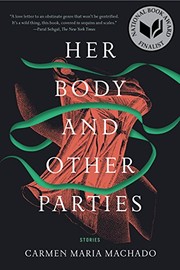
Her Body and Other Parties: Stories
Eight stories where bodies, medicine and old fairy tales get taken apart, with a green ribbon running through the whole book.
2,997-word summary · 13 min read
The Gift of the Magi
A young couple with almost no money each sells the thing they treasure most to buy a Christmas present for the other.
1,978-word summary · 9 min read
Locke & Key, Vol. 1: Welcome to Lovecraft
After their father is murdered, the Locke children move into a haunted family estate where keys unlock doors to ghosts, other places, and dangerous secrets.
2,019-word summary · 9 min read
Hearts in Atlantis
Five linked stories follow Bobby Garfield, Carol Gerber, and their friends from a haunted childhood in 1960 to the long aftermath of Vietnam.
2,402-word summary · 11 min read
The Memoirs of Sherlock Holmes
Doyle's second Holmes collection gathers twelve Strand stories, including the early case of the Gloria Scott and the confrontation with Moriarty at Reichenbach…
2,390-word summary · 11 min read
The Illustrated Man
A tattooed drifter's moving pictures retell eighteen Bradbury stories of children, rockets, Mars and the last night of the world.
2,791-word summary · 12 min read
Lullaby
A reporter discovers that a poem in a children's book kills anyone who hears it, and his attempt to destroy every copy turns into a road trip through grief,…
2,147-word summary · 10 min read
Galatea
The statue brought to life narrates her own story: a jealous sculptor, a locked hospital room, a daughter to protect, and one last plan to escape.
1,972-word summary · 9 min read
This Present Darkness
A pastor and reporter face demons over Ashton while angels answer prayer.
2,384-word summary · 11 min read
The Epic of Gilgamesh
Gilgamesh loses Enkidu, then seeks endless life past the flood.
2,246-word summary · 10 min read
The Day of the Triffids
Blinded survivors flee carnivorous plants after a meteor shower.
2,171-word summary · 10 min read
The Complete Fairy Tales
Mermaids, snow queens and tin soldiers in the full Andersen collection.
2,414-word summary · 11 min read
Haunted
Writers lock in for three months and trade worse stories as food runs out.
2,576-word summary · 11 min read
Full Dark, No Stars
Four novellas about revenge where ordinary people do terrible things and live with it.
2,646-word summary · 12 min read