
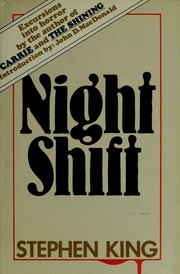
Night Shift
2,488-word summary 11 min read 336 pages in the book
- First published
- 1978
- Publisher
- Doubleday
- Pages
- 336
- ISBN
- 9780385129916
Reading options
What's inside (7 sections)
- Jerusalem's Lot, Graveyard Shift, and the mills of Maine
- Machines that bite: The Mangler, Battleground, Trucks, The Lawnmower Man
- Telling someone and wishing you had not: The Boogeyman, Gray Matter, Sometimes They Come Back
- Wanting and worshipping: I Know What You Need, Children of the Corn, Strawberry Spring
- Deals, edges, and goodbyes: Quitters Inc. to The Woman in the Room
- Key takeaways
- FAQ
I came to Night Shift late, after the big novels, and that turned out to be the right order. This is Stephen King's first collection, published February 17, 1978 by Doubleday, 336 pages, ISBN 9780385129916, with an introduction by John D. MacDonald. On my list it showed up as Stories from Night Shift on line 1721, which is the same book under a variant title, so I am filing it under its standard title Night Shift. Twenty stories, most first printed in men's magazines like Cavalier and Penthouse and a few new for the book, written before King could afford to be picky. You can feel a young writer trying every door to see which ones open onto something cold.
The range surprised me. There are Maine horror stories and science fiction turns, revenge tales and sad ones that barely count as horror until the last page. A few became films you have probably seen, Children of the Corn, Trucks as Maximum Overdrive, The Boogeyman, The Lawnmower Man in name if not in plot, Quitters Inc. and The Ledge folded into Cat's Eye. But reading them together is different from catching the movies. The book has a texture, cheap motels and mill shifts and laundry machines and high school hallways, ordinary workplaces where something patient is waiting. King would later write longer and more polished books. Here he is hungry, fast, and willing to end a story with a slammed door rather than a lesson.
Jerusalem's Lot, Graveyard Shift, and the mills of Maine
The book opens with Jerusalem's Lot, an epistolary prequel of sorts to Salem's Lot. Charles Boone inherits a gloomy family house called Chapelwaite and writes letters to a friend about rats in the walls, a deserted village nearby, and a church with a strange book on its altar. His servant Calvin McCann helps him dig into Boone family history, and the past gets worse the deeper they go. The ending leans on old New England dread, worms and chanting and something large moving under the floor. It is the longest story here and the most old fashioned, and I mean that fondly. King is doing his Lovecraft homework in public, and the letters let him hide how little happens for pages until it all happens at once.
Graveyard Shift drops the manners and gets dirty. Hall, a drifter working a summer mill job, joins a cleanup crew in the basement of an old textile mill. Warwick, the foreman, hates him and picks him for the worst work. Down below they find rats, then bigger rats, then bats, then a subcellar no map admits. The description of the mill, the oil and cotton dust and dead air, is vivid in a way that makes your skin itch. Hall's rivalry with Warwick drives the plot toward a coffin sized choice. The horror is physical more than moral. No one learns anything. The mill just keeps eating.
Night Surf comes next and wrong foots you if you expect monsters. On a beach in a world emptied by a flu called A2, a group of teenagers tell stories about who died and who might still be alive. They talk about parties and cars and a house where someone is sick. The dread is quiet. King, writing in the late sixties, already has his post plague voice that he would later stretch into The Stand. I liked this one more on a second read, when I stopped waiting for a creature and noticed how young everyone sounds trying to act finished with grief.
I Am the Doorway closes this early run with science fiction. Cather, an astronaut back from Venus, has hands that itch and eyes that seem to move on their own. He tells a friend that something came back with him and is growing under his skin. The friend tries to help and the result is brutal. The body horror is played straight, with bandages and ointment and a man staring at his own fingers. It is short and mean and it works because Cather narrates like a man filing a report he does not want to believe.
Machines that bite: The Mangler, Battleground, Trucks, The Lawnmower Man
The middle of the book loves machines that stop obeying. The Mangler is set in a laundry, where an industrial presser with a history of cuts and burns seems to develop a taste for people. A policeman and a laundry owner piece together a pattern of accidents, missing fingers, strange smells, and a virgin bled onto the machine by accident or design. The exorcism scene, if you can call it that, is played with total seriousness, which makes it funnier and scarier at once. I laughed and then felt bad for laughing. That feels like the point.
Battleground is almost wordless in effect. John Renshaw, a hired killer, gets a package of toy soldiers after a job and finds they are armed and organized. They set up mortars on the bookshelf, send helicopters from the desk, and demand surrender. Renshaw fights them room to room with real guns and real fire. The pleasure is in the tactics, a general brought low by infantry six inches tall. The ending has a neat snap. No fat on it at all.
Trucks is bleaker. At a truck stop, rigs without drivers start circling, then killing, then demanding fuel. The narrator, the counterman, and a young woman are trapped inside while the trucks idle outside like cattle. Humans are forced to pump gas to stay alive, with the promise, if you can call it that, of more work tomorrow. King lets the narrator think about planes overhead and whether anyone is left up there. The final image stuck with me longer than the gore. Work as survival, survival as work, with no one to complain to.
Then comes The Lawnmower Man, which has almost nothing to do with the film that borrowed its title. Harold Parkette hires a odd job man to cut his overgrown lawn and is told not to watch. He watches anyway. The mower runs itself, the grass is eaten rather than cut, and the man behind it serves Pan, the old goat god of pastures, in a suburban yard. The last pages go pagan and bloody. It is silly and it knows it, but King writes the heat and the smell of cut grass so well that the silliness curdles. Not his best, but you remember it.
Telling someone and wishing you had not: The Boogeyman, Gray Matter, Sometimes They Come Back
Three of the strongest stories are built as confessions. In The Boogeyman, Lester Billings tells a psychiatrist how his three children died. The first cried about something in the closet. The second the same. The third, after moves and prayers and a new house, the same again. Lester is not likable. He is cold about his wife, quick to call his boys soft, slow to admit he left a child alone in a room he feared to enter himself. That coldness makes the story harder to shake. When he finishes talking and reaches for his coat, what is waiting in the office reframes everything. I will not spoil the exact beat, but it is one of King's cleanest closing shocks.
Gray Matter is a bar story. An old man bursts into a convenience store in a snowstorm and says his son Richie, hurt at work and living on bad beer, is changing into something that hates light and wants more than beer. A few men go to the house to see. What they find upstairs is soft and spreading and still hungry. The joy here is voice, men on stools trying not to believe each other, the cold outside and the smell inside. It is short, it does not explain itself, and it ends at the right second.
Sometimes They Come Back flips the confession into guilt. Jim Norman, a teacher, lost his older brother to street hoods when he was a boy and froze when it mattered. Now students in his class die and are replaced by the same hoods, young again and smiling at him. His wife is pregnant, his mother calls, his past will not stay past. The classroom scenes are tense because King knows schools, chalk dust and seating charts and the particular fear of losing control in front of teens. The price Jim pays to fix it feels old and unfair, which suits the story. You cannot bargain with the dead without bringing cash you do not want to spend.
Wanting and worshipping: I Know What You Need, Children of the Corn, Strawberry Spring
I Know What You Need starts soft and turns possessive. Elizabeth Rogan, a college girl with little money and less luck, keeps running into Edward, a young man who always knows what she needs, a job lead, the right book, comfort after a bad date. At first it feels sweet. Then friends notice Edward's past, the girls who changed after knowing him, the way his gifts fit a little too well. King is good at this kind of slow curdle, kindness as surveillance. The last third reads fast because you want Elizabeth to see it before she cannot leave it.
Children of the Corn is the famous one, and fame has not dulled it much. Burt and Vicky, a couple already fighting about everything, cut through Gatlin, Nebraska and find empty streets, empty houses, and corn that seems too tall and too close. The town's children, led by boy preacher Isaac and his enforcer Malachi, worship He Who Walks Behind the Rows and have removed every adult. Burt tries to play hero and Vicky tries to keep them both alive, but neither listens well. King keeps the god mostly offstage, a rustle and a shadow and red eyes in green, which is wiser than any costume. The closing turn, with the age of favor lowered, lands because it is religious logic followed to its end.
Strawberry Spring returns to campus and fog. A narrator remembers a season called strawberry spring, a false thaw when fog sat on the college grounds and girls started dying. He remembers who he walked with, what was said in the parking lot, how fear made everyone kinder and stranger. The trick of the story is memory itself. Who is telling this and why now. Rereading the first paragraph after the last line is an unpleasant pleasure. Short, foggy, and confident.
Deals, edges, and goodbyes: Quitters Inc. to The Woman in the Room
The last stretch collects King's deal with the devil stories and his sadder goodbyes, and the mix keeps the pages turning.
Quitters Inc. gives Richard Morrison a cure for smoking he cannot refuse. Vic Donatti shows him photos, files, and methods, and explains the company will watch him, punish slips, and extend the treatment to his wife and child if he fails. Morrison quits fast. The comedy drains out as the months pass and he understands the contract has no end date. It is one of the best built stories here, all menace in office furniture.
The Ledge is a straight dare. Stan Norris loves the wrong man's wife, and Cressner, the rich husband, offers a bet. Walk the five inch ledge around his high rise penthouse and he can have her and money and freedom. Refuse and lose everything. Norris goes out into the wind in his underwear while pigeons watch. King writes height the way he writes mills, with attention to hands and breath and the stupidity of looking down. The final phone call is petty and perfect.
The Man Who Loved Flowers is brief and cruel in a different key. In 1963 a young man in a fine suit buys flowers on a city street, smiling, asking about a girl in a white dress. Everyone likes him. Then he finds a girl and the evening breaks. King ties the mood to a date readers will recognize without spelling it out. I admired the restraint. No monster, just a mind that slipped and a city too busy to notice.
One for the Road brings back Jerusalem's Lot country in winter. Two old men in a bar tell a newcomer about a car stuck in the snow near the old town and a family still inside it. They drive out and walk in and find what the cold preserved and what the town kept. It works as a sequel and as a standalone, a story about neighbors who know better and go anyway because leaving people in the snow is worse than fear.
The Last Rung on the Ladder is the gentlest story here and, for me, the most haunting in a quiet way. Larry remembers his sister Kitty, games in the barn, a fall that should have killed her and a save he still does not fully grasp. Grown life pulls them apart, jobs and marriages and distance, until a letter asks for help he answers too late. No monster appears. The horror is time and neglect. King lets the barn loft stand for every childhood place you cannot climb back to.
The Woman in the Room ends the book on that same low note. Johnny cleans his guns while his mother dies of cancer in a hospital bed, in pain that medicine barely touches. He loves her, he cannot stand watching, and he thinks about helping her die and what that would make him. The story stays in the room, the hum of machines, the weight of a decision. After all the possessed presses and killer trucks, this feels like the scariest room in the book because it is real.
Reading straight through, the unevenness shows. Some early stories repeat moves, lonely men in small towns, wives who do not listen, endings that snap shut a page too fast. A couple of couples, Burt and Vicky especially, bicker so much you start rooting for the corn. The science fiction entries creak a little now, with Venus expeditions and Cold War hardware. And the women in these stories are often victims or motives more than people, a fair knock on young King that later books would only partly fix.
Still, the hit rate is high for a first collection, and the voice is already there. The Maine towns sound right. The work details, truck stops and laundry floors and classrooms, carry weight. The scares come from attention more than shock, from King noticing how a basement smells or how fog sits on a quad or how a man holds a ledge when the wind finds him. If you only know the films, the book gives you the stories as they were meant, shorter, stranger, and less forgiving. Start with The Boogeyman or Quitters Inc. if twenty feels like a lot. You will find your way to the rest before the night is over.
FAQ
When was Night Shift published?
Doubleday published it on February 17, 1978. The first edition runs 336 pages and the ISBN is 9780385129916.
Is Stories from Night Shift a different book?
No. Line 1721 lists it as Stories from Night Shift, a variant title for the same Night Shift collection. Line 1722 Night Shift plain is the same work, so only this post was created.
Is Night Shift part of a series?
No. It stands alone as a collection, though Jerusalem's Lot leads into Salem's Lot and One for the Road returns to that town.
Similar books
Skeleton Crew
King's 1985 collection pairs The Mist with The Jaunt, The Raft, and Survivor Type: 22 stories of Maine dread.
3,209-word summary · 14 min read
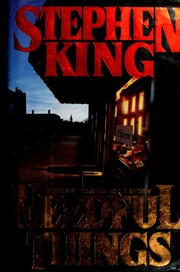
Needful Things
A smiling man sells exactly what you want for cash plus one small cruelty to a neighbor.
2,007-word summary · 9 min read
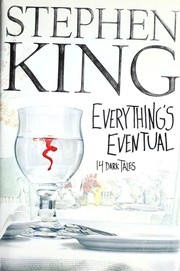
Everything's Eventual: 14 Dark Tales
Fourteen Stephen King stories shuffled by the deal of a card deck, from the haunted room of 1408 to quiet tales of grief that sting as much as the monsters.
2,000-word summary · 9 min read

If It Bleeds
Holly Gibney faces an outsider plus three more tales of dread.
2,219-word summary · 10 min read

Full Dark, No Stars
Four novellas about revenge where ordinary people do terrible things and live with it.
2,646-word summary · 12 min read
Four Past Midnight
Four novellas about a plane lost in time, a writer haunted, and horrors small and large.
2,584-word summary · 11 min read
Duma Key
After losing his arm, Edgar Freemantle paints on a Florida island and learns his pictures can open doors for something hungry.
2,530-word summary · 11 min read
The Dark Half
A Maine novelist buries his violent pen name George Stark, then faces murders that carry his own fingerprints.
2,956-word summary · 13 min read

The Call of Cthulhu and Other Weird Stories
Seventeen tales from Dagon to Innsmouth, led by Cthulhu, the Colour, and the Whisperer, in S. T. Joshi careful Penguin edition with notes and corrected texts.
2,593-word summary · 12 min read
The Call of Cthulhu
A professor's papers link a sculptor's dreams, a Louisiana cult raid, and a sailor's voyage to a sleeping god under the sea.
2,530-word summary · 11 min read
Rosemary's Baby
A young couple's dream apartment in the Bramford turns dark when helpful neighbors and a trusted doctor take over Rosemary's pregnancy.
2,665-word summary · 12 min read

Hidden Pictures
Nanny Mallory sees Teddy drawings predict a murder in New Jersey.
2,332-word summary · 10 min read
Lisey's Story
Two years after her novelist husband dies, Lisey Landon follows a trail of clues into his childhood and the other world that made him a writer.
1,998-word summary · 9 min read

Hearts in Atlantis
Five linked stories follow Bobby Garfield, Carol Gerber, and their friends from a haunted childhood in 1960 to the long aftermath of Vietnam.
2,402-word summary · 11 min read
Rose Madder
After fourteen years of abuse, Rosie Daniels flees her cop husband and finds a painting that opens into a dangerous mythic world.
2,349-word summary · 10 min read
Revival
Jamie Morton shadows preacher Jacobs from boyhood healings to electric cures that open a door best left shut.
2,037-word summary · 9 min read
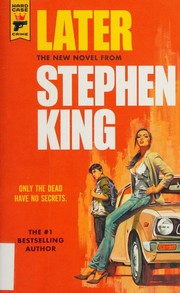
Later
Boy Jamie Conklin sees dead people who must answer truthfully, pulling him into NYPD cases and a drug crew's greed.
2,009-word summary · 9 min read

Elevation
A Castle Rock man keeps losing weight without changing shape, and spends his strange condition helping his new neighbors.
2,984-word summary · 13 min read
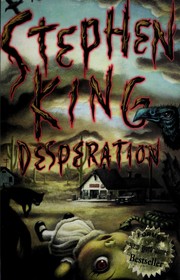
Desperation
Travelers on Highway 50 are hauled into empty Desperation, Nevada, where a possessed deputy serves an old thing in the mine.
2,993-word summary · 13 min read
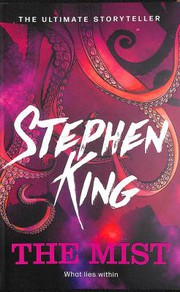
The Mist
Mist full of creatures traps a Maine supermarket while Mrs. Carmody builds a congregation inside.
2,104-word summary · 9 min read
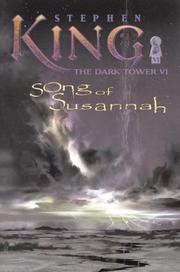
Song of Susannah
Mia takes Susannah to 1999 New York to bear a chap while Roland meets his author in Maine.
2,051-word summary · 9 min read
Insomnia
Widowed Ralph stops sleeping in Derry and sees small doctors with scissors deciding who lives and dies.
3,605-word summary · 16 min read

The Girl Who Loved Tom Gordon
Nine-year-old Trisha McFarland strays off the Appalachian Trail and spends days lost in Maine woods with a Walkman and Tom Gordon on her mind.
2,957-word summary · 13 min read
Gerald's Game
Handcuffed to a bed after her husband dies, Jessie Burlingame faces thirst, a stray dog, and buried memories over 28 hours.
2,940-word summary · 13 min read

Bag of Bones
A blocked novelist returns to his Maine lake house after his wife dies and faces a custody fight and old ghosts.
2,616-word summary · 12 min read
Christine
Misfit Arnie restores a wrecked 1958 Plymouth Fury that takes him over, forcing best friend Dennis and girlfriend Leigh to fight back.
2,106-word summary · 9 min read

Under the Dome
Chester's Mill is sealed under an invisible dome as cook Barbie and editor Julia face Big Jim Rennie's rule.
2,731-word summary · 12 min read
The Institute
A kidnapped prodigy wakes in a Maine facility where gifted kids earn tokens in Front Half and vanish from Back Half.
3,814-word summary · 17 min read
Doctor Sleep
Grown Dan Torrance gets sober in New Hampshire and helps gifted Abra Stone face the True Knot.
2,841-word summary · 13 min read
Cujo
A rabid St. Bernard traps a mother and her young son in a broken-down car at a lonely Maine garage.
2,910-word summary · 13 min read