

Reading options
What's inside (8 sections)
I came to this one because a friend kept telling me it was the King book that made him cry, which sounded wrong to me. King is the guy I associate with clowns in sewers and cars that fix themselves, not custody hearings and writer's block. I expected a straight ghost story set at a lake. What I got was slower and sadder than that, and in the end I understood why he remembered it that way. Published in 1998 by Scribner, about 529 pages in the first hardcover, it reads like King trying to write about grief first and ghosts second.
The setup is simple and it lands hard. Mike Noonan is a bestselling novelist living in Derry, Maine, married to Jo, who handles everything practical in his life while he types. Early in the book Jo dies suddenly of a brain aneurysm while pregnant, on the street, waiting for Mike. He loses her and the child at once. After that he cannot write. He sits at the screen and nothing comes, or he writes pages he deletes. He has bad dreams set at their summer place on Dark Score Lake, a cabin called Sara Laughs in the unorganized township called TR-90. Four years pass in that stuck state. Sleeping pills, daytime naps, a routine that looks fine from outside and feels hollow inside.
What finally moves him is pressure plus curiosity. His publisher wants a book. His brain keeps returning to the lake house he has avoided since Jo died. He decides to go back for the summer, to face the place and maybe to work again. His brother-in-law thinks it is a bad idea. His friends in town think time will sort him out. Mike goes anyway, driving up with boxes of notes and a plan to sort papers and sleep better. The house has been closed up. The caretaker has watched it. The lake is cold and pretty and quiet in a way that makes every small noise loud at night.
A widower who cannot write
The first stretch is all about that blocked state, and King writes it with close, believable detail. Mike describes the way his days split into naps and false starts. He keeps Jo's things where she left them. He finds himself talking to her in his head. He has a recurring dream of walking down a road toward the lake while someone calls for help. He wakes sweating. None of this is played for scares yet. It plays like a man describing what mornings feel like after a loss.
I liked how specific the writing life feels here. Mike talks about his agent, his editor, the contract for a book he does not have. He talks about the tricks he used when work went well, like writing fast in the morning and fixing later. He talks about the fear that the talent left with Jo, since she typed his drafts and told him the truth about them. There is a funny, tired honesty to these pages. He is famous enough that people recognize his name in town, but not so famous that it protects him from anything.
Then small strange things start. Magnets on the fridge spell things he does not remember arranging. His computer seems to produce pages while he naps, pages in a new novel he does not remember starting. At first he treats this as stress. He jokes about it to himself. He asks whether grief can make a person sleepwalk through work. King lets this build slowly. A letter opener moves. A name repeats. Jo loved word games and left notes everywhere when alive, so Mike wonders if he is inventing messages because he misses her.
This is also where the book shows its age in a good way. No phones buzzing every minute. People drive to each other's houses. Lawyers send faxes. Research means going to the library and asking an older person who remembers. That pace suits the story, because Mike has time to sit on a porch and think, and so do you.
Sara Laughs and the Devore fight
On his first days at the lake Mike meets Mattie Devore and her three year old daughter Kyra. Mattie is twenty, widowed, poor, living in a trailer, working hard to keep her life together. Her husband Lance died in an accident. Her father in law is Max Devore, a very rich and very old man from the town's leading family, who has decided he should raise Kyra himself. Mattie refuses. Max hires lawyers and starts proceedings to take the girl.
Mike is drawn to them fast, maybe too fast, and the book knows it. Kyra is bright and odd, fond of Mike from the start, quick with words for a three year old. Mattie is warm but guarded, tired of men who promise help and then want something. Mike starts helping in small ways. Rides. Groceries. Sitting with Kyra so Mattie can work. Then he steps in bigger by paying for John Storrow, a good custody lawyer from Derry, to represent Mattie. Storrow is blunt and decent, the kind of man who tells Mike not to date his client during a custody case because it will look bad in court.
Max Devore is a strong villain because he rarely raises his voice. He is in a wheelchair, blunt, used to buying what he wants. With him is Rogette Whitmore, his assistant, a tall woman who handles threats with calm manners. They offer money. They hire investigators. They spread stories about Mattie being unfit and about Mike being an unstable older man chasing a young widow. Sheriff deputies watch. Town people take sides. Some remember what the Devores did for the town with jobs and gifts. Others remember what it felt like to cross them.
Bill Dean, the local caretaker who looks after Sara Laughs, becomes Mike's friend and guide. Bill is older, plain spoken, loyal to the town but honest about its past. He warns Mike that custody cases here get ugly. He tells stories about the lake families, about who married whom, about children who died young. Through Bill and others Mike starts to hear the name Sara Tidwell. Sara was a Black blues singer who played at town gatherings decades earlier, in the days when a Black woman on stage in that part of Maine drew crowds and trouble. The cabin Sara Laughs is named for the sound people said they heard there, a woman laughing, long after she was gone.
Dreams, messages, and the old crime
The middle of the book braids the custody fight with the haunting, and this is where I had to pay attention. Mike's dreams get worse. He dreams of a woman singing, of children near the water, of men in old clothes standing in the woods. Kyra seems to share some of it. She says things a three year old should not know, names and bits of songs. She draws pictures that disturb Mattie. Mike wonders if the lake itself holds something that touches sensitive people, especially kids.
He also learns that Jo knew more about this place than he thought. Going through her office things and her computer files, he finds lists, notes, and library records showing she came back to TR-90 several times in the year before she died without telling him. She was looking into Sara Tidwell and into the families around the lake. She made a family tree. She copied old newspaper stories. Mike feels a sting reading this. Why did she keep it from him. Was she protecting him while he was blocked, or did she sense he would laugh it off.
The papers point to a pattern. In several old lake families, firstborn children with names starting with K or C died young, often by drowning, across generations. Kyra fits that pattern as a Devore descendant. Mike's notes start to suggest that Sara Tidwell had a young son named Kito who died in the lake, and that Sara herself died violently around the same time. The town story says she left or drowned. The hidden story, the one Jo was piecing together, says a group of local men attacked Sara, assaulted her, killed her, and drowned the boy to hide it. Those men were grandfathers and great grandfathers of people still living around the lake, including the Devore line.
King handles this reveal in pieces rather than one speech. A vision here. A half remembered song there. A document Jo hid inside a manuscript box. Mike's new novel, the one writing itself on his computer, turns out to hold clues too, as if Jo is feeding him lines through sleep. I found this device strange but moving. Mike is a writer who cannot write, and then words come through him that are not quite his. He has to decide whether to trust them.
There is a scary sequence where Max and Rogette try to kill Mike to end his help for Mattie. They lure him out and try to drown him near the lake. He survives, helped, he believes, by Jo stepping between him and the water in some form he cannot explain. That same night Max kills himself. The custody case should end there, but it does not end cleanly. Money keeps moving. Old hatreds keep moving. Storrow hires a private investigator to watch for dirty tricks, and for a while it looks like Mattie might keep Kyra and start over.
The storm and what the bones demand
The last part moves fast after so much slow build, and it hurt to read. Storrow and the investigator are celebrating a good ruling when Mattie tries to tell Mike something personal, something about how grateful she is and how confused she feels. Before they can sort it out, a truck passes her trailer and someone fires into it. Mattie is killed. Storrow and the investigator are wounded. The shooter is connected to men paid through Devore money, though Max is already dead and cannot call it off. The investigator manages to shoot the driver and stop the attack with Mike's help. It is messy, loud, and short, nothing like a movie gunfight.
Mike grabs Kyra and drives through a rising storm back to Sara Laughs, because men are still looking for the girl and the cabin has locks and a phone. What follows is the hardest section to summarize without sounding wild, so I will stay close to what happens. Under Sara's influence, Mike feels pulled toward the water with Kyra, pulled toward doing what the old curse wants, which is the death of another K child of those families. He carries the girl toward the lake in rain and wind, hearing singing, seeing shapes. He understands, in a foggy way, that Sara wants him to drown Kyra and then himself, to add to her count.
Jo stops him. That is how Mike experiences it. He hears her voice the way he used to when she read his drafts and told him to fix a scene. He remembers the pages of his sleep written novel and sees the clue he missed. He gets Kyra inside, locks the doors, and follows the paper trail Jo left to its end. The genealogy shows something he did not expect, that his own blood ties to one of the lake families through an older branch, and that a child he and Jo might have had would have carried a K name and stood next in line. That is why Jo kept digging. She felt their family was part of it.
Mike goes looking for Sara's resting place in the storm. Ghosts of the old men try to stop him, standing in the road, crowding the woods. He has a clear vision of what happened to Sara and Kito, and it is brutal. He finds where her bones lie and destroys them, breaking the hold. King writes this as physical work, lifting, striking, breathing hard in rain, not as magic words. When it is done the singing stops. The pressure lifts.
Back at the house Rogette has taken Kyra during the confusion and carried her toward the lake. Mike follows. In the water by the dock, as Rogette tries to pull them both under, Mattie's spirit appears and strikes Rogette, knocking her into the lake. Rogette grabs Mike, but storm wreckage from the dock impales her and she dies in the water. Mattie says goodbye to Kyra in a brief moment Mike can barely stand to watch. Then she is gone.
The epilogue is quiet. Mike has stopped writing for publication. He is trying to adopt Kyra, but as a single older man with no blood tie the process drags. The book does not promise he will get her. It leaves him waiting, caring for her when allowed, hoping the state will see what matters. After all the ghosts and gunfire, that plain uncertainty felt right to me.
What works and what drags
What works best is the grief. Mike missing Jo feels real on every page, in big speeches and in small habits, like keeping her sweaters or hearing her edit his sentences. His bond with Kyra also works. She is written as a real toddler, funny and sudden, not as a tiny adult. Mattie is drawn with care too, proud, tired, trying to stay kind while afraid. The town feels lived in, with its mix of kindness and fear around rich families.
The scares are mostly quiet, which I liked. Cold spots. Songs half heard. Fridge magnets. Dreams that leave water on the floor. When violence comes it is human first, lawyers, money, guns, and only then ghostly. King also gives the book a clear moral shape without preaching. The old crime was covered up by decent people who wanted quiet, and the curse grew in that quiet.
What drags is the middle. The custody law detail goes on. Storrow explains strategy. Investigators report. Mike repeats his dreams to different people and gets similar warnings. I skimmed some of those pages. A few side characters blur together, especially the lawyers and deputies. Readers who want fast horror may find the first half slow, since the true haunting stays in the background while the court case takes center stage.
Still, I finished it feeling the length earned its ending. The storm chapters pay off threads about names, songs, and papers that seemed scattered earlier. The final image of Mike waiting to adopt Kyra stayed with me longer than any single scare. If you want King at his most human, with horror wrapped around loss rather than the other way around, this is a good place to start. If you want nonstop terror, start with Misery or The Shining and save this for a rainy week when you have time to sit with it.
How this one fits
It helps to know this was King's first novel for Scribner after years with Viking, and it won major horror honors including the Bram Stoker Award for Best Novel in 1999 along with British Fantasy and Locus awards. A television miniseries followed in 2011 with Pierce Brosnan as Mike. None of that matters while reading, but it explains the confidence in the voice. King was starting fresh with a new house and chose to write about starting over after loss. The lake, the papers Jo left, the child who needs a home, all of it points the same way. You cannot fix the past by holding its bones. You have to name what happened, break its grip, and care for the living who remain.
FAQ
When was Bag of Bones published?
Scribner published it on September 22, 1998. The first hardcover runs 529 pages and the ISBN is 9780684853505.
Is Bag of Bones part of a series?
No. It stands alone, though it shares Maine settings and themes with King's other novels.
Who are the main characters?
Mike Noonan, a blocked novelist, his late wife Jo, young widow Mattie Devore and her daughter Kyra, rich Max Devore, and singer Sara Tidwell.
Similar books
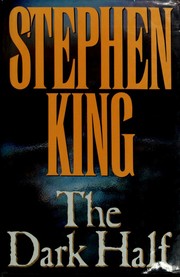
The Dark Half
A Maine novelist buries his violent pen name George Stark, then faces murders that carry his own fingerprints.
2,956-word summary · 13 min read

The Valley of Vengeful Ghosts
A grieving therapist buys a model home in a rainy valley where the walls leak ghosts.
2,035-word summary · 9 min read

Lisey's Story
Two years after her novelist husband dies, Lisey Landon follows a trail of clues into his childhood and the other world that made him a writer.
1,998-word summary · 9 min read
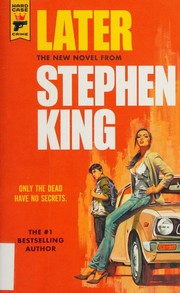
Later
Boy Jamie Conklin sees dead people who must answer truthfully, pulling him into NYPD cases and a drug crew's greed.
2,009-word summary · 9 min read
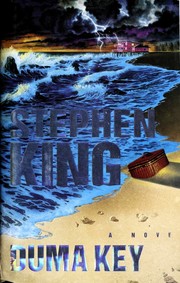
Duma Key
After losing his arm, Edgar Freemantle paints on a Florida island and learns his pictures can open doors for something hungry.
2,530-word summary · 11 min read
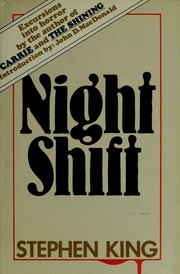
Night Shift
King's first story collection moves from haunted mills to killer cornfields, twenty early tales where ordinary places turn evil.
2,488-word summary · 11 min read
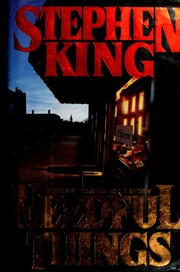
Needful Things
A smiling man sells exactly what you want for cash plus one small cruelty to a neighbor.
2,007-word summary · 9 min read

Under the Dome
Chester's Mill is sealed under an invisible dome as cook Barbie and editor Julia face Big Jim Rennie's rule.
2,731-word summary · 12 min read
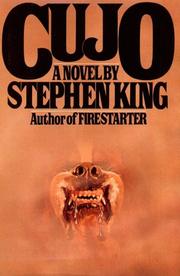
Cujo
A rabid St. Bernard traps a mother and her young son in a broken-down car at a lonely Maine garage.
2,910-word summary · 13 min read

'Salem's Lot
A writer returns to Jerusalem's Lot as an old house fills with vampires.
2,046-word summary · 9 min read

Pet Sematary
Doctor Louis buries Church and then Gage in ground that returns them wrong, learning dead is better.
2,158-word summary · 10 min read
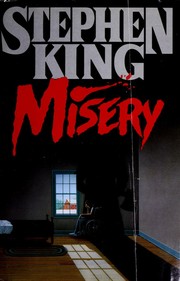
Misery
A novelist crashes in Colorado snow and wakes in the home of his self-declared number one fan, who will not let him leave.
2,744-word summary · 12 min read

A Head Full of Ghosts
A broke Massachusetts family lets a reality TV crew film their daughter's exorcism, and fifteen years later the only survivor tries to explain what really…
2,588-word summary · 12 min read

At First Sight
Jeremy and Lexie are married and expecting a baby when anonymous emails tell him the child may not be his.
2,317-word summary · 10 min read

Delilah Green Doesn't Care
Delilah returns to Bright Falls to photograph her stepsister's wedding and falls for Claire, a bookstore owner and single mother, while a cruel bet threatens…
2,315-word summary · 10 min read

The Survivors
Kieran Elliott returns to Evelyn Bay twelve years after a storm killed his brother, and a young woman's murder forces the town to face what it has concealed.
2,571-word summary · 11 min read

Family of Liars
The prequel to We Were Liars: Carrie Sinclair finally tells the story of the summer of 1987, the boy who died on Beechwood Island, and the lie her family built…
2,072-word summary · 9 min read

Anna Dressed in Blood
Ghost hunter Cas meets Anna, the ghost who kills back.
2,622-word summary · 12 min read

The Broken Girls
A journalist revisits her sister's murder while a restored boarding school gives up a girl missing since 1950.
2,579-word summary · 11 min read

The Winners
Two years on, Beartown opens a new rink, welcomes Maya and Benji home, and faces money fights and a gun at the ice.
2,366-word summary · 11 min read

The Amityville Horror
The Lutz family flees 112 Ocean Avenue after 28 days of cold spots, voices, and flies, following DeFeo murders.
2,088-word summary · 9 min read

How to Sell a Haunted House
Siblings Louise and Mark must empty puppet filled parents house that fights back.
2,085-word summary · 9 min read

Gallant
Mute Olivia Prior returns to Gallant manor where ghouls walk and a shadow Recommends.
2,081-word summary · 9 min read

All Rhodes Lead Here
Grieving Aurora moves to Colorado to fix a farmhouse, finding slow healing with her gruff older neighbor Tobias Rhodes.
2,249-word summary · 10 min read

The Switch
A burned-out consultant and her 79-year-old grandmother swap London and Yorkshire homes for two months, facing grief, dating apps, and village politics.
2,782-word summary · 12 min read

The Shipping News
At thirty-six, failed newsman Quoyle loses his cruel wife and flees to ancestral Newfoundland with his daughters, where a small-paper job slowly rebuilds him.
2,833-word summary · 13 min read

Sing, Unburied, Sing
A Mississippi family drives to Parchman prison while ghosts press close, and a dying grandmother holds the house together.
2,871-word summary · 13 min read

Heart-Shaped Box
A washed-up rock star buys a haunted suit online and must face the vengeful ghost attached to it.
2,980-word summary · 13 min read

Evvie Drake Starts Over
A widow hiding a painful secret rents her back apartment to a pitcher who lost his throw, and they slowly learn to start again.
2,584-word summary · 11 min read

The Turn of the Screw
A governess sees Quint and Jessel at Bly, or projects them; James never settles which, and Miles dies.
2,080-word summary · 9 min read