
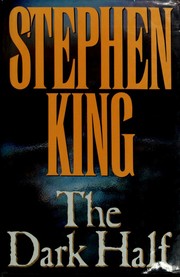
The Dark Half
2,956-word summary 13 min read 431 pages in the book
- First published
- 1989
- Publisher
- Viking
- Pages
- 431
- ISBN
- 9780670829828
Reading options
What's inside (8 sections)
I picked this one up because I kept hearing it was King's answer to getting caught. He had been writing as Richard Bachman for years, and when a bookstore clerk figured it out, the secret collapsed. I wanted to see what a writer does with that kind of embarrassment. Turns out he writes a horror novel about it. Published in 1989 by Viking, 431 pages in the first hardcover, The Dark Half is the story of a man who tries to bury his pen name in public and then watches that pen name climb out and start killing people.
Thad Beaumont is not a star. He teaches writing, lives in Ludlow, Maine with his wife Liz, and writes serious novels that get polite reviews and thin sales. Under the name George Stark, though, he writes brutal crime books about a killer called Alexis Machine, and those books pay the bills. Stark has a fake biography and a fake photo. Readers love him. Thad keeps the two lives separate until a lowlife figures out the secret and tries to blackmail him. Instead of paying, Thad and Liz decide to out themselves on their own terms, with a magazine piece and a mock funeral in the local cemetery, complete with a cardboard tombstone that says Not a Very Nice Guy.
That photo of Thad smiling next to Stark's grave always stuck with me. It feels cocky in the way people get when they think they have solved a problem by naming it. Thad thinks he can close a chapter. He wants to write as himself now. He and Liz have infant twins, William and Wendy, and he is sober after years of drinking too much. Life is steadier than it used to be. Killing Stark looks like part of growing up.
Then people start dying.
A pen name with a grave
The early chapters move between Thad's house and the ugly details of the Stark business. King spends time on how the books got written, which I enjoyed more than I expected. Thad describes slipping into Stark's voice like putting on a different coat. The sentences get shorter. The jokes get meaner. He drinks when he writes as Stark, or he used to before he quit. Liz knows the signs. She can tell when he has been down in that basement room too long because he comes up wired and strange.
The blackmail part is handled fast. A man has found royalty paperwork and odd connections, and he wants money to stay quiet. Thad talks it over with Liz and with his agent and editor in New York. They agree the smart move is to confess first and control the story. A reporter and photographer from People come up to Maine. They shoot the grave. They run the piece. Friends call to joke about it. Students in Thad's classes think it is cool that their quiet professor wrote those wild books.
What makes this opening work is how normal it feels. There are phone calls about contracts. There is worry about whether the literary crowd will punish Thad for writing trash under another name. There is a small, tired marriage trying to handle twins who do not sleep through the night. Liz is practical and loyal, the kind of person who keeps lists and remembers to eat. Thad is anxious to please and a little proud of his trick. Neither of them expects anything worse than a dip in income.
King was clearly writing close to home here. He knew what it felt like to maintain a second name, to enjoy the freedom of it, to feel a little thrill when readers of the serious stuff had no idea. He also knew the guilt that comes when the fun identity starts to feel more alive than the real one. You can feel him poking at that in these pages without turning it into a lecture. He just shows Thad enjoying Stark's success a bit too much, then feeling relieved and a bit empty when Stark is declared dead.
The murders start
The first murder lands hard because the victim is helpless in a specific, local way. Homer Gamache is found dead by the side of the road near Castle Rock, beaten and left in his truck. The details are grim. What matters for the plot is what the police find inside the truck. The fingerprints belong to Thad Beaumont.
Sheriff Alan Pangborn enters here, and he quickly became my favorite part of the book. Pangborn is the sheriff of Castle Rock, the town next over, steady and dry and hard to fool. He drives to Thad's house with questions he does not want to ask. Thad has no reason to know Gamache, no reason to be near that road, and a solid alibi at home with Liz and the babies. Yet the prints match. Pangborn watches Thad's face while they talk. He notices how scared Thad looks, and how unwilling he is to explain certain gaps.
More killings follow, and they follow a pattern. The people who helped kill Stark on paper start dying in violent ways. Thad's agent in New York. His editor. The photographer and the writer connected to the magazine piece. Each scene is bloody and direct. Stark does not sneak around with poison or clever traps. He uses knives and razors and his hands, and he leaves a mess. At some of the scenes, or in calls around them, comes the phrase about sparrows flying again. Thad hears sparrows inside his own head during headaches, thousands of them cheeping at once, and the sound terrifies him in a way he cannot explain to Liz.
I found these middle murder chapters both gripping and a little wearing. On one hand, King stages them with awful clarity. You see the hotel rooms and offices, the late night arrivals, the way Stark talks to his victims first. Stark is big and pale and crewcut, with a dead look that people remember. He smokes Pall Malls constantly. He drinks. He quotes his own books. On the other hand, after the second or third killing, the shape repeats. Someone connected to the burial answers the door or picks up the phone, Stark toys with them, then violence. The dread stays, but surprise fades.
Thad's home life frays while this happens. Reporters call. Police call. Liz tries to shield the twins from the noise. Thad starts sleepwalking, or something like it. He wakes with dirt on his shoes. He finds notes in his own handwriting that describe things Stark has done, written in a voice that is his and not his. He hides this from Pangborn at first, which is understandable and also a mistake. Pangborn is fair, but he is not patient with people who waste his time when bodies are piling up.
Headaches and the twin
The turn that lifts the book from a simple pursuit story is the medical history. As a boy, Thad suffered terrible headaches. Doctors thought he had a tumor. When he was about eleven, a surgeon operated and found something that was not a tumor at all. Inside Thad's brain were bits of unformed human tissue. Part of a nostril. Slivers of fingernail. Chips of teeth. A malformed eye staring out from the tissue.
The explanation, when it comes, is that Thad absorbed a twin in the womb. One fetus grew around the other. What was removed was the remnant of a brother who never fully formed. Thad grew up thinking of it as a weird story his mother told in pieces. Pangborn hears it later and goes very quiet, because it gives him a physical reason for why Stark's fingerprints match Thad's exactly.
Thad connects this to his own twins. William and Wendy are still babies, but he watches them react to each other across rooms. One cries and the other wakes. One gets a cold and the other seems out of sorts. Liz tells him all twins do that. Thad starts to wonder if the link between him and Stark works the same way, only darker. When Stark hurts someone, Thad gets a headache or a nightmare. When Thad tries to write himself out of trouble, Stark seems to know.
This twin idea could have felt like a trick, but King grounds it in small domestic scenes that rang true to me. Thad changing diapers while trying not to think about fingerprints. Liz nursing one baby while the phone rings with another reporter asking about murder. Thad standing in the kitchen at 3 a.m., listening for sparrows that no one else hears, afraid to wake Liz because he has no good answer if she asks what is wrong. The horror grows out of tired parenting and money stress as much as out of anything supernatural.
There is also the drinking history, which King treats with care. Thad is sober when the book opens, going to meetings, counting time. Stark drinks the way Thad used to, heavily and with pride. When Stark takes over more of Thad's mind, Thad feels the old thirst return. It is not subtle, but it hit me anyway. Part of Thad misses the person he was when he wrote as Stark, looser and meaner and less afraid. Liz sees it too, and it scares her more than the police visits do.
Stark takes shape
Stark himself is worth describing at length because he carries so much of the book. He is not a ghost in a sheet. He looks like a man, solid and strong, healing fast from wounds that should slow him down. Early on he is rotting a little around the edges, which makes sense if you think about where he came from. A thing pulled out of a grave should smell like dirt. As the murders continue, as he writes more of his next Alexis Machine book in Thad's hand, he gets healthier. Thad, by contrast, gets thinner and paler. Energy seems to pass between them.
His personality is blunt force. He likes fast cars, loud music, cigarettes, whiskey. He speaks in short insults. He thinks Thad's literary novels are boring. He thinks Liz made Thad soft. He loves the Alexis Machine books because Machine does what Stark wants to do, which is hurt people who get in the way and enjoy it. When Stark sits at a typewriter, the pages fly. When Thad tries to write as himself, the pages crawl. King, who has written about writing more than almost anyone, clearly had fun with this split. One side of the desk is joy and speed. The other side is duty and drag.
Liz gets more to do as this section builds. She starts as the supportive wife who answers doors and calms babies, but she pushes back when Thad tries to manage her. She asks why he kept certain notes from her. She asks what he remembers from the nights he cannot account for. She loves him, but she does not excuse him. There is a painful scene where she admits she liked some of the Stark money and the attention that came with it, and now she hates herself for that. It felt honest. People do enjoy the fruits of things they later call wrong.
The Maine setting helps throughout. Ludlow is quiet streets and college offices and grocery runs. Castle Rock is bars and lake roads and winter coming early. Thad drives between them with the twins' car seats in back, trying to look like a normal dad while a voice in his head tells him what Stark did with a straight razor the night before. Pangborn watches the roads. Neighbors watch each other. Fall light gets thin. I believed the geography even where the plot stretched belief, because King writes errands and weather and small talk so well.
Pangborn starts to believe
Pangborn carries the investigation chapters, and they are the steadiest part of the novel. At first he treats Thad as a suspect who lawyered up too fast. The fingerprint evidence is hard to ignore. Thad's alibis check out, but alibis can be arranged, and Thad's evasions do not help. Pangborn interviews Liz separately. He interviews Thad's agent's office staff, hotel clerks, the magazine people. He builds a timeline on paper and stares at it.
What shifts him is not one clue but a pile of wrong details. Witnesses describe a man who looks like Thad but moves differently, broader and louder, with a crewcut Thad has never worn. The wounds on victims suggest a right handed attacker with great strength, while Thad is still weak from worry and lack of sleep. Phone records show calls Thad could not have made. And then there is the medical file about the childhood surgery, plus the fact that Stark's prints match Thad's exactly in a way that should be impossible.
Pangborn also hears about the sparrows. Thad finally tells him about the sound in his head and the phrase left at scenes. An older colleague with an interest in folklore and death customs tells them that in some traditions sparrows carry souls between worlds, acting as guides for the dead. The book treats these birds as psychopomps, carriers who gather when something unnatural tries to stay. Thad starts to understand his headaches as the sound of them circling, waiting for Stark to slip. Pangborn, a practical man, does not accept this all at once. He keeps checking motel registries even while he starts to keep an open mind.
I liked Pangborn because he does not become a believer too fast. He gets angry at Thad for holding back. He gets angry at himself for considering ideas that would sound foolish in court. He keeps doing police work, measuring distances, testing alibis, asking who benefits. When he finally agrees to help Thad set a trap for Stark rather than arrest Thad, it feels earned. He has run out of normal answers. He would rather risk looking silly than watch more innocent people die while he guards the wrong man.
This stretch has my main criticism of the book. The middle gets crowded. There are long conversations where characters explain the twin surgery twice, and long drives where Thad thinks in circles about whether Stark is a spirit or a split in his own mind. King wants to have it both ways, a real monster and a metaphor for authorship, and sometimes the talk stalls the chase. Readers who came for a tight police hunt may get restless around this point. I stayed with it because Pangborn's doggedness held me, but I skimmed a few paragraphs where the theorizing looped back on itself.
What the sparrows take
The last part returns to Thad's house and to the twins, which raises the stakes fast. Stark has been writing himself stronger, but he is also decaying in a way he cannot stop. He needs Thad to keep writing him, or he needs to replace Thad entirely. He starts coming around Ludlow openly, calling the house, leaving signs. Liz, who has tried to stay calm for the babies, finally sees him face to face and understands this is not a jealous fan or a lookalike. This is something that wears her husband's face and hates her.
Thad tries to fight back with words first. He starts a new Stark novel, thinking if he controls the story he can control Stark. It backfires. Every page he writes gives Stark more life and more pain. His hand cramps. His head fills with birds. Liz begs him to stop typing. William and Wendy cry through the night as if they feel the pressure too. The house, normally full of small domestic noise, goes tense and quiet between scares.
The showdown, when it comes, is strange and vivid and very King. Thad uses a bird call, the kind of thing he learned as a boy in Maine, to summon real sparrows. They come in huge numbers over Castle Rock and Ludlow, darkening the sky, drawn to Stark as carriers drawn to something that should have passed on. They fall on Stark and tear him apart with the force of weather correcting itself. Stark fights hard. He is strong to the end, cursing and slashing, but there are too many of them. They carry off flesh and the part of Thad that made Stark possible.
I will not spoil every beat of who lives and who is hurt in those final pages, since the book earns its surprises. I will say the ending refused to comfort me, which I respected even as it left me sad. Pangborn survives with a clearer sense of what happened and a heavier sense of what it costs. Thad survives, thinner in every way. Liz stays, for now, but she tells Thad in plain words that part of him liked Stark and that she cannot forget that. After all the blood and birds, the marriage, not the monster, is the thing that feels most fragile.
So who should read this. If you like King when he writes about writers, like Misery or Bag of Bones, you will find a lot to chew on here. If you like Castle Rock stories and Pangborn's dry decency, this is a key stop. If you want spare prose and a fast puzzle, this may frustrate you. The book is long in the middle, the gore is explicit, and Thad spends a lot of time feeling sorry for himself while others clean up. I kept thinking about the Bachman secret behind it, though. A man invents a tougher brother to say the rough things, then has to answer for what that brother did.
FAQ
When was The Dark Half published?
Viking published it on October 20, 1989. The first hardcover runs 431 pages and the ISBN is 9780670829828.
Is The Dark Half part of a series?
No. It stands alone, though Sheriff Alan Pangborn returns in Needful Things and the story shares Castle Rock and Ludlow with King's other Maine books.
Who are the main characters?
Thad Beaumont, a Ludlow novelist, his wife Liz and twins William and Wendy, his pen name come to life George Stark, and Castle Rock sheriff Alan Pangborn.
Similar books
Everything's Eventual: 14 Dark Tales
Fourteen Stephen King stories shuffled by the deal of a card deck, from the haunted room of 1408 to quiet tales of grief that sting as much as the monsters.
2,000-word summary · 9 min read

If It Bleeds
Holly Gibney faces an outsider plus three more tales of dread.
2,219-word summary · 10 min read
Four Past Midnight
Four novellas about a plane lost in time, a writer haunted, and horrors small and large.
2,584-word summary · 11 min read
Revival
Jamie Morton shadows preacher Jacobs from boyhood healings to electric cures that open a door best left shut.
2,037-word summary · 9 min read
Later
Boy Jamie Conklin sees dead people who must answer truthfully, pulling him into NYPD cases and a drug crew's greed.
2,009-word summary · 9 min read
Night Shift
King's first story collection moves from haunted mills to killer cornfields, twenty early tales where ordinary places turn evil.
2,488-word summary · 11 min read

Bag of Bones
A blocked novelist returns to his Maine lake house after his wife dies and faces a custody fight and old ghosts.
2,616-word summary · 12 min read
Needful Things
A smiling man sells exactly what you want for cash plus one small cruelty to a neighbor.
2,007-word summary · 9 min read
Under the Dome
Chester's Mill is sealed under an invisible dome as cook Barbie and editor Julia face Big Jim Rennie's rule.
2,731-word summary · 12 min read
Doctor Sleep
Grown Dan Torrance gets sober in New Hampshire and helps gifted Abra Stone face the True Knot.
2,841-word summary · 13 min read
Cujo
A rabid St. Bernard traps a mother and her young son in a broken-down car at a lonely Maine garage.
2,910-word summary · 13 min read
The Outsider
Coach Terry Maitland's DNA and witnesses point to an impossible murder, until Ralph Anderson and Holly Gibney trace it to El Cuco.
2,586-word summary · 11 min read
Misery
A novelist crashes in Colorado snow and wakes in the home of his self-declared number one fan, who will not let him leave.
2,744-word summary · 12 min read
The Shining
The Shining retold: Jack winters at Overlook with Wendy and Danny, REDRUM, hedge maze chase.
2,011-word summary · 9 min read
Lullaby
A reporter discovers that a poem in a children's book kills anyone who hears it, and his attempt to destroy every copy turns into a road trip through grief,…
2,147-word summary · 10 min read
This Present Darkness
A pastor and reporter face demons over Ashton while angels answer prayer.
2,384-word summary · 11 min read
Horns
Accused of killing Merrin Williams, Ig Perrish wakes with horns that force strangers to confess their darkest sins.
2,264-word summary · 10 min read
NOS4A2
Vic McQueen's bike finds lost things through a bridge, pitting her against Manx's Rolls-Royce ride to Christmasland.
2,060-word summary · 9 min read
Rosemary's Baby
A young couple's dream apartment in the Bramford turns dark when helpful neighbors and a trusted doctor take over Rosemary's pregnancy.
2,665-word summary · 12 min read

The Truth About the Harry Quebert Affair
A blocked writer tries to clear his mentor Harry Quebert after a girl missing since 1975 is found buried with his famous manuscript.
2,192-word summary · 10 min read
Thinner
A Connecticut lawyer escapes punishment after a fatal crash, then an old Romani father lays a wasting curse on him and the pounds start falling off.
2,502-word summary · 11 min read
Odd Thomas
A twenty year old fry cook who sees the dead tries to stop a mass shooting in his desert town.
3,797-word summary · 17 min read
Hidden Pictures
Nanny Mallory sees Teddy drawings predict a murder in New Jersey.
2,332-word summary · 10 min read

Lisey's Story
Two years after her novelist husband dies, Lisey Landon follows a trail of clues into his childhood and the other world that made him a writer.
1,998-word summary · 9 min read

Full Dark, No Stars
Four novellas about revenge where ordinary people do terrible things and live with it.
2,646-word summary · 12 min read
Rose Madder
After fourteen years of abuse, Rosie Daniels flees her cop husband and finds a painting that opens into a dangerous mythic world.
2,349-word summary · 10 min read
Skeleton Crew
King's 1985 collection pairs The Mist with The Jaunt, The Raft, and Survivor Type: 22 stories of Maine dread.
3,209-word summary · 14 min read
Duma Key
After losing his arm, Edgar Freemantle paints on a Florida island and learns his pictures can open doors for something hungry.
2,530-word summary · 11 min read
Elevation
A Castle Rock man keeps losing weight without changing shape, and spends his strange condition helping his new neighbors.
2,984-word summary · 13 min read