
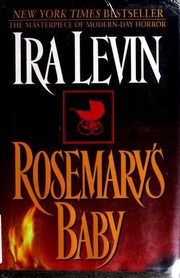
Rosemary's Baby
2,665-word summary 12 min read 319 pages in the book
- First published
- 1967
- Publisher
- Random House
- Pages
- 319
- ISBN
- 9780451194008
- Series
- Rosemary's Baby (#1)
Reading options
What's inside (8 sections)
I finally read Rosemary's Baby because I kept running into it sideways. People mention it when they talk about apartment horror, about gaslighting before that word was everywhere, about the movie with Mia Farrow. Random House published it in 1967 and it became one of those rare horror novels that people who do not read horror still know. My copy is the Signet reprint, a short book that runs 319 pages, and I finished it in two sittings because the second half would not let me put it down. It is the first book in the Rosemary's Baby series, followed much later by Son of Rosemary, but this one stands completely on its own.
What surprised me was how normal it feels at the start. No fog, no castle, no warning music. Just a young married couple hunting for an apartment in New York and feeling lucky. That ordinariness is the whole trick. Levin lets you settle into paint colors and dinner plans and then slowly takes the floor out.
Rosemary and Guy want a fresh start
Rosemary and Guy Woodhouse are in their twenties, newly married, and renting a small place on First Avenue when the story opens. Guy is an actor with more ambition than credits. He does commercials and small stage parts and waits for a break. Rosemary grew up Catholic in Omaha, moved east, married Guy, and keeps house with a lot of care. She is practical about money, warm with friends, and clear that she wants a baby once they are settled.
They hear through a friend of a friend, a woman named Mrs. Cortez, that an apartment has opened in the Bramford. It is one of those old Upper West Side buildings with high ceilings, thick walls, and a lobby that feels like another century. The rent is within reach because the previous tenant died. Rosemary falls for the space at once. Big rooms, a fireplace, room for a nursery later. Guy likes the address too. It signals arrival.
A friend named Hutch, older and blunt, tells them not to take it. He knows the building's reputation and thinks it is gloomy. They take it anyway. That decision felt very real to me. When you are young and find a place that seems too good, you explain away the warning. You tell yourself the older friend is being fussy. Rosemary and Guy sign, paint, arrange furniture, and start inviting people over. For a little while the book is almost a domestic comedy about curtains and budgets and Guy learning lines.
The marriage at this point reads as affectionate but uneven. Guy talks about his career constantly. Rosemary listens, cooks, makes the apartment livable. She is not helpless. She has opinions about money and friends and when to try for a child. Still, Guy steers most big choices. That imbalance matters later, because Levin never has Guy turn into a cartoon villain overnight. He just keeps choosing himself a little more each time until the gap between them is wide enough for other people to walk through.
The Bramford feels wrong in small ways
The Bramford is really the second main character. Levin gives it a long, ugly history. Previous residents include sisters who ate children, a witch named Adrian Marcato who claimed to have called up evil, and tenants who died badly. The building has a laundry room in the basement, heavy doors, and apartments that connect in odd ways. People hear things through walls. Management is strict about who gets in.
Rosemary notices the atmosphere before she can name it. An old woman dies in a laundry accident. A young woman Rosemary befriends, Terry, who was taken in by the neighbors, dies by suicide off the street. These events sit inside ordinary city life. Police come, reports are filed, neighbors gossip. Nobody calls it supernatural. That restraint makes the early chapters creepy in a quiet way. You keep waiting for someone to say what it means, and nobody does.
Hutch is the only person who treats the history as relevant. He sends Rosemary a book later on, but at first he just warns them off with stories. Guy brushes it aside. He wants to be near theaters and agents, not in a debate about old scandals. Rosemary is caught between them. She loves the apartment and she also keeps having small moments of doubt. A cabinet that seems sealed. A chant heard through a wall late at night. A smell of herbs from next door that never quite goes away.
I thought this section was well paced. Levin does not rush to monsters. He lets New York do the work. Friends visit, Guy auditions, Rosemary shops for food and learns which stores carry what. The horror comes from how easily a strange building becomes home. After a few weeks Rosemary stops noticing the dark lobby. That felt true. You adjust to a place, even a place with a past, because rent is paid and the kitchen light works.
Minnie and Roman make themselves family
The neighbors are Minnie and Roman Castevet, an elderly couple next door who are loud, nosy, and hard to refuse. Minnie talks fast, brings food unasked, comments on Rosemary's weight and clothes and plans. Roman is quieter, polite, well read in his own odd way, and very interested in Guy. They lost someone young they cared about, Terry, and they fasten onto the Woodhouses quickly.
Rosemary dislikes them at first. Minnie barges in, criticizes, leaves a bitter chocolate mousse, insists on helping. Guy, to Rosemary's surprise, starts spending evenings with Roman. He listens to Roman talk about theater and travel and old New York. He borrows books. He starts repeating Roman's opinions. Rosemary jokes that Guy has a new father. Then Guy lands a real break. Another actor, Donald Baumgart, suddenly goes blind, and Guy is picked as the replacement in an important play. It is the kind of luck actors dream about.
Levin never has a character announce a deal. He just places facts side by side. Guy was failing, Guy befriended Roman, Guy succeeded. Rosemary is happy for him and also uneasy. Guy becomes more secretive about what he and Roman discuss. He defends Minnie when Rosemary complains. He agrees that they should accept help from the Castevets during the pregnancy, including their doctor. When Rosemary pushes back, Guy treats her as emotional. That shift is gradual enough that Rosemary doubts herself before she doubts him.
Hutch sees the change from outside and does not like it. He finds Roman familiar but cannot place him. He starts digging through old papers and theater records. That research gets Hutch hurt, which removes Rosemary's one outside ally at the worst time. I found this the most upsetting part of the middle. Not a scare, just the familiar experience of watching someone lose their independent friends one by one and not being able to stop it because each step looks reasonable on its own.
The night she gets pregnant and the months after
Rosemary and Guy plan the baby carefully. They pick dates, see doctors, fix up the spare room in their heads. The night they choose becomes the center of the book. Minnie brings individual desserts. Rosemary eats hers, feels dizzy and ill, and falls into a drugged sleep. She dreams something terrible and vivid. In the dream she is on a yacht or an altar, surrounded by chanting people including the Castevets and Guy, and she is assaulted by something inhuman with yellow eyes while her husband watches without helping.
She wakes scratched and sore. Guy tells her plainly that he had sex with her while she was unconscious because he did not want to miss the fertile window. He apologizes for the scratches as if they came from his nails. Rosemary is angry and then lets it pass because she wants the pregnancy and because Guy frames it as practical. Reading that now is rough. Levin wrote it in 1967, and he presents Guy's excuse as selfish and gross even before you know the rest. Rosemary notes the lie in it. She does not have the support to hold onto that anger.
She gets pregnant. The Castevets insist she switch to their friend, Dr. Sapirstein, a famous obstetrician. He puts her on a daily herbal drink Minnie prepares, tells her to avoid reading pregnancy books, limits visitors, and brushes off her severe pain as normal. Rosemary loses weight instead of gaining. She looks pale and drawn. She develops a craving for raw meat and chicken livers. Friends say she looks ill. Sapirstein says the pain will pass and keeps her away from other doctors.
This stretch is long on purpose and I have mixed feelings about it. On one hand the detail builds dread. Every appointment follows the same shape. Rosemary reports pain, Sapirstein reassures, Minnie arrives with the drink, Guy sides with them. Rosemary stops calling friends because she is tired and because Guy says they worry too much. On the other hand pages of nausea and doctor visits can drag if you want plot movement. I kept thinking someone should intervene sooner. That frustration is probably the point, but it still tests patience. Levin wants you to feel how medical authority plus a tired husband plus a helpful neighbor can fence a person in without any single dramatic scene.
Paranoia starts to look like evidence
Hutch falls into a mysterious coma and dies, but before that he mails Rosemary a book about witchcraft with a marked passage. With help from a friend, Rosemary works out an anagram. Roman Castevet rearranges to Steven Marcato, son of Adrian Marcato, the Bramford witch from the building history. Suddenly the chanting, the herbs, the interest in her baby, and Guy's luck line up in a new way.
Rosemary changes after that. She starts hiding the herbal drink instead of swallowing it. She meets an old friend who sees how thin she is. She reads about witches in secret. She counts dates and realizes the baby is due at a significant time for the group. She buys garlic and hangs it. Little acts of resistance replace polite compliance. The book gets sharper here. Scenes are shorter. Rosemary lies to Minnie for the first time and feels guilty and thrilled.
She tries to get outside help and fails in a way that still stings. She goes to another doctor, Dr. Hill, with her story and the book. She expects rescue. Instead Hill calls Sapirstein and Guy, assuming she is having a breakdown from pregnancy strain. They arrive together, calm and concerned, and take her home. That scene is the core of the novel for me. Not the coven, not the yellow eyes. A woman tells the truth to a professional and the system hands her back to the people hurting her. Levin does not make Hill evil. He makes him busy and conventional. That is worse.
After that Rosemary is watched constantly. Guy locks away her money and phone access in practical ways. Minnie stays over. Sapirstein schedules her. Rosemary plans escape around the due date but goes into labor early. She is sedated. When she wakes, she is told the baby died. Guy cries. Sapirstein looks tired. Minnie hovers. Rosemary does not believe them because she hears a baby crying through walls and because milk comes in. Grief plus that sound pushes her past fear. She finds a closet with a hidden passage into the Castevets' apartment and walks in with a knife.
What she finds and why it still divides readers
She finds them gathered around a black draped bassinet. Guy is there. Sapirstein is there. The Castevets and their friends are there, chanting and weeping with joy. Inside is her son, healthy, with eyes that reflect light the way an animal's do. Roman announces the child by a name from the old books and tells the group the year is the start of something new. Someone tells Rosemary to hail the child. She spits and calls them out. Then she looks longer at the baby crying for its mother.
The ending does not give a chase or a rescue. Rosemary, who came in ready to kill, puts the knife down when Minnie points out the baby needs milk and no one else can feed him. Roman invites her to be the mother, not a victim. Guy stands to the side, already replaced as the center. Rosemary rocks the cradle. She scolds Minnie about a detail of care, which tells you she has decided to stay and raise him. The coven sings. The book stops.
I had to sit with that. Part of me wanted her to run into the street screaming. Part of me saw why Levin ends it there. Rosemary has lost Hutch, her doctors, her husband, and her belief that anyone outside will help. The baby is hers even if its father is not human. Maternal feeling plus exhaustion plus nowhere to go equals a terrible yes. It is not forgiveness. It is a claim. She will mother the child on her terms if she stays.
My criticism starts there. The final choice is powerful but also rushed after so much slow buildup. Guy's motive gets less attention than it deserves. We learn he traded his wife's body and child for career help, yet Levin gives him few scenes where he faces what that means. He cries, he makes excuses, he stands around. That thinness makes him chilling but also a little empty. I wanted one honest conversation between him and Rosemary before the bassinet scene, even a failed one.
I also think Rosemary's Catholic past could have carried more weight. Levin mentions it early, then drops it for long stretches. A woman raised with clear ideas about good and evil, now told her son is the opposite, should have more inner conflict on the page. Instead the book focuses on logistics. Hiding books, skipping drinks, finding doors. That keeps momentum but leaves her inner life a bit spare at the exact moment it should widen.
The plain style will split readers too. Levin writes clean, simple sentences with little decoration. No long speeches, no set piece scares, no gore for pages at a time. I liked how fast it read once the pregnancy took hold. Some readers may find it flat compared with modern horror that lives inside the narrator's head. There is also the dated layer. Husbands speaking for wives, doctors patting hands, neighbors calling a grown woman a girl. Levin shows that world clearly, but he does not always push back through Rosemary as much as I wanted.
Still, the strengths hold. The Bramford stays with you because it is mostly an apartment building, not a portal. The Castevets stay with you because every street has a version of Minnie, kind and suffocating and impossible to refuse without seeming rude. The middle section about pain disbelieved by experts feels more current now than in 1967, which is depressing and also why the book lasts. Horror that relies on shocks dates fast. Horror about who gets believed does not.
If you come for scares, expect unease more than jolts. If you come for story, you get a complete arc from hopeful move to trap to grim motherhood. I would suggest it to readers who like slow burns like The Haunting of Hill House, to anyone curious where modern occult horror started, and to people who can handle a plot about pregnancy used as control. Skip it if medical scenes or infant danger hit too close, or if you need a hero who escapes clean. Rosemary does not escape. She stays, she nurses, she corrects Minnie on how to hold him. That last image is the one I cannot shake, a tired mother taking charge in a room full of chanting strangers because the baby is crying and someone has to act like an adult.
FAQ
When was Rosemary's Baby published?
Random House published it in 1967. The first edition runs 245 pages and the Signet reprint used here runs 319 pages with ISBN 9780451194008.
Who are the main characters?
Rosemary and Guy Woodhouse, Minnie and Roman Castevet, Dr. Sapirstein, and the friend Hutch, plus the Bramford building itself.
Is Rosemary's Baby part of a series?
Yes. It is the first book in the Rosemary's Baby series, followed by Son of Rosemary in 1997, but it stands alone.
Similar books
More from Rosemary's Baby first, then related titles.

Hidden Pictures
Nanny Mallory sees Teddy drawings predict a murder in New Jersey.
2,332-word summary · 10 min read
The Troop
A Boy Scout troop on a Canadian island takes in a stranger who cannot stop eating, and the worm inside him turns a camping trip into a war.
2,457-word summary · 11 min read
Lullaby
A reporter discovers that a poem in a children's book kills anyone who hears it, and his attempt to destroy every copy turns into a road trip through grief,…
2,147-word summary · 10 min read
Everything's Eventual: 14 Dark Tales
Fourteen Stephen King stories shuffled by the deal of a card deck, from the haunted room of 1408 to quiet tales of grief that sting as much as the monsters.
2,000-word summary · 9 min read
This Present Darkness
A pastor and reporter face demons over Ashton while angels answer prayer.
2,384-word summary · 11 min read
The Last House on Needless Street
A lonely man, a cat and a mysterious neighbor pull you into a house full of buried trauma.
2,627-word summary · 12 min read
The Chalk Man
Childhood chalk codes lead to a murder that follows friends thirty years later.
2,350-word summary · 10 min read

Relic
A museum beast kills during an exhibition while an agent investigates.
2,066-word summary · 9 min read

If It Bleeds
Holly Gibney faces an outsider plus three more tales of dread.
2,219-word summary · 10 min read

Full Dark, No Stars
Four novellas about revenge where ordinary people do terrible things and live with it.
2,646-word summary · 12 min read
Four Past Midnight
Four novellas about a plane lost in time, a writer haunted, and horrors small and large.
2,584-word summary · 11 min read

Rose Madder
After fourteen years of abuse, Rosie Daniels flees her cop husband and finds a painting that opens into a dangerous mythic world.
2,349-word summary · 10 min read
Horns
Accused of killing Merrin Williams, Ig Perrish wakes with horns that force strangers to confess their darkest sins.
2,264-word summary · 10 min read

Skeleton Crew
King's 1985 collection pairs The Mist with The Jaunt, The Raft, and Survivor Type: 22 stories of Maine dread.
3,209-word summary · 14 min read
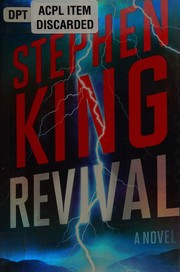
Revival
Jamie Morton shadows preacher Jacobs from boyhood healings to electric cures that open a door best left shut.
2,037-word summary · 9 min read

NOS4A2
Vic McQueen's bike finds lost things through a bridge, pitting her against Manx's Rolls-Royce ride to Christmasland.
2,060-word summary · 9 min read
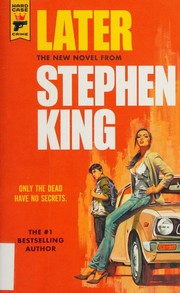
Later
Boy Jamie Conklin sees dead people who must answer truthfully, pulling him into NYPD cases and a drug crew's greed.
2,009-word summary · 9 min read

Duma Key
After losing his arm, Edgar Freemantle paints on a Florida island and learns his pictures can open doors for something hungry.
2,530-word summary · 11 min read
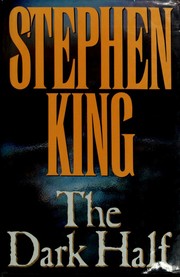
The Dark Half
A Maine novelist buries his violent pen name George Stark, then faces murders that carry his own fingerprints.
2,956-word summary · 13 min read
The Sun Down Motel
In 1982 Viv vanishes from a Fell motel desk; in 2017 niece Carly takes the same shift to find her.
2,150-word summary · 10 min read

Watchers
A lonely veteran and a shy woman shelter a genius dog while a lab-made killer hunts them.
2,823-word summary · 13 min read

Night Shift
King's first story collection moves from haunted mills to killer cornfields, twenty early tales where ordinary places turn evil.
2,488-word summary · 11 min read
Thinner
A Connecticut lawyer escapes punishment after a fatal crash, then an old Romani father lays a wasting curse on him and the pounds start falling off.
2,502-word summary · 11 min read

Final Girls
A survivor of a cabin massacre tries to live normally until another Final Girl dies and a second one shows up at her door.
2,176-word summary · 10 min read
Lock Every Door
Broke Jules apartment sits at the Bartholomew where another sitter vanished.
2,224-word summary · 10 min read
Needful Things
A smiling man sells exactly what you want for cash plus one small cruelty to a neighbor.
2,007-word summary · 9 min read
The Institute
A kidnapped prodigy wakes in a Maine facility where gifted kids earn tokens in Front Half and vanish from Back Half.
3,814-word summary · 17 min read
Doctor Sleep
Grown Dan Torrance gets sober in New Hampshire and helps gifted Abra Stone face the True Knot.
2,841-word summary · 13 min read
The Outsider
Coach Terry Maitland's DNA and witnesses point to an impossible murder, until Ralph Anderson and Holly Gibney trace it to El Cuco.
2,586-word summary · 11 min read