
Reading options
What's inside (8 sections)
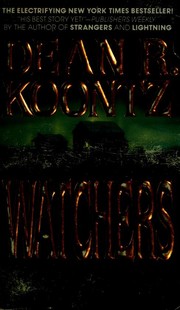
A friend with a golden retriever told me this was the dog book that ruined other dog books for him. I laughed it off at the time. I had read one Koontz novel years back, the one about the fry cook who sees ghosts, and I remembered it being fast and a little corny and hard to put down. A horror novel built around a super smart dog sounded like it could go wrong in about ten ways. Sentimental. Goofy. Or gross in the wrong places. I picked up a used copy anyway because the premise stuck in my head. Putnam published it in February 1987, 352 pages in the first hardcover, back when Koontz was climbing toward the top of the bestseller lists with books like Strangers and Lightning.
The setup is simple enough to tell in a minute. Travis Cornell, thirty six, lives alone near Santa Barbara. He was Delta Force once. Then he sold real estate. Then his wife Paula died of cancer, and after a whole string of earlier losses he stopped seeing much point in the days. On his thirty sixth birthday he drives up into the foothills of the Santa Ana Mountains with a revolver in the car. He tells himself he wants to shoot rattlesnakes. In a canyon a filthy golden retriever steps into his path and will not let him go down one particular trail. Something is moving in the brush that does not sound like a person or a cougar. He fires a couple of warning shots and gets out with the dog. On the drive home he says something out loud about a candy bar in the glove box, and the dog opens the glove box and gets it. That is the moment the book clicks into place.
A dog in the canyon
Travis names him Einstein, which is obvious and also perfect, because what else do you call a dog who fetches specific beers from the fridge by brand.
The early chapters are my favorite part of the whole novel. Koontz slows down and lets Travis notice things one at a time. Einstein can open doors and faucets. He arranges nineteen dog biscuits on the kitchen floor into a question mark. He hates collars in a way that feels like panic rather than stubbornness. He has a lab tattoo in his ear. Travis, who has been talking to nobody for months, starts talking to the dog. He tells Einstein about Paula, about his squad, about growing up with loss stacked on loss. It is a heavy backstory, maybe too heavy, but the scenes work because Travis is embarrassed to be unburdening himself to an animal, and Einstein listens with his head cocked, and for the first time in years Travis feels needed.
There is a lot of beer fetching and tail wagging in these pages, and I mean that as praise. Koontz writes the physical stuff well. The weight of a retriever leaning against your leg. The way Einstein flops in front of the TV for old Mickey Mouse cartoons and watches with total focus. That detail matters later, so file it away.
If I have a complaint this early, it is that Travis recovers a little fast. One week he is driving into the hills with a gun and no plan, the next he is cooking and playing and making plans to keep a stray. Grief does lift in bursts like that sometimes. Still, I wanted one more scene of him resisting the bond, telling himself the dog belongs to someone else, calling the pound and hanging up. The book skips past that hesitation.
Nora
Nora Devon is thirty, or around thirty, and she has barely lived. Her aunt Violet took her in when she was two and raised her in a house in Santa Barbara under a set of rules that amounted to the world being filthy and men being worse. No school to speak of. No friends. When Violet died, about a year before the main story, Nora inherited the house and the fear and did not know what to do with either.
Her trouble has a name, Art Streck, a television repairman who did work in her house and decided Nora was available for pestering. He follows her to a park. He talks to her on a bench in a way that makes your skin crawl. He describes what he plans to do to her. Nora spits in his face, which takes guts, and then freezes. Einstein happens to be there with Travis. The dog charges and drives Streck off. Travis introduces himself. Awkward small talk follows.
What happens next is the scene that sold me on Nora. Einstein will not let it go. He keeps fussing about the woman from the park. Travis looks her up in the phone book, which dates the book as much as anything, and they drive to her house on a hunch. They get there just as Streck has broken in and has Nora cornered. Einstein goes through glass to get at him and holds him in the kitchen until Travis can get his gun on him and call the police.
Koontz could have left Nora as the helpless neighbor, but he gives her a slow thaw that feels earned. She starts spending time with Travis and Einstein. She cooks. She watches Einstein figure out picture books, answering yes with a tail wag and no with a single bark. Her lawyer, Garrison Dilworth, an older man who handled Violet's affairs, tells her plainly that Violet's whole worldview curdled after a bad marriage, that it was never about Nora at all. That conversation loosened something in me too. We all know someone who was told they were worthless by a person who was hurting.
The romance between Travis and Nora is sweet and, to be honest, a touch rushed. They bond over the dog and over being lonely in the same coastal town. Then Einstein starts pulling out a Modern Bride magazine and nudging it toward them, and Travis proposes in June. I smiled through it. I also thought, you have known each other a few months and you are being hunted. But Koontz writes lonely people well, and lonely people move fast when someone finally sees them.
Einstein spells it out
The middle of the book is where Einstein stops being a clever pet and starts being a person in a dog suit.
Nora has the idea to use Scrabble tiles. They spread them on the floor and Einstein noses out answers letter by letter. Through the tiles they learn he came from a lab. He was made to be smart. Something else came out of the same place, something that hates him and is looking for him through some kind of sense that works at a distance.
Later Nora teaches him to read with primers, the way you would teach a kid. He picks it up frighteningly fast. He tells them names. Banodyne Laboratories, down in Irvine. The Francis Project, named after Saint Francis of Assisi, which is a grim joke once you know what they built there. At one point he spells out that he would die of lonely without them. The grammar is off because he is a dog working with tiles, and Koontz leaves the mistakes in, which was a smart choice.
I should say the science here is hand waving of the highest order. Genes spliced, intelligence edited in, a psychic link between two lab animals so one can track the other across counties. If you need hard biology, this book will annoy you by chapter five. I decided to treat it as a fable with guns. The question is never how the intelligence works. The question is what you owe a creature once it can ask for things.
That question gets a good airing through Garrison. He is the one who says, in lawyer terms, that people have no right to build a thinking being and then file it as equipment. The vet they meet later, Jim Keene in Carmel, burns a lab flyer once he sees what Einstein can do. Koontz is not subtle about it. He repeats the point through several mouths. I did not mind, because Einstein on the floor with his tiles makes the cage feel obscene.
One warning. The Scrabble scenes go on for a while, mixed with a lot of cozy domestic settling in. I liked the warmth, the sense of three strays making a household, but I could feel the plot idling.
The Outsider
In my memory the monster was a blur. Rereading, the Outsider is the saddest thing in the book, and the scariest, and those two facts fight each other the whole way through.
Banodyne made it from baboon stock, beefed up for war. Big jaws. Claws. Lantern yellow eyes, as Travis sees them once in his own house. Strong enough to tear people apart. Smart enough to hold a grudge and to know it is ugly. While Einstein got patience and curiosity, the Outsider got contempt from its makers and learned to return it. It escaped around the same time Einstein did. Since then it has been moving north through the wild parts of California, leaving bodies with the eyes torn out. Cops find a petting zoo slaughtered. Two deputies dead in a tract development. A girl on a horse survives an attack up in the Angeles National Forest because the horse fights back.
The detail that got under my skin was the lair. When searchers find where it has been sleeping, they find candy wrappers smoothed flat and kept. A Mickey Mouse coin bank. A shard of mirror. A magazine with the eyes of every photographed face scratched out. So the creature loves bright things and hates faces, including its own.
For a long stretch we only see results, not the thing itself, and that restraint helps. A scream in the canyon. A shape at a window. By the time the Outsider steps into the open, you are primed to be afraid of it, which makes the last turn hit harder, because Koontz asks you to pity it instead.
I have mixed feelings about that turn. The book spends three hundred pages telling you this thing rips people apart, then wants you to weep for it in about ten pages. I did weep, sort of, but I was aware of being steered.
Nasco and Lem Johnson
There are two human hunts running alongside the monster hunt, and they could not be more different.
Vince Nasco is a freelance killer, hired through Soviet cutouts to murder the Banodyne scientists one by one. He believes each person he kills gives him a little of their life force, that he is storing it up toward something like invulnerability. Early on he shoots a scientist named Davis Weatherby, then others, picking up rumors as he goes about a dog worth a fortune. Nasco decides to find Einstein first and sell him back at a premium. He is patient. He is completely hollow inside. Koontz writes him without a flicker of charm, which I found refreshing after so many lovable hitmen in thrillers.
Lemuel Johnson is the other hunter, and in some ways the conscience of the book. He runs the NSA office for Southern California and he is tasked with getting both animals back quietly. He brings in Marines disguised as hikers. He leans on sheriffs. He taps Garrison's phones. As the body count climbs, Lem starts asking whether recovering Einstein means condemning him. He keeps going because stopping the Outsider is real work that somebody has to do.
These two plots do not quite mesh for a long time. Nasco kills and schemes. Lem holds meetings and flies over forests. Travis and Nora hide and spell with the dog. I caught myself skimming some of Nasco's travel and Lem's office wrangling to get back to Santa Barbara. Nasco works best once he locks onto Travis directly, through the forger in San Francisco who sold Travis and Nora their new papers. That forger keeps secret copies, and Nasco squeezes him until he gives up the Big Sur address. From that point Nasco is terrifying because he is close.
Lem works best in small moments. He sees the coin bank and the mirror shard and understands what they mean before his men do. He argues with himself about duty. By December he is mostly acting alone, or with one or two people he trusts, because the official machine wants specimens and he wants the killing to stop.
A fair knock: the Soviet angle feels leftover from another draft. Men in Moscow order murders, then vanish from the story. You could cut them and lose nothing.
Big Sur and the barn
Travis and Nora, married in Las Vegas with Einstein in attendance, take new names and rent a remote house south of Carmel, in the Big Sur country. Travis wires the place with alarms and shutters and guns. Nora learns she is pregnant. Einstein gets distemper and nearly loses his mind to fever. They take him to Jim Keene, who saves him and then agrees to lie for them. The tiles test afterward, where Einstein proves he is still himself, made me put the book down for a minute.
Then December 29 arrives, in a storm, and everything happens at once.
Nasco grabs Nora after a prenatal visit in Carmel and makes her drive him home at gunpoint. She keeps her head. She has a small pistol hidden in the car, and when they pull up she shoots him four times. He is wearing a vest, so he stays upright, and he shoots Travis in the shoulder. Travis gets to a heavier gun on the porch and finishes Nasco in close, ugly fashion. There is no quip. No cool pose. Travis is bleeding and shaking and Nora is screaming. It feels like what shooting a man in your driveway would actually feel like.
Before they can breathe, Einstein raises the alarm. The Outsider has been waiting for the noise to die down. It comes through an upstairs window and gets Einstein by the leg and drags him. Travis goes after it with a shotgun and wounds it badly enough that it retreats to the barn. What follows is the scene people remember.
The barn smells of gas and hay. The creature is dying. It holds a Mickey Mouse videotape it picked up somewhere, which is absurd and heartbreaking at the same time. It speaks in broken bits. It says it hurts. It says Mickey. It taunts Travis that the dog is dead, then seems to grieve, then begs.
Kill me.
Travis does. Koontz plays it as mercy and as execution, both at once, and refuses to tidy the feeling. Einstein lives, though Keene has to patch a mangled leg that leaves a limp. Nasco is dead on the porch. The Outsider is dead in the straw. Nora is unhurt. Travis is shot through the shoulder and half out of his mind. The storm keeps rattling the shutters.
Lem arrives in January, alone. Travis tells him Einstein died of his wounds and that there is no body to show because he buried him deep. Lem sees retriever hairs on Travis's pants in a spotless kitchen and understands perfectly. He writes the file to say both animals are gone. Travis tells him that if anyone comes back, the Francis Project goes public. They shake on a lie that lets everyone live. I believed it. Men like Lem, tired and decent under the weight, make choices like that.
Years later, in an epilogue I will not spoil line by line, Travis and Nora are raising their boy with Einstein still bright and still spelling. He has a mate named Minnie, and the puppies are smart. Einstein types something on a computer about being remembered, and Nora answers him with the kind of promise you make to a child. Corny? Sure. I teared up anyway.
Would I press this on everyone? Not quite. If you need your horror bleak, the warmth here will put you off. The middle third drags, and the science is tissue thin. Nasco's soul battery idea never quite gels.
But the core trio holds. A man who thought his life was over, a woman who was told she was nothing, a dog who can ask for love in plain English. Watching those three find each other while something yellow eyed moves through the trees is exactly what a suspense novel should do. It scared me in the canyon chapters. It charmed me in the kitchen chapters. It left me, on the last page, glad Einstein got his Mickey Mouse tapes and his family and his run on the beach. I closed the copy and called my friend and told him he was right about the dog books.
FAQ
When was Watchers published?
G.P. Putnam's Sons published it in February 1987. The first hardcover runs 352 pages with ISBN 9780399132636.
Is Watchers part of a series?
No. It stands alone. Koontz never wrote a sequel, though the ending leaves room for Einstein's puppies.
Does the dog survive at the end?
Yes. Einstein survives his wounds and a bout of distemper, keeps his intelligence, and later fathers puppies that inherit it.
Similar books
The Institute
A kidnapped prodigy wakes in a Maine facility where gifted kids earn tokens in Front Half and vanish from Back Half.
3,814-word summary · 17 min read
The Troop
A Boy Scout troop on a Canadian island takes in a stranger who cannot stop eating, and the worm inside him turns a camping trip into a war.
2,457-word summary · 11 min read
Upgrade
A Gene Protection agent is infected with an upgrade virus that makes him stronger and faster than human, and only he can stop his sister from releasing it on…
2,166-word summary · 10 min read

The Last House on Needless Street
A lonely man, a cat and a mysterious neighbor pull you into a house full of buried trauma.
2,627-word summary · 12 min read
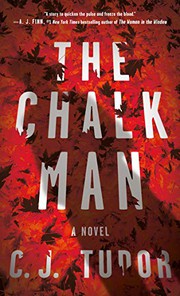
The Chalk Man
Childhood chalk codes lead to a murder that follows friends thirty years later.
2,350-word summary · 10 min read
Relic
A museum beast kills during an exhibition while an agent investigates.
2,066-word summary · 9 min read

Full Dark, No Stars
Four novellas about revenge where ordinary people do terrible things and live with it.
2,646-word summary · 12 min read
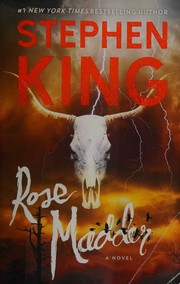
Rose Madder
After fourteen years of abuse, Rosie Daniels flees her cop husband and finds a painting that opens into a dangerous mythic world.
2,349-word summary · 10 min read
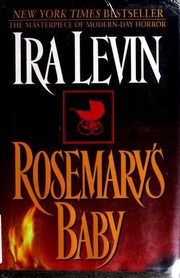
Rosemary's Baby
A young couple's dream apartment in the Bramford turns dark when helpful neighbors and a trusted doctor take over Rosemary's pregnancy.
2,665-word summary · 12 min read
Pines
A Secret Service agent wakes hurt in Wayward Pines, Idaho, hunting two missing agents, and finds a town that will not let him leave.
2,452-word summary · 11 min read
The Sun Down Motel
In 1982 Viv vanishes from a Fell motel desk; in 2017 niece Carly takes the same shift to find her.
2,150-word summary · 10 min read
Prey
Jack Forman takes a contract job at a Nevada lab in Michael Crichton's 2002 thriller Prey, where self replicating nanoparticle swarms have started hunting on…
2,959-word summary · 13 min read
The Guardian
Widowed at twenty-five, Julie Barenson leans on a Great Dane named Singer, then dates two men and learns one of them is a killer.
2,221-word summary · 10 min read

Final Girls
A survivor of a cabin massacre tries to live normally until another Final Girl dies and a second one shows up at her door.
2,176-word summary · 10 min read

Lock Every Door
Broke Jules apartment sits at the Bartholomew where another sitter vanished.
2,224-word summary · 10 min read

The Andromeda Strain
A town dies in seconds, and a sealed lab team races a germ that learns to eat seals.
2,013-word summary · 9 min read
Under the Dome
Chester's Mill is sealed under an invisible dome as cook Barbie and editor Julia face Big Jim Rennie's rule.
2,731-word summary · 12 min read
Hidden Pictures
Nanny Mallory sees Teddy drawings predict a murder in New Jersey.
2,332-word summary · 10 min read
Dark Matter
Abducted from his Chicago family, Jason Dessen wakes in a life he never chose and fights through worlds to return.
2,707-word summary · 12 min read
11/22/63
A Maine teacher steps through a diner portal to 1958 to stop the Kennedy assassination, and learns the past resists change while a new life pulls him in.
2,799-word summary · 12 min read

What She Knew
Rachel lets her eight-year-old son run ahead in a Bristol park, and the nine-day search turns her into a suspect in the public eye.
2,952-word summary · 13 min read

The Beach House
A young valet is beaten to death at a Hamptons party, and his law-student brother spends a year building a case against the family that covered it up.
2,049-word summary · 9 min read

Six Years
A professor who promised to forget the woman he loved sees her husband's obituary and discovers that the wedding, the marriage, and the woman herself may never…
2,076-word summary · 9 min read

Rules of Prey
Minneapolis detective Lucas Davenport hunts a killer who leaves a new rule at every scene and treats murder as a game of wits.
1,914-word summary · 9 min read

Authority
The new director of the Southern Reach takes over an agency that is hiding the truth about Area X, and the building starts to change around him.
2,029-word summary · 9 min read

Wilder Girls
At a quarantined boarding school off Maine, three girls with strange mutations search for a missing friend and learn what the adults have hidden.
2,594-word summary · 12 min read

Night Film
A disgraced journalist investigates the death of a reclusive horror director's daughter, following a red coat through hospitals, secret clubs, and a family…
2,690-word summary · 12 min read

4th of July
Lindsay Boxer shoots two armed teenagers in self-defense, faces a wrongful-death trial, and spends her leave chasing a string of throat-slashing murders in…
2,192-word summary · 10 min read
Sleeping Giants
A girl falls into a field and lands in a giant metal hand. Years later a secret team assembles the rest of the machine, and it chooses its own pilots.
2,466-word summary · 11 min read