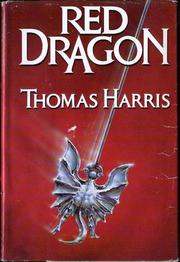
Red Dragon
2,592-word summary 12 min read 348 pages in the book
- First published
- 1981
- Publisher
- G.P. Putnam's Sons
- Pages
- 348
- ISBN
- 9780399123559
- Series
- Hannibal Lecter (#1)
Reading options
What's inside (8 sections)
I picked up Red Dragon because I had seen The Silence of the Lambs first and wanted to know where Hannibal Lecter started. I expected a smaller version of that later book. What I found felt different, sadder and more private. This is the first book in the Hannibal Lecter series, published in 1981 by G.P. Putnam's Sons, 348 pages in the first American edition. It introduces Will Graham, Francis Dolarhyde, and Lecter himself before he became famous. I read it slowly over a week, mostly late at night, and I kept thinking about work and what it costs to be good at looking at terrible things.
Will Graham lives in Marathon, Florida when we meet him. He repairs boats. He lives with his wife Molly and her son Willy from an earlier marriage. He tries to stay away from crowds and cameras. A few years earlier he worked for the FBI as a profiler with a strange gift. He could look at a crime scene and rebuild what the offender felt. That gift led him to Dr. Hannibal Lecter, a Baltimore psychiatrist who turned out to be a murderer. Graham caught him. Lecter nearly killed him first and left a scar across his face and a deeper mark on his sleep. Graham retired to save himself and his family.
Jack Crawford calls him back. Crawford runs the Behavioral Science section and he does not beg. Two families have been killed a month apart, on or near a full moon. The Jacobis in Birmingham, Alabama. The Leeds in Atlanta, Georgia. Couples in their thirties with two children each. Killed in their homes at night. The press calls the killer the Tooth Fairy because of bite marks left on the victims. Crawford needs Graham to look and tell him what kind of man could do this. Molly does not want him to go. Willy watches him with careful eyes. Graham says yes because no one else sees the way he sees, and because children are dead.
Coming Back To The Work
Graham flies to Birmingham first, then Atlanta. Harris writes these visits in a flat, tired style that I liked. No flashing lights. Just heat, lawns, neighbors who heard a dog and then nothing. Graham walks through empty houses with tape on the floor. He notes which rooms were used and which were skipped. He looks at where the killer entered, what he touched, what he ignored. He sits on the floor for a long time. He tries to let the rooms speak.
The pattern is clear and awful without needing detail. Both families were attacked after dark. The killer broke in quietly and controlled everyone. He arranged the bodies and used shards of mirror. He left little physical evidence except hairs, fibers, and those bites. He chose houses with trees close to the windows and yards that gave cover. He watched them beforehand. He knew work schedules and pet habits. Graham tells Crawford this is not random rage. This is planned, ritual work tied to the moon. A third full moon is coming. They have about three weeks.
Crawford builds a team around Graham. Beverly Katz handles photography and fibers. Price handles the lab. Dr. Alan Bloom, a psychiatrist who taught Graham, helps with motive. What works here is how normal they all seem. Graham is not a superhero. He gets headaches. He dislikes flying. He calls Molly every night and lies a little about how he feels. His talent frightens him. To catch the man, he has to think like him for minutes at a time, and each time he comes back a little shaken.
The Doctor In The Cell
Graham hates the next step and does it anyway. He goes to see Hannibal Lecter. Lecter is held in a high security hospital for the criminally insane. He has a clean cell, books, drawings, and perfect manners. He remembers Graham. He calls him Will. He asks about the scar. He offers nothing for free. Harris keeps their talks short, which makes them worse. Lecter studies Graham the way Graham studies killers. He notices fear and hunger for approval. He pokes at both.
The help Lecter gives is thin but useful. He tells Graham to look at what the killer kept, not only what he broke. He points him toward obsession, toward a private story the killer tells himself. He warns him that the killer will try to stop and will fail. Graham leaves angry and writes down what he can use. What stays with me is not any clever line. It is how Lecter enjoys being needed again. He was forgotten for a while. Now the FBI is back at his door. That pleases him.
Then come the letters. This part drives the middle of the book. Lecter starts writing to the killer through secret notes hidden in the personal ads of a tabloid called the National Tattler. He also writes to Graham in a way meant to unsettle him. The hospital censors catch some of it and miss some. A nurse passes a message without knowing what it means. A cleaning rag, a toilet paper core, a line of numbers that looks like nothing. Harris explains the trick plainly. Lecter gives the killer Graham's home address and tells him to hurt Graham's family to stop Graham from seeing him clearly. It is petty and cold. It shows that Lecter does not care who the Tooth Fairy kills. He cares about keeping his own game alive.
The Man Who Answers To The Dragon
Francis Dolarhyde is forty one. He works the night shift at a film processing plant in St. Louis called Gateway. He lifts weights. He keeps to himself. He was born with a cleft lip that was repaired but left a scar and speech trouble. His mother left him. His grandmother raised him with harsh rules and threats. He spent time in an orphanage and a boys home where older boys hurt him. His grandmother took him back and kept hurting him in quieter ways. Harris gives you this past in short scenes, not lectures. You see a boy told he is ugly and wrong, learning to be still to avoid punishment.
As an adult, Dolarhyde believes he is changing into something else. He calls it the Dragon, after the William Blake watercolor The Great Red Dragon and the Woman Clothed with the Sun. He has the image tattooed across his back and chest in a long painful process. He keeps prints in his house in Chicago. He talks to the Dragon in his head. The voice tells him killing families will complete the change and give him power. He breaks into homes on full moon nights because the Dragon demands witnesses and order. He sets mirrors around so he can watch himself. Afterward he keeps a piece of film or a small item. He develops his own memories in his darkroom.
What makes Dolarhyde scary on the page is not strength. It is belief. He truly thinks the murders improve him. He weighs himself, photographs his back, records his thoughts in a journal. When doubt comes, the voice shouts him down. Harris lets you sit with him while he trims bushes to see a house better or picks a ladder from a hardware store. Those plain errands feel worse than any threat because you know where they lead. I found these chapters hard to read even though Harris holds back on physical detail. He focuses on choice and planning, which is enough.
My criticism starts here and it is about graphic content. Harris does not hide what Dolarhyde does to families, including children. He keeps the language restrained compared to later horror novels, and he cuts away from the worst moments. Still, the idea is present on almost every page for a long stretch. The bite marks, the mirrors, the home movies, the way the killer replays events. If you are sensitive to harm against children or home invasion, this book will stay with you in a bad way. I had to put it down twice and walk around the room. That is the point, I think, but it is fair to warn about it.
Reba Sees Him Without Sight
Reba McClane changes the book. She works at Gateway in a role that serves blind employees. She lost her sight in childhood and lives alone with skill and humor. She meets Dolarhyde when she needs help with a film jam or a ride. She is direct. She teases him about being shy. She asks him to drive her home. He says yes because he cannot say no to kindness that expects nothing.
Their early dates are the warmest pages in a cold novel. Dolarhyde takes Reba to the zoo after hours through a contact who keeps tigers. She cannot see the tiger but she can hear it breathe and feel heat through the fence. She puts her hand near the wire and laughs. He watches her face and feels something loosen. Later they go to his house for dinner. She touches his scarred lip without flinching and kisses him. She sleeps with him without pity. For the first time, Dolarhyde feels wanted as a man, not as a servant or a freak. He starts to think he might stop killing.
Harris handles Reba with respect, which I appreciated. She is not a symbol. She has friends, a temper, a past lover who still calls. She notices Dolarhyde goes quiet for long stretches. She notices he avoids certain questions. She does not excuse him, because she does not know what he is. She simply likes his gentleness with her and his care driving at night. Their scenes have small concrete details. A tape recorder for notes. A kitchen with labeled cans. A porch where they drink beer and listen to traffic. Those details matter because they show what a normal life could look like for him.
The tension grows because the Dragon hates Reba. The voice tells Dolarhyde she will weaken him and expose him. Dolarhyde fights the voice in ways that feel sad and real. He tries to avoid her to protect her. Then he seeks her out because he is lonely. Later he tries to destroy the painting's hold by traveling to the museum and damaging the original work. Harris presents this as a man trying to quit an addiction by burning the bar. It does not work for long. Reba stays in danger without knowing it, and that knowledge made my stomach tight through every kind date.
Traps, Fire And A Faked Death
While Dolarhyde wavers, Graham and Crawford try to force a mistake. Freddie Lounds works for the National Tattler. He is loud, pushy, and cruel on paper. He prints photos of the dead families and calls the killer names to sell copies. Graham hates him but uses him. With Crawford's approval, Graham gives Lounds an interview where he calls the killer impotent, ugly, and a product of abuse. The hope is that anger will make the killer reach out and reveal his job or location. It is a dirty trick and Graham knows it.
It works too well. Dolarhyde grabs Lounds in a parking garage and takes him to his Chicago house. What happens there is the most upsetting section, and Harris wisely keeps much of it off the page. He shows the lead up and the result, not the act itself. Lounds is left in a wheelchair outside the Tattler offices, harmed badly and set on fire. He lives long enough to whisper something misleading. Graham feels sick with guilt. Crawford tells him it was war and these things happen. That line lands flat on purpose. No one believes it, least of all Graham.
After Lounds, the lab work finally pays off. Katz and Price trace film and fibers. Graham realizes the killer handles home movies and must work in processing. The list narrows to plants that serve both Birmingham and Atlanta. Gateway fits. Dolarhyde sees the net closing through news reports and through Lecter's coded warning. He decides to fake his own death. He sets up a body to look like himself after a struggle, burns his house partly, and lets police think the Tooth Fairy is gone. Crawford's team wants to believe it. Graham does not. He goes home to Florida exhausted, hoping doubt will fade.
It does not fade. Dolarhyde travels to Florida. He watches Molly and Willy from a distance. He kills small animals nearby to test himself. He waits for Graham to relax. Harris cross cuts between Graham trying to be a husband again and Dolarhyde sitting in a motel with a shotgun, arguing with the Dragon about Reba and about finishing Graham. The moon fills again. The trap Graham set with words has turned. Now the killer will come to the profiler's house, not the other way around.
Marathon, Florida
The final attack happens at the Graham house and Harris writes it fast and plain. There is no music. No speeches. Dolarhyde gets inside and goes for Graham first. He shoots and stabs. Graham fights back with his hands and a piece of furniture. Molly acts quickly. She gets Willy to safety and finds a gun. She shoots Dolarhyde to stop him from killing her husband. Willy, only a boy, is forced to see too much. Graham lives but is badly hurt in the face and torso. He will need surgery and time. He will carry new scars over old ones.
What I liked about this ending is how unheroic it feels. No one poses. Molly shakes so hard she can barely hold the phone. Police arrive late. Willy cries and then goes quiet in a way that worries Molly more than noise. Graham, in the hospital, asks first about his family, then about Reba. He learns Reba survived her own night with Dolarhyde through luck and Dolarhyde's last shred of care. It is not comforting. It is relief mixed with shame.
Reba's last scene deserves mention. Dolarhyde brings her to his house after faking his death. He plans to kill her and himself. He sets fire to the place with them inside. At the last moment he cannot do it. He lets her live and sends her out. That choice does not redeem him. Harris is clear on that. It shows Dolarhyde was still a person under the voice, which makes his crimes worse, not better, because he knew what care felt like and killed anyway.
My other criticism, besides the graphic weight, is pace in the middle. The lab sequences about fibers, film stock, and moon charts are well researched but they stall the story after Lounds dies. I skimmed two or three passages about processing machines and lost nothing. Also, Molly and Willy get less room than they deserve until the end. Molly is sharp and funny early on, then waits by the phone for a hundred pages. I wanted more of her view while Graham was gone. Still, as the first Hannibal Lecter novel, this 1981 G.P. Putnam's Sons book earns its place. It sets up Lecter as a side player rather than a star, keeps Graham human, and gives Dolarhyde and Reba a sad center that lifts it above a simple hunt. I closed my 348 page copy tired and glad to be home. If you read it, read the Reba chapters slowly and the lab chapters fast, and keep a light on for the Florida night.
FAQ
Is Red Dragon the first Hannibal Lecter book?
Yes. Published in 1981 by G.P. Putnam's Sons, it is book 1 in the Hannibal Lecter series and introduces Will Graham before Clarice Starling arrives in book 2.
Who is the Tooth Fairy in Red Dragon?
The press nickname for Francis Dolarhyde, a film lab worker who kills families on full moon nights while believing Blake's Dragon painting drives him.
Is Red Dragon very graphic?
Yes. Harris keeps physical detail restrained, but the murders, home invasions and harm to children are disturbing and frequent. Skip it if that material stays with you.
Similar books
More like Red Dragon →More from Hannibal Lecter first, then related titles.

The Silence of the Lambs
Clarice Starling seeks Hannibal Lecter's help to catch Buffalo Bill before Catherine Martin runs out of time.
2,616-word summary · 12 min read

The Outsider
Coach Terry Maitland's DNA and witnesses point to an impossible murder, until Ralph Anderson and Holly Gibney trace it to El Cuco.
2,586-word summary · 11 min read

The Only One Left
Caregiver Kit tends mute Lenora Hope accused of 1929 family murders.
2,592-word summary · 12 min read

The Maidens
Therapist Mariana hunts Cambridge professor Edward Fosca after a Maidens murder.
2,234-word summary · 10 min read

The Locked Door
Surgeon Nora Davis hides serial killer father while patients die.
2,465-word summary · 11 min read

The Coworker
When odd accountant Dawn vanishes, star salesperson Natalie becomes the prime suspect in a tense office thriller with turtles, lies and revenge.
2,511-word summary · 11 min read