
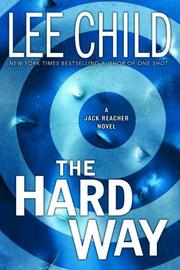
The Hard Way
2,637-word summary 12 min read 371 pages in the book
- First published
- 2006
- Publisher
- Delacorte Press
- Pages
- 371
- ISBN
- 9780385336697
- Series
- Jack Reacher (#10)
Reading options
What's inside (9 sections)
I picked up The Hard Way because it kept getting recommended as the one where Child takes Reacher out of small-town America and drops him into New York City. I live in a city, and the idea of watching this drifter navigate a place that runs on subways and doormen and private armies sounded like a good change of pace. What I got was a book that is part kidnapping thriller, part argument about what a man is willing to do to get back the people he says he loves. It is the tenth Jack Reacher novel, published in 2006 by Delacorte Press in the United States and by Bantam in Britain.
A man, a car, and a million dollars
The whole story starts with something Reacher sees and almost forgets. He is sitting in a coffee shop in Manhattan, soaking up a hot summer night, when a man walks over to a parked Mercedes, unlocks it, and drives off. That is it. No alarm, no chase. Reacher notices the man because noticing things is what he does, and because he has nothing else to do. Twenty-four hours later, men working for a retired Army colonel named Edward Lane find him at the same coffee shop, question him about the driver, and drive him to the Dakota, the old apartment building on the Upper West Side where Lane lives.
The car, it turns out, held a million dollars in cash. The money was ransom. Lane's wife Kate and her daughter Jade had disappeared after a shopping trip to Bloomingdale's, taken, everyone assumed, along with the family's chauffeur, a quiet man named Graham Taylor. The man Reacher saw driving the Mercedes was the person who collected the first payment. Lane wants a description of that driver, and once he learns that Reacher used to be a military police investigator, he offers him a place on his payroll at twenty-five thousand dollars a month to find Kate and Jade.
That is the hook, and it is a good one. A witness with no stake in the case becomes the best manhunter in the world because he happened to be drinking coffee in the right place at the right time. You can feel the machinery of the series clicking into place: the drifter with the strange skills, the wealthy and dangerous employer, the job that is too well paid to be simple. Child is writing to type here, and he knows exactly what readers of this series came for.
But the setup also rests on a coincidence the book never really apologizes for. If Reacher had picked a different coffee shop, none of this happens. That is fine for a thriller, but it is worth noticing how much of the plot hangs on Reacher being in one specific place on one specific night. The novel asks you to accept it and move on, and most readers will.
The colonel with a private army
Edward Lane is the most interesting thing in the early chapters. He is a retired Army colonel who runs a private soldiers-for-hire operation, a small mercenary army of former Special Forces men who do jobs for whoever pays them. He has money, muscle, and a twenty-one million dollar payday from an operation in Africa that sits at the back of everything. He tells Reacher he will use any tool to get his family back, and he means it. There is no room in Lane's plan for the police, and he makes that clear from the start.
The problem is that Lane is not a grieving husband so much as a man used to giving orders. He pays the first million, and Kate and Jade do not come home. The kidnappers ask for five million more, then another four and a half, a demand that adds up to half the money from that African job. Lane agrees to every new figure. Still no wife, still no child. Reacher, who is supposed to be the hired help, starts to wonder whether they were ever really the point of the exercise. The ransom keeps climbing and the family stays missing, which is the first sign that the person paying the bills may not be telling the truth about what he wants.
What makes Lane so useful as an antagonist is that he is almost a mirror of Reacher. Both men are former soldiers who learned to solve problems with violence and a cool head. The difference is that Reacher walks away from the Army and refuses to belong to anyone, while Lane built a company out of the same talents and turned them into a business. Marilyn Stasio, reviewing the book in the New York Times, called Reacher "a killer who can think" and noted how close he comes to being almost human in this one. Lane is what Reacher might have become if he had stayed in uniform and learned to charge for it. That parallel gives the book more weight than a straightforward rescue mission would have.
Reacher half joins Lane's crew, which means he sits in rooms with men like John Gregory, a retired British soldier, and listens while they talk about the missing family as if it were a military problem. He is careful. He takes Lane's money but does not promise loyalty. That wariness turns out to matter more than any punch he throws.
The first wife and the war in Africa
The case stops being about a missing wife and child once Reacher starts digging into Lane's past. Lane's first wife, Anne, was also reported kidnapped, and she turned up dead a month later. Her sister, Patti Joseph, never accepted the official story. Patti believed Lane arranged the killing and dressed it up as a kidnapping because Anne had asked for a divorce and a large settlement. She spent months watching Lane's apartment and passed what she saw to an NYPD detective, who in turn fed it to Lauren Pauling, a retired FBI agent who had worked Anne's case.
Pauling is one of the best parts of the book. She is around fifty, experienced, and not impressed by Lane or his money. She and Reacher start comparing notes, and the story they assemble is ugly. During that African operation, Lane had one of his own men, a mercenary named Knight, kill Anne. When the operation started to collapse, Lane arranged for Knight and a second man to be left behind to be captured and killed, breaking the military promise to bring every man home. In other words, the colonel who talks about family disposed of the man who did his dirty work exactly as you would expect him to.
A body floating in the Hudson is assumed to be Graham Taylor, the missing chauffeur. The kidnappers stop calling. Lane's group quietly files Kate and Jade under dead, and the search loses its urgency for everyone except Reacher and Pauling. This is where the novel starts to feel less like a chase and more like an excavation, with Reacher pulling up layers of an old crime in an African conflict most people never heard about.
I liked this stretch, though it does slow the pace. Child spends a lot of pages on who knew what in a war that ended badly, and the book sometimes feels like two novels glued together: a Manhattan kidnapping story and a story about what a private army did overseas. The connection is real, and it pays off later, but getting there asks for patience. If you want wall-to-wall action from page one, this is not the Reacher book for you.
The man who came back in pieces
Pauling has a contact at the Pentagon who tells her what happened to the two men left behind in Africa. Knight, the one who killed Anne, died in captivity. The other, Clay James Hobart, survived and made it back to the United States. Reacher and Pauling track Hobart down to the home of his widowed sister, Dee Marie Graziano, and break in when no one answers the door. What they find is one of the more disturbing scenes Child has written. Hobart is emaciated and toothless, suffering from malaria and tuberculosis, and has lost all four limbs after what he endured in the prison camp. He is a wreck of a man, and he is innocent of anything except following orders.
Dee Marie tells them she had gone to the Lane house in the Hamptons to warn Kate about her husband. That single detail reframes the whole case. Kate knew what Lane was capable of before she vanished. Reacher, who has been treating this as a kidnapping from the first page, has to consider that the missing woman might not have been taken at all.
Then Lane finds out Hobart is alive. It is never spelled out in a boardroom, but the reason is obvious to everyone: Hobart is a loose end, and Lane does not leave loose ends. His men fan out through hospitals searching for the broken mercenary. Reacher and Pauling race back to warn Hobart and Dee Marie, but Lane's people are already close. Reacher buys time by telling Lane that for a million dollars he will hand over the kidnapper's name the next day. He intends to use that money to pay Pauling and to set up Hobart in a decent clinic with care and living expenses.
That promise is the moment the book quietly changes sides. Until now Reacher has been a hired gun following a rich man's instructions. Once he decides to protect Hobart, he is working against the man paying him, and the rest of the novel is about how far he will go to finish that reversal.
The chauffeur who could not speak
Working backward from the ransom and the car, Reacher and Pauling settle on Graham Taylor as the key. Everyone assumed the chauffeur was a victim, then a kidnapper, then dead in the Hudson. The truth is stranger. Taylor, a former British operative, had been hiding an English accent by pretending to be mute. He kept Kate and Jade in his own apartment in New York, then flew back to England with them. The man everyone pitied or blamed was the one who actually knew where the missing family was.
Reacher has a phone number for Taylor's closest relative, pulled from a speed dial shortcut, and a local detective traces it to Taylor's sister, Susan Jackson. She lives on a newly bought, isolated farm in Norfolk, in the flat farmland of East Anglia. The trail that began in a Manhattan coffee shop now runs across the Atlantic. Reacher, Pauling, Lane, and Lane's heavily armed crew all end up in England, which is a satisfying jolt after so much time spent in American cities. Child is English, and you can tell he enjoys putting his hero on the rough roads and cold fields of his home country.
Reacher and Pauling drive out to the farm, confirm Taylor is there, and go back to London. Then comes the scene that makes the whole book work. Reacher asks Lane for the promised million and starts to describe the Norfolk farm as the place where the kidnappers are hiding. Partway through, he understands what the evidence has been saying all along: Kate left New York of her own free will. She and Jade are at that farm because Taylor rescued them, not because he took them. Lane has been hunting the wrong thing the entire time, and the woman he claims to love fled him with the help of the chauffeur he trusted.
The narration lands on this reveal with brutal economy, the sort of moment that reminds you why Child is so good at this. He lets Reacher be wrong in a big way, then lets him see it. The critic at Library Journal pointed out that Reacher is humanized here by his mistakes and by his relationship with the fiftyish Pauling, and this is exactly what that means. For most of the book the smartest man in the room has accepted the wrong story, and his recovery of the truth is the real climax.
The farm in Norfolk and what follows
Once Reacher understands that giving Lane the address would hand Kate and Jade straight back to the man they escaped, the job flips. Finding the missing pair was only useful if he could reach them before his employer did. He races Lane and his men back to Norfolk, and the confrontation at the farm turns into the kind of violent finale this series is known for. Lane and his crew die. Reacher does not linger. Kate and Jade stay on the farm with Taylor, Susan Jackson, and her family, and Reacher moves on to wherever he goes next.
It is a decisive ending, and it resolves the moral question the book has been circling. The man who hired Reacher to save a family was the danger that family was running from. Once that is clear, the violence reads as necessary rather than showy. Still, I would not call the last act subtle. Child brings in a private army, a transatlantic chase, and a farmhouse shootout, and he does not mind how loud it gets. Some readers will find that thrilling. Others may feel the book has spent three hundred pages setting up a puzzle only to solve it with a lot of gunfire.
There is also the matter of Reacher's near miss with Pauling. The two of them have a rapport that the book clearly wants you to notice, and there is a warmth between them that is rare for this character. Child keeps it mostly under the surface, which is probably the right call. A full romance would have slowed a story that already has enough going on. What you get instead is a hint of what Reacher might have had if he were the sort of man who stayed put.
What to make of it
The Hard Way is a strong entry in the series and a strange one. It asks Reacher to be an observer first and a fighter second, and it spends real time on the damage done by men who treat other people as assets. The Africa storyline and the fate of Hobart give the book a moral weight that a simpler kidnapping plot would not have had. The New York setting works too. Child was living in the city when he wrote it, and the square blocks and doorman buildings and late-night coffee shops feel lived in.
The faults are the ones that come with the format. The middle section drags while the past is being pieced together, the coincidence that starts the plot is a big one, and the ending leans hard on violence to tie up threads that were complicated enough to deserve a more careful answer. Reacher being wrong for most of the book is refreshing, but it also means the detective work he is famous for spends a long time pointing in the wrong direction. None of that ruins the ride. It just means this is a thriller with a few rough edges, not a polished puzzle box.
If you are new to the series, you can read this on its own. The case is self-contained and the necessary background about Reacher arrives early. If you have been following along, book ten is where Child starts testing the formula a little harder, letting his hero stumble and bringing him home to England for the finish. That willingness to break his own pattern is what made me keep reading, and it is why this book stuck with me longer than some of the cleaner entries in the run.
FAQ
Where does The Hard Way fit in the Jack Reacher series?
It is the tenth Jack Reacher novel, published in 2006 by Delacorte Press in the United States and Bantam in Britain. It follows One Shot and comes before Bad Luck and Trouble.
Who is really behind the kidnapping in The Hard Way?
The apparent kidnapping is a cover. Kate Lane left her husband Edward Lane voluntarily, and the chauffeur Graham Taylor helped her and her daughter Jade escape to England. Lane, the man who hired Reacher, is the danger they were fleeing.
Do I need to read the earlier Reacher books before this one?
No. The case is self-contained and the background you need about Reacher arrives early, though book ten shows him stumbling in a way that rewards readers familiar with the formula.
Similar books
More from Jack Reacher first, then related titles.

Killing Floor
Ex-military policeman Jack Reacher is arrested for murder in Margrave, Georgia, then learns the victim was his brother.
2,872-word summary · 13 min read
Tripwire
In Key West, Jack Reacher follows a murdered detective's trail to New York, an old mentor's files, and a loan shark stealing a dead soldier's name.
2,688-word summary · 12 min read
Running Blind
Jack Reacher must catch a killer who murders women with no forced entry and no trace.
2,008-word summary · 9 min read

Echo Burning
Reacher hitches a ride with a Texas woman who wants her abusive husband killed, then has to prove she did not murder him when he comes home.
2,209-word summary · 10 min read
Without Fail
Reacher is asked to test vice presidential security by planning to kill.
2,084-word summary · 9 min read
Persuader
Reacher goes undercover in a Maine crime family to find a missing DEA agent and the man he once failed to kill, and Lee Child keeps the whole thing tight,…
2,278-word summary · 10 min read

The Enemy
In January 1990, MP major Jack Reacher investigates a dead general, a stolen briefcase, and three murders tied to an Army power struggle.
2,123-word summary · 9 min read

One Shot
Six shots, five dead in Indiana, and James Barr asks for Jack Reacher. Reacher leaves Miami to test the proof in this 2005 Delacorte Press thriller, 376 pages,…
2,972-word summary · 13 min read

Bad Luck and Trouble
A deposit of $1,030 summons Jack Reacher back to his old army unit, which is being picked off one name at a time.
2,366-word summary · 11 min read
Gone Tomorrow
Reacher stops a suicide bomber on the subway, then hunts her handlers.
2,308-word summary · 10 min read

61 Hours
A bus crash strands Jack Reacher in a snowbound South Dakota town where a drug gang, a corrupt police force, and a single witness are on a collision course.
2,227-word summary · 10 min read

Worth Dying For
Reacher stops for one night in rural Nebraska and finds a family that runs the county, a missing girl and a shipment worth killing for.
2,021-word summary · 9 min read
The Affair
In 1997, Reacher goes undercover in a Mississippi town where a murder near an army base collides with a senator's power. The case that ends his military career.
2,039-word summary · 9 min read
A Wanted Man
Hitchhiking home to Virginia, Jack Reacher accepts a ride from three strangers and finds himself inside a murder case that someone has decided to erase.
2,788-word summary · 12 min read
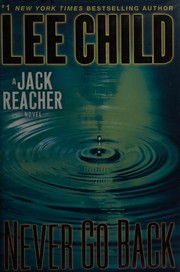
Never Go Back
Reacher returns to his old military unit to find Major Susan Turner jailed and two invented cases hiding an opium smuggling ring.
2,245-word summary · 10 min read
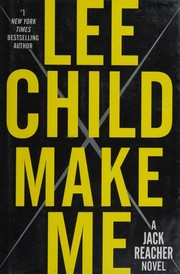
Make Me
Reacher drifts into a quiet Midwestern town and finds a missing investigator, a trail of killers, and a deep web secret.
2,352-word summary · 10 min read
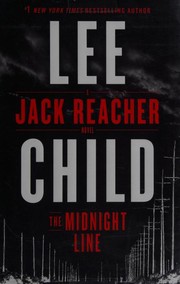
The Midnight Line
A West Point class ring in a Wisconsin pawnshop sends Jack Reacher across the Midwest, from a biker's lie to a wounded veteran hiding from the opioid trade.
2,590-word summary · 12 min read
The 5th Horseman
Two linked cases pull Lindsay Boxer and the Women's Murder Club into a hospital full of strange deaths and a luxury-car murder spree.
2,609-word summary · 12 min read
Zero Day
Army investigator John Puller is sent alone to a West Virginia coal town to solve a colonel's murder, and finds a much larger secret buried nearby.
3,434-word summary · 15 min read
The Running Grave
In the seventh Cormoran Strike novel, Robin goes undercover inside a Norfolk cult while Strike digs into a child's death from decades earlier.
2,615-word summary · 12 min read
The Keeper of Lost Causes
Jussi Adler-Olsen introduces Carl Mørck and Department Q, a Copenhagen cold-case unit in a basement, and a missing politician whose file refuses to stay closed.
2,759-word summary · 12 min read
Jack & Jill
A senator is killed with a nursery-rhyme calling card as a child is murdered near Alex Cross's home. The third Alex Cross novel pulls him toward two cases, one…
2,646-word summary · 12 min read
Fractured
In Karin Slaughter's second Will Trent novel, a mother kills the wrong man in an Atlanta mansion, and a GBI agent with a hidden reading difficulty finds a…
2,219-word summary · 10 min read
Falling
A pilot is told his family will be killed unless he crashes his Los Angeles to New York flight. Newman's debut turns one clean premise into a relentless…
2,507-word summary · 11 min read

What She Knew
Rachel lets her eight-year-old son run ahead in a Bristol park, and the nine-day search turns her into a suspect in the public eye.
2,952-word summary · 13 min read

The Beach House
A young valet is beaten to death at a Hamptons party, and his law-student brother spends a year building a case against the family that covered it up.
2,049-word summary · 9 min read

Six Years
A professor who promised to forget the woman he loved sees her husband's obituary and discovers that the wedding, the marriage, and the woman herself may never…
2,076-word summary · 9 min read

Rules of Prey
Minneapolis detective Lucas Davenport hunts a killer who leaves a new rule at every scene and treats murder as a game of wits.
1,914-word summary · 9 min read

4th of July
Lindsay Boxer shoots two armed teenagers in self-defense, faces a wrongful-death trial, and spends her leave chasing a string of throat-slashing murders in…
2,192-word summary · 10 min read

Still Missing
A realtor is abducted at a Vancouver Island open house and held for more than a year. Told through therapy sessions, the novel follows her escape and the hunt…
2,466-word summary · 11 min read