
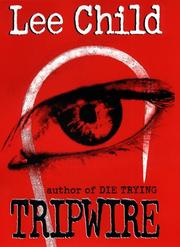
Tripwire
2,688-word summary 12 min read 343 pages in the book
- First published
- 1999
- Publisher
- G.P. Putnam's Sons
- Pages
- 343
- ISBN
- 9780399144677
- Series
- Jack Reacher (#3)
Reading options
What's inside (7 sections)
I came to Tripwire after Killing Floor and Die Trying left me curious about where Reacher would land next. A friend said the third one was where Child started letting Reacher have a personal life, which sounded risky. Lee Child published it in 1999 with Putnam. The first American hardcover runs 343 pages. It is Jack Reacher book three. I read it over a few nights and kept thinking about how different it feels from the first two, slower in the middle, stranger at the edges, and then very fast at the close.
Reacher is in Key West when it starts. He is out of the Army, drifting, working with a shovel digging swimming pools by day and bouncing at a strip club by night. Child likes that image. A huge man doing blunt physical work in heat, hands blistered, shirt stuck to his back, happy to be left alone. The pool job matters later in a way I did not expect. For now it just tells you Reacher is broke by choice and tired in a good way.
A private detective named Costello finds him there. Costello is from New York, polite, out of place in the sun. He says he was hired by a Mrs Jacob to locate Jack Reacher. Reacher does not know any Mrs Jacob. He gives Costello almost nothing and sends him off. That night at the club, two men come around asking the same questions in a harder tone. Reacher tries to follow them after his shift and finds Costello dead on the sidewalk in Old Town. His fingertips have been cut off.
That detail sets the tone. Someone wanted Costello unidentified for a while and wanted to scare anyone else who might look. Reacher does not call it in and walk away. He takes it personally, the way he does. He flies to New York to find out who Mrs Jacob is and why a simple locate turned into a killing.
A name he does not know
New York in this book is damp and crowded after the open light of Key West. Reacher goes to Costello's office first. The place looks untouched, which bothers him. He talks his way past the secretary and pokes around. What catches him is a document left open on her computer, unsaved, with contact details for the client. It feels like a small break a real investigator would catch. Not a lab trick. Just someone forgetting to close a file.
The address leads him into the middle of a funeral. His old commanding officer and mentor, General Leon Garber, has just died. Reacher did not know. He stands at the back while people pay respects, and that is where he meets Mrs Jacob.
Mrs Jacob is Jodie Garber-Jacob. She is Garber's daughter. Reacher last saw her when she was fifteen and had a fierce crush on him that embarrassed them both. Now she is thirty, divorced, working as a lawyer in the city. She hired Costello because her father, before he died, asked her to find Reacher and did not explain why in full. She kept her married name for work, which is why Reacher did not recognize it.
I liked that reunion and also felt unsure about it. Child writes Jodie as smart and steady, not a prop. She handles estates and corporate paper, she asks direct questions, she does not panic when Reacher lays out how bad the Costello killing looks. At the same time the old crush turning into a current romance happens fast. Reacher and Jodie fall into bed and into trust with very little friction. After the loneliness of the first two books, it feels warm. It also feels a little easy for a man who is supposed to be hard to find and harder to keep.
Jodie shows Reacher what her father left behind. Garber had been working on something on his own time, pulling files and making notes about a Vietnam veteran named Victor Hobie. Victor, who went by Hook Hobie after losing a hand, was reported missing in action when his helicopter went down. His elderly parents, Tom and Mary Hobie, still live with that loss. Garber had started asking whether the man calling himself Victor Hobie back in the States was really him at all.
The early warning system
The book opens with a prologue from the other side, which Child does not do often. A man who calls himself Victor Hobie has built what he thinks of as tripwires. One contact eleven thousand miles away, another six thousand miles away, people and paper that will warn him if anyone starts pulling at his past. When both alerts fire on the same day, he decides to tie off loose ends, take the money, and vanish.
That man lives in New York as a businessman. On paper he offers high interest loans to firms that banks will not touch. In practice he is a loan shark who has gone upscale. He finds a struggling company, lends just enough to get inside, then uses threats and beatings and legal pressure to strip its assets. His crew is small and loyal because he pays well and scares them more.
The hook is real. He has a prosthetic hook where his right hand should be. People remember it. He uses it to hurt people and to remind them. Child makes him enjoy pain in a way that goes past business. He keeps a marble office and polite manners and then tells a man in a back room exactly which bone will break if a signature does not appear.
I found this villain both effective and tiring. Effective because the hook and the calm voice stick in memory. Tiring because he is cruel without much variation. He tortures because he likes it, he kills because it is convenient, he sneers at weakness. After a while I wanted one scene where he wanted something besides control. Child does give him one habit that helps. He is careful with money and escape routes. He counts exits. That care makes the last act believable when he tries to cash out.
Reacher and Jodie start by visiting Tom and Mary Hobie. They are old, proud, still keeping their son's room more or less as it was. They talk about Victor as a good boy who flew helicopters and wrote home. They also talk about a man named Rutter who came to them claiming to be a liaison for families of missing soldiers. Rutter took their savings as fees to search for Victor and send documents. He is a con artist working a shameful trade, charging grieving parents for false hope.
Reacher deals with Rutter in a scene I remembered after finishing. He does not call the police first. He finds Rutter, scares him badly, and makes him give the money back to the Hobies. It is not legal and Child knows it. It also feels like the moral center of Reacher in this period. He hates people who steal from the weak more than he hates people who try to kill him.
Paper in St Louis and bones in Hawaii
The middle third is detective work with files and travel. Reacher and Jodie go to the National Personnel Records Center in St Louis, then follow the trail to a forensic lab in Hawaii that works on identifying remains from Vietnam. Child slows down here. There are forms, archives, clerks, waiting rooms. Jodie uses her lawyer patience. Reacher uses his military police memory for how records should look when they are clean and how they look when someone has thumbed them.
What they piece together is ugly. The real Victor Hobie died in the crash. The man using his name is really Carl Allen. Allen was another soldier in Vietnam who killed a superior officer in what the Army calls fragging and knew he would face prison if he went home under his own name. In the chaos after the helicopter was shot down, Allen was badly burned, left his own dog tags behind to fool the recovery team, and took Hobie's identity. He lost his right hand in the crash and later wore the hook that gave him his nickname.
Allen kept the lie for thirty years. He came home as a wounded hero instead of a suspect. He built a criminal lending business on intimidation, then cleaned the front with suits and offices. The reason Garber got involved was that something in the old files did not line up. A scar in the wrong place. A dental record that did not match. A story about the crash that changed between tellings. Garber was old and sick but he was still Garber, and he kept pulling.
I thought these chapters were the best written and also the slowest. Best because Child explains how identity theft could work inside a war bureaucracy without making it sound like a movie. Paper burns, bodies burn, clerks rotate, families want to believe. Slowest because there are a lot of rooms where people read folders and explain them to each other. If you like procedure, you will like it. I do, but around page one hundred and eighty I wanted Reacher back outside doing something physical. Child seems to know this, because he cuts the archive work with calls from Allen's men getting closer.
There is also a sad thread with the Hobie parents that Child handles with care. Tom and Mary do not want to hear that their son died in mud thirty years ago and that a stranger has been cashing checks on his name. When Reacher tells them, he is blunt but not cold. He brings proof. He sits with them. Later, when he is hurt, they come to see him. That visit earns its place.
Chester and Marilyn Stone
While Reacher is digging into the past, Allen is trying to close one last deal. His target is a bankrupt multimillion dollar company owned by Chester Stone and his wife Marilyn. The Stones are not villains. Chester inherited a business that is failing, with debts and payroll he cannot meet. Marilyn is sharper about people than Chester is. They borrow from Allen because no bank will help, and then learn what that help costs.
Allen takes them hostage in a house outside the city with help from his crew. He wants Chester to sign the company over. Marilyn stalls. She asks for a lawyer, asks for time, pretends to be more confused than she is. She knows signing means they lose everything and probably die right after. Child gives Marilyn some spine here. She is scared and she still thinks.
Two other people get pulled into that house. Sheryl, a realtor who had the bad luck to be showing property at the wrong time, is held with the Stones. William Curry, another private investigator hired by the Stones, poses as their lawyer to get inside and is caught. By the time Jodie is called back to New York by her firm to handle paperwork on the Stone deal, Allen sees a chance to grab everyone who knows too much in one place. He takes Jodie too.
That setup forces Reacher to come in head on. He has no backup, no warrant, no plan beyond getting inside and ending it. The house fight is close and messy. Hallways, stairs, a kitchen knife, a gun that changes hands. Reacher kills Allen and his men, but not cleanly. He takes a bullet to the chest at short range.
Child then does something I did not buy at first and then half accepted. At the hospital a doctor finds that the bullet did not get past Reacher's rib cage because his chest muscle had grown so thick from months of digging pools with a shovel in Key West. It sounds like a joke. Reacher's manual labor saves his life. People who know guns will roll their eyes. I did. But Child had planted the pool work from page one, the sore shoulders, the calluses, the way Reacher breathed when he lifted. So when the doctor explains it, it feels planted rather than invented on the spot. Still, it is a lucky break for a hero who rarely needs luck.
The aftermath is quiet. Jodie stays with him while he heals. The Stones survive. Curry survives. Sheryl survives, shaken. Tom and Mary Hobie visit the hospital to thank Reacher for clearing Victor's name. That scene is short and I was glad Child kept it short. An old couple saying thank you carries more weight than a speech about honor.
What holds and what creaks
What holds is the structure. Two cold trails, one from Garber's files and one from Costello's murder, meet in the middle and turn into a siege. Key West light against New York winter light. Old war paper against new loan paper. Jodie gives Reacher someone to talk to who can read a contract faster than he can, which balances his skill with weapons and distances and times. The Rutter side plot, short as it is, gives the book a conscience. Stealing from Gold Star parents is the one crime Child treats as unforgivable, and Reacher's anger there feels real.
The pace in the first eighty pages and the last hundred is strong. Short chapters, plain sentences, Reacher watching hands and doors. Costello's death on the sidewalk, the office search, the funeral meeting, the house siege. Those scenes move.
What creaks for me is the middle and the villain's sameness. The St Louis and Hawaii research goes on a bit, with a few too many explanations of how archives work. Allen's cruelty repeats. Once you have seen him use the hook to make a man sign, you get it. The second and third demonstrations do not add much. The romance also moves on rails. Jodie is capable and then quickly needs rescue, which undercuts the capable start. I wanted one more scene where she saved Reacher with lawyering instead of the other way around with fists.
There is also the shift to third person. Killing Floor was first person, all Reacher voice. Tripwire steps back and follows Allen and Jodie and the Stones too. That lets Child build suspense with cross cutting, and I think the siege needed it. But I missed the tight first person math from book one, the bus times and food lists that made Reacher odd and specific. Here he is smoother, more like a standard hero, less strange.
Who should read it. If you follow the series in order, do not skip it. The chest wound gets mentioned in later books, when women notice the scar and ask, and Jodie matters to how Reacher thinks about Garber and home. If you like thrillers about stolen identity and predatory lending, with a Florida start and a New York finish, this one fits. If you dislike torture scenes or paperwork chapters, know they are both here. The torture is not endless but it is graphic. The paperwork is not endless but it is detailed.
For facts kept straight while reading, this is Jack Reacher book three, first out in 1999 from Putnam in the States, 343 pages in the first hardcover. The UK edition came from Bantam the same year. Later paperbacks reset the type and run longer. The series order matters because Garber dies here and Jodie enters Reacher's life here, and both echo forward. Read Die Trying before it if you can, since Reacher is still drifting after that trouble and Key West makes more sense as a hiding place.
I closed it thinking about the Hobies more than the hook. An old couple kept a boy's room and paid a liar to keep hope alive, while the liar lived large on their son's name. Reacher gives them back the name and the money Rutter took, and then walks away with a scar on his chest and Jodie beside him for a while. That trade, a name restored for blood spilled, felt like what Child wanted from the start.
FAQ
When was Tripwire published?
Lee Child published Tripwire in 1999 with Putnam. The first American hardcover runs 343 pages and is Jack Reacher book three.
Is Tripwire the third Jack Reacher book?
Yes. Tripwire follows Killing Floor and Die Trying. It centers on General Garber's daughter Jodie and the stolen identity of MIA Victor Hobie.
How does Reacher survive being shot?
A short range chest bullet stops at his rib cage because months of digging pools thickened his chest muscle, as the hospital doctor explains.
Similar books
More from Jack Reacher first, then related titles.

Killing Floor
Ex-military policeman Jack Reacher is arrested for murder in Margrave, Georgia, then learns the victim was his brother.
2,872-word summary · 13 min read
Running Blind
Jack Reacher must catch a killer who murders women with no forced entry and no trace.
2,008-word summary · 9 min read

Echo Burning
Reacher hitches a ride with a Texas woman who wants her abusive husband killed, then has to prove she did not murder him when he comes home.
2,209-word summary · 10 min read
Without Fail
Reacher is asked to test vice presidential security by planning to kill.
2,084-word summary · 9 min read
Persuader
Reacher goes undercover in a Maine crime family to find a missing DEA agent and the man he once failed to kill, and Lee Child keeps the whole thing tight,…
2,278-word summary · 10 min read

The Enemy
In January 1990, MP major Jack Reacher investigates a dead general, a stolen briefcase, and three murders tied to an Army power struggle.
2,123-word summary · 9 min read

One Shot
Six shots, five dead in Indiana, and James Barr asks for Jack Reacher. Reacher leaves Miami to test the proof in this 2005 Delacorte Press thriller, 376 pages,…
2,972-word summary · 13 min read

Bad Luck and Trouble
A deposit of $1,030 summons Jack Reacher back to his old army unit, which is being picked off one name at a time.
2,366-word summary · 11 min read
Gone Tomorrow
Reacher stops a suicide bomber on the subway, then hunts her handlers.
2,308-word summary · 10 min read

61 Hours
A bus crash strands Jack Reacher in a snowbound South Dakota town where a drug gang, a corrupt police force, and a single witness are on a collision course.
2,227-word summary · 10 min read

Worth Dying For
Reacher stops for one night in rural Nebraska and finds a family that runs the county, a missing girl and a shipment worth killing for.
2,021-word summary · 9 min read
The Affair
In 1997, Reacher goes undercover in a Mississippi town where a murder near an army base collides with a senator's power. The case that ends his military career.
2,039-word summary · 9 min read

What She Knew
Rachel lets her eight-year-old son run ahead in a Bristol park, and the nine-day search turns her into a suspect in the public eye.
2,952-word summary · 13 min read

The Beach House
A young valet is beaten to death at a Hamptons party, and his law-student brother spends a year building a case against the family that covered it up.
2,049-word summary · 9 min read

Six Years
A professor who promised to forget the woman he loved sees her husband's obituary and discovers that the wedding, the marriage, and the woman herself may never…
2,076-word summary · 9 min read

Rules of Prey
Minneapolis detective Lucas Davenport hunts a killer who leaves a new rule at every scene and treats murder as a game of wits.
1,914-word summary · 9 min read

4th of July
Lindsay Boxer shoots two armed teenagers in self-defense, faces a wrongful-death trial, and spends her leave chasing a string of throat-slashing murders in…
2,192-word summary · 10 min read

Still Missing
A realtor is abducted at a Vancouver Island open house and held for more than a year. Told through therapy sessions, the novel follows her escape and the hunt…
2,466-word summary · 11 min read

3rd Degree
The third Women's Murder Club novel follows a San Francisco terror cell and a three-day killing schedule, and it costs the club a member.
2,685-word summary · 12 min read

Say You're Sorry
A widowed prosecutor defends the teenager accused of killing her babysitter, uncovering a small town's secrets and a killer hiding in plain sight.
2,116-word summary · 9 min read

Girl, Forgotten
A rookie US marshal guards a judge with a stalker and ends up reopening the 1982 prom-night murder of the judge's pregnant daughter.
2,111-word summary · 9 min read

The Woods
Twenty years after two teenagers were murdered and two vanished at summer camp, prosecutor Paul Copeland identifies a fresh corpse as one of the missing.
2,490-word summary · 11 min read

The Boy from the Woods
Wilde, found feral in a New Jersey forest in 1986, hunts for a missing teenager while a senator's secrets tear a wealthy town apart.
2,270-word summary · 10 min read

Things We Do in the Dark
A comedian kills her husband, then a podcaster digs up her teen murder past.
2,427-word summary · 11 min read

The Widow
A widow of a suspected criminal faces reporters and police while hiding what her marriage really cost.
2,599-word summary · 12 min read
The Racketeer
A jailed lawyer trades a judge murder secret for freedom and revenge.
2,434-word summary · 11 min read

The Night Swim
A true crime podcaster covers a rape trial while probing an old drowning in a small town.
2,260-word summary · 10 min read
The Judge's List
Lacy Stoltz hunts a sitting judge who murders off his list.
2,513-word summary · 11 min read
The Innocent
A government hitman refuses one kill and must protect a teenage girl at the center of a cover-up.
2,403-word summary · 11 min read
The Girl Who Was Taken
A survivor returns alone while a reporter digs for her lost sister.
2,261-word summary · 10 min read