

The Enemy
2,123-word summary 9 min read 393 pages in the book
- First published
- 2004
- Publisher
- Delacorte Press
- Pages
- 393
- ISBN
- 9780385336673
- Series
- Jack Reacher (#8)
Reading options
What's inside (7 sections)
I picked up The Enemy because I wanted to see Reacher before he became the drifter. Most of the series follows him after he leaves the Army, riding buses and walking highways with nothing in his pockets. This one goes the other way. Lee Child published it in 2004 with Delacorte Press, and the first American hardcover runs 393 pages. It was the eighth book released but it sits earliest in Reacher's life, back when he was twenty-nine and a major in the military police. It is also told in the first person, which Child only did a few times, so you hear the younger Reacher thinking out loud.
That setup hooked me. The Berlin Wall is falling. The Cold War is ending. The Army is about to shrink, and every general with stars on his shoulders is doing math about his own future. Into that nervous moment drops a dead two-star general in a cheap motel. What follows is the most straight-up detective story in the early Reacher books, and my favorite of the prequels for that reason alone.
New Year's Day at Fort Bird
The book opens in the last hours of 1989, rolling into New Year's Day 1990. Major General Kenneth Kramer is found dead in a run-down motel near Fort Bird, North Carolina, the fictional post where Reacher is stationed. The place is the kind with peeling paint and a buzzing soda machine, twenty rooms long, across from a gas station. Kramer is on the bed. His clothes are off or half off. His briefcase is gone.
Reacher catches the call because he is the duty investigator with the 110th Special Investigations Unit, the Army's elite MP detective outfit. He has just arrived from Panama, part of a wave of transfers that moved a lot of senior MPs to new posts on the same day. At the scene he meets the local deputy chief, a man named Stockton, who is out of his depth and knows it. The town cops want this to be simple. A general with a weak heart and a woman in a motel. Case closed, please.
Reacher does not buy simple. The night clerk remembers hearing a military vehicle pull away after Kramer died, which points away from a local woman and toward someone from the post. The missing briefcase bothers him more than the body. Generals carry paper that matters. Somebody took it, and that somebody drove something with Army tires.
There is a nice touch here I appreciated. Reacher's boss at this point is Colonel Leon Garber, the one decent senior officer in his life, the man who built the 110th into something real. Garber tells Reacher to keep the lid on the situation but to actually work it. That order, control it and solve it, drives the whole book.
The widow in Virginia
Garber sends Reacher to do the notification run. When a general dies, somebody has to knock on the wife's door. Reacher takes a young officer with him, Lieutenant Summer, a Black woman recently assigned to the 110th. She is junior, sharp, and tired of being treated as decoration. She becomes his partner for the case, and honestly she is one of the best sidekicks in the series.
They drive to the Kramers' quarters in Virginia expecting grief. They find a crime scene instead. Irene Kramer, the general's wife, has been bludgeoned to death in her own house. So now there are two bodies and no briefcase, and the math has changed. A heart attack plus a burglary is one thing. Two killings in two states in one day is something else.
This is where Child starts layering the military politics. Two men from Kramer's staff show up asking pointed questions: Colonel Coomer and Brigadier General Vassell. They want to know about the briefcase. They ask the way men ask when they already know the answer matters more than the question. Reacher mentions Mrs. Kramer's murder and watches their faces. They leave. He files their interest away.
Back at Fort Bird, Reacher works the bar across from the motel, trying to find the woman Kramer was with. The bar has strippers and a bouncer with heavy hands. Reacher gets into it with the bouncer after the man slaps one of the women for talking too much, and Reacher puts him down. It reads like classic Reacher, fast and physical, but Child loads a cost onto it. A Delta Force sergeant named Christopher Carbone is in the bar that night and sees the whole thing. Carbone later files a formal complaint accusing Reacher of assault. Paper like that follows a man.
A new colonel who wants it buried
Then the ground shifts. Garber, Reacher's protector, is suddenly transferred to a command in South Korea. No warning, no handover. His replacement is Colonel Willard, a desk-shaped careerist who treats the 110th like a problem to be managed. Willard's first instruction to Reacher is to write off the new death as an accident. Because yes, there is a new death. Carbone, the Delta sergeant from the bar, is found murdered.
Willard holds the assault complaint over Reacher's head. Close the case fast, he says, or the complaint goes forward and Reacher's career takes the hit. It is blackmail in regulation wrapping. Reacher keeps digging anyway, with Summer covering his back, and the pressure ratchets up with every chapter. Willard is not a great villain in the sense of having layers. He is a great obstacle. Every scene with him made my jaw tighten, which I think is the point.
The killings keep coming. David Brubaker, Carbone's commanding officer in Delta, turns up dead too. The briefcase resurfaces, but the one thing that mattered is missing from inside it: the printed agenda for a hush-hush conference Kramer was set to attend, a gathering of armor branch leaders. Coomer and Vassell deny any agenda exists. Willard pushes harder for Reacher to stop. Summer finds threads Willard wants cut. The more the Army says there is nothing to see, the more certain Reacher gets that the briefcase is the whole case.
I should be honest about this middle stretch. There are a lot of office confrontations and a lot of talk about force structure, armor versus infantry, who briefs whom. If you came for bar fights, these pages can drag. I found myself skimming one Willard dressing-down scene and then getting pulled straight back in by a sharp forensic detail, like the way Reacher reads the wounds on Carbone's body or the timeline of the murders. The procedure carries the politics.
Paris, then the top floor
Underneath the case runs a personal thread that gives the book its weight. Reacher gets a call from his older brother Joe. Their mother is dying of cancer in Paris. The Reacher family is Army to the bone: a Marine father, sons born on bases overseas, a French mother named Josephine who held the whole thing together. Reacher flies to Paris with Summer. His mother dies. They bury her.
I will not spoil everything Josephine tells her son before the end, except to say it reframes things Reacher believed about his family and about Joe. It lands because Child keeps it small. No speeches. Just a dying woman telling the truth while she still can, and a son who files it away with all the other evidence. Fans who know Joe Reacher from the later books, where he casts a long shadow as the brilliant dead brother, will feel this section most.
Back in the States, Reacher pulls a move I did not see coming. He gets himself in front of the Army Chief of Staff and lays out what the transfers mean. With the Soviet Union collapsing, the armored divisions face the axe, and a faction of armor generals was building a publicity and lobbying scheme to force Congress to spare them. The Chief admits the counter-move: he quietly scattered twenty of the Army's best investigators, Reacher among them, to key posts using forged orders under Garber's name, hoping straight cops would trip up any plotting before it turned into something worse. He also warns that the Secretary of Defense's people are tangled up with the plotters. So Reacher is working more than a murder case. He is standing where two factions of the most powerful institution on earth are pushing at each other.
This is the part of the book that strains belief if you poke it. The idea of the top soldier in the Army forging transfer orders and running his own quiet counter-plot is a lot to swallow. It works on the page because Child plays it as a tired old man confessing to a young cop, not as a thriller set piece. I bought it for the length of the scene. Later, thinking about it, I bought it less. Your mileage may vary.
The briefcase and the firing range
Here is how it all connects, so stop here if you want to stay clean for the twists. Kramer was lured to that motel by Carbone. The bait was a homosexual tryst. Kramer died of a heart attack in the room, and Carbone lifted the briefcase and told his commander Brubaker what was inside. The agenda listed something far darker than lobbying: a plan to murder eighteen prominent infantry officers to cripple the rival branch's modernization drive and protect armor's budget and billets.
Coomer and Vassell wanted the briefcase back. Their errand man was Major Marshall, a staff officer who also happened to be Kramer's lover. Marshall set up an exchange with Carbone, then killed him. He killed Brubaker to cut the link. And he had killed Irene Kramer earlier while tearing her house apart looking for the briefcase, in a rage fed by jealousy as much as by orders. Reacher proves it the hard way, by pressure and timeline and by knowing how soldiers lie.
The takedown runs in two parts. Coomer and Vassell get arrested through channels, with the Chief of Staff's weight behind it. Marshall is harder. Reacher tracks him to a live-fire training exercise at a range in the Mojave Desert and walks in to arrest him in front of tanks. Marshall tries to get himself killed by maneuvering armor onto his own position, a suicide by training accident. Reacher shoots him in the shoulder instead and takes him alive. The missing agenda turns up hidden in Carbone's billet, and the paper convicts everybody. The plotters draw life sentences.
The last thirty pages hit like a door closing. Carbone's assault complaint against Reacher is still on file. Since Carbone is dead, Reacher could deny the whole thing and walk away clean. He refuses. He accepts the charge rather than smear a dead gay soldier who cannot answer back, and the price is a demotion from major to captain. Then, on his own time, he visits Willard at home and executes the corrupt colonel, staging the body with planted drugs so it reads as a deal gone bad. It is cold and deliberate, and the book does not ask you to cheer. It just shows you what this Reacher does to men who sell out soldiers. We learn Summer made captain too, and that Reacher never saw her again.
My fair criticism, then. The assassination list of eighteen officers is absurd as a plan, and the book knows it is absurd but rushes past that. The Mojave arrest with live tanks is staged for cinema, not for sense. Willard never becomes more than a smug wall. And the way gay soldiers are discussed reflects the ban-era Army of 1990 in terms that can read crude now, though Child's sympathy clearly sits with Carbone, and Reacher's final choice about the complaint is the book's moral spine.
Still, this is the Reacher procedural at its most procedural, and I mean that as praise. The clues stack in order. The timeline matters. Summer earns her place on every page. The prequel trick pays off because the ending explains the drifter: a man who watched the institution eat its own, took a demotion on principle, murdered his corrupt boss, and walked away from the uniform a few books later. If you have only seen the television version, where Reacher is a wall with a quip, this book will surprise you. The young officer here is smart, tired, funny in a dry way, and already stubborn beyond reason.
Read it with Killing Floor close by. That first published book shows you the lone wanderer. This one shows you the soldier he was, and what it cost him to stop being that man.
FAQ
Is The Enemy the first Jack Reacher book?
No. It was the eighth book published, in 2004 with Delacorte Press, but it is set earliest, in January 1990, when Reacher is a 29-year-old MP major.
Do I need to read the earlier Reacher books first?
No. The Enemy stands alone as a prequel. It introduces Reacher, his mentor Colonel Garber, his partner Lieutenant Summer, and his brother Joe from scratch.
Why is Reacher demoted at the end of The Enemy?
He accepts a dead soldier's assault complaint against him instead of denying it. The price is reduction from major to captain.
Similar books
More from Jack Reacher first, then related titles.

Killing Floor
Ex-military policeman Jack Reacher is arrested for murder in Margrave, Georgia, then learns the victim was his brother.
2,872-word summary · 13 min read
Tripwire
In Key West, Jack Reacher follows a murdered detective's trail to New York, an old mentor's files, and a loan shark stealing a dead soldier's name.
2,688-word summary · 12 min read
Running Blind
Jack Reacher must catch a killer who murders women with no forced entry and no trace.
2,008-word summary · 9 min read

Echo Burning
Reacher hitches a ride with a Texas woman who wants her abusive husband killed, then has to prove she did not murder him when he comes home.
2,209-word summary · 10 min read
Without Fail
Reacher is asked to test vice presidential security by planning to kill.
2,084-word summary · 9 min read
Persuader
Reacher goes undercover in a Maine crime family to find a missing DEA agent and the man he once failed to kill, and Lee Child keeps the whole thing tight,…
2,278-word summary · 10 min read

One Shot
Six shots, five dead in Indiana, and James Barr asks for Jack Reacher. Reacher leaves Miami to test the proof in this 2005 Delacorte Press thriller, 376 pages,…
2,972-word summary · 13 min read

Bad Luck and Trouble
A deposit of $1,030 summons Jack Reacher back to his old army unit, which is being picked off one name at a time.
2,366-word summary · 11 min read
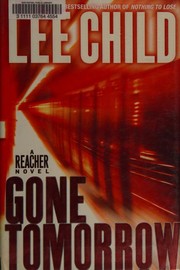
Gone Tomorrow
Reacher stops a suicide bomber on the subway, then hunts her handlers.
2,308-word summary · 10 min read

61 Hours
A bus crash strands Jack Reacher in a snowbound South Dakota town where a drug gang, a corrupt police force, and a single witness are on a collision course.
2,227-word summary · 10 min read

Worth Dying For
Reacher stops for one night in rural Nebraska and finds a family that runs the county, a missing girl and a shipment worth killing for.
2,021-word summary · 9 min read

The Affair
In 1997, Reacher goes undercover in a Mississippi town where a murder near an army base collides with a senator's power. The case that ends his military career.
2,039-word summary · 9 min read

What She Knew
Rachel lets her eight-year-old son run ahead in a Bristol park, and the nine-day search turns her into a suspect in the public eye.
2,952-word summary · 13 min read

The Beach House
A young valet is beaten to death at a Hamptons party, and his law-student brother spends a year building a case against the family that covered it up.
2,049-word summary · 9 min read

Six Years
A professor who promised to forget the woman he loved sees her husband's obituary and discovers that the wedding, the marriage, and the woman herself may never…
2,076-word summary · 9 min read

Rules of Prey
Minneapolis detective Lucas Davenport hunts a killer who leaves a new rule at every scene and treats murder as a game of wits.
1,914-word summary · 9 min read

4th of July
Lindsay Boxer shoots two armed teenagers in self-defense, faces a wrongful-death trial, and spends her leave chasing a string of throat-slashing murders in…
2,192-word summary · 10 min read

Still Missing
A realtor is abducted at a Vancouver Island open house and held for more than a year. Told through therapy sessions, the novel follows her escape and the hunt…
2,466-word summary · 11 min read

3rd Degree
The third Women's Murder Club novel follows a San Francisco terror cell and a three-day killing schedule, and it costs the club a member.
2,685-word summary · 12 min read

Say You're Sorry
A widowed prosecutor defends the teenager accused of killing her babysitter, uncovering a small town's secrets and a killer hiding in plain sight.
2,116-word summary · 9 min read

Girl, Forgotten
A rookie US marshal guards a judge with a stalker and ends up reopening the 1982 prom-night murder of the judge's pregnant daughter.
2,111-word summary · 9 min read

The Woods
Twenty years after two teenagers were murdered and two vanished at summer camp, prosecutor Paul Copeland identifies a fresh corpse as one of the missing.
2,490-word summary · 11 min read

The Boy from the Woods
Wilde, found feral in a New Jersey forest in 1986, hunts for a missing teenager while a senator's secrets tear a wealthy town apart.
2,270-word summary · 10 min read

Things We Do in the Dark
A comedian kills her husband, then a podcaster digs up her teen murder past.
2,427-word summary · 11 min read

The Widow
A widow of a suspected criminal faces reporters and police while hiding what her marriage really cost.
2,599-word summary · 12 min read
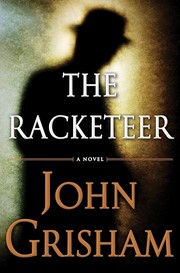
The Racketeer
A jailed lawyer trades a judge murder secret for freedom and revenge.
2,434-word summary · 11 min read

The Night Swim
A true crime podcaster covers a rape trial while probing an old drowning in a small town.
2,260-word summary · 10 min read
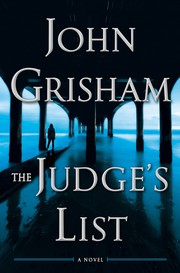
The Judge's List
Lacy Stoltz hunts a sitting judge who murders off his list.
2,513-word summary · 11 min read

The Innocent
A government hitman refuses one kill and must protect a teenage girl at the center of a cover-up.
2,403-word summary · 11 min read

The Girl Who Was Taken
A survivor returns alone while a reporter digs for her lost sister.
2,261-word summary · 10 min read