

Echo Burning
2,209-word summary 10 min read 354 pages in the book
- First published
- 2001
- Publisher
- G. P. Putnam's Sons
- Pages
- 354
- ISBN
- 9780399147265
- Series
- Jack Reacher (#5)
Reading options
What's inside (9 sections)
Echo Burning is the Jack Reacher book that feels most like a western. Reacher arrives in Texas with no plan, gets into a fight in a saloon, and ends up on a ranch with a woman who wants her husband dead. There is a dusty town, a powerful family, a corrupt district attorney, and a finale that involves a fire and a gun. The difference is that the woman is not a femme fatale and the husband is not the villain Reacher expects. The book is a thriller, but its real subject is domestic abuse and the way a small community closes ranks around a man who beats his wife.
Lee Child published Echo Burning in 2001. Bantam Press brought out the UK edition on 2 April, and Putnam published the American edition on 25 June. The Putnam hardcover runs 354 pages and carries the ISBN 9780399147265. It is the fifth Jack Reacher novel, after Running Blind and before Without Fail. Child wrote it in the third person, as he had written the earlier Reacher books, and the narration is cool and procedural in a way that suits the Texas setting. Reacher is an outsider here, and the book keeps him at a slight distance from the people he is trying to help.
A fight and a ride
The novel opens in a saloon in a small Texas town. A man is drunk and looking for trouble. He keeps provoking Reacher, and Reacher finally breaks his nose and a finger. The man turns out to be a local cop. The next day he comes back with three colleagues to arrest Reacher. Reacher decides it is time to leave. He chooses hitchhiking because it is the fastest way out, and a car stops for him. The driver is Carmen Greer, a woman of Mexican heritage with a six-year-old daughter named Ellie.
Carmen does not stop by accident. She has been looking for someone like Reacher. Her husband, Sloop Greer, is about to be released from prison after serving time for tax evasion. Sloop beat her before he went away, and he will beat her again. He also knows that Carmen was the one who informed on him. Carmen has been trying to find a man who can kill him. Reacher's military background makes him a candidate. She makes the proposal plainly, without romance or melodrama. Reacher refuses, gets out of the car, and then realizes that standing in the middle of a Texas road in extreme heat is a bad idea. He gets back in and agrees to ride to the ranch.
The Greer ranch is called Echo, and the town nearby shares the name. Sloop's mother, brother, and two ranch hands live there. They are hostile from the moment Reacher arrives. They are also racist, and Carmen's Mexican heritage is a constant target. Reacher gets the family to hire him as a wrangler so he has a reason to stay. He teaches Carmen how to handle a firearm. He also starts asking questions about Sloop, the family business, and the people who have been watching the ranch.
The watchers are the first sign that the situation is bigger than a domestic dispute. Two men and a boy have been staking out the ranch. A second group, a trio of professional killers, is also in the area. The killers murder the watchers and then murder Al Eugene, the lawyer who secured Sloop's release. The reader knows before Reacher does that multiple parties are converging on Echo, and that Carmen's problem is not only her husband.
The Greer family and the law
Sloop arrives at the ranch and immediately claims Reacher is trespassing. He has Reacher arrested and removed by Texas Rangers. On the way to town, the Rangers are called back. Sloop has been shot dead. The authorities find a gun and charge Carmen with the murder. While she is in jail, she suddenly confesses and refuses legal help. The confession is false, and everyone except the authorities seems to know it. Reacher obtains a lawyer for her anyway: Alice Amanda Aaron, a Harvard-educated, vegetarian, lesbian attorney who is as out of place in Echo as Reacher is.
Alice is one of the book's better supporting characters. She is idealistic without being naive, and she gives the novel a legal spine. She and Reacher discover a cover-up. When Hack Walker, the Pecos County district attorney and an old friend of Sloop's, was younger, he, Sloop, and Al Eugene murdered several illegal immigrants. The crime was buried. Hack is now running for reelection, and the last thing he needs is an investigation that digs up the past. Reacher concludes that Hack orchestrated the current murders to protect his career, and that he is pressuring Carmen to confess by threatening Ellie's life.
The immigration plot is where the book becomes more than a revenge story. The victims are people with no standing in the community, and their deaths were easy to ignore because nobody with power cared. Hack's respectability depends on keeping them invisible. Carmen is vulnerable for the same reason. She is a Mexican American woman in a town that treats her as an outsider, and her husband's family has money and connections. The law is not neutral in Echo. It is a tool that the powerful use to protect themselves.
The killers and the twist
The trio of hitmen is led by a woman, and Child uses her to unsettle the reader's expectations. The killers are professional, patient, and willing to wait for the right moment. They kill the watchers, then Al Eugene, then come for Carmen. Reacher kills two of them in an ambush. The third killer goes after Ellie at a motel, and Reacher tracks him down and stops him. The action scenes are fast and physical, and Child is good at making Reacher's competence feel earned rather than magical.
The twist is that Hack Walker hired the killers, not Sloop's family. Sloop's death was part of the cover-up. Carmen's confession was obtained by threatening her daughter. The Greer family is awful, but they are not the architects of the conspiracy. The real villain is the district attorney, a man who has spent years presenting himself as the voice of law and order. When Reacher confronts him at the ranch, Sloop's mother shoots Hack. A fire breaks out and burns down the house. The matriarch who spent the whole novel insulting Carmen ends up killing the man who ruined her family, and the novel does not pretend that this is justice.
The ending is messy in a way that fits the book. Carmen is not simply rescued. She has lost her husband, her home, and the life she had, even if that life was miserable. She leaves with Ellie to start again. Reacher hitches a ride out of Texas. He does not stay for a relationship, and he does not offer a speech about what he has learned. The case is closed, but the town has not changed.
Reacher as an outsider
Reacher works in Echo Burning because he is not part of the community. He has no history with the Greers, no stake in Hack's election, and no reason to protect the town's reputation. He can see what the locals have agreed not to see. That is the fantasy of the Reacher series in general, and it is especially clear here. A stranger arrives, notices the abuse, refuses to look away, and uses violence to protect a woman and a child. The fantasy is satisfying, and it is also a fantasy. Real Carmen Greers do not often get a Reacher.
The novel is aware of this, at least partly. Carmen is not passive. She is the one who finds Reacher, makes the proposal, and keeps her daughter safe. Alice is the one who builds the legal case. Reacher is the muscle, but he is not the only agent in the story. The book gives Carmen a history and a voice, and it lets her be angry without making her monstrous. That is more than many thrillers manage.
Child has said he wanted Carmen to be a character the reader would not know whether to trust. That ambiguity works for a while. Did she really kill Sloop? Is she manipulating Reacher? The confession complicates things, and the reveal that Hack is behind the killings resolves the question. Carmen is a victim who fought back in the only ways available to her. The book does not punish her for that.
What drags and what works
Echo Burning is longer than it needs to be. The middle section, with Reacher working on the ranch and trying to figure out who is watching, moves slowly. Child spends a lot of time on the Texas landscape, the heat, the food, and the rhythms of ranch life. Some of this is atmosphere, and some of it is padding. The legal plot is also complicated, and the immigration cover-up takes a while to come into focus. Readers who want the lean, propulsive Reacher of Killing Floor may find this one frustrating.
The politics are blunt. The Greers are openly racist, Hack is a cynical opportunist, and the town's power structure is rotten. Child is not subtle about it, and the book's anger is part of its appeal. The ending, with Sloop's mother shooting Hack and the house burning, is operatic. It works emotionally, but it is not plausible, and the novel has to rush the aftermath to keep the tone from tipping into melodrama.
The action is well done. The fight in the saloon, the ambush of the hitmen, and the final confrontation at the ranch are all clear and tense. Reacher's competence is the pleasure of the series, and this book delivers it. The quieter scenes with Ellie are also good. Reacher is awkward with children, and Child does not turn him into a sentimental father figure. He simply treats Ellie like a person, which is more than her father's family does.
The Texas setting
Child has said the idea for the book came from two places. One was a simple question: what would it be like for a woman whose husband was coming home from jail, but who did not want him to come home? The other was the grave of the gunfighter Clay Allison, who supposedly said that he never killed a man who did not need killing. That second idea gives the novel its moral shape. Reacher is a man who has killed before, and he is not squeamish about doing it again. The question the book keeps asking is who deserves it, and who gets to decide.
Texas is not just a backdrop. The heat, the distances, the ranches, and the small-town hierarchy are all part of the trap. Carmen cannot simply drive away because she has no money and no support. The police are not on her side. The district attorney is part of the family's social world. The ranch is isolated, and the people who work there depend on the Greers for their jobs. The novel is careful about these details. It shows how abuse survives in a place where everyone knows everyone and nobody wants to interfere.
The third-person narration helps. Reacher is not a talkative narrator, and Child does not try to make him one. We see the town from the outside, the way Reacher sees it, and we are allowed to notice things he does not. The watchers, the killers, and the lawyer are all introduced before Reacher understands how they fit together. That structure creates suspense, but it also creates a sense of inevitability. The violence is coming, and the only question is who will be standing when it arrives.
Child's prose is plain and fast. He likes short sentences, concrete details, and dialogue that sounds like people actually talking. The style is not showy, but it is effective. A scene like Reacher teaching Carmen to shoot is suspenseful because of what is not said. The reader knows the gun will be used. The characters do not. The book is good at that kind of quiet dread.
Why it stays with me
The scene I remember is not a fight. It is Carmen explaining why she stayed. She did not stay because she loved Sloop. She stayed because she had no money, no family nearby, and a daughter to protect. The ranch was a trap, and leaving was more dangerous than staying. That is the reality of domestic abuse, and the novel takes it seriously. The thriller plot is built on top of that reality, but the reality is what gives the plot weight.
Echo Burning is not the best Reacher novel. It is too long, the mystery is convoluted, and the villain is a stock corrupt official. It is, however, one of the most socially engaged books in the series. It looks at abuse, immigration, and small-town corruption without pretending that a punch to the face solves any of them. Reacher leaves Texas, and the problems stay. The book knows that, and the knowledge makes the ending feel less like a victory and more like a temporary reprieve.
FAQ
Is Echo Burning a Jack Reacher novel?
Yes. It is the fifth book in Lee Child's Jack Reacher series, published in 2001 between Running Blind and Without Fail.
Can I read Echo Burning without the earlier Reacher books?
Yes. The plot is self-contained and does not depend on events from earlier novels.
Does Echo Burning have a happy ending?
Carmen and her daughter survive and leave Texas, but the town's corruption is not fixed and Reacher moves on alone.
Similar books
More from Jack Reacher first, then related titles.

Killing Floor
Ex-military policeman Jack Reacher is arrested for murder in Margrave, Georgia, then learns the victim was his brother.
2,872-word summary · 13 min read
Tripwire
In Key West, Jack Reacher follows a murdered detective's trail to New York, an old mentor's files, and a loan shark stealing a dead soldier's name.
2,688-word summary · 12 min read
Running Blind
Jack Reacher must catch a killer who murders women with no forced entry and no trace.
2,008-word summary · 9 min read

Without Fail
Reacher is asked to test vice presidential security by planning to kill.
2,084-word summary · 9 min read
Persuader
Reacher goes undercover in a Maine crime family to find a missing DEA agent and the man he once failed to kill, and Lee Child keeps the whole thing tight,…
2,278-word summary · 10 min read

The Enemy
In January 1990, MP major Jack Reacher investigates a dead general, a stolen briefcase, and three murders tied to an Army power struggle.
2,123-word summary · 9 min read

One Shot
Six shots, five dead in Indiana, and James Barr asks for Jack Reacher. Reacher leaves Miami to test the proof in this 2005 Delacorte Press thriller, 376 pages,…
2,972-word summary · 13 min read

Bad Luck and Trouble
A deposit of $1,030 summons Jack Reacher back to his old army unit, which is being picked off one name at a time.
2,366-word summary · 11 min read
Gone Tomorrow
Reacher stops a suicide bomber on the subway, then hunts her handlers.
2,308-word summary · 10 min read

61 Hours
A bus crash strands Jack Reacher in a snowbound South Dakota town where a drug gang, a corrupt police force, and a single witness are on a collision course.
2,227-word summary · 10 min read

Worth Dying For
Reacher stops for one night in rural Nebraska and finds a family that runs the county, a missing girl and a shipment worth killing for.
2,021-word summary · 9 min read
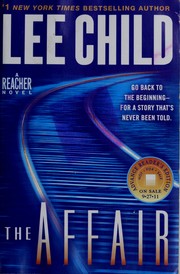
The Affair
In 1997, Reacher goes undercover in a Mississippi town where a murder near an army base collides with a senator's power. The case that ends his military career.
2,039-word summary · 9 min read

What She Knew
Rachel lets her eight-year-old son run ahead in a Bristol park, and the nine-day search turns her into a suspect in the public eye.
2,952-word summary · 13 min read

The Beach House
A young valet is beaten to death at a Hamptons party, and his law-student brother spends a year building a case against the family that covered it up.
2,049-word summary · 9 min read

Six Years
A professor who promised to forget the woman he loved sees her husband's obituary and discovers that the wedding, the marriage, and the woman herself may never…
2,076-word summary · 9 min read

Rules of Prey
Minneapolis detective Lucas Davenport hunts a killer who leaves a new rule at every scene and treats murder as a game of wits.
1,914-word summary · 9 min read

4th of July
Lindsay Boxer shoots two armed teenagers in self-defense, faces a wrongful-death trial, and spends her leave chasing a string of throat-slashing murders in…
2,192-word summary · 10 min read

Still Missing
A realtor is abducted at a Vancouver Island open house and held for more than a year. Told through therapy sessions, the novel follows her escape and the hunt…
2,466-word summary · 11 min read

3rd Degree
The third Women's Murder Club novel follows a San Francisco terror cell and a three-day killing schedule, and it costs the club a member.
2,685-word summary · 12 min read

Say You're Sorry
A widowed prosecutor defends the teenager accused of killing her babysitter, uncovering a small town's secrets and a killer hiding in plain sight.
2,116-word summary · 9 min read

Girl, Forgotten
A rookie US marshal guards a judge with a stalker and ends up reopening the 1982 prom-night murder of the judge's pregnant daughter.
2,111-word summary · 9 min read

The Woods
Twenty years after two teenagers were murdered and two vanished at summer camp, prosecutor Paul Copeland identifies a fresh corpse as one of the missing.
2,490-word summary · 11 min read

The Boy from the Woods
Wilde, found feral in a New Jersey forest in 1986, hunts for a missing teenager while a senator's secrets tear a wealthy town apart.
2,270-word summary · 10 min read

Things We Do in the Dark
A comedian kills her husband, then a podcaster digs up her teen murder past.
2,427-word summary · 11 min read

The Widow
A widow of a suspected criminal faces reporters and police while hiding what her marriage really cost.
2,599-word summary · 12 min read
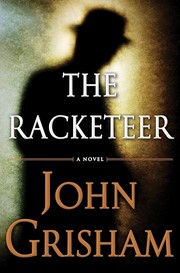
The Racketeer
A jailed lawyer trades a judge murder secret for freedom and revenge.
2,434-word summary · 11 min read

The Night Swim
A true crime podcaster covers a rape trial while probing an old drowning in a small town.
2,260-word summary · 10 min read
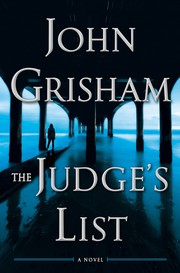
The Judge's List
Lacy Stoltz hunts a sitting judge who murders off his list.
2,513-word summary · 11 min read

The Innocent
A government hitman refuses one kill and must protect a teenage girl at the center of a cover-up.
2,403-word summary · 11 min read
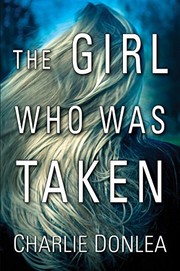
The Girl Who Was Taken
A survivor returns alone while a reporter digs for her lost sister.
2,261-word summary · 10 min read