

61 Hours
2,227-word summary 10 min read 383 pages in the book
- First published
- 2010
- Publisher
- Delacorte Press
- Pages
- 383
- ISBN
- 9780385340588
- Series
- Jack Reacher (#14)
Reading options
What's inside (10 sections)
The bus is the first thing that goes wrong. Jack Reacher is hitchhiking across South Dakota in the middle of winter when the tour bus he has joined skids off the interstate and ends up in a ditch. The passengers are elderly. The driver is shaken. The nearest town is Bolton, a small place with a big prison and a police department that is legally required to drop everything and report to the prison if a siren goes off. Reacher helps the passengers into town because he has nothing better to do, and because he is the kind of man who helps when helping is needed.
That is the setup of 61 Hours, the fourteenth Jack Reacher novel, published by Delacorte Press in 2010. It is a closed-circle thriller: a snowbound town, a handful of cops, a witness who needs protection, and a countdown clock. The title refers to the hours remaining before Janet Salter is due to testify against a drug operation. The novel is structured around that clock, and Lee Child uses it to create a sense of pressure that builds steadily until the last page.
Bolton, and the woman in the library
Bolton is a company town, and the company is the prison. The facility is huge, the local economy depends on it, and the police force is small enough that a single emergency can strip the town of protection. That is the weakness the villains exploit. A methamphetamine operation is running out of an abandoned military compound nearby, and the only person who can testify against it is Janet Salter, a retired librarian who lives alone and likes books.
Reacher meets Salter early, and she is one of the best characters in the book. She is old, sharp, and completely unimpressed by him. She criticizes his ascetic lifestyle, his lack of possessions, and his habit of eating whatever is available. She is also brave in a quiet way. When Reacher teaches her to use a gun, she pays attention. She is not an action heroine. She is a woman who has decided she will not be a victim, and Child writes her with respect.
The police are led by Tom Holland, a chief who seems competent and tired. Andrew Peterson is a younger deputy with a family and a future. The relationship between Reacher and the local cops is the heart of the novel. They do not know him, they do not entirely trust him, and they gradually realize that he is the only person in town who has seen this kind of violence before. The scenes in the station are full of small-town texture: bad coffee, old radios, snow tires, and the constant awareness of the prison on the hill.
The compound, and what is buried under it
Reacher's first job is to figure out what is stored in the abandoned compound. The place was built in the 1950s as a fallout shelter and an orphanage, which is a strange combination that the novel makes even stranger. The official records are incomplete. The military says it was surplus storage. The locals say it was an orphanage. Nobody knows what is in the tunnels underneath.
Reacher calls his old unit in Virginia and gets Major Susan Turner, the new commanding officer of the 110th Military Police. Turner is a voice on the phone for most of the book, but she is a memorable one. She is dry, competent, and willing to bend rules for Reacher because she knows his reputation. Together they piece together the history of the site: forty tons of surplus material from World War II, stored in tunnels that were never properly inventoried.
What they find is methamphetamine. Not a modern lab, but boxes of the stuff dating back to the 1940s, when the military gave amphetamines to bomber pilots to keep them awake. The compound also holds jewelry, paintings, and other valuables that were never redeemed from a pawnshop empire. The man behind it all is Plato, a Latin American drug lord who owns the site and is preparing to sell it to a Russian buyer. The meth and the loot are the sweetener.
Plato is a good villain in theory. He is described as a small, precise man with a pawnshop chain and a private Boeing 737. He is not a brawler. He is a businessman who has decided that the world is made of transactions. Child gives him a few memorable lines, but he remains more of a concept than a person. The real menace in the book is his hitman, a man who never misses and who turns out to be hiding in plain sight.
The hitman in the police station
The hitman is the best twist in 61 Hours. A local lawyer is found shot in his car, and Reacher realizes that the killer has to be someone with access to police information. The list of suspects is small. The answer is Holland, the police chief. He has been working for Plato, passing information, and clearing the way for the murder of anyone who can testify.
Holland is not a cartoon corrupt cop. He is a man who has made a series of small compromises that have added up to treason. Child shows him doing his job, worrying about his officers, and then making a call that gets Peterson killed. The murder of Peterson is one of the most effective scenes in the book because it happens off-page, in the middle of an ordinary night, and because Reacher likes him. Peterson's wife and children are left behind, and the novel does not forget them.
Janet Salter is killed too. Reacher runs two miles through the snow to protect her when the prison siren goes off, and he arrives too late. She is dead in her library, her gun still in her pocket. The scene is devastating because Salter did everything right. She learned to shoot. She locked her doors. She trusted the police. The system failed her anyway.
That failure is the emotional low point of the novel. Reacher, who is usually a fantasy of competence, is forced to confront the limits of what one man can do. He calls Turner and tells her a story he has never told anyone: in Kuwait, during the Gulf War, he nearly killed a one-star general who was stealing food from the troops. The incident cost him his career. The confession is a rare moment of vulnerability, and it lands because Child has spent the whole book showing us a man who does not explain himself.
The confession, and the promise
Turner listens. She does not judge him. She tells him she is not married, which is a small, human detail that changes the temperature of the conversation. Reacher promises to head to Virginia the next day. It is a romantic gesture wrapped in a travel plan, and it is exactly the kind of understated moment Child does well.
The rest of the book is revenge. Reacher drives with Holland, accuses him, and kills him after Holland crashes the car. Then he impersonates Holland, goes underground with Plato, and kills the drug lord in the tunnels. The fight is brutal and close-quarters, and Child makes you feel the low ceiling and the bad air. It is not a triumphant action scene. It is a man doing a necessary job in a place where the light does not reach.
Plato's men, who are actually working for the Russian buyer, pump jet fuel into the tunnels and drop a flare. The facility explodes. Reacher runs up the spiral staircase ahead of the fire and emerges into the snow. The explosion is the climax of the countdown, and it is staged with real skill. The book has been building to this moment for three hundred pages, and it delivers.
The ending in Virginia
The final chapter is not about Reacher. It is about Susan Turner, sitting in Virginia, watching the news reports of an explosion outside a small town in South Dakota. The reports mention fumes with a stimulant in them. She does not get a call from Reacher. A month later she is redeployed to Afghanistan, and she still has not heard from him.
That ending is deliberately unresolved. It is the kind of cliffhanger that would be annoying in a lesser book, but here it works because the novel is not really about whether Reacher survives. It is about the cost of the job. Turner is left waiting. Peterson is dead. Salter is dead. The town is saved, but the people who saved it are not okay. Reacher walks away, as he always does, and the reader is left with the bill.
I have seen readers complain that the ending is too abrupt, and I understand the complaint. The book spends a lot of time on the countdown, and then the countdown ends and the novel stops. There is no epilogue, no reunion, no explanation of how Reacher gets out of South Dakota. If you want closure, you have to read the next book. That is a commercial decision as much as an artistic one, and it is the main reason 61 Hours feels like the first half of a larger story.
The countdown is more than a marketing device. Child uses it to control information. Each chapter gives the reader a little more time and a little less certainty, so the tension comes from the gap between what we know and what the clock is doing. The weather does the same job. The cold is not background. It limits movement, closes roads, and makes every trip outside a small risk. By the last hundred pages, the snow feels like another antagonist.
The structure also makes the novel feel like a stage play: a small cast, a single location, a fixed deadline, and a villain who is mostly talked about rather than seen. That theatrical quality is why the book reads so quickly. It is also why the ending lands like a curtain rather than a resolution. Child has been tightening the screws for three hundred pages, and when the clock runs out, he stops.
What works
The pacing is excellent. Child is a master of the slow build, and the countdown gives the novel a structure that keeps the reader oriented. Every chapter moves the clock forward, and every conversation adds a piece to the puzzle. The snowbound setting is used well. The cold is not just weather. It is a physical fact that limits what people can do and increases the isolation.
The character work is stronger than in many Reacher novels. Janet Salter is a fully realized person, not a plot device. Peterson is a good cop with a family, and his death matters. Holland is a believable traitor. Turner is a voice on the phone who becomes important without ever appearing in the same room as Reacher. The book is full of people who are trying to do their jobs in a system that is rigged against them.
The action is restrained until the end, and then it is brutal. Child does not romanticize violence. The fight with Plato is ugly, and the explosion is terrifying. The novel earns its climax because it has spent so long establishing what is at stake.
What does not work
The villains are thin. Plato is a collection of quirks and a private plane. His men are interchangeable. The Russian buyer is a plot device. The conspiracy is elaborate, but the people behind it are not interesting. The novel is much more interested in the town than in the criminals, and that is both its strength and its weakness.
The military-surplus explanation is also a long walk to a simple reveal. The book spends a lot of time on the history of the compound, the orphanage, the fallout shelter, and the missing inventory. The answer is meth and loot. It is a good answer, but it does not need quite so much setup. Some readers will find the middle section slow, especially if they are not already invested in Reacher's world.
The ending is the biggest issue. It is a cliffhanger, and it withholds the emotional resolution the novel has been building toward. If you are reading the series in order, it works as a bridge. If you are reading 61 Hours as a standalone, it may leave you feeling cheated.
Who should read it
61 Hours is for readers who like their thrillers procedural and their heroes laconic. It is a good entry point for the Reacher series because it does not require much prior knowledge. It is also a good book for a cold weekend, preferably with snow outside and a locked door. The countdown structure makes it hard to put down, and the Salter sections give it an emotional weight that the series does not always achieve.
I read it in two nights, and the second night was mostly the last hundred pages. The explosion, the chase, the quiet chapter in Virginia. It is not the best Reacher novel, but it is one of the most atmospheric. The town of Bolton feels real. The cold feels real. The ending feels like a door slamming. I wanted the next book immediately, which is probably the point.
FAQ
What does the title 61 Hours refer to?
It refers to the countdown before a court hearing that could shut down the drug operation, which gives the novel its structure.
Does Jack Reacher survive the explosion in 61 Hours?
Yes. He escapes up the staircase before the facility explodes, though the novel ends without a direct reunion with Susan Turner.
Is 61 Hours a good place to start the Jack Reacher series?
It can be read on its own, but it ends on a cliffhanger that leads into Worth Dying For, so some readers prefer to continue immediately.
Similar books
More from Jack Reacher first, then related titles.

Killing Floor
Ex-military policeman Jack Reacher is arrested for murder in Margrave, Georgia, then learns the victim was his brother.
2,872-word summary · 13 min read
Tripwire
In Key West, Jack Reacher follows a murdered detective's trail to New York, an old mentor's files, and a loan shark stealing a dead soldier's name.
2,688-word summary · 12 min read
Running Blind
Jack Reacher must catch a killer who murders women with no forced entry and no trace.
2,008-word summary · 9 min read

Echo Burning
Reacher hitches a ride with a Texas woman who wants her abusive husband killed, then has to prove she did not murder him when he comes home.
2,209-word summary · 10 min read
Without Fail
Reacher is asked to test vice presidential security by planning to kill.
2,084-word summary · 9 min read
Persuader
Reacher goes undercover in a Maine crime family to find a missing DEA agent and the man he once failed to kill, and Lee Child keeps the whole thing tight,…
2,278-word summary · 10 min read

The Enemy
In January 1990, MP major Jack Reacher investigates a dead general, a stolen briefcase, and three murders tied to an Army power struggle.
2,123-word summary · 9 min read

One Shot
Six shots, five dead in Indiana, and James Barr asks for Jack Reacher. Reacher leaves Miami to test the proof in this 2005 Delacorte Press thriller, 376 pages,…
2,972-word summary · 13 min read

Bad Luck and Trouble
A deposit of $1,030 summons Jack Reacher back to his old army unit, which is being picked off one name at a time.
2,366-word summary · 11 min read
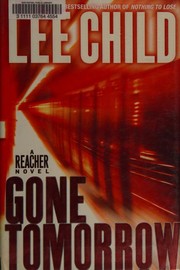
Gone Tomorrow
Reacher stops a suicide bomber on the subway, then hunts her handlers.
2,308-word summary · 10 min read

Worth Dying For
Reacher stops for one night in rural Nebraska and finds a family that runs the county, a missing girl and a shipment worth killing for.
2,021-word summary · 9 min read
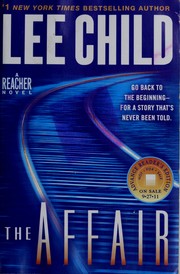
The Affair
In 1997, Reacher goes undercover in a Mississippi town where a murder near an army base collides with a senator's power. The case that ends his military career.
2,039-word summary · 9 min read

What She Knew
Rachel lets her eight-year-old son run ahead in a Bristol park, and the nine-day search turns her into a suspect in the public eye.
2,952-word summary · 13 min read

The Beach House
A young valet is beaten to death at a Hamptons party, and his law-student brother spends a year building a case against the family that covered it up.
2,049-word summary · 9 min read

Six Years
A professor who promised to forget the woman he loved sees her husband's obituary and discovers that the wedding, the marriage, and the woman herself may never…
2,076-word summary · 9 min read

Rules of Prey
Minneapolis detective Lucas Davenport hunts a killer who leaves a new rule at every scene and treats murder as a game of wits.
1,914-word summary · 9 min read

4th of July
Lindsay Boxer shoots two armed teenagers in self-defense, faces a wrongful-death trial, and spends her leave chasing a string of throat-slashing murders in…
2,192-word summary · 10 min read

Still Missing
A realtor is abducted at a Vancouver Island open house and held for more than a year. Told through therapy sessions, the novel follows her escape and the hunt…
2,466-word summary · 11 min read

3rd Degree
The third Women's Murder Club novel follows a San Francisco terror cell and a three-day killing schedule, and it costs the club a member.
2,685-word summary · 12 min read

Say You're Sorry
A widowed prosecutor defends the teenager accused of killing her babysitter, uncovering a small town's secrets and a killer hiding in plain sight.
2,116-word summary · 9 min read

Girl, Forgotten
A rookie US marshal guards a judge with a stalker and ends up reopening the 1982 prom-night murder of the judge's pregnant daughter.
2,111-word summary · 9 min read

The Woods
Twenty years after two teenagers were murdered and two vanished at summer camp, prosecutor Paul Copeland identifies a fresh corpse as one of the missing.
2,490-word summary · 11 min read

The Boy from the Woods
Wilde, found feral in a New Jersey forest in 1986, hunts for a missing teenager while a senator's secrets tear a wealthy town apart.
2,270-word summary · 10 min read
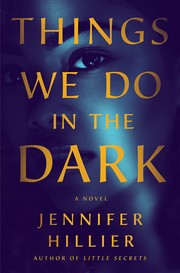
Things We Do in the Dark
A comedian kills her husband, then a podcaster digs up her teen murder past.
2,427-word summary · 11 min read

The Widow
A widow of a suspected criminal faces reporters and police while hiding what her marriage really cost.
2,599-word summary · 12 min read
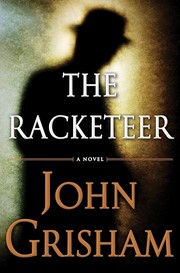
The Racketeer
A jailed lawyer trades a judge murder secret for freedom and revenge.
2,434-word summary · 11 min read

The Night Swim
A true crime podcaster covers a rape trial while probing an old drowning in a small town.
2,260-word summary · 10 min read
The Judge's List
Lacy Stoltz hunts a sitting judge who murders off his list.
2,513-word summary · 11 min read
The Innocent
A government hitman refuses one kill and must protect a teenage girl at the center of a cover-up.
2,403-word summary · 11 min read
The Girl Who Was Taken
A survivor returns alone while a reporter digs for her lost sister.
2,261-word summary · 10 min read