
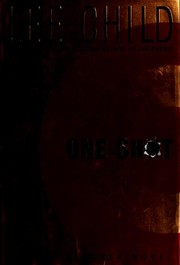
One Shot
2,972-word summary 13 min read 376 pages in the book
- First published
- 2005
- Publisher
- Delacorte Press
- Pages
- 376
- ISBN
- 9780385336680
- Series
- Jack Reacher (#9)
Reading options
What's inside (9 sections)
I came to One Shot late, after seeing the film first and assuming I knew the story. The film called Jack Reacher from 2012 uses the same spine, a sniper case in Indiana, but the novel is a different animal. Published in 2005 by Delacorte Press at 376 pages, first issued on 4 April 2005 by Bantam in Britain and by Delacorte in America, it is the ninth book in the Jack Reacher series. I read it on a long train ride with a pencil in hand because Child plants details early that pay off hundreds of pages later. By the time I reached the gun range chapters I had three pages of notes and a clear feeling that Reacher was not there to save the accused man at all.
That twist is the engine. James Barr, a former Army sniper, is arrested after six shots are fired from a parking garage across a plaza in a small Indiana city. Five people die. The police find his rifle, his van, his brass, and his fingerprints in all the right places. Barr is beaten in custody before he can explain, falls into a coma, and wakes with no memory of the day. When he can finally speak he does not ask for a lawyer. He says, Get Jack Reacher. The police think it is a confession by proxy. The prosecutor thinks it is theater. Helen Rodin, the young defense lawyer assigned to Barr, thinks it might be the only lead she has. She finds Reacher in Miami and asks him to help. Reacher says yes, but not for the reason she hopes.
Six shots on a Friday
Child opens with the shooting itself, told like a training exercise. A man pays for parking, takes the stairs to an upper level of a garage, wedges a van into a disabled bay, and fires across the plaza toward a public pool and office front. Six rifle shots. Five dead. One survivor with a head wound. The victims seem random: a clerk leaving work, an older man feeding pigeons, a young woman with a child, and others caught in daylight with no cover. The city freezes. News vans gather. Police lock down the garage within minutes.
The evidence points one way. A Lake Shore rifle in .308, a single spent case pattern, a traffic cone used as a rest, a quarter left in the parking meter to buy time. Forensics ties the rifle to James Barr, forty one, ex infantry, trained sniper, now living quietly with his sister Rosemary Barr and working as a contractor. His van was seen. His prints are on the meter and the garage ticket. A witness remembers him at the range. When detectives Emerson and Donna Bell pick him up, Barr tries to run, gets caught, and in the interview room says the line that sets the book running.
Child writes this section with flat police detail. Times, distances, wind, sight lines. The range from garage to plaza is the kind of shot Barr could make in his sleep. That ease becomes part of the suspicion. If it was so easy for him, why leave so much trace? Helen Rodin, daughter of District Attorney Alex Rodin, is handed the defense. She is earnest, overworked, and aware that her father wants a fast trial and a death penalty headline. She keeps the file, visits the garage with a laser measure, and starts to feel that the case is too neat. Neat, in Child's world, means built.
Reacher gets off a bus from Miami
Jack Reacher is drifting in Miami when Helen tracks him down through a military contact. He is big, quiet, ex military police, living out of a folding toothbrush and an ATM card. He agrees to meet Helen not to clear Barr but to bury him. Years earlier, during the Gulf War, Reacher investigated Barr after a shooting spree in Kuwait City where four people died during a training period. Barr walked because the Army wanted the incident closed and witnesses went vague. Reacher promised himself that if Barr killed again, he would finish it himself. When he hears about Indiana, he rides north expecting to watch Barr convicted and then, in his own words to Helen, to make sure the man pays in full.
This is vintage Child misdirection. The reader expects the lone hero to prove innocence. Reacher expects guilt and wants punishment. Helen expects help and gets a hostile witness who knows more about sniping than her experts. Their early scenes together carry the book: coffee shops, parking lots, the courthouse steps, Helen pushing files across the table while Reacher reads them once and remembers everything. He tells her the state has the wrong theory but the right man. She tells him he cannot act as judge. Rosemary Barr, James's sister, joins them and begs Reacher to look harder. She insists her brother changed after the Army, kept to himself, fed stray dogs, and would not shoot strangers for sport.
Reacher starts checking anyway, because one detail nags him. Barr, as a trained sniper, would not have parked where he did, paid with a traceable ticket, and left brass to be swept up. A real sniper vanishing after six shots in daylight would have planned exit, wind, and crowd panic. Barr's scene looks like a stage set of a sniper attack rather than the work itself. That doubt, plus Helen's stubbornness and Rosemary's pleading, moves Reacher from executioner to investigator. He tells Helen he will stay a few days. He rents a room, buys a toothbrush, and walks the plaza at the same hour to feel the light.
A client who cannot remember
Before Reacher can confront Barr, Barr is nearly killed in the county jail. Two inmates beat him so badly that he suffers brain injury and prolonged unconsciousness. He wakes confused, with patchy amnesia covering the shooting and the days before it. Doctors say memory may return in fragments or not at all. Legally this freezes the case. Morally it frees Child to investigate without Barr's help. Helen cannot ask her client where he was. She must prove where he was not.
Reacher visits the hospital, looks at the bandaged man, and feels no pity at first. He remembers Kuwait: Barr smiling in an interview room while statements fell apart. But amnesia also removes the easy path. If Barr cannot confess, the state must rely on physical proof, and physical proof can be tested. Reacher begins with the rifle report, the timing between shots, and the grouping of hits. Six shots, five kills, in a tight span, with traffic noise and echo off concrete. Possible for Barr. Possible for several men Child later names. But the pattern of victims bothers Reacher. Four seem random. One does not.
Ann Yanni, a local television reporter hungry for a career break, pushes into the story here. She lends Reacher her car, trades tips for access, and points him toward witnesses the police logged but did not press. She knows the plaza regulars, including the older man who fed pigeons every Friday. One of those routines, Yanni suggests, could have been watched for weeks without anyone noticing.
Helen, meanwhile, fights her father in pretrial hearings. Alex Rodin wants no delays. Helen wants ballistics tests, phone records, and the garage tape enhanced. Reacher watches and says little, but his presence makes clerks find files faster.
The range and the 300 yard test
The heart of the book sits at a rural gun range run by Martin Cash, a former Marine everyone calls Cash. Cash is one of Child's best minor creations: talkative, principled, tired of weekend shooters who lie about groups. Barr practiced at Cash's range, and the sign in sheet shows regular visits in the weeks before the shooting. The prosecution reads that as rehearsal. Reacher reads it as something else and asks Cash for a private test.
Reacher wants to know if Barr could have made those plaza shots cold, under stress, with that rifle, from that garage, in that wind. Cash sets steel at 300 yards, the same rough distance as the plaza, and watches Reacher shoot. Reacher, who was a decent shot but never a sniper, finds the work hard even in calm air. His groups spread. His breathing matters. Cash explains how a true sniper builds a position, controls cant, reads mirage, and follows through. Then Cash shows Reacher the range logs more closely. The sheets for Barr's recent visits look faked. Different ink, same hand filling names, perfect scores that do not match what Cash remembers seeing through the spotting scope.
This is where Child turns procedural detail into plot. Someone wanted Barr to appear to be training hard while keeping him away from real practice. Someone paid in cash, signed Barr in, and shot well enough to leave a paper trail. Cash, once he trusts Reacher, admits he looked the other way because money is money and the range was struggling. He also admits Barr's actual shooting in those weeks was rusty, hesitant, the work of a man who had not fired seriously in years. A rusty shooter does not make five kills from six shots across a plaza in wind. That single fact cracks the state's neat story.
Reacher and Cash rerun the plaza geometry with a map and a stopwatch. Parking ticket time, meter time, stair time, van position, cone position. The numbers fit too well, as if planned backward from police procedure. Reacher says out loud what Helen fears to file: Barr was framed to take the fall for a single aimed killing hidden inside four random ones.
The Zek and the men behind the glass
The aimed victim, when Reacher and Helen isolate it, is a young woman connected to a construction deal that touches a local Russian group. The trail leads to a small crew fronted by an old man called the Zek, short for zek, the slang for a Soviet prisoner. He is eighty years old, a survivor of the gulag, brought to America late in life, now living quietly while younger men do the work. Around him are enforcers with overlapping names in different statements: Linsky, a careful manager type; Chenko and Vladimir, muscle; Raskin, a driver; and a lawyer who keeps paper clean. They run extortion, concrete, trucking kickbacks, and they solve problems by making examples that look like accidents.
Child gives the Zek a long interrogation style backstory through prison records, immigration files, and Cash's memory of rumors. The Zek learned in the camps that the best murder is one the crowd explains for you. A bar fight, a fire, a robbery. In Indiana he updates the lesson. If you need one person dead in public, kill four others with them and let the police call it a spree. Hire a real sniper for the one shot that matters, hire a patsy with a record for the other five shots on paper, and let ballistics blur the rest. The crew picked Barr because his Gulf War file marked him as a man who had shot civilians before and escaped charge. Who would doubt he did it again?
Linsky, as Child writes him, is the bridge. He rents the garage space, studies the plaza routines, pays the range for faked sheets, plants the rifle, and times the meter. Chenko takes the true aimed shot from a different hide with a suppressed weapon while Barr's supposed shots mask the sound. Vladimir and Raskin handle the van, the cone, the ticket. The plan needs Barr free and visible until arrest, then silent after. The jail beating that leaves Barr amnesiac is not part of the original design but suits the crew fine. A client who cannot remember cannot contradict planted memory.
Helen and Rosemary together push Reacher to see Barr as a person rather than a file. Rosemary brings photos, work logs, a neighbor who saw Barr mowing his lawn when he was supposed to be at the range. Helen brings phone tolls that show calls from a pay phone near the garage to a motel where Linsky stayed. None of it alone clears Barr, but together it points to choreography. Reacher, who came to Indiana to close an old debt, starts to admit his Gulf War certainty may have blinded him. Barr was guilty then, Reacher still believes, and got lucky. That does not mean he is guilty now.
Storm, confession, and release
Child ends with force rather than a courtroom reveal. Reacher, Helen, Cash, and Yanni pool what they can prove and what they cannot yet prove. The police, led by Emerson, will not move without a witness. The prosecutor will not pause a winning case. So Reacher does what Reacher does in every book and walks straight at the crew.
He takes Cash's help to reach the suburban house where the Russians keep books and guns. What follows is close quarters fighting in hallways and a garage, told in short bursts. Child keeps the geography clear: door, stair, car hood, shotgun under a coat. Reacher is hurt, tired, and methodical. He does not trade quips. He breaks hands, takes weapons, and keeps moving toward the Zek. Linsky tries to bargain. Chenko tries to shoot. Vladimir tries size. None of it holds. By the end the house is quiet, the ledgers are open, and the Zek, old and calm, talks because talking is the last power he has.
The Zek confesses in his own flat way. One target had to die because she threatened to expose the concrete payments. Four others died so the city would mourn a spree instead of hunting a motive. Barr was chosen, framed, and left for the state to process. The jail beating was bought cheap through inmates who owed money. Child lets the old man explain without apology, which makes the passage colder than any gunfire before it.
With that account plus Cash's testimony about faked sheets, Yanni's notes on routines, and Helen's phone records, the case against Barr collapses. Alex Rodin drops the charges in a short hearing that Child wisely underplays. Barr, still foggy, is freed to Rosemary's care with therapy ahead and no memory of the week that nearly killed him. Helen stands on the courthouse steps feeling both relief and anger at how close the machine came to executing an innocent man. Reacher leaves town by bus, his old Gulf War debt unsettled in a way he does not try to tidy. Barr was guilty once and innocent now, and Reacher must carry both facts without forcing them to cancel out.
What works and what creaks
The pull of One Shot is structure. Child hides one aimed murder inside a mass shooting, then hides Reacher's true motive inside a rescue story. Both reveals land because the gun detail earns them. The 300 yard test at Cash's range is the best set piece, full of wind calls and breathing and the honest admission that even a strong shooter struggles at that distance under pressure. Helen Rodin gives the book a legal spine without turning it into a courtroom drama, and her fights with her father Alex give the middle chapters stakes beyond ballistics. Yanni's borrowed car, Cash's loyalty once bought, and Rosemary Barr's steady pleading keep Reacher tethered to ordinary people.
The creaks are real too, and they match complaints readers have made about the middle Reacher books. First, Reacher is close to invincible. He out shoots, out fights, and out thinks every opponent, and injuries slide off him in ways that lower tension. When he storms the house alone at the end, skill matters more than luck, so the outcome never feels in doubt. Readers who like odds will find the finale efficient rather than scary.
Second, Barr himself is thin. Amnesia keeps him off the page for long stretches, which serves the mystery but leaves the emotional center to Rosemary and Helen. We are told Barr changed after Kuwait, told he is gentle now, told he feeds dogs and fixes fences, but we see little of it directly. That makes Reacher's shift from hunter to defender more intellectual than felt. I believed the ballistics. I wanted one more live scene of Barr as a neighbor before the state tried to end him.
Third, the procedure bloats. Phone logs, motel receipts, range sheets, garage tickets, hospital releases: Child loves paper, and at 376 pages he lets Helen and Reacher reread files in multiple rooms. Two or three of those passes could have been cut without losing the thread. Fans of method will enjoy the repetition. Impatient readers will skim.
A note on the film helps set expectations. Jack Reacher from 2012, with Tom Cruise as Reacher and Werner Herzog as the Zek, keeps the Indiana spree and the one target hidden among random victims, but it trims Cash, compresses Helen's role, and stages the end as a more standard action finish. The novel gives Cash and Yanni far more room and lets the Zek speak at length about gulag logic. If you watched first, as I did, expect the book to feel slower, talkier, and more interested in how a frame is built sheet by sheet.
I closed One Shot liking it more than I expected. It is the ninth Jack Reacher novel, published in 2005 by Delacorte Press, and it shows Child confident enough to make his hero wrong at the start and to let a defense lawyer carry equal weight. The Indiana plaza will stay with me, not for the noise of six shots but for the quiet test afterward at 300 yards, when a Marine range owner shows a drifter what rust looks like on paper and what murder looks like when it pretends to be random.
FAQ
Is One Shot the ninth Jack Reacher novel?
Yes. Published in 2005 by Delacorte Press at 376 pages, it is the ninth book in the Jack Reacher series. The British edition came from Bantam on 4 April 2005.
Who is the Zek in One Shot?
The Zek is an eighty year old former Soviet prisoner living in Indiana. He leads a Russian crew that hides one aimed killing among four random deaths.
How does the 2012 Jack Reacher film differ?
The 2012 film Jack Reacher keeps the Indiana shooting and hidden motive but trims Cash, compresses Helen Rodin, and stages a simpler action ending.
Similar books
More from Jack Reacher first, then related titles.
Killing Floor
Ex-military policeman Jack Reacher is arrested for murder in Margrave, Georgia, then learns the victim was his brother.
2,872-word summary · 13 min read
Tripwire
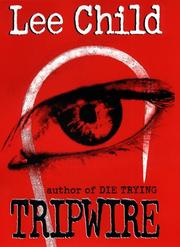
In Key West, Jack Reacher follows a murdered detective's trail to New York, an old mentor's files, and a loan shark stealing a dead soldier's name.
2,688-word summary · 12 min read
Running Blind
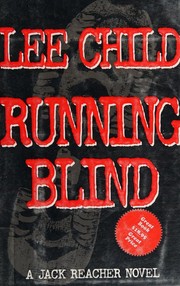
Jack Reacher must catch a killer who murders women with no forced entry and no trace.
2,008-word summary · 9 min read

Echo Burning
Reacher hitches a ride with a Texas woman who wants her abusive husband killed, then has to prove she did not murder him when he comes home.
2,209-word summary · 10 min read
Without Fail
Reacher is asked to test vice presidential security by planning to kill.
2,084-word summary · 9 min read
Persuader
Reacher goes undercover in a Maine crime family to find a missing DEA agent and the man he once failed to kill, and Lee Child keeps the whole thing tight,…
2,278-word summary · 10 min read
The Enemy
In January 1990, MP major Jack Reacher investigates a dead general, a stolen briefcase, and three murders tied to an Army power struggle.
2,123-word summary · 9 min read

Bad Luck and Trouble
A deposit of $1,030 summons Jack Reacher back to his old army unit, which is being picked off one name at a time.
2,366-word summary · 11 min read
Gone Tomorrow
Reacher stops a suicide bomber on the subway, then hunts her handlers.
2,308-word summary · 10 min read

61 Hours
A bus crash strands Jack Reacher in a snowbound South Dakota town where a drug gang, a corrupt police force, and a single witness are on a collision course.
2,227-word summary · 10 min read

Worth Dying For
Reacher stops for one night in rural Nebraska and finds a family that runs the county, a missing girl and a shipment worth killing for.
2,021-word summary · 9 min read
The Affair
In 1997, Reacher goes undercover in a Mississippi town where a murder near an army base collides with a senator's power. The case that ends his military career.
2,039-word summary · 9 min read

What She Knew
Rachel lets her eight-year-old son run ahead in a Bristol park, and the nine-day search turns her into a suspect in the public eye.
2,952-word summary · 13 min read

The Beach House
A young valet is beaten to death at a Hamptons party, and his law-student brother spends a year building a case against the family that covered it up.
2,049-word summary · 9 min read

Six Years
A professor who promised to forget the woman he loved sees her husband's obituary and discovers that the wedding, the marriage, and the woman herself may never…
2,076-word summary · 9 min read

Rules of Prey
Minneapolis detective Lucas Davenport hunts a killer who leaves a new rule at every scene and treats murder as a game of wits.
1,914-word summary · 9 min read

4th of July
Lindsay Boxer shoots two armed teenagers in self-defense, faces a wrongful-death trial, and spends her leave chasing a string of throat-slashing murders in…
2,192-word summary · 10 min read

Still Missing
A realtor is abducted at a Vancouver Island open house and held for more than a year. Told through therapy sessions, the novel follows her escape and the hunt…
2,466-word summary · 11 min read

3rd Degree
The third Women's Murder Club novel follows a San Francisco terror cell and a three-day killing schedule, and it costs the club a member.
2,685-word summary · 12 min read

Say You're Sorry
A widowed prosecutor defends the teenager accused of killing her babysitter, uncovering a small town's secrets and a killer hiding in plain sight.
2,116-word summary · 9 min read

Girl, Forgotten
A rookie US marshal guards a judge with a stalker and ends up reopening the 1982 prom-night murder of the judge's pregnant daughter.
2,111-word summary · 9 min read

The Woods
Twenty years after two teenagers were murdered and two vanished at summer camp, prosecutor Paul Copeland identifies a fresh corpse as one of the missing.
2,490-word summary · 11 min read
The Boy from the Woods
Wilde, found feral in a New Jersey forest in 1986, hunts for a missing teenager while a senator's secrets tear a wealthy town apart.
2,270-word summary · 10 min read
Things We Do in the Dark
A comedian kills her husband, then a podcaster digs up her teen murder past.
2,427-word summary · 11 min read
The Widow
A widow of a suspected criminal faces reporters and police while hiding what her marriage really cost.
2,599-word summary · 12 min read
The Racketeer
A jailed lawyer trades a judge murder secret for freedom and revenge.
2,434-word summary · 11 min read
The Night Swim
A true crime podcaster covers a rape trial while probing an old drowning in a small town.
2,260-word summary · 10 min read
The Judge's List
Lacy Stoltz hunts a sitting judge who murders off his list.
2,513-word summary · 11 min read
The Innocent
A government hitman refuses one kill and must protect a teenage girl at the center of a cover-up.
2,403-word summary · 11 min read
The Girl Who Was Taken
A survivor returns alone while a reporter digs for her lost sister.
2,261-word summary · 10 min read