

4th of July
2,192-word summary 10 min read 400 pages in the book
- First published
- 2005
- Publisher
- Little, Brown and Company
- Pages
- 400
- ISBN
- 9780316710602
- Series
- Women's Murder Club (#4)
Reading options
What's inside (9 sections)
The book opens with a chase, because of course it does. Lindsay Boxer is a homicide lieutenant in San Francisco, and she and Warren Jacobi have a lead on a double murder. The suspects are in a Mercedes. The Mercedes runs. The chase ends with the car wrapped around something, two teenagers inside, and both cops shot before they can finish saying "show me your hands."
Lindsay takes a bullet in the shoulder and another in the thigh. Jacobi is hit twice. Lindsay fires back. When the noise stops, Sara Cabot is dead and her brother Sam is paralyzed from the chest down. Both had guns. Both had just shot two police officers. The department calls it self-defense, and for a few days everyone agrees.
Then the lawsuit arrives. Andrew Cabot, the father, is a doctor with money and a story that plays well on television. He says his children were scared, unarmed by the time Lindsay fired, and murdered by a cop who panicked. The city sees a grieving father. The department sees a liability. Lindsay sees the boy's face every night.
That is the setup for the fourth Women's Murder Club novel, written with Maxine Paetro. It is a legal thriller bolted to a serial-killer story, and the two halves are held together by Lindsay's bad year.
The trial that is not really a trial
The case against Lindsay is civil, not criminal. Andrew Cabot wants money, and he wants her career. The city assigns Yuki Castellano to defend her, which is one of the better choices in the book. Yuki is smart, blunt, and not impressed by Lindsay's badge. She tells Lindsay the truth about how a jury will see a white cop who shot a Black teenager and a Black girl in a stolen car. The racial politics are not subtle, but they are not ignored either.
Lindsay spends the first third of the book preparing for a hearing and then a trial while the department keeps her at arm's length. The media camp outside her apartment. Her friends try to help, and she pushes them away. Joe Molinari, her Homeland Security boyfriend, is mostly absent, and when he does show up he seems to be auditioning for a different book. The romance is the thinnest thread here.
Patterson and Paetro are good at the courtroom furniture. The lawyers object. The judge sustains. The witnesses sweat. Yuki makes a mistake early and then recovers with a line that lands. Lindsay has to sit still while strangers describe her as a killer. The scenes move fast, and the pages turn, but the trial is never as tense as it should be, because the outcome is never really in doubt. The book needs Lindsay acquitted so it can get back to the murder case.
What the trial does well is show how a legal victory can feel like a loss. Lindsay is cleared. The city still looks at her differently. The boy in the wheelchair is still in the wheelchair. The girl is still dead. The system has done its job, and the job has not fixed anything.
Half Moon Bay
While the trial is on break, Lindsay goes to Half Moon Bay to house-sit for her sister Cat. Cat is a doctor, organized, married, and pregnant. The house is quiet and close to the water. Lindsay plans to sleep, walk on the beach, and stay out of trouble.
Trouble finds her in the local paper. Two people have been murdered, their throats cut and their bodies whipped. The details are familiar. Ten years ago, when Lindsay was a rookie, she worked a case with the same signature: a couple killed in their home, throats cut, whip marks on the bodies. The case went cold. Lindsay never stopped thinking about it.
She starts asking questions. The local police chief tells her to stay out of it, then changes his mind when more bodies turn up. The victims seem unrelated at first: a businessman, a woman who ran a small shop, a couple in a rented house. Lindsay and the local detectives build a map of their lives and find the thing they share. Pornography. Some of the victims appeared in adult films. Some produced them. Some were related to people who did.
The book treats this revelation as a grimy little secret, and the tone gets ugly fast. Patterson and Paetro are not writing a treatise on the adult industry. They are using it as a shortcut to make the victims feel compromised, and the killers feel like vigilantes. It works as plot. It does not work as social commentary. The novel keeps suggesting that the victims had it coming, then backs away from the suggestion when it needs the reader to sympathize.
The people in town
Half Moon Bay is stocked with the usual Patterson supporting cast. There is a police chief who is gruff but decent. There is a local detective who resents the famous San Francisco cop until he needs her. There is a doctor who flirts with Lindsay. There is a charming gas station attendant named Keith Howard who sells her a car and asks her to dinner.
Keith is the one who feels off. He is too helpful. He turns up in the right places. He knows more about the victims than a gas station attendant should. Lindsay likes him, which is the point. The book wants the reader to like him too, so the reveal hurts.
The other recurring figure is Bob Hinton, a lawyer who bumps into Lindsay at a restaurant and then again at the market. He is smooth, funny, and interested. He is also, by the end, one of the killers. The third is Carolee Brown, a friend of Lindsay's sister, who runs a school for runaway children. Carolee is warm, maternal, and utterly sincere. She believes she is saving the world one morally worthless person at a time.
The vigilante group is made up of people who were hurt by the pornography business and decided to hurt back. Carolee is the organizer. Bob is the money and the respectability. Keith is the muscle. There may be others, but the book keeps the circle small. They kill people they have decided are beyond redemption. They whip the bodies because the first killer did, and they want the police to connect the cases. It is a reenactment as much as a revenge plot.
This is a decent idea for a thriller. It falls apart in the execution. The book never quite decides whether the vigilantes are tragic, monstrous, or justified. Carolee gets a speech about the children she has buried, and it is genuinely affecting. Then she tries to kill Lindsay, and the sympathy evaporates. The shift is too fast to be disturbing. It just feels like the book changed its mind.
The house gets shot
The middle of the novel is the strongest stretch. Lindsay is alone in her sister's house when someone puts a shotgun through the window. She rolls off the couch, crawls through broken glass, and gets out the back. The shooters are gone before the local police arrive. The message is clear: stop asking questions.
She does not stop. She drives to the city, meets with Claire, Cindy, and Yuki, and lays out the case. The Women's Murder Club scenes are the warmest parts of the book. Claire is the medical examiner, calm and precise. Cindy is the reporter, hungry and reckless. Yuki is the lawyer, sharp and tired. They eat, they argue, they make connections Lindsay missed. The club works because each woman has a different relationship to the truth. Claire reads bodies. Cindy reads people. Yuki reads juries. Lindsay reads crime scenes. Together they cover more ground than any of them could alone.
The club also gives the book its best emotional beat. Lindsay is ashamed of the shooting, and she cannot say it out loud to anyone at work. She can say it to these women. They do not tell her it was fine. They tell her they believe her, which is different. The distinction matters.
The investigation narrows. Lindsay finds a link between the victims and a production company that made adult films. She finds a connection to the old case. She finds Keith's fingerprints on a piece of evidence that should not have his prints. The book moves quickly here, with short chapters and hard cuts. Patterson's chapters are often two or three pages, and Paetro keeps the dialogue clipped. It is easy to read fifty pages without noticing.
The fourth of July
The climax takes place at the waterfront celebration. The town has gathered for fireworks and a band. Lindsay knows the killers will use the crowd. She is right. Carolee, Bob, and Keith are there, and they have a plan that involves a lot of people dying.
The logistics are muddy. There are fire trucks, a parade, a pier, and a shooter in a window. Lindsay runs through the crowd. She tackles someone. She fires her weapon. The scene is loud and confusing, which may be intentional, but it is not clear enough to be exciting. The book has spent so long building the trial and the investigation that the actual confrontation feels rushed.
Carolee is caught because her daughter Alison shows up at Lindsay's house. That is the detail that breaks the case. Alison is young, frightened, and loyal to her mother. She does not understand what her mother has done, or she understands and cannot say it. Lindsay gets her talking. The police move in. Bob and Keith are arrested. Carolee is arrested. The killing stops.
The resolution is tidy in a way that the rest of the book has not earned. The vigilantes are caught. The old case is closed. Lindsay is acquitted. She goes back to San Francisco a hero twice over. Yuki joins the Women's Murder Club, replacing the murdered Jill Bernhardt from earlier books. The ending is designed to feel like a reset, and it does.
What the book gets right and wrong
The best thing about 4th of July is its pace. Patterson and Paetro know how to end a chapter. They know how to plant a detail and pay it off forty pages later. The trial scenes, the house shooting, and the final chase all move. If you want a book that gets you through a long flight, this is that book.
The worst thing is the moral fog. The novel uses pornography as a marker of worthlessness, then asks the reader to be horrified when the vigilantes treat people as worthless. It wants to have it both ways. The victims are never given enough interior life to complicate the killers' judgment. They are bodies with a backstory, and the backstory is meant to make the reader uncomfortable in a way the book does not examine.
The racial dimension of the shooting is handled with a similar half-step. The book acknowledges that Lindsay is a white cop and the Cabot siblings are Black. It lets Yuki say the uncomfortable thing. Then it moves on. The trial is not about race by the end. It is about Lindsay's conscience. That is a smaller book than the one the setup promises.
The romance with Joe is forgettable. He is a nice boyfriend who exists to be worried about. The flirtation with the local doctor goes nowhere. The book is not interested in Lindsay's love life except as a way to show that she is distracted. That is fine. The Women's Murder Club books are not romances, and the best entries keep the personal stuff light.
The prose is functional. Patterson's chapters are built from short sentences and simple declaratives. Paetro gives the women sharper dialogue than the men. The book is not trying to be lyrical. It is trying to be fast, and it succeeds.
Who should read it
Read this if you have read the first three Women's Murder Club books and want to see Lindsay tested in a courtroom. Read it if you like legal procedurals with a body count. Read it if you want a book that takes a familiar cop-shoots-suspect scenario and asks what happens after the shooting stops.
Do not read it if you want a careful examination of race, policing, or the adult film industry. The book raises those questions and then drops them. Do not read it for the romance. Do not read it if you need a mystery whose solution is fair. The killers are revealed through a coincidence and a hunch, not through clues the reader could have assembled.
What remains is a sturdy, forgettable thriller with one genuinely good idea: the trial and the murder case are the same story. Lindsay is judged by strangers in a courtroom while she judges strangers in a small town. Both processes are imperfect. Both leave damage behind. The book does not push the parallel far enough, but it is there, and it gives the last page a little more weight than the plot strictly needs.
FAQ
Do I need to read the Women's Murder Club books in order?
It helps. Lindsay's shooting and trial grow out of the previous three novels, though the Half Moon Bay case is self-contained.
What happens to Lindsay Boxer in 4th of July?
She is sued for wrongful death after shooting two teenagers who had shot her and Jacobi, is acquitted, and solves the Half Moon Bay murders before returning to San Francisco.
Who wrote 4th of July?
James Patterson wrote it with Maxine Paetro, the fourth of their Women's Murder Club collaborations.
Similar books
More from Women's Murder Club first, then related titles.
1st to Die
Lindsay, Claire, Cindy and Jill hunt a honeymoon killer terrorizing San Francisco.
2,536-word summary · 11 min read

2nd Chance
Lindsay Boxer and the Women's Murder Club hunt the Chimera killer after a church shooting in San Francisco.
2,572-word summary · 11 min read

3rd Degree
The third Women's Murder Club novel follows a San Francisco terror cell and a three-day killing schedule, and it costs the club a member.
2,685-word summary · 12 min read

The Beach House
A young valet is beaten to death at a Hamptons party, and his law-student brother spends a year building a case against the family that covered it up.
2,049-word summary · 9 min read
The Racketeer
A jailed lawyer trades a judge murder secret for freedom and revenge.
2,434-word summary · 11 min read
The Judge's List
Lacy Stoltz hunts a sitting judge who murders off his list.
2,513-word summary · 11 min read
The Rainmaker
Broke rookie Rudy Baylor sues an insurer over a denied transplant and faces Leo Drummond at trial.
3,040-word summary · 14 min read
Defending Jacob
A Newton prosecutor defends his fourteen year old son after a classmate is stabbed in the park.
2,994-word summary · 13 min read
Along Came a Spider
Detective Alex Cross hunts Gary Soneji after two children vanish from a Washington school and a Lindbergh echo grows.
2,523-word summary · 11 min read

What She Knew
Rachel lets her eight-year-old son run ahead in a Bristol park, and the nine-day search turns her into a suspect in the public eye.
2,952-word summary · 13 min read

Six Years
A professor who promised to forget the woman he loved sees her husband's obituary and discovers that the wedding, the marriage, and the woman herself may never…
2,076-word summary · 9 min read

Rules of Prey
Minneapolis detective Lucas Davenport hunts a killer who leaves a new rule at every scene and treats murder as a game of wits.
1,914-word summary · 9 min read

61 Hours
A bus crash strands Jack Reacher in a snowbound South Dakota town where a drug gang, a corrupt police force, and a single witness are on a collision course.
2,227-word summary · 10 min read

Still Missing
A realtor is abducted at a Vancouver Island open house and held for more than a year. Told through therapy sessions, the novel follows her escape and the hunt…
2,466-word summary · 11 min read

Bad Luck and Trouble
A deposit of $1,030 summons Jack Reacher back to his old army unit, which is being picked off one name at a time.
2,366-word summary · 11 min read

Worth Dying For
Reacher stops for one night in rural Nebraska and finds a family that runs the county, a missing girl and a shipment worth killing for.
2,021-word summary · 9 min read

Say You're Sorry
A widowed prosecutor defends the teenager accused of killing her babysitter, uncovering a small town's secrets and a killer hiding in plain sight.
2,116-word summary · 9 min read

Echo Burning
Reacher hitches a ride with a Texas woman who wants her abusive husband killed, then has to prove she did not murder him when he comes home.
2,209-word summary · 10 min read

Girl, Forgotten
A rookie US marshal guards a judge with a stalker and ends up reopening the 1982 prom-night murder of the judge's pregnant daughter.
2,111-word summary · 9 min read

The Woods
Twenty years after two teenagers were murdered and two vanished at summer camp, prosecutor Paul Copeland identifies a fresh corpse as one of the missing.
2,490-word summary · 11 min read

The Boy from the Woods
Wilde, found feral in a New Jersey forest in 1986, hunts for a missing teenager while a senator's secrets tear a wealthy town apart.
2,270-word summary · 10 min read
Gray Mountain
A Manhattan associate furloughed after the financial crash takes a year of unpaid legal aid work in Appalachian coal country, and finds the case of her life…
2,026-word summary · 9 min read

Without Fail
Reacher is asked to test vice presidential security by planning to kill.
2,084-word summary · 9 min read

Things We Do in the Dark
A comedian kills her husband, then a podcaster digs up her teen murder past.
2,427-word summary · 11 min read

The Widow
A widow of a suspected criminal faces reporters and police while hiding what her marriage really cost.
2,599-word summary · 12 min read
The Night Swim
A true crime podcaster covers a rape trial while probing an old drowning in a small town.
2,260-word summary · 10 min read
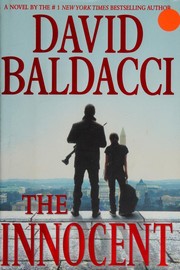
The Innocent
A government hitman refuses one kill and must protect a teenage girl at the center of a cover-up.
2,403-word summary · 11 min read
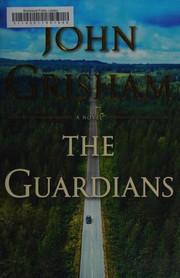
The Guardians
A innocence lawyer reopens a prison murder where the wrong man waits on death row.
2,564-word summary · 11 min read
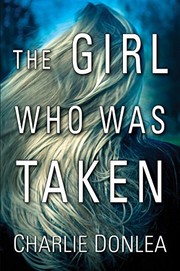
The Girl Who Was Taken
A survivor returns alone while a reporter digs for her lost sister.
2,261-word summary · 10 min read
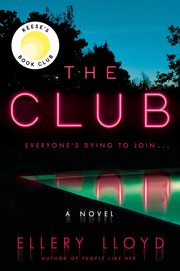
The Club
A luxury island resort for the rich turns deadly when secrets, staff and guests collide.
2,386-word summary · 11 min read