
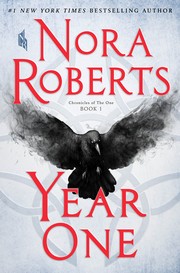
Year One
2,029-word summary 9 min read 419 pages in the book
- First published
- 2017
- Publisher
- St. Martin's Press
- Pages
- 419
- ISBN
- 9781250122957
- Series
- Chronicles of The One (#1)
Reading options
What's inside (10 sections)
I have read enough Nora Roberts to expect a certain rhythm: a woman with a wound, a man with a temper, a house that needs fixing, and a happy ending earned through conversation. Year One has the wound and the house, but it also has a plague that kills most of humanity, a witch who levels a town with grief, and a prophecy about a child who will save the world. It is the first book in the Chronicles of The One, published by St. Martin's Press in 2017, and it is Roberts doing fantasy on a much bigger canvas than usual. The result is ambitious, readable, and a little clumsy.
The bird in the circle
The book opens on New Year's Eve in Dumfries, Scotland. Ross MacLeod, sixty-four, is hunting pheasant near a stone circle called sgiath de solas. A wounded bird falls inside the circle, and its blood soaks into the ground. The ward that has kept something out for centuries cracks. His neighbor, Mrs. Frazier, warns him that a war between light and dark has begun and that his grave will be the first.
Ross and his wife Angie fly home to New York, and the plague they carry spreads through the airport and then the world. It is called the Doom. It kills quickly, sometimes within hours, and it does not care who you are. Ross dies. Angie dies. Their pregnant daughter Katie is exposed, and her husband Tony dies within days.
That opening is efficient and creepy. Roberts is good at the ordinary details of catastrophe: the missed calls, the hospitals filling, the news anchors losing their composure, the way people keep behaving normally until they cannot. The Doom is not explained in any scientific depth, and readers who want a plausible epidemiology will be frustrated. It is a device to clear the board and let the survivors discover what they are.
The survivors
The book follows several groups. Jonah Vorhies is a paramedic who can see death coming. He is on the verge of suicide when Katie goes into labor, and he delivers twins, Duncan and Antonia, in a deserted maternity ward. Dr. Rachel Hopman, an immune ER doctor, joins him. They take in an orphaned newborn named Hannah. The four of them become a family on the road, and their chapters are the warmest in the book.
In Brooklyn, Lana Bingham and Max Fallon are a young couple who have been dabbling in magic. When the world collapses, their dabbling becomes real power. They flee the city with a drifter named Eddie Clawson and his puppy Joe, heading for Max's brother Eric's remote retreat in the Alleghenies. Lana is a witch. Max is something else, a man whose gift is tied to light and protection.
Arlys Reid is a journalist who keeps broadcasting as the world dies. Her intern Fred reveals that she is a faerie. A hacker named Chuck tells Arlys that over two billion people are dead, the president is dead, and the military is rounding up the immune. When the anchor Bob Barrett hijacks the broadcast and shoots himself on air, Arlys tells the truth, destroys her workstation, and escapes with Fred and Chuck through the PATH tunnels.
The strands converge slowly. They meet at Arlys's childhood home in Ohio, then at a ghost town they rename New Hope, Virginia. By the middle of the book, the survivors have a community, a council, and a set of laws. The laws are built around the Wiccan Rede: an it harm none, do what you will. It is a nice idea, and the book is smart enough to show how hard it is to keep.
Arlys is the character who carries the book's sense of the outside world. She is a journalist, which means she is professionally nosy, and she keeps broadcasting after the networks collapse. Her chapters have the best tension because they are about information: who knows what, who is lying, who is still trying to control the story. Fred the faerie is a delightful sidekick, and Chuck the hacker gives the group a way to listen to the dying country. The three of them are more fun than the romantic leads, and I wished the book had spent more time with them.
The council scenes are also stronger than the battles. Roberts is good at meetings. She understands that building a town is a series of arguments about water, food, shelter, and who gets to make decisions. The New Hope council includes a doctor, a journalist, a hacker, a witch, and a former soldier, and their disagreements feel like real disagreements. The book's politics are simple, but its logistics are convincing.
New Hope
The New Hope section is the best part of the novel. Roberts is good at communities. She gives you the doctor, the cook, the carpenter, the teenager who turns out to be useful, the difficult neighbor, the woman who cannot stop grieving. The town grows past three hundred people. There are gardens, a school, a power station that Max repairs with his gift. There is a Fourth of July celebration with lanterns for the dead. It feels like a place, not a set.
It is also where the book's romance settles. Lana and Max are already a couple, but the pregnancy and the wedding give them an arc. Their relationship is the emotional center, and Roberts writes it with her usual competence. Max is kind, steady, and a little too perfect. Lana is powerful and scared of her power. They are not complicated people, but they are easy to root for.
The villains are the Purity Warriors, a militia led by a man named Jeremiah White. They believe the plague was a punishment for sin, and they want to cleanse the world of the gifted. Eric and Allegra, Max's brother and his wife, are corrupted by dark magick and join them. The setup is simple, almost comic-book simple, and it gives the book a clear moral axis. It also makes the villains less interesting than the survivors.
The attack
The attack comes on the Fourth of July. The Purity Warriors hit New Hope while the town is celebrating. Carla and Drake Manning are killed. Max shields Lana and the unborn baby with his body and dies. Lana's grief erupts into raw power that flattens the attackers. She takes Max's ring and belt and flees into the forest.
That sequence should be devastating. It is the book's big turn, the moment the community's fragile peace breaks. It is also rushed. Max's death is over in a few pages, and Lana's grief is described from the outside. I felt the loss less than I expected to, partly because Max is so lightly characterized and partly because the book has so many characters to service.
Lana spends about six weeks on the run, half-starved, hiding from Purity Warriors, and dreaming of a farm in the Blue Ridge Mountains. She finds Simon Swift, a former Army captain, who shelters her. Two men come looking for her with a photograph. Simon claims she is not there, then kills one when they turn violent. Lana stays, cooks, gardens, and slowly heals.
Fallon
The last section is the birth. Lana prophesies that Simon's hands will deliver the baby amid storms and lightning. On a stormy September night, she gives birth to a daughter and names her Fallon, after Max. The baby quiets only when Simon holds her. On New Year's Eve, a rider named Mallick arrives. He honors the child as The One and says Fallon will be safe for thirteen years, after which she must train with him for two years to prepare for her destiny.
Mallick leaves three gifts: a candle only Fallon can light, a crystal only she can see, and a teddy bear for joy. Lana moves Max's ring to her right hand, asks that Fallon carry Simon's surname, and affirms Simon as her father alongside Max. Fallon lights the candle with her power. The book ends on that image, which is both a christening and a promise of the series to come.
What works
Roberts knows how to keep pages moving. The chapters are short, the cast is large but manageable, and the apocalypse is rendered with enough domestic detail to feel real. The New Hope section is genuinely satisfying. The themes are clear without being preachy: community versus purity, chosen family versus blood, the cost of power.
The magic system is soft and intuitive, which fits the fairy-tale tone. Witches, faeries, elves, seers, and shape-shifters exist, and the book does not spend much time explaining why. If you accept the premise, the rules are consistent enough. If you want a hard system, look elsewhere.
The best scenes are the small ones. A woman giving birth in an empty hospital. A man teaching a child to fish. A town meeting about a well. Roberts has been writing about families and houses for decades, and those skills transfer well to the apocalypse. The book is most convincing when it forgets it is a fantasy novel and remembers it is a story about people trying to make dinner.
What does not
The book has too many characters and not enough time for most of them. Fred the faerie is a great idea who disappears for long stretches. Chuck the hacker is useful but thin. The Purity Warriors are evil in a way that requires no understanding. The plague is a plot device, not a phenomenon.
The fantasy elements are also underdeveloped. Witches, faeries, elves, and seers appear, but the book does not build a system or a history for them. Magic is whatever the plot needs it to be. Lana's power is grief and light. Max's power is protection. The rules are emotional rather than mechanical, which fits the fairy-tale tone but makes the climaxes feel arbitrary. If a character can do something because she is angry enough, the reader stops worrying about whether she will succeed.
The romance is also rushed. Lana and Max are together before the world ends, and their relationship never has to earn its depth. The pregnancy gives them stakes, but it does not give them conflict. When Max dies, the book asks for grief it has not fully built.
The ending is a setup for the next book, not a resolution. Fallon is a baby, Mallick is a mystery, and the war is still coming. If you want a standalone, this is not it. If you want a trilogy, it does its job.
The pacing also wobbles. The first hundred pages are excellent, the middle is a long stretch of town-building, and the last fifty rush through a battle, a death, a birth, and a prophecy. The imbalance is frustrating because the material is there for a longer, slower book. Roberts wrote a trilogy, but Year One often feels like three books compressed into one.
Should you read it
Read it if you like Nora Roberts and want to see her stretch into fantasy. Read it if you like plague stories, chosen families, and small towns rebuilding after the end of the world. Read it if you are willing to forgive thin villains and a rushed middle for the pleasure of watching a competent storyteller work.
Do not read it if you want hard science fiction, morally complex antagonists, or a complete story in one volume. It is the opening act of a trilogy, and it knows it. I enjoyed it more than I expected and less than I wanted to. The community is the reason to stay. The prophecy is the reason to keep going.
One more note for readers deciding whether to continue: the next books, Of Blood and Bone and The Rise of Magicks, follow Fallon as she grows up. Year One is mostly setup for her story. If you are here for Lana and the New Hope community, you should know that the series moves on from them. That is not a flaw, but it is a shift, and it helps to know it before you start.
FAQ
Is Year One a romance novel?
It has romance, especially between Lana and Max, but it is primarily a post-apocalyptic fantasy with a large cast and a trilogy-long story.
What caused the plague in Year One?
A bird's blood soaks into a stone circle in Scotland and cracks an ancient ward. The plague spreads from the people who were near it, though the book does not explain the biology.
Does Year One end on a cliffhanger?
It ends with the birth of Fallon and the arrival of Mallick, who says she must train with him in thirteen years. It is a setup for the next book rather than a standalone ending.
Similar books
More from Chronicles of The One first, then related titles.
The Twelve
The middle volume of the Passage trilogy braids the year America died, a picnic massacre decades earlier, and the survivors' war against the twelve master…
2,089-word summary · 9 min read
The Young Elites
Adelina survives fever and execution to join a secret group of gifted malfettos plotting against the queen of Kenettra.
3,310-word summary · 15 min read
The Grace Year
In Garner County, Tierney James faces her grace year exile, where girls are blamed for magic and must survive a year outside the fence before they can return…
2,817-word summary · 13 min read
Bird Box
A mother and two small children risk a blindfolded river trip after sight itself turns deadly.
3,229-word summary · 14 min read
The Scorch Trials
Thomas and the Gladers cross a burned wasteland to reach haven while WICKED watches.
2,097-word summary · 9 min read
The Road
A father and son walk through ash America with a cart and a pistol, repeating carry the fire.
3,243-word summary · 14 min read

The Blinding Knife
Kip trains to join the Blackguard while the Prism hides his true identity, loses his colors, and fights a war against a rogue drafter who wants to birth a god.
2,049-word summary · 9 min read

Inkdeath
The final Inkworld novel sends Mo into the land of the dead, leaves Meggie choosing between two boys, and ends the Adderhead's immortality with three written…
2,062-word summary · 9 min read
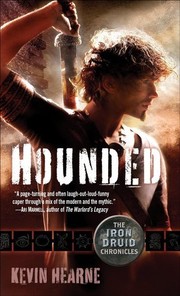
Hounded
A two-thousand-year-old druid runs a bookshop in Arizona, hides from an Irish god who wants his sword back, and talks to his dog.
2,159-word summary · 10 min read
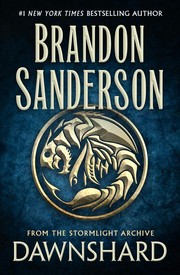
Dawnshard
Rysn sails toward forbidden Akinah to save her dying larkin and finds a Dawnshard guarded by the Sleepless.
3,229-word summary · 14 min read

The Icebound Land
Captured and enslaved in Skandia, Will fights a drug that erases him while Halt and Horace cut a bloody road through Gallica to bring him home.
2,088-word summary · 9 min read

The Field Guide
Three siblings move into a creepy Maine estate, anger a brownie, and find a forbidden guide to the fairy world in the first Spiderwick book.
2,033-word summary · 9 min read

Magic Burns
A magic flare hits Atlanta, and mercenary Kate Daniels must recover stolen maps, find a missing witch, and keep a teenage girl alive while Celtic gods try to…
2,021-word summary · 9 min read
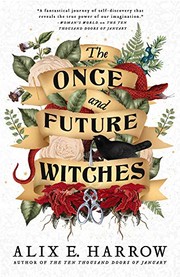
The Once and Future Witches
Three estranged sisters bring witchcraft back to an 1893 city where magic hides in nursery rhymes and the fight for the vote is also a fight for power.
2,132-word summary · 9 min read

Secrets of the Dragon Sanctuary
Kendra is replaced by a plant copy and held by the Society, while Seth steals a unicorn horn so the family can enter a dragon sanctuary.
2,590-word summary · 12 min read

Lioness Rampant
Alanna searches for the Dominion Jewel with the Shang Dragon, then returns to Tortall to face Duke Roger at Jonathan's coronation.
2,478-word summary · 11 min read
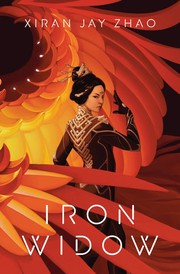
Iron Widow
Wu Zetian enlists to avenge her sister, kills her pilot, and becomes an Iron Widow in a mecha Huaxia where the machines are built to kill women.
2,444-word summary · 11 min read
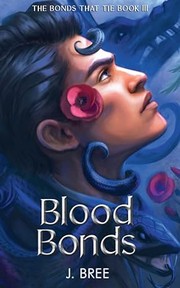
Blood Bonds
Oleander is chained in a Resistance camp, and her five Bonds have to find her before Silas Davies finishes what he started in this third Bonds that Tie book.
2,018-word summary · 9 min read
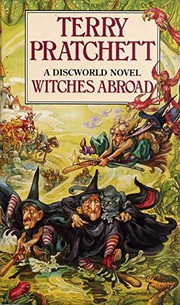
Witches Abroad
Three Lancre witches fly to Genua to stop a fairy godmother from forcing a servant girl into a storybook marriage, and find a city arranged around a happy…
2,651-word summary · 12 min read
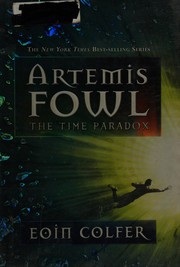
The Time Paradox
When his mother falls ill with a fairy disease, Artemis Fowl travels back in time to find the extinct lemur that can cure her and confronts his younger self.
2,601-word summary · 12 min read

The Siren
Saved from a shipwreck in 1930, Kahlen becomes a siren who sings men to their deaths for the Ocean, until a boy in a college library makes her want a life she…
2,369-word summary · 11 min read
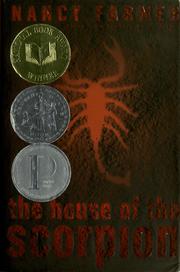
The House of the Scorpion
A clone raised in a drug lord's poppy fields learns what he was made for and chooses what to do with the life he was given.
2,527-word summary · 11 min read

The Golem's Eye
Two years after The Amulet of Samarkand, Nathaniel is a rising bureaucrat, Bartimaeus is his unwilling servant again, and something made of clay is tearing…
2,299-word summary · 10 min read

Magician's Gambit
Garion and his companions cross haunted Maragor and the caves beneath Rak Cthol to recover the Orb of Aldur.
2,391-word summary · 11 min read

Homeland
Drizzt Do'Urden is born into the cruel drow city of Menzoberranzan, where his father teaches him to fight and to doubt everything his family believes.
2,303-word summary · 10 min read
Enchanters' End Game
Garion marches toward Torak while Ce'Nedra leads the West's army in the final Belgariad volume, where prophecy and war meet.
2,557-word summary · 11 min read
Nettle & Bone
Marra, a princess in a convent, leaves to save her abused sister, but first she must finish three impossible tasks: a bone dog, a nettle cloak, moonlight in a…
2,061-word summary · 9 min read

Grip of the Shadow Plague
A plague turns Fablehaven's creatures of light into shadows while Kendra hunts an artifact in Arizona and Seth races to find the cause.
2,131-word summary · 9 min read

The Rose & the Dagger
Shahrzad is pulled from her Caliph husband and left in a desert camp of rebels, needing to break his curse and end a war before it ends her.
2,520-word summary · 11 min read