
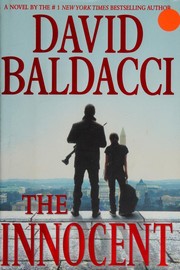
The Innocent
2,403-word summary 11 min read 422 pages in the book
- First published
- 2012
- Publisher
- Grand Central Publishing
- Pages
- 422
- ISBN
- 9780446572996
- Series
- Will Robie (#1)
Reading options
What's inside (8 sections)
I picked up The Innocent because I wanted a straight thriller after a run of slower books, and Baldacci gave me exactly that kind of fast, crowded story. It is the first Will Robie book, published in 2012 by Grand Central Publishing at 422 pages in hardcover. Robie is a government hitman who works off the books, and this time he says no to a kill in Washington, D.C. That one refusal pulls him into the life of Julie Getty, a fourteen year old foster kid whose parents have been murdered. I liked it more than I expected, even when the plot got big and a little wild near the end.
Robie is good at his job in the way thriller heroes have to be. He plans, he watches, he leaves nothing behind. He lives alone in a plain apartment, keeps to himself, and takes orders from a man everyone calls the Blue Man. The Blue Man is calm, older, careful with words. He does not threaten. He just lays out the job. Robie trusts him because the system has always worked. You get a name, you check it, you act. No questions that slow you down.
The opening job breaks that pattern. Robie is sent to kill a woman named Jane Wind in the D.C. area. He sets up, he watches her house, and something feels off. The timing is wrong. The backup is wrong. The reason is thin. Robie has killed before without much pause, but here his gut tells him to wait. He does not pull the trigger. That pause changes everything. Another shooter acts, Jane Wind dies anyway, and suddenly Robie is the problem to be cleaned up. His own people start hunting him.
I liked this setup because it flips the usual hitman story. Robie is not trying to quit for moral reasons in some grand speech. He just knows a bad setup when he sees one. Baldacci writes him as practical, not preachy. Robie runs because running is smart. He goes quiet, drops his phone, changes cars, checks for tails. The tradecraft stuff felt solid without slowing the pages too much.
Julie on the bus
Julie Getty is fourteen and already tired in the way kids in foster care get tired. Her foster parents are rough, her school life is thin, and she has learned not to count on adults. When she sneaks back to her family home she finds her parents dead. She does not scream and wait for help. She runs. She knows no one will believe her quickly enough to keep her safe.
She ends up on a bus. Robie ends up on the same bus, trying to disappear after the failed job. A man follows Julie onto that bus. Robie sees it. He has no reason to help her. He has every reason to keep his head down. But he steps in, subdues the man, and gets Julie off just before the bus explodes. The blast kills people inside and knocks both of them flat. It is a loud, ugly moment early in the book that tells you this will not be a quiet investigation.
Robie takes Julie to one of his safe houses. He does not want a kid with him. He tells himself she is a witness who will get him killed. Julie tells herself she cannot trust him either. Their back and forth gives the book some heart. She is sharp, mouthy, scared, and grieving. She asks blunt questions. Robie answers with short, useful truths. He feeds her, finds her clean clothes, teaches her how to watch a street without staring. It is not fatherly in a soft TV way. It is more like a tired instructor with a student who learns too fast.
Julie is not just baggage. She remembers details about her parents, about men who came to the house, about small fights and odd phone calls. Her father and mother seemed normal, but normal starts to crack. Bills, old Army friends, names from the Gulf War period. Baldacci lets Julie be useful without making her a mini spy. She is a kid who paid attention because she had to.
The Blue Man and Nicole Vance
The Blue Man contacts Robie after the bombing. He does not order Robie in. He admits the mission was a setup and says there may be traitors inside their own setup. That is a big admission from a man who never admits much. He tells Robie to work with the FBI on the bombing and the murders, partly to solve it and partly to look cooperative while they dig.
FBI agent Nicole Vance gets paired into this mess. She is young for the role she is given, serious, trying to prove she belongs on a big case. At first she sees Robie as a possible suspect or at least a liar. He is vague about where he was, what he does, who pays him. She presses. He deflects. Slowly, after a couple of attempts on their lives, she starts to believe he is not the one killing people. Their partnership is prickly. She follows rules. He breaks them to stay alive. They meet in the middle because bodies keep dropping.
I liked Vance because she does not fall for Robie in some forced way. She respects his skill and hates his secrecy. She has her own career on the line. When she decides to shelter Julie for a stretch while Robie chases leads, it feels like a real risk for her, not just a plot move. If her bosses learn she hid a witness with a suspected killer, she is done.
The Blue Man stays in the background, pulling strings, feeding Robie names of old squad members, warning him when to go dark. He is one of those handlers who knows more than he says. You never fully trust him, and Robie does not either, but there is history there. Robie owes him, and the Blue Man knows it.
Gulf War squad and old debts
The middle of the book turns into a hunt through old military connections. Julie's father and a man named Rick Wind, Jane Wind's ex husband, served in the same squad during the Gulf War. Rick turns up dead, his body decomposed, which tells Robie this goes back years. The squad list becomes the map. Who is still alive, where are they, what did they see over there that someone wants buried now.
Robie leans on his mentor Shane Connors, an older killer from the same world, retired but still sharp. Connors is blunt and a little weary. He knows how the agency buries mistakes. He points Robie toward Jerome Cassidy, another squad member, and Elizabeth van Beuren, the only woman in that squad. Elizabeth is in hospice, dying from an illness linked to the war. She is fragile, clear headed in bursts, and scared.
This section dragged a bit for me. Lots of names, visits, half memories, people who do not want to talk. Baldacci keeps it moving with attacks. Every time Robie and Vance get close, someone shoots at them, or a car tries to run them down, or a hotel room is tossed. It is a lot. I get why it is there. It shows the other side is scared and has resources inside both the FBI and CIA. But after the third attempt, I started skimming the gunfire to get to what Elizabeth actually knew.
What she knew matters. She had learned of a plan by her husband George to kill the president, and she told the squad members when they visited, all except Cassidy. That omission will matter later. George silenced her when she confronted him. He killed his own dying wife to keep the plan alive. It is a cold detail that stuck with me because it is domestic and political at once.
Robie and the Blue Man rush toward the White House angle. They find George knocked out, which means he was a piece, not the hand moving pieces. The real shooter is still out there. That twist felt fair. Baldacci had planted enough about access, schedules, and who could get close without being checked twice.
Annie next door
The neighbor thread is the one that got under my skin. Annie Lambert lives next to Robie. She works as a secretary in the White House orbit. She is friendly, normal, a little flirty in a neighborly way. Robie notices her the way a lonely man notices someone kind, but he keeps distance because distance keeps people safe around him.
Annie turns out to be the assassin. Robie finds her in position and has to kill her to stop the hit on the president. It happens fast, without a speech. He does what he was trained to do, and it costs him because he liked her.
The explanation after is bleak. Annie was raised by adoptive parents who were Iranian citizens with a deep hatred of America, and she was shaped from a young age to serve a man named Talal, a Saudi prince Robie thought he had killed earlier. Talal had her placed near Robie to watch him. The attempts on Robie were not just to kill him. They were meant to wear him down, to make him doubt, to break his steadiness. Talal also had squad members killed, including Julie's parents, because they knew about the White House plot and might talk.
I have mixed feelings about this part. On one hand, it ties the personal and political together. Robie's neighbor, his failed mission, Julie's dead parents, all lead to one rich, vengeful man. On the other hand, the brainwashing backstory is a lot to swallow in a book that felt grounded in tradecraft for the first half. It works if you read it as pulp, which I did, but it is a jump.
Talal did not die in Robie's earlier attempt. He survived, nursed a grudge, and built a long revenge. He grabs Julie and Vance and pulls Robie to Morocco for an exchange. He promises to let them live if Robie comes alone. He lies, of course. He plans to kill all three. A bodyguard who was secretly feeding information helps Robie turn it. Connors shows up to help. There is a tight, violent rescue, and Robie hands Talal to Saudi authorities. Later the Blue Man says Talal was executed for his crimes. It is a tidy end for a messy villain.
What works and what wears thin
What works is pace and the Robie and Julie bond. Short chapters, constant movement, enough tradecraft to feel smart without drowning in jargon. Robie checking a room, changing a route, spotting a tail, these small habits build him better than any speech about his past. Julie keeps him human. She calls out his evasions. She grieves in bursts, angry one minute, shut down the next. Her adoption by Cassidy at the end, with Robie and Vance watching, earned a little warmth without going soft.
Vance is also a plus. She is competent, not a sidekick who needs saving every chapter, though she does need saving in Morocco. The Blue Man and Connors give the spy world weight. You feel there are rules, budgets, rivalries, bosses who will trade a man to save a program.
What wears thin is the pileup. Bus bombing, decomposed body, hospice murder, White House plot, Morocco kidnapping, brainwashed neighbor, surviving prince. Any three of those could carry a thriller. All of them together made me stop asking how and just ride it. A couple of traitors inside the FBI and CIA are named quickly, almost in passing, and I had to flip back to remember who they were. If you like clean, tight conspiracies, this may feel crowded.
Baldacci's prose is plain and fast. Short sentences. Little description beyond what matters for the next move. D.C. streets, safe houses, motels, hospitals. You will not get long passages about the city. You will get where the exits are. That fits Robie. He is not a man who notices curtains.
I also appreciated that Robie does not become a different person by the end. He still kills when he has to. He still works in shadows. He just has two people he will answer the phone for now. For a series starter, that is enough. It sets up The Hit without closing everything. The agency is still compromised, Robie is still marked by what he had to do to Annie, and Julie still has a long road after losing her parents.
If you are new to Baldacci, this is a fine place to start. You do not need earlier books. If you already read his Camel Club or King and Maxwell books, Robie is colder than those leads, less chatty, more alone. The violence is higher here, and the politics are bigger. Parents should know Julie is fourteen and sees a lot of death, though the book is not graphic for shock. It is more tense than gory.
I finished it in a few sittings and immediately wanted the next one to see if Robie learns to trust Vance and if Julie gets a steadier life with Cassidy. That is probably the best sign. Even when I thought the plot was doing too much, I kept turning pages to make sure those two got out.
Who should pick it up
Pick it up if you like government thriller series with a lone operator, like Mitch Rapp or Jack Reacher but with more agency politics. Pick it up if you like kid in danger stories where the kid is smart, not just screaming. Skip it for now if you want a slow, realistic spy novel or if a brainwashing plot will bother you. This is big, fast, American thriller writing, and it knows what it is.
For me, the bus chapters and the safe house chapters were the best. Two damaged people learning to share a small space while killers look for them. The White House and Morocco chapters were fine, loud, a bit much, but they paid off the early setup about a hit gone wrong. I closed the book thinking Robie will never have a normal neighbor again, and that Julie might be the one person who can make him knock before he enters. That image stayed longer than the conspiracy did.
FAQ
Is The Innocent the first Will Robie book?
Yes. It was first published in 2012 by Grand Central Publishing, with the standard hardcover at 422 pages. It is book one in the Will Robie series and is followed by The Hit.
Who are Will Robie and Julie Getty?
Will Robie works off the books for the government and his handler is known as the Blue Man. Julie Getty is fourteen, in foster care, and on the run after her parents are murdered.
Similar books
More from Will Robie first, then related titles.

What She Knew
Rachel lets her eight-year-old son run ahead in a Bristol park, and the nine-day search turns her into a suspect in the public eye.
2,952-word summary · 13 min read

The Beach House
A young valet is beaten to death at a Hamptons party, and his law-student brother spends a year building a case against the family that covered it up.
2,049-word summary · 9 min read

Six Years
A professor who promised to forget the woman he loved sees her husband's obituary and discovers that the wedding, the marriage, and the woman herself may never…
2,076-word summary · 9 min read

Rules of Prey
Minneapolis detective Lucas Davenport hunts a killer who leaves a new rule at every scene and treats murder as a game of wits.
1,914-word summary · 9 min read

4th of July
Lindsay Boxer shoots two armed teenagers in self-defense, faces a wrongful-death trial, and spends her leave chasing a string of throat-slashing murders in…
2,192-word summary · 10 min read

61 Hours
A bus crash strands Jack Reacher in a snowbound South Dakota town where a drug gang, a corrupt police force, and a single witness are on a collision course.
2,227-word summary · 10 min read

Still Missing
A realtor is abducted at a Vancouver Island open house and held for more than a year. Told through therapy sessions, the novel follows her escape and the hunt…
2,466-word summary · 11 min read

Bad Luck and Trouble
A deposit of $1,030 summons Jack Reacher back to his old army unit, which is being picked off one name at a time.
2,366-word summary · 11 min read

3rd Degree
The third Women's Murder Club novel follows a San Francisco terror cell and a three-day killing schedule, and it costs the club a member.
2,685-word summary · 12 min read

Worth Dying For
Reacher stops for one night in rural Nebraska and finds a family that runs the county, a missing girl and a shipment worth killing for.
2,021-word summary · 9 min read

Say You're Sorry
A widowed prosecutor defends the teenager accused of killing her babysitter, uncovering a small town's secrets and a killer hiding in plain sight.
2,116-word summary · 9 min read

Echo Burning
Reacher hitches a ride with a Texas woman who wants her abusive husband killed, then has to prove she did not murder him when he comes home.
2,209-word summary · 10 min read

Girl, Forgotten
A rookie US marshal guards a judge with a stalker and ends up reopening the 1982 prom-night murder of the judge's pregnant daughter.
2,111-word summary · 9 min read

The Woods
Twenty years after two teenagers were murdered and two vanished at summer camp, prosecutor Paul Copeland identifies a fresh corpse as one of the missing.
2,490-word summary · 11 min read

The Boy from the Woods
Wilde, found feral in a New Jersey forest in 1986, hunts for a missing teenager while a senator's secrets tear a wealthy town apart.
2,270-word summary · 10 min read
Without Fail
Reacher is asked to test vice presidential security by planning to kill.
2,084-word summary · 9 min read
Things We Do in the Dark
A comedian kills her husband, then a podcaster digs up her teen murder past.
2,427-word summary · 11 min read

The Widow
A widow of a suspected criminal faces reporters and police while hiding what her marriage really cost.
2,599-word summary · 12 min read
The Racketeer
A jailed lawyer trades a judge murder secret for freedom and revenge.
2,434-word summary · 11 min read
The Night Swim
A true crime podcaster covers a rape trial while probing an old drowning in a small town.
2,260-word summary · 10 min read
The Judge's List
Lacy Stoltz hunts a sitting judge who murders off his list.
2,513-word summary · 11 min read
The Girl Who Was Taken
A survivor returns alone while a reporter digs for her lost sister.
2,261-word summary · 10 min read
The Club
A luxury island resort for the rich turns deadly when secrets, staff and guests collide.
2,386-word summary · 11 min read
The Chalk Man
Childhood chalk codes lead to a murder that follows friends thirty years later.
2,350-word summary · 10 min read
The Silent Wife
A Chicago psychologist watches her twenty-year partnership collapse when Todd leaves for Natasha, then plans murder.
2,591-word summary · 12 min read
The Overnight Guest
A snowbound writer shelters a lost boy in Iowa while a twenty-year-old story of neglect closes in.
2,580-word summary · 11 min read
Running Blind
Jack Reacher must catch a killer who murders women with no forced entry and no trace.
2,008-word summary · 9 min read
Keep It in the Family
Mia and Finn renovate a long empty house and find seven children hidden in the attic.
2,270-word summary · 10 min read
Force of Nature
Four women walk out of the Giralang Ranges and Alice Russell does not, leaving Falk to link bush lies to firm fraud.
2,250-word summary · 10 min read

2nd Chance
Lindsay Boxer and the Women's Murder Club hunt the Chimera killer after a church shooting in San Francisco.
2,572-word summary · 11 min read