
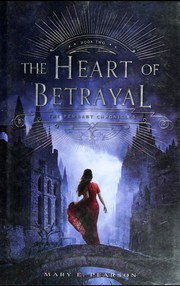
The Heart of Betrayal
2,702-word summary 12 min read 480 pages in the book
- First published
- 2015
- Publisher
- Henry Holt and Co.
- Pages
- 480
- ISBN
- 9780805099249
- Series
- The Remnant Chronicles (#2)
Reading options
What's inside (8 sections)
I read this one straight after The Kiss of Deception, which is the sensible way to read it and the way I would recommend to anyone. The previous book ended with Lia being carried off toward Venda, and I remember closing it with that particular annoyance you feel when a story stops in the middle of a breath. This book picks up on the same road. It came out in 2015 from Henry Holt and Co., the second volume of The Remnant Chronicles, and it runs to 480 pages in the hardcover edition I have. It is a harder book than the first, meaner in places, and I think it is also the one where Pearson shows what the world she built is actually for.
The first book spent a lot of time in a fishing village with ale and fog and a slow-building mystery about two strangers. This one shuts that door. The tavern is gone, the disguises are thinner, and the people in charge are not interested in being charming about it. Within a few chapters I was missing Berdi and the ordinary rhythm of Terravin. That seemed to be the point. Lia has to find out who she is when nobody is paying her to be a barmaid and nobody friendly is within reach.
Chains into Venda
The story opens with Lia and Rafe traveling into Venda as prisoners. Kaden, the quiet young man who spent the first book failing to carry out his order to kill her, is the one delivering them. He has chosen to keep her alive by telling the Komizar, the ruler of Venda, that Lia has the gift of sight. It is a desperate argument, and it works better than Kaden expected. The Komizar is curious about a princess who can supposedly see things, and curiosity in this place is a dangerous kind of attention.
Rafe does a piece of quick thinking in their first interview. He tells the Komizar he is a messenger from Dalbreck rather than the prince himself. He is, of course, the prince, the same boy Lia ran away from rather than marry. Lia knows one wrong word from him could get them both killed, and the chapters in their holding cell have her watching him the way you watch someone who has lied to you before and might do it again. He plays the part well enough to buy them time.
I liked the unease of these early chapters. Nobody here is safe, and the book does not pretend otherwise. Venda takes few prisoners, which means being kept alive is already a strange kind of favor, and nobody knows what the Komizar intends to do with either of them. Kaden moves through the city with the confidence of someone who belongs, but he is nervous too, and Pearson lets that nervousness show in small ways rather than big speeches. He has put his own position at risk for Lia and he knows it.
A city that refuses to fit her lessons
Once the Komizar leaves town for a few days, Kaden gets Lia out of the cell, finds her new clothes, and shows her around. This is where the book starts doing its real work. Lia has been raised to believe that Venda is a place of barbarians, a story her kingdom tells about its enemy the way people always tell stories about the place across the border. What she finds is poor and hard and often cruel, but it is also full of people with habits and affections and grievances that make sense once you hear them.
A dressmaker gives her far more garments than she pays for. A woman named Calantha says a blessing over a meal, then hands the words over to Lia, who should not know them and yet finds they come out of her anyway. Calantha turns out to be the daughter of the previous Komizar, and her history explains a great deal about how the current one keeps his throne. There is a girl, Aster, who becomes Lia's friend and helps her slip through the catacombs beneath the city. Down there, robed scholars work over ancient books pulled from an older civilization, and Lia cannot yet read most of what she finds.
The Komizar also uses her in public. He has her dressed in a short sackcloth at one point to humiliate her, then later parades her in the fine clothes the clans have given her, because the clans have started to read something into her presence. She recites stories from her window for the people below. They hear a princess with the sight. Some of them hear something older than that, a figure from their own forgotten histories named Jezelia, and they begin to treat her as a sign.
This is the part of the book I found most interesting, because it takes the simple version of the first book and breaks it. Morrighan was smug and Venda was brutal, or so Lia was taught. Here she learns that Dalbreck and Morrighan brutalized Venda over generations, and that the scholars in the catacombs include people from her own country, some of them former tutors of hers and her brother. The old history she carried out of the citadelle in stolen pages starts to look less like a relic and more like a set of instructions someone left for her. Her mother, it seems, had plans of her own.
Pearson takes her time with this material, and that is both a strength and a problem. There are long stretches of Lia walking through the city, being shown poverty, being told pieces of a history she half understands. I was absorbed, but I can see a reader getting impatient. The book is willing to stop the escape plot to let its heroine learn things. That choice gives the world real weight. It also means the middle drags in places, and the romance triangle keeps circling back while the history waits to be finished.
The gift, and the two men who claim to understand it
Rafe stays hidden for much of the book, and when Lia manages to reach him, their reunion is nothing soft. They have both lied, they both have reasons, and they have to work out whether any of the feeling between them survived the lying. He is still the man she loves and still the prince she refused to marry, and the book keeps both of those facts in the room at once. Their secret meetings are tense in a way the tavern conversations never were.
Kaden complicates things further. He admits that he has the sight too, that it came from his mother, and that he knew of Lia before they ever met. His visions have tied him to her for longer than she realized, and that is part of why he could not finish his assignment in the village. His past is rough. His father was a Morrighan noble who fathered him on a mistress and sold him to beggars when his mother died. The Komizar took him in and made him an assassin, so his loyalty to Venda and his feelings for Lia pull in opposite directions. When he tells her he has seen the two of them together in Venda, holding a baby, Lia cannot ignore it. She has had visions of her own, including one of Rafe leaving the city without her.
I have mixed feelings about how the gift gets used here. On one hand, Pearson treats it as a burden and a question rather than a superpower. Lia never fully controls it, and she is the first to doubt what it shows her. Kaden's certainty about what their visions mean is more troubling, and the book lets that trouble sit unresolved. On the other hand, the visions arrive when the plot needs a turn, and more than once I felt the author reaching for them to nudge a decision along. Readers who dislike prophecy in their fantasy will probably grind their teeth a few times.
The Komizar is the strongest thing in the book. He is not a raging villain who shouts. He is a patient man who understands that spectacle and hope are tools, and he uses Lia's royal blood and her supposed gift to build support among the clans. He announces that he intends to marry her, which is less a proposal than a way of binding her to Venda and shutting down the idea that she belongs anywhere else. When Kaden objects, the Komizar reminds him that Venda comes first. When Lia resists, he threatens Rafe. It is effective because it is so practical.
There is also a war being built in the background. Lia is taken on an outing that ends at the edge of another city, a city full of soldiers assembled to march on Morrighan. The Vendans have huge horses they call Death Steeds, driven into battle carrying explosive powder, and the mixture comes from the old knowledge the robed scholars have been recovering. Lia pleads for Morrighan and gets nothing. Her own country, it turns out, has been living next door to a grievance it never bothered to answer.
A wedding nobody asked for
While Lia is stuck inside Venda, Pauline is trying to get help from the outside. She travels with Gwyneth toward Civica to petition the chancellor and then the king. What she finds is a story already written for her: Walther is dead, and the word has spread that Lia planned this all along, that she means to marry the ruler of the barbarians and become queen of Venda. Even Lia's brothers believe it. Lia is declared an enemy of Morrighan, to be killed on sight. Pauline also learns that Mikael, the man she thought dead and whose child she is carrying, is alive. Lia lied to her about that, and Pauline has to decide whether to keep working for a friend who kept that from her. She is only two months from giving birth. This thread runs quietly in the background, and I wished for more of it. Pauline's loyalty tested under that kind of pressure is the sort of material the first book handled well, and here it gets compressed into reports and overheard news.
Back in the city, the pressure closes in. Vendan soldiers bring back prizes from a raid, and among them are things clearly taken from Dalbreck soldiers. Rafe sees them and loses control, and he and Kaden end up in a duel. Rafe is the better swordsman, but he lets Kaden win, which tells you something about how he is playing the long game now. The new governor who was supposed to arrive turns out to be one of Rafe's men, and that means reinforcements are already inside the walls. A raft is hidden on the river, and a plan takes shape for the night before the wedding.
What struck me is how little anyone here gets what they want by being honest. Rafe lies about who he is. Kaden lies about why he kept Lia alive. The Komizar lies about the marriage being an honor. Lia has spent the whole book learning that the stories she was told at home were also lies, just older ones. The title earns itself. Most of the people in this book lie as a matter of course, and the ones who survive are those who work out which lie carries the most weight.
The terrace and the river
On the morning of the wedding, the Komizar locks Lia in her tiny room, having guessed that she plans to run. Aster finds a key and lets her out. Lia makes it to the terrace, and the gift tells her to speak. She recites the story of Venda to the people gathered below, the old story of Jezelia, the girl who would come and the sacrifice that went with her coming. Lady Venda, who has been appearing to Lia in visions, supplies the rest. The Komizar catches them before she can finish. He kills Aster for helping her, and Lia drives a dagger into his chest.
Then the scene breaks into chaos. Rafe and Kaden and Rafe's men arrive, soldiers move in, and Calantha helps the survivors reach the hidden raft. Everyone who came down that river bank gets away except Kaden, who is left inside Venda when the raft pushes off. Lia is on the raft with Rafe, and it looks for a moment like the escape might actually hold. Then archers fire from the shore. Two arrows hit Lia and she falls into the water, held down by the weight of her wedding dress. Rafe jumps in after her. The book ends with him pulling her out onto the far bank, cold and hurt, carrying her on foot, with no certainty that she will live.
I will say this for the ending: it refuses to give you a clean emotional payoff. Aster is dead. The Komizar may or may not be finished. Kaden is trapped in the city he has always served. Lia has escaped a forced marriage only to be shot out of the sky by her own people's enemies, and the country she was running to has declared her a traitor. The last image is Rafe walking with her in his arms, which is tender and also grim. It made me want the third book immediately, which is the job a middle volume has to do.
What I kept turning over
The weak spots are real. The middle sags, particularly in the run of chapters where Lia tours the city and absorbs one more piece of the old history. The triangle between Lia, Rafe, and Kaden is familiar material, however well Pearson writes the individual conversations, and readers who are tired of two handsome men competing over one heroine will not be won over by the political plotting layered on top. The book also stops hard, with several major threads left dangling, so anyone who wants an ending that closes things down should know this is the second of three.
What held me was the way the world keeps refusing to simplify itself. Venda is brutal, and Lia has every reason to fear it, and the book still insists that its people have been brutalized by Morrighan and Dalbreck. Kaden is an assassin who saved her life and a man who wants something from her that she cannot give. Rafe lied to her and keeps sacrificing himself for her. The gift that everyone wants to use is the one thing Lia least understands. I finished the book believing that Pearson cares more about these contradictions than about tying them off neatly, and that is a rare thing in this end of young adult fantasy.
Lia comes out of it harder than she went in. She arrives as a princess who ran away from one unwanted future and spends this book being pushed toward another, by a ruler who wants to marry her, by a prophecy that several people claim to understand better than she does, and by two men whose love is tangled up with their secrets. By the river she has made a few choices that are hers, including speaking to the crowd when the gift tells her to and stabbing the Komizar when there is no other move left. It is not a triumphant arc. It is a girl learning to tell the difference between a story someone else wrote for her and the one she is willing to act on.
I would hand this to a reader who liked the first book and wants the stakes to get larger and the answers to get smaller. I would be careful with a reader who wants a self-contained adventure or a clean romantic resolution. This book is mostly about captivity, and it spends its length asking what a person can still choose when nearly every choice has been taken away. It does not answer that in a speech. It answers it with a girl on a terrace, a dead child, a dagger, and a river full of arrows.
FAQ
Do I need to read The Kiss of Deception first?
Yes. This book begins with Lia being carried into Venda at the end of the first novel, and it assumes you already know who Rafe and Kaden are.
What is the gift of sight in this book?
It is a sporadic ability to see things that have not happened, shared by Lia and later revealed in Kaden. Neither of them fully controls it, and the Komizar wants to use it as a political tool.
Does Lia end up safe?
Not entirely. Lia and Rafe escape Venda by raft, but archers shoot her twice and she falls into the river, and Kaden is left behind in the city.
Similar books
More from The Remnant Chronicles first, then related titles.
The Kiss of Deception
Princess Lia flees an arranged marriage and hides in a village, unaware one stranger is a prince and the other an assassin.
2,196-word summary · 10 min read

Vow of Thieves
Kazi and Jase return to Tor's Watch to find it occupied, and their marriage is tested by captivity, betrayal, and a war for the town of Hell's Mouth.
2,059-word summary · 9 min read
The Girl of Fire and Thorns
Rae Carson's debut follows Elisa, an insecure princess born with a godstone in her navel, who is married to a foreign king and must grow into the leader a…
2,331-word summary · 10 min read

The Rose & the Dagger
Shahrzad is pulled from her Caliph husband and left in a desert camp of rebels, needing to break his curse and end a war before it ends her.
2,520-word summary · 11 min read
Dance of Thieves
Queen's thief Kazi infiltrates Ballenger lands while young leader Jase plays her right back.
2,005-word summary · 9 min read

The Iron Knight
Winter prince Ash journeys to the End of the World to earn a soul and a mortal body so he can stand beside Meghan, the Iron Queen.
2,564-word summary · 11 min read

Magic Study
Sentenced to die in Ixia, Yelena returns to the land she was stolen from to learn the magic that made her an outlaw.
2,542-word summary · 11 min read

Lioness Rampant
Alanna searches for the Dominion Jewel with the Shang Dragon, then returns to Tortall to face Duke Roger at Jonathan's coronation.
2,478-word summary · 11 min read

Archenemies
Nova steals for the Anarchists while Adrian hides his Sentinel identity, and a serum that erases prodigy powers puts them both at risk.
2,485-word summary · 11 min read

The Queen of the Tearling
Nineteen-year-old Kelsea leaves the woods to take her throne, ends a shipment of human captives, and draws the Red Queen's revenge.
2,357-word summary · 10 min read

We Hunt the Flame
In a fractured Arabia-inspired world, a disguised huntress and a prince-assassin race to find a magic-restoring book and confront an ancient evil.
2,195-word summary · 10 min read

Lore
Lore Perseous, the last of a hunted bloodline, is pulled back into the Agon when a wounded Athena offers her revenge against the god who killed her family.
2,188-word summary · 10 min read
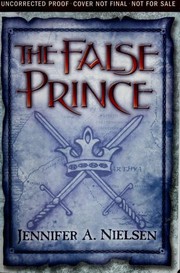
The False Prince
A nobleman buys four orphans and tells them only one will survive to impersonate the missing prince. The narrator, a defiant thief named Sage, has other plans.
2,044-word summary · 9 min read
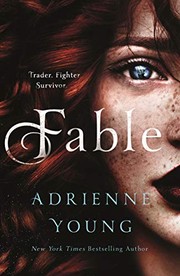
Fable
Abandoned on a lawless island at fourteen, Fable spends four years diving for gems to buy passage off it, straight into the cutthroat trade of the Narrows.
2,320-word summary · 10 min read

The Winner's Curse
An aristocratic girl buys a slave who is secretly a prince plotting rebellion.
2,124-word summary · 9 min read
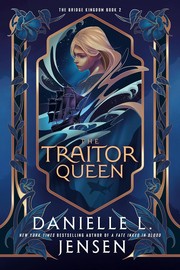
The Traitor Queen
Exiled Lara returns to free Aren and break her father hold.
2,328-word summary · 10 min read

The Iron Queen
Meghan faces the Iron King past while Ash pays a winter price.
2,548-word summary · 11 min read
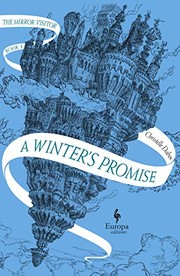
A Winter's Promise
Ophelia reads objects and is sent to marry Thorn on a cold ark.
2,502-word summary · 11 min read
Daughter of the Siren Queen
Alosa hunts the last map pieces toward Isla de Canta while defying her father Kalligan, facing her brother Draxen, and choosing her loyal crew and Riden at…
2,643-word summary · 12 min read
Daughter of No Worlds
A former slave with rare magic hires exiled warrior Max to train her for a daring rescue, sparking slow burn love and wider war in this big 520-page fantasy…
2,529-word summary · 11 min read
Bitterblue
Eighteen-year-old Queen Bitterblue sneaks out to learn why Monsea still suffers after Leck, facing court lies, ciphers, and trials in Cashore's rich third…
2,686-word summary · 12 min read
The Iron Daughter
Exiled with Ash after the scepter theft, Meghan hunts the Iron stronghold as iron magic wakes inside her.
2,995-word summary · 13 min read
Strange the Dreamer
Orphan librarian Lazlo Strange joins a quest to the lost city of Weep, where blue-skinned godspawn haunt dreams.
2,221-word summary · 10 min read
Poison Study
Sentenced to die, Yelena becomes the Commander's poison taster and learns survival in Ixia has a daily price.
2,501-word summary · 11 min read
To Kill a Kingdom
A siren princess turned human must steal a siren-hunting prince's heart to win back the sea.
2,248-word summary · 10 min read
The Shadows Between Us
Alessandra plans to woo the Shadow King, marry him, and kill him for his throne, then finds someone else wants him dead first.
2,571-word summary · 11 min read

Fire
A human monster who reads minds is pulled into war in the Dells and must decide how to use her power.
2,727-word summary · 12 min read
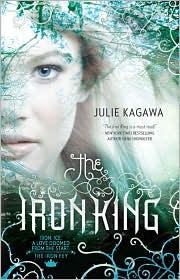
The Iron King
Meghan Chase follows her stolen brother into the Nevernever and bargains with a Winter prince to face the Iron King.
2,720-word summary · 12 min read
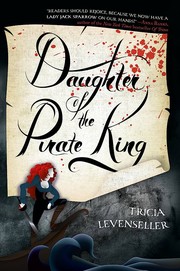
Daughter of the Pirate King
A pirate captain daughter lets herself be captured to find a map, then spars with a strict young pirate prince.
2,156-word summary · 10 min read
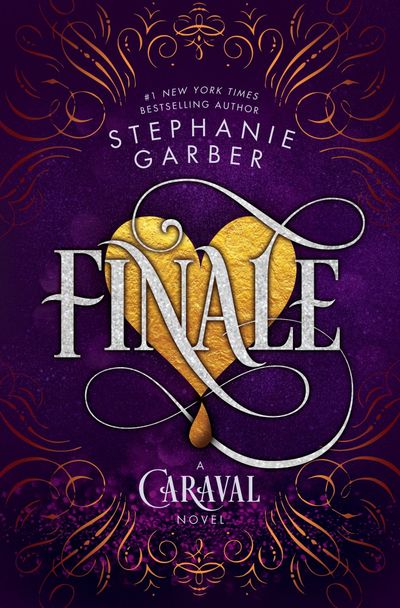
Finale
Sisters face waking Fates with debts due, loving princes, and choices that break immortal math.
1,995-word summary · 9 min read