
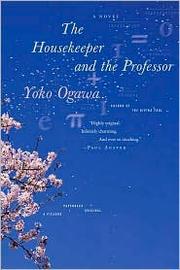
The Housekeeper and the Professor
2,141-word summary 10 min read 304 pages in the book
- First published
- 2003
- Publisher
- Shinchosha
- Pages
- 304
- ISBN
- 9780312427801
Reading options
What's inside (8 sections)
The man who forgets everything
The narrator is a twenty-eight-year-old single mother and the tenth housekeeper the Professor has hired. Her agency sends her to his house without much explanation, which is just as well, because nothing about the job can be explained in ordinary terms. The Professor is sixty-four, a former mathematician with a doctorate in algebraic number theory from Cambridge. A traffic accident in 1975, when he was forty-seven, left him able to retain new memories for only eighty minutes.
He has built a life inside that limitation. Notes are pinned all over his suit to remind him who people are. Baseball cards and mementos live in a cookie tin. Every eighty minutes he starts again, and the people who care about him have learned to be patient with a man who will not remember them from one hour to the next. The housekeeper finds him frustrating and cold at first. He shows interest in almost nothing except mathematics.
I picked this book because the premise is so quietly strange. A person who cannot remember you, and a relationship that has to be rebuilt from the beginning every day, is a setup for sentimentality. Yōko Ogawa resists it. The novel was published in Japan in 2003 and translated into English by Stephen Snyder in 2009. Its original title, which translates roughly as "The Professor's Beloved Equation," tells you where its heart is. This is a book about numbers and about the people who love the people who love numbers.
A boy named Root
The Professor loves the Hanshin Tigers, especially a pitcher named Yutaka Enatsu, whose uniform number, twenty-eight, is the second smallest perfect number. This is the first sign that his obsessions are not really separate. Baseball and mathematics are the same activity for him, a way of finding order in a world that has stopped holding still.
When he learns that the housekeeper's ten-year-old son waits at home alone until late every night, he flies into a rage and orders that the boy come to his house directly from school. It is the first moment of warmth in the book, and it arrives as an order rather than a kindness. The woman who cleans his house has a child, and the child is alone, and that is simply not acceptable. There is no discussion.
The boy arrives the next day. He is nicknamed Root because the flat top of his head resembles a square-root symbol. He is the only character in the novel who is given anything like a name. The narrator, the Professor, the Widow, even Enatsu are identified by their roles. Root is the exception, and the nickname is both a joke and an act of affection. He repairs the Professor's old radio so the three of them can listen to baseball broadcasts together. The two males bond like father and son, and the Professor becomes the first father figure Root has ever had.
This arrangement is also what gets the housekeeper in trouble. She has broken her employment contract by bringing a child into the client's home and staying beyond her assigned hours. The Widow, who manages the Professor's affairs, fires her and accuses her of trying to extort money. It is a brutal scene, and the Professor's response is to write Euler's formula on a piece of paper. The Widow looks at it and immediately accepts them both. Mathematics is the only language in which he can illustrate what matters to him, and the Widow, who has known him a long time, reads it fluently.
Amicable numbers
The first real connection between the housekeeper and the Professor comes through a watch. He shows her the underside, where the number 284 is engraved. Her birthday is February 20, and 220 and 284 are an amicable pair, the smallest known example of two numbers whose proper divisors sum to each other. The watch was his University President's Award for a thesis on transcendental number theory.
That exchange is the whole book in miniature. She mentions a date. He has a number. Between them is a relationship neither expected, built out of a fact that would mean nothing to most people. From then on their days settle into a rhythm of solving problems and exploring ideas together. They work through roots and imaginary numbers, factorials, primes and twin primes, perfect and abundant and deficient numbers, triangular numbers, Ruth-Aaron pairs, Mersenne primes, Napier's constant and Euler's identity. They talk about Fermat's Last Theorem and Artin's conjecture. She cannot pronounce "Journal of Mathematics" and calls it "Jaanaru obu," and he accepts the name.
The scenes around the radio are among my favorites. A retired mathematician, a housekeeper in her late twenties and a ten-year-old boy sit in a Japanese living room listening to a baseball game, and the Professor explains why a pitcher's number is interesting while the game plays on. Root is not studying. He is just sitting with the man who has become his friend, and the mathematics arrives as a kind of background music to affection. Ogawa understands that learning happens this way, through proximity and repetition and the presence of someone who cares that you understand.
The title's equation is waiting in the book's structure. The professor's beloved equation is not a single formula but the whole practice of finding order, of noticing that two numbers belong together the way 220 and 284 do. By the time the novel ends, the housekeeper and Root have learned to look for those relationships too. That is the inheritance the Professor leaves them, and it is not affected by his inability to remember giving it.
What is remarkable is how Ogawa writes this material. The mathematics is real, and it is never presented as decoration. The pleasure the characters take in an elegant proof is the same pleasure other novels would locate in a conversation about love. The book trusts that a reader can follow the shape of an idea without needing to do the homework. When a concept appears, it appears as something that means something to these people, not as a puzzle for the reader to solve.
The Professor has other gifts that look like magic until you know him. He can read things backwards. He can find the first star in the sky before anyone else. These abilities are placed alongside the mathematics as further evidence that his mind works in a way that is both damaged and extraordinary. The accident took his short-term memory and left the rest of him intact, which is a strange and specific kind of loss.
The Widow and the photograph
The Widow is one of the book's great creations. She runs the household with a firm hand, fires people, checks contracts, and seems incapable of sentiment. The housekeeper eventually learns that the Widow's difficulty walking came from the same accident that injured the Professor, and she finds an old photograph of the two of them in the cookie tin. The suggestion of an earlier romance is never stated outright. Ogawa leaves it in the tin, where the housekeeper found it.
That restraint is characteristic. The novel never tells you what anything means. It gives you the photograph, the walking difficulty, the monthly trips, the way the Widow knows exactly what Euler's formula looks like, and lets you assemble the history. It is a much more moving method than an explanation would have been.
In one memorable scene, the housekeeper and Root give the Professor a rare Yutaka Enatsu baseball card as a congratulatory present. It is the kind of gift that only people who have been paying close attention could think to give. He understands exactly what it is and what it cost, and the moment is one of the few in which his memory limitation does not matter. Some things do not need to be remembered. They are simply true while they are happening.
There is a lovely small detail about the Professor's talent for finding the first star. It is the sort of thing that has no practical use and no connection to his work, and Ogawa includes it simply because it is something he can do. In a character whose life has been stripped down by illness, these remaining abilities matter enormously. They are evidence that the person is still there. The notes pinned to his suit maintain his identity in a bureaucratic sense. Finding the first star maintains it in a human one.
The book also has a great deal of warmth in its treatment of the housekeeper's ordinary life. She is a single mother with a child she worries about, a job she needs, and a fear of being found wanting. Her anxiety about breaking the contract is not a plot device. It is the condition of someone who knows how quickly a job can disappear and how little margin she has. When the Widow accuses her of extortion, the charge lands because it is exactly the kind of thing she has been afraid of. That is why Euler's formula is such a satisfying response. It bypasses the accusation entirely and speaks to the person who actually understands the situation.
What lasts
As his condition worsens, the Professor is moved to a nursing home. The housekeeper, Root and the Widow continue to visit him. He is still the man who lives for eighty minutes at a time, and the visits are still conversations that he will not retain. What has changed is the people around him. They have learned to carry the relationship themselves, to be the memory he cannot be.
Root grows up to become a junior high school mathematics teacher. It is the book's quiet payoff, and it arrives without fanfare. The boy who fixed a radio and listened to baseball with a dying mathematician ended up spending his life passing on the thing they shared. The novel's structure is a circle. It begins with a child waiting alone at home and ends with a man who teaches numbers to children.
The book won the inaugural Hon'ya Taishō award, and the December 2005 paperback sold a million copies in two months in Japan. A film directed by Takashi Koizumi appeared in January 2006. The novel's bibliography includes The Man Who Loved Only Numbers, the biography of Paul Erdős, and it has been said that Erdős was the model for the Professor. All of that makes sense. There is something of the famous wandering mathematician in a man who keeps his identity pinned to his suit and thinks about prime numbers while listening to baseball.
I should mention the English edition, because the book has a slightly odd publishing history. Stephen Snyder's translation appeared in 2009, and the Picador edition is the one most English readers will encounter. Page counts vary depending on which edition a catalog is describing, which is a common problem with translated novels that have been reissued in several markets. The story is the same in all of them.
The effect of it
I am not usually a person who gets emotional about number theory, but this book made me feel the beauty of an amicable pair. That is a strange thing to say about a novel, and it is a measure of Ogawa's skill. She makes the Professor's love of mathematics contagious, not by explaining it but by showing what it does for him. In a life where everything else slips away after eighty minutes, the numbers are the one thing that stays. They are the structure he can keep returning to.
The book is also, without ever saying so, about care. The housekeeper's job is to look after a man who will not know she was there. The Widow has been doing the same thing for years. Root learns it from both of them. None of them will be remembered by the person they are caring for, and they do it anyway. Ogawa never makes a speech about the dignity of that work. She just shows us the cookie tin and the pinned notes and the baseball card, and lets us understand.
If there is a criticism, it is that the Professor is more of a beautifully constructed idea than a person. His memories are gone, his past arrives in fragments, and he is defined almost entirely by his relationship to mathematics and baseball. Ogawa knows this, and the Widow's photograph is there partly to give him a history that the narrative cannot show. It works, but it is a narrow portrait. That is also the point. He is a man reduced by an accident to a few durable loves, and the people around him have learned to love him in that reduced form.
FAQ
Is The Housekeeper and the Professor based on a real mathematician?
The novel's bibliography includes the Paul Erdős biography The Man Who Loved Only Numbers, and it has been said that Erdős was a model for the Professor. The character and events are fictional.
What does the title refer to?
The Japanese original means roughly The Professor's Beloved Equation. The book treats mathematics not as a single formula but as a way of finding order, from perfect numbers to Euler's identity.
Who is the Widow?
She manages the Professor's affairs and was injured in the same accident that caused his memory loss. She initially fires the housekeeper for breaking her contract, then accepts her after seeing Euler's formula.
Similar books

The Memory Police
On an unnamed island, ordinary things keep vanishing from memory, and a novelist hides her editor from the police who make sure the vanished stay forgotten.
2,440-word summary · 11 min read
Moonwalking with Einstein: The Art and Science of Remembering Everything
A journalist spends a year training for the U.S. Memory Championship and discovers that extraordinary memory is mostly technique, attention, and a lot of…
2,027-word summary · 9 min read

Dance Dance Dance
A divorced Tokyo writer returns to a Sapporo hotel that has been rebuilt, then follows a woman who may be a ghost and a teenage girl through a mystery about…
2,407-word summary · 11 min read
Men Without Women
Seven stories about men living after women leave, die, or stay distant.
2,673-word summary · 12 min read

Kitchen
Orphan Mikage finds home in a kitchen with Yuichi and Eriko after loss.
2,597-word summary · 12 min read

South of the Border, West of the Sun
A married Tokyo bar owner reunites with his lost childhood sweetheart and must choose between steady family life and a haunting first love.
2,844-word summary · 13 min read
The True True Story of Raja the Gullible (and His Mother)
A gay philosophy teacher in Beirut revisits six decades of Lebanese history, family trauma, and his thorny bond with his mother.
2,274-word summary · 10 min read

The South
A seventeen-year-old moves to his family's failing fruit orchard in 1990s Malaysia, where a summer love affair unfolds as the household and the land around him…
2,903-word summary · 13 min read
The Sisters
Three sisters watch one another take the lives they imagined, across thirty years in Stockholm and Tunisia, in a novel that bends time like an accordion.
2,199-word summary · 10 min read
Palaver
A mother shows up uninvited at her estranged son's Tokyo apartment, and the two spend the weeks before Christmas talking their way toward something like…
2,465-word summary · 11 min read

One Boat
A woman returns to a Greek coastal town after her father's death, and the holiday she took nine years earlier after her mother's death keeps breaking through.
2,143-word summary · 10 min read
Left Neglected
A busy mother suffers left neglect after a car crash, forcing her family and her own attention to rebuild a slower life.
2,201-word summary · 10 min read
Women
Charles Bukowski's semi-autobiographical novel of Henry Chinaski at fifty, drinking heavily and sleeping his way through Los Angeles while fame arrives late.
2,124-word summary · 9 min read

Whistler
Ann Patchett's eleventh novel follows a New York teacher who reconnects with a former stepfather at the Met and hears the strange story of a chestnut mare.
2,697-word summary · 12 min read
What We Can Know
In McEwan's eighteenth novel, a lonely scholar in a flooded, diminished Britain chases a vanished poem that could win him the professorship he has long wanted.
2,408-word summary · 11 min read
Theft
Gurnah traces three linked lives in Tanzania, where a servant's accusation of theft opens a family history of love, duty and quiet betrayal.
2,454-word summary · 11 min read

The Zahir
A bestselling novelist's wife vanishes from their Paris home, sending him on a search that becomes a reckoning with his own marriage and attention.
2,433-word summary · 11 min read
The Reluctant Fundamentalist
In a Lahore cafe, Changez tells a nervous American how Princeton and a New York career gave way to anger after September 11.
2,340-word summary · 10 min read
The Children Act
A High Court family judge weighs whether a dying teenage boy can refuse a blood transfusion while her own marriage quietly comes apart.
2,399-word summary · 11 min read

Tara Road
After her husband admits to an affair, a Dublin woman swaps houses for the summer with a grieving American, and each begins to heal inside the other's life.
2,020-word summary · 9 min read
King of Ashes
A Virginia crematorium, a debt owed to the Black Baron Boys and a family secret pull Roman Carruthers back into a war where everything burns.
2,229-word summary · 10 min read
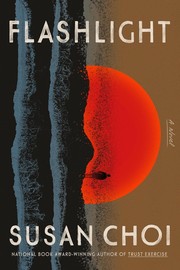
Flashlight
Susan Choi's Booker-shortlisted novel opens with a father and daughter on a breakwater in 1978, then follows the loss outward through four generations and…
2,849-word summary · 13 min read
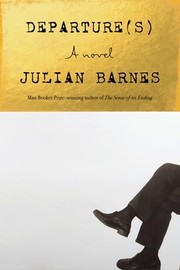
Departure(s)
Barnes's fifteenth and final novel blends fiction, memoir and essay as a grieving north London writer tests what memory can be trusted to deliver. Short,…
2,234-word summary · 10 min read

The Diamond Age: Or, A Young Lady's Illustrated Primer
A stolen nanotech primer raises a poor girl in 22nd-century Shanghai, and Neal Stephenson turns her education into an argument about class, freedom, and who…
2,055-word summary · 9 min read

The Bone Clocks
A teenage runaway, a Cambridge con artist, a war reporter and a dying novelist circle a hidden war between immortals across sixty years, with Holly Sykes at…
2,125-word summary · 9 min read

Hearts in Atlantis
Five linked stories follow Bobby Garfield, Carol Gerber, and their friends from a haunted childhood in 1960 to the long aftermath of Vietnam.
2,402-word summary · 11 min read
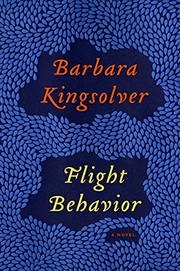
Flight Behavior
Dellarobia Turnbow is stuck in a Tennessee farm marriage until a valley full of monarch butterflies, and the scientist who comes to study them, force her to…
2,051-word summary · 9 min read

Days at the Morisaki Bookshop
Heartbroken Takako moves into her uncle's tiny secondhand bookshop in Jimbocho, and the shop and its regulars slowly give her back her life.
2,011-word summary · 9 min read

And Every Morning the Way Home Gets Longer and Longer
An elderly grandfather, his son, and his grandson share memories and fears as the old man's mind begins to fade, in a short novel about grief and love.
2,078-word summary · 9 min read
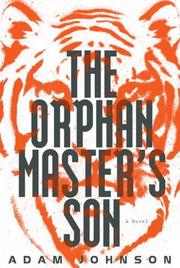
The Orphan Master's Son
Adam Johnson's Pulitzer-winning novel follows Pak Jun Do from a North Korean orphanage to a deadly identity swap, under a state whose loudspeakers never stop…
2,219-word summary · 10 min read