
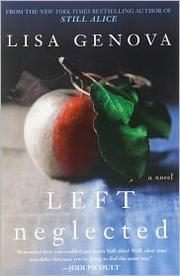
Left Neglected
2,201-word summary 10 min read 327 pages in the book
- First published
- 2011
- Publisher
- Gallery Books
- Pages
- 327
- ISBN
- 9781439164631
Reading options
What's inside (7 sections)
I read this after Still Alice and expected something similar: a sharp, clinical account of a mind coming apart, told from the inside. What I got instead was a book about a calendar. The first quarter of Left Neglected is spent watching Sarah Nickerson fill every hour of her life with work, children, errands, and plans, and the rest of the novel is about what happens to a person who cannot stop and who is then forced to. That structure is the point, and it took me a while to see it.
Lisa Genova holds a doctorate in neuroscience, and her second novel uses that background the way her first did. She writes about a specific neurological condition rather than a general idea of illness. Here the condition is left neglect, a failure to attend to the left side of space that comes from damage to the right hemisphere of the brain. The book is fiction, but the medical details are handled by someone who understands how the brain works and who knows how much of recovery is repetitive, unglamorous effort.
A life with no empty space
Sarah Nickerson is thirty seven and lives in Welmont, a fictional suburb of Boston. She has a job that demands constant travel and long hours, a husband named Bob who works at a startup, and three young children: Charlie, Lucy, and a baby named Linus. The opening chapters move through her day at a pace that feels deliberately exhausting. She is on the phone, in the car, at the office, at the school, and back again, with a mental list that never quite gets shorter.
Genova makes this routine feel like a character in its own right. Sarah measures a good day by how much she gets done, and the measures keep multiplying. There is always another purchase to arrange, another appointment to keep, another expectation to meet. The house, the clothes, the children's activities, and the next promotion all blur into one long task. I found the opening convincing because it is not played as a complaint. Sarah likes her life. She is good at it. The problem is that there is no room in it for anything that cannot be scheduled.
The book is also a critique of the suburban consumer life that surrounds her. The Nickersons need a certain income to sustain the way they live, which means Sarah has to keep working at a level that leaves little left for the people at home. Genova is not subtle about this, and some readers will find the criticism heavy handed. The point still lands, because the accumulation of small obligations is more tiring to read about than any single complaint would be. It feels like a life being slowly filled to the brim.
There is an early strand about Sarah's mother that seems minor at first. The two are estranged, and Sarah believes her mother failed her after the death of Sarah's brother, Nate. That history sits in the background of the busy early chapters, easy to skim past. It becomes much more important once Sarah needs care herself, and the shift gives the book its emotional weight.
The opening also manages something that is hard to pull off. It makes the crash feel inevitable without making it feel deserved. Sarah is not a careless person being punished for a single bad decision. She is a careful person operating under a constant low level of pressure, and the moment with the phone arrives in the middle of an ordinary, overfull day. I kept thinking about how little it takes to change a life when attention is already stretched thin. Genova never says this outright, which is why it works.
The accident and the diagnosis
The crash happens while Sarah is driving and looking through the contacts on her cell phone. It is an ordinary moment of divided attention with catastrophic results. She survives, but the damage is to the right side of her brain, and the consequence is left neglect. The first quarter of the book happens before this event. Almost everything after it is about learning to live with what the injury took.
Left neglect is not the same as blindness, and Genova is careful about the distinction. Sarah's eyes work. What fails is her attention. The left side of her world simply does not register, and because she does not register it, she does not know that she is missing anything. This is the most unsettling part of the condition as the book presents it. A person with a damaged right hemisphere can be convinced that nothing is wrong, even while bumping into furniture or leaving half of a meal untouched.
The medical scenes are clear without becoming lectures. Doctors explain the injury, therapists set tasks, and Sarah gradually understands that her brain can change with repeated practice. Genova returns often to the idea of neuroplasticity, the capacity of the brain to reorganize itself after damage. In less careful hands this could become a simplistic message about positive thinking. Here it is grounded in the slow work of rehabilitation, where progress comes in tiny increments and plateaus are common.
I appreciated that the book refuses to make the recovery clean. Sarah gets frustrated, she lies to herself about what she can do, and she has to be told the same things many times. The frustration is not presented as a character flaw. It is what a person does when her own sense of what is real can no longer be trusted.
Learning to notice what is missing
Much of the middle of the novel is a record of small acts of relearning. Sarah works with therapists who try to teach her to scan toward the left, to dress both sides of her body, to read a page from its beginning, and to move through a room without colliding with half of it. Each task sounds simple and turns out to be hard. Genova gives these scenes patience, and the repetition is part of the effect. You feel how tiring it is to rebuild a habit that most people never think about.
The book uses the phrase left neglected in two ways. The medical meaning is the one the doctors use. The other meaning is the one Sarah slowly arrives at herself. Long before the crash she had been neglecting parts of her own life, and not only in the sense of working too much. She had pushed away her mother, kept her brother's death at a distance, and treated the people closest to her as items on a list. The injury makes the metaphor literal, then asks whether the emotional neglect can be repaired in the same gradual way.
This double meaning is handled with more care than I expected. It would be easy to make Sarah's injury a neat punishment for a busy life, and the book flirts with that idea. What saves it is that the crash is an accident, not a moral event. Nobody in the novel suggests Sarah deserved to be hurt. What changes is that the accident gives her a reason, and eventually a need, to pay attention to the things she had been pushing aside.
Her mother moves in to help, and their hours together are among the best parts of the book. The old arguments do not disappear because of the injury. They become quieter and more painful, because both women are now forced to be in the same room without the buffer of Sarah's schedule. Genova writes these scenes with a restraint that the rest of the novel does not always manage, letting small gestures carry the history between them.
The people who stay
Bob's response to the accident is practical and, at first, awkward. He is busy with his own work and unsure how to talk to a wife who insists she is fine. Over time he changes his role in the family, and the book eventually has him give up his job so the household can rearrange itself around Sarah's needs. That choice is a large one, and the novel treats it as both an act of love and a source of new tension. A marriage that was built on two demanding careers has to find another shape.
The children are present but less developed. Charlie, Lucy, and Linus register their mother's absence and confusion in the way children do, through questions and through the ordinary demands that keep coming. I wanted more of them, especially Lucy, who is old enough to understand that something is wrong and young enough to be frightened by it. Genova keeps the focus on Sarah, which is the right decision for the structure, but it leaves the family as a set of reactions rather than full people.
The move to a weekend house in Vermont is where the book changes gear. The family leaves the suburb and its expectations behind, at least for a time, and tries a slower rhythm. Sarah's work life cannot continue in its old form, and Bob's departure from his job means the money has to come from somewhere else. These are real pressures, and the novel is honest that a simpler life is not automatically an easier one. It still requires decisions, and the decisions still have costs.
The ending is deliberately gentle. A reviewer at USA Today called it a happy ending, or at least a things-are-getting-better ending, which seems fair. Sarah does not recover in the sense of returning to the person she was. She learns to live with a condition that will not fully go away, and she builds a life in which the condition has less power. There is real warmth in that, and there is also a risk of feeling too tidy, as though the accident has delivered a lesson that everyone learns on schedule.
Where the book strains
The most common criticism of Left Neglected is that it is too neat, and I think that is right. The accident leads to a diagnosis, the diagnosis leads to rehabilitation, the rehabilitation leads to a family crisis, and the family crisis leads to a change of address and a calmer life. The sequence is satisfying, but real recovery rarely arranges itself so cleanly. The Boston Globe noted this quality when the book came out, and the same review still seems accurate. Parts of the plot are a bit too well behaved.
Some of the writing leans on cliches, particularly in the domestic scenes and in Sarah's interior moments of realization. A reviewer at the Globe and Mail found the story less vital and immediate than Still Alice, and I felt the difference too. Alice Howland's deterioration in the earlier book had a raw quality that is softened here. The medical material in Left Neglected is strong, but the emotional material is more familiar, and the book sometimes reaches for the standard phrase where a stranger one would have worked better.
The San Francisco Chronicle called the novel engaging and sympathetic if not particularly subtle, which is about right. Publishers Weekly judged it more accessible than Still Alice, and that is also true. If the earlier book felt like a case study with a heartbeat, this one reads more like a family drama with a neurological engine. Readers looking for another cool dissection of a failing brain may be surprised by how much space is given to marriage, parenting, and the politics of a household budget.
One more reservation is worth naming. The novel tells us repeatedly how much Sarah's life has changed, but it spends less time on the plain boredom of the new routine. Recovery involves a great deal of waiting, repeating, and sitting still, and the book compresses much of that into summary. That is a reasonable choice for a novel, yet it means the hardest part of the experience stays slightly out of reach. The chapters about therapy sessions are the closest it comes, and they are among the most convincing pages here.
Those complaints aside, I finished the book glad I had read it. Genova makes a condition that most people have never heard of feel immediate and specific. She also resists the temptation to make the injury a metaphor that swallows the whole story. Sarah remains a working mother with a bad habit of overcommitting, not a symbol of anything larger. The shift in her life is real, the work of recovery is dull and hard, and the people around her are changed by it in ways the book is willing to leave partially unresolved.
Left Neglected was published in 2011 by Gallery Books, a Simon & Schuster imprint, and the first edition runs 327 pages. The ISBN cited here is 9781439164631, the original Gallery Books hardcover. Like Still Alice, it is fiction by a writer who knows the science from the inside, and it works best when it stays close to the daily business of living with an injury rather than reaching for a larger lesson. Read it for the detail of the condition and for the quiet tension between Sarah and her mother. Those are the parts that last.
FAQ
Is Left Neglected based on a true story?
No. It is a 2011 novel by Lisa Genova, who holds a doctorate in neuroscience. Sarah Nickerson and her family are fictional characters created to show the condition from the inside.
What is left neglect?
It is a condition after right hemisphere brain damage in which a person fails to attend to the left side of space. Genova shows Sarah missing half of what is in front of her without realizing it.
Is this a sequel to Still Alice?
No. It is Genova's second novel, published in 2011 by Gallery Books, and it shares no characters with Still Alice. Both draw on her neuroscience background.
Similar books
Women
Charles Bukowski's semi-autobiographical novel of Henry Chinaski at fifty, drinking heavily and sleeping his way through Los Angeles while fame arrives late.
2,124-word summary · 9 min read
Theft
Gurnah traces three linked lives in Tanzania, where a servant's accusation of theft opens a family history of love, duty and quiet betrayal.
2,454-word summary · 11 min read
King of Ashes
A Virginia crematorium, a debt owed to the Black Baron Boys and a family secret pull Roman Carruthers back into a war where everything burns.
2,229-word summary · 10 min read
Olive, Again
Elizabeth Strout returns to Crosby, Maine, as Olive Kitteridge marries Jack Kennison, confronts her son, and faces old age, grief, and small-town judgment.
2,333-word summary · 10 min read
The Most Fun We Ever Had
Four Sorenson sisters orbit perfect parents hiding old cracks.
2,590-word summary · 12 min read
The Accidental Tourist
Grieving Macon writes travel guides for haters of travel, then Muriel intrudes.
2,252-word summary · 10 min read

Kitchen
Orphan Mikage finds home in a kitchen with Yuichi and Eriko after loss.
2,597-word summary · 12 min read
Freedom
A St. Paul couple and their grown children strain marriage, loyalty, and ideals in 2000s America.
2,678-word summary · 12 min read
The Corrections
An aging Midwestern couple tries to gather three troubled adult children for one last Christmas at home.
2,094-word summary · 9 min read
Still Alice
Harvard professor Alice Howland faces early onset Alzheimer's and her family must adapt as memory fades.
2,477-word summary · 11 min read

The Wilderness
Four Black women move through twenty years of friendship in Angela Flournoy's discontinuous, widely praised second novel.
2,141-word summary · 10 min read
The True True Story of Raja the Gullible (and His Mother)
A gay philosophy teacher in Beirut revisits six decades of Lebanese history, family trauma, and his thorny bond with his mother.
2,274-word summary · 10 min read

The South
A seventeen-year-old moves to his family's failing fruit orchard in 1990s Malaysia, where a summer love affair unfolds as the household and the land around him…
2,903-word summary · 13 min read
The Sisters
Three sisters watch one another take the lives they imagined, across thirty years in Stockholm and Tunisia, in a novel that bends time like an accordion.
2,199-word summary · 10 min read
The Rest of Our Lives
A law professor drives his daughter to college, then heads west instead of home, testing a private promise he made twelve years ago.
2,238-word summary · 10 min read
The Nix
A stalled novelist and community college professor goes looking for the mother who left him and finds a radical activist whose rock thrown at a governor made…
2,214-word summary · 10 min read
The Loneliness of Sonia and Sunny
Two Indian families, a failed arranged match, and years between Allahabad and New York shape a slow, sprawling romance.
2,092-word summary · 9 min read

Perfect Match
A Maine prosecutor shoots the priest she believes abused her son, then faces a trial that questions what justice can mean.
2,241-word summary · 10 min read
Palaver
A mother shows up uninvited at her estranged son's Tokyo apartment, and the two spend the weeks before Christmas talking their way toward something like…
2,465-word summary · 11 min read
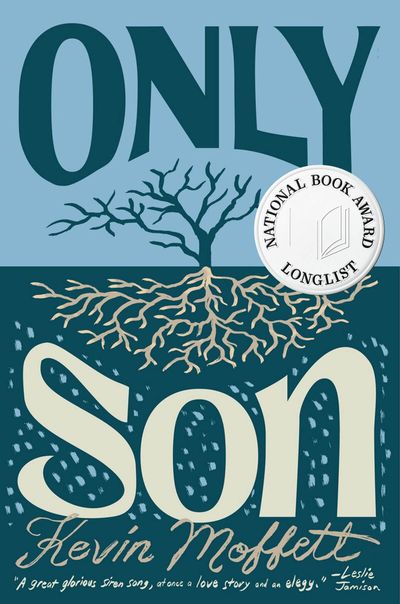
Only Son
A brief, funny, melancholy debut about a boy whose father dies in 1982 Florida, and the man he becomes, still trying to read the mystery of that loss.
2,170-word summary · 10 min read
Misinterpretation
An unnamed Albanian interpreter in New York is drawn into the trauma of a Kosovo war victim, and the empathy she brings home begins to undo her marriage.
2,546-word summary · 11 min read

Love Forms
A Trinidadian mother sent away at sixteen returns to the loss of her daughter forty years later, in Claire Adam's quiet, longlisted novel.
2,153-word summary · 10 min read

Yellow Crocus
In 1837 Virginia, an enslaved wet nurse is separated from her own son to raise a planter's daughter, and the two women build a love the law says cannot exist.
2,094-word summary · 9 min read

Whistler
Ann Patchett's eleventh novel follows a New York teacher who reconnects with a former stepfather at the Met and hears the strange story of a chestnut mare.
2,697-word summary · 12 min read
Three Days in June
A Baltimore mother loses her job, and her ex-husband turns up with a rescue cat, in Anne Tyler's short, funny novel about the three days around her daughter's…
2,867-word summary · 13 min read
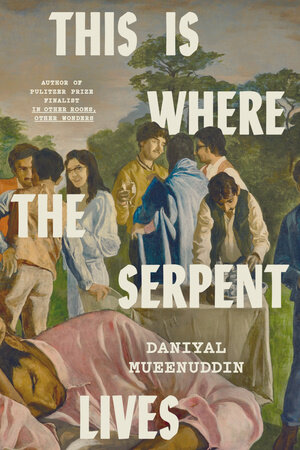
This Is Where the Serpent Lives
Daniyal Mueenuddin's second novel follows an orphan who rises through Lahore and a gardener's son who becomes an outlaw, across a Pakistan of caste and capital.
2,257-word summary · 10 min read

The Zahir
A bestselling novelist's wife vanishes from their Paris home, sending him on a search that becomes a reckoning with his own marriage and attention.
2,433-word summary · 11 min read
The Vacationers
A New York family's two-week stay in Mallorca turns into a comedy of exposed secrets when a magazine editor's affair and a son's debts come to light.
2,324-word summary · 10 min read
The Reluctant Fundamentalist
In a Lahore cafe, Changez tells a nervous American how Princeton and a New York career gave way to anger after September 11.
2,340-word summary · 10 min read