
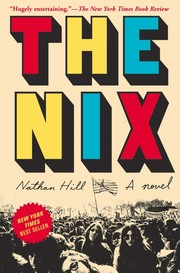
The Nix
2,214-word summary 10 min read 625 pages in the book
- First published
- 2016
- Publisher
- Knopf
- Pages
- 625
- ISBN
- 9781101946619
Reading options
What's inside (7 sections)
I started this book because a friend kept describing it as the rare debut that manages to be funny about serious things. That turned out to be accurate, though funny is doing a lot of work in that sentence. Nathan Hill published The Nix with Knopf in 2016, and it is a long, sprawling novel that contains a failed writer, an absent mother, a media circus, the Vietnam War, the Iraq War, and a great deal about the way the internet rearranges a person's attention. It is also a book with a sense of humor about its own ambitions, which is why I stuck with it through the parts that wander.
The story is set mostly in 2011 and follows Samuel Andresen-Anderson, a community college English professor who has been paid an advance for a book he has not written. That is the wound at the center of the novel. His publisher is losing patience, tells him in effect that he is no longer famous, and starts talking about getting the advance back. Samuel's response is to avoid the problem as thoroughly as possible. He teaches his classes, eats too much junk food, runs a sharp and often cruel commentary in his own head, and spends his evenings inside an online role playing game full of elves and orcs called Elfscape. If you have ever opened a game to avoid something you ought to be doing, you will recognize the rhythm immediately.
Hill does not treat that avoidance as a cute quirk. He treats it as the shape of Samuel's whole life. The doubled last name is a joke the book acknowledges, and it points to a larger question about identity that keeps resurfacing. Samuel is a man who has inherited a name, a job, and a disappointingly ordinary existence, and he is not at ease with any of it. The novel opens with him at a low point and then keeps finding ways to make his life more complicated.
The mother who came back on the front page
The engine of the plot is a piece of news. Samuel's mother left when he was small, during the loose, idealistic years that the book looks back on with both affection and suspicion. For decades she was gone, a family story with the edges worn smooth. Then she reappears in the headlines because she threw a rock at a rising right wing politician named Sheldon Packer, the governor the press keeps describing as a demagogue. Hill has fun with the way that story gets packaged. He walks the reader through the permutations of coverage as the woman moves from the back pages to the front, with headlines growing more breathless, until a clever copywriter gives her the name Packer Attacker and the networks adopt it for their logos.
That sequence is one of the best things in the book. It is a small, exact demonstration of how a person gets turned into a story, and how the story then replaces the person. Samuel watches his mother become a public figure in a matter of days, and the only version of her he can find is the one on television. His editor, who still wants the book that was paid for, suggests that he go find the real woman and write about her instead. So the reason Samuel starts digging into his mother's past is partly professional and partly personal, and the book is honest about how tangled those motives are.
What he finds is a life that does not fit the headline. His mother's story runs through the sixties and beyond, through idealism and its wreckage, through relationships and mistakes and political commitments that the news coverage flattens into a single act of throwing a rock. Hill gives her a history full of contradiction, and the non linear structure means the reader has to assemble it alongside Samuel. One chapter will be a contemporary scene of Samuel interviewing someone or following a lead, and the next will be a decade or more earlier, told from a different point of view. The mother's past and the son's present keep commenting on each other.
Following a life sideways through time
The book is built in ten parts and moves freely across decades. One strand goes back to the fjords of Norway, where part of the family story begins. Another lands in Chicago in the summer of 1968, a period the novel renders with a mockery that has teeth. Hill calls the city Czechago in places, and the sections have the feel of a historical account written by someone who has read a great many historical accounts and distrusts all of them. The Vietnam War hangs over these chapters, and so does the later war in Iraq, which the novel folds into its argument about what America tells itself when it sends young people overseas.
Samuel's search takes him through the people who knew his mother, and these encounters are where the book's comedy and its sadness sit close together. Some of the people he meets remember her differently, and none of them can hand him a clean answer. That is the point. A life assembled from other people's memories is a messy, partial thing, and Samuel's frustration with that mess is part of his character. He wants a version of his mother he can either forgive or condemn, and the evidence keeps refusing to cooperate.
Running alongside all of this is Samuel's own present, which includes his teaching, his game playing, and his stalled attempt to write anything at all. There is a strand involving a student and a strange, fable like episode with a tree that pushes the book toward the fantastic. Hill handles it lightly, never quite insisting you take it literally, and that refusal to explain is one of the reasons some readers found the novel puzzling. I read it as another way of asking how a person makes a story out of what happened to them, which is the question Samuel keeps failing to answer.
A book that satirizes nearly everything
Hill's targets are broad. Advertising culture gets a workout, publishing gets one, academia gets one, and American politics gets the longest treatment. The scene in which the media renames Samuel's mother is funny because it is recognizable. The publisher's treatment of Samuel is funny for the same reason, because the language of contracts and advances is so clearly a way of avoiding saying something human. Even the college where Samuel teaches is drawn with a dry eye for the way institutions talk about themselves.
For me the satire worked best when it stayed close to a particular scene. The headline sequence is sharp. The account of the political machine around Packer is sharp. When the book pulls back to make a general point about media or war or the digital age, it gets looser and more lecture like. Hill is clearly a writer with a great deal he wants to say, and the novel sometimes stops to say all of it at once. Those passages are the main reason the book runs as long as it does.
The tone is also a balancing act. This is a novel about abandonment, political violence, and two wars, yet it keeps aiming for laughs. When it works, the humor is a way of getting at pain without staring at it directly. When it does not, a serious subject gets snapped into a joke too quickly. I noticed this most in sections that deal with Samuel's childhood, where the comedy sometimes undercuts a feeling the book has just asked me to take seriously.
The title is worth a moment too. In folklore a nix is a shape shifting water spirit, a creature that does not keep one form for long, and Hill keeps that idea close to his own method. The book keeps changing what kind of story it appears to be. A chapter that reads like a news account turns into a family history, a family history turns into a political argument, and a political argument turns into something closer to a fable. That restlessness is the source of both the book's energy and its occasional confusion. I never quite knew what I was reading from one section to the next, which I mostly enjoyed, though I can see why some readers would find it exhausting.
What helped me was paying attention to the smaller recurring details rather than trying to hold the whole design in my head. The doubled last name keeps coming back. So does the question of what a person owes to a parent who left, and what they owe to a child they abandoned. The book returns to these not as themes to be stated but as problems its characters keep bumping into. Hill is better at the bumping than at the stating, and the passages where he simply lets two people talk past each other are stronger than the ones where he tells you what the talk means.
What holds the sprawl together
The thing that kept me reading was not the plot, which is really an excuse to go looking, but the quality of the prose. Hill writes sentences that are worth pausing over, and he is especially good on the small humiliations of a life gone slightly off track. Samuel's inner voice is acidic and frequently unfair, and the book lets him be both intelligent and unlikable without asking the reader to choose. That is a harder trick than it sounds. A lot of first novels make their characters lovable in order to excuse them. This one lets a man be annoying and still interesting.
The mother's sections are stronger than Samuel's in my view. They have a clarity of purpose that his wandering searches lack, perhaps because Hill is writing about a period with more obvious texture. The 1968 material in particular has a vividness that the 2011 material rarely matches. That imbalance is worth noting, because the book's structure keeps returning to the present, and the present is the thinner half. Elfscape is a clever idea, but the game chapters never become much more than a symbol for avoidance.
There is a related problem with the book's pacing. Because Hill keeps cutting between timelines, a stretch that is going well will break off just as it gathers force, and the reader has to find their footing in another decade before the earlier thread resumes. Sometimes that interruption is the point, since the whole novel argues that the past does not stay put. Other times it feels like an author protecting himself from having to write a scene all the way through. I found myself flipping back to remind myself who was talking and when, which is not a complaint a book like this can entirely avoid.
Still, the ambition is real. It is not common for a debut to take on this much material and keep its sense of humor intact. Hill has an ear for the way institutions speak, and he can turn a press cycle into comedy without pretending the underlying violence is funny. That combination is the reason the novel drew so much attention, and it is the reason I kept going when the structure tested me.
The ending tries to pull the strands into a resolution, and it is more emotional than the rest of the book. That shift surprised me. After hundreds of pages of irony, Hill asks the reader to take a reconciliation seriously, and the novel mostly earns it by making the reader sit through all the reasons it should not be easy. I closed the book feeling that the length had been worth it, though I would have been happy with a tighter version.
Who this book is for
This is a literary novel that asks for patience. It runs past six hundred pages in the first Knopf edition, it moves in ten parts, and it refuses to hand over its secrets on a schedule. Readers who like a plot that announces its destination early will probably find the early chapters slow. Readers who enjoy a writer playing with form and bypassing their expectations will find a great deal to admire. Hill is at his best when he is writing about how a story gets made out of a life, and at his weakest when he stops dramatizing that problem and starts explaining it.
I would recommend it to someone who likes a novel with a lot in it and does not mind the mess that comes with that ambition. The book won the Los Angeles Times Book Prize for first fiction and was named a best book of the year by a long list of publications, which tells you something about how much it impressed readers when it appeared. It also carried the particular weight of a debut, with all the reach and occasional overreach that implies. What I remember now is not the argument about politics but the picture of a man avoiding his own life through a game, and the slow, awkward discovery that the mother he had turned into a headline was a person after all. That is a generous thing for a first novel to leave behind.
FAQ
What is The Nix about?
It follows Samuel Andresen-Anderson, a community college teacher who goes looking for the mother who abandoned him after she becomes famous for attacking a politician.
Is The Nix Nathan Hill's first novel?
Yes. Published by Knopf in 2016, it was his debut and won the Los Angeles Times Book Prize for first fiction.
Is The Nix hard to follow?
It jumps between 2011 and several earlier decades, and the chapters do not follow a straight line. Keeping track of the mother's past alongside Samuel's search makes it easier.
Similar books
The Rest of Our Lives
A law professor drives his daughter to college, then heads west instead of home, testing a private promise he made twelve years ago.
2,238-word summary · 10 min read
Only Son
A brief, funny, melancholy debut about a boy whose father dies in 1982 Florida, and the man he becomes, still trying to read the mystery of that loss.
2,170-word summary · 10 min read

Love Forms
A Trinidadian mother sent away at sixteen returns to the loss of her daughter forty years later, in Claire Adam's quiet, longlisted novel.
2,153-word summary · 10 min read
Three Days in June
A Baltimore mother loses her job, and her ex-husband turns up with a rescue cat, in Anne Tyler's short, funny novel about the three days around her daughter's…
2,867-word summary · 13 min read
The Vacationers
A New York family's two-week stay in Mallorca turns into a comedy of exposed secrets when a magazine editor's affair and a son's debts come to light.
2,324-word summary · 10 min read
Red at the Bone
A girl's coming-of-age ceremony in a Brooklyn brownstone opens a family story shaped by Tulsa, teenage pregnancy, class and a second tragedy on September 11.
2,108-word summary · 9 min read

Detransition, Baby
Torrey Peters's debut follows three Brooklyn adults as an unexpected pregnancy pushes them to imagine an unconventional family. Funny, sharp, and unwilling to…
2,925-word summary · 13 min read
Watermelon
A woman left by her husband on the day their daughter is born retreats to her chaotic Dublin family, then slowly learns to stop believing his version of the…
2,295-word summary · 10 min read
Flight Behavior
Dellarobia Turnbow is stuck in a Tennessee farm marriage until a valley full of monarch butterflies, and the scientist who comes to study them, force her to…
2,051-word summary · 9 min read

The Tiger's Wife
A young doctor in a war-scarred Balkan country chases the stories her grandfather left behind, including a deathless man and a deaf girl who loved an escaped…
2,232-word summary · 10 min read
The School for Good Mothers
A mother sent to a reform school fights to keep her daughter under cold surveillance and strict rules.
2,114-word summary · 9 min read
The Island of Missing Trees
A talking fig links 1970s Cyprus lovers Kostas and Defne with their grieving London daughter Ada years later.
3,172-word summary · 14 min read
This Is Not About Us
Sisters Sylvia and Helen Rubinstein feud over apple cake in linked stories spanning divorces, bat mitzvahs and three generations of family life.
2,064-word summary · 9 min read
The Humans
An alien borrows Andrew Martin's life to erase a proof, then a dog, peanut butter, and a tired family win him over.
2,959-word summary · 13 min read

The Bean Trees
Taylor Greer flees Kentucky, inherits Cherokee toddler Turtle, and roots with Tucson strays.
2,082-word summary · 9 min read
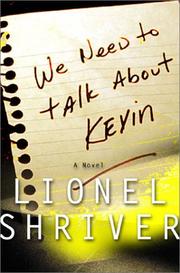
We Need to Talk About Kevin
In letters to her dead husband, Eva reconstructs how her son Kevin grew from a cold child into a school killer.
2,041-word summary · 9 min read
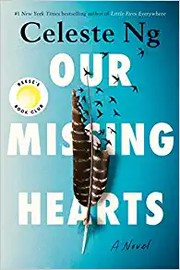
Our Missing Hearts
In a fearful future America, twelve-year-old Bird crosses the country to find the poet mother who left him.
2,434-word summary · 11 min read
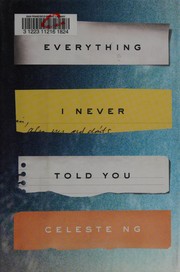
Everything I Never Told You
In 1977 Ohio, sixteen-year-old Lydia Lee is found dead in a lake, forcing her interracial family to face the secret pressures around race, school and duty that…
2,711-word summary · 12 min read
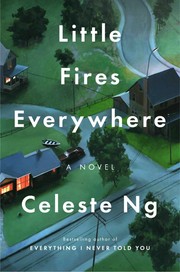
Little Fires Everywhere
In planned Shaker Heights, Elena Richardson rents to drifting artist Mia Warren, and a custody fight over baby May Ling splits friends and teens.
1,911-word summary · 8 min read

The Wilderness
Four Black women move through twenty years of friendship in Angela Flournoy's discontinuous, widely praised second novel.
2,141-word summary · 10 min read
The True True Story of Raja the Gullible (and His Mother)
A gay philosophy teacher in Beirut revisits six decades of Lebanese history, family trauma, and his thorny bond with his mother.
2,274-word summary · 10 min read
The South
A seventeen-year-old moves to his family's failing fruit orchard in 1990s Malaysia, where a summer love affair unfolds as the household and the land around him…
2,903-word summary · 13 min read
The Sisters
Three sisters watch one another take the lives they imagined, across thirty years in Stockholm and Tunisia, in a novel that bends time like an accordion.
2,199-word summary · 10 min read

The Pelican Child
Twelve short stories by Joy Williams, where talking dogs, bleak comedy, and the nearness of death mark a late-career stylist at work.
2,415-word summary · 11 min read
The Long Haul
Greg Heffley's summer road trip goes sideways with a towed boat, a live pig, and a family in a purple van.
2,311-word summary · 10 min read
The Loneliness of Sonia and Sunny
Two Indian families, a failed arranged match, and years between Allahabad and New York shape a slow, sprawling romance.
2,092-word summary · 9 min read
Palaver
A mother shows up uninvited at her estranged son's Tokyo apartment, and the two spend the weeks before Christmas talking their way toward something like…
2,465-word summary · 11 min read

Of Love and Other Demons
In colonial Cartagena, a twelve-year-old girl bitten by a rabid dog is locked in a convent, where the priest sent to exorcise her falls in love.
2,258-word summary · 10 min read
Left Neglected
A busy mother suffers left neglect after a car crash, forcing her family and her own attention to rebuild a slower life.
2,201-word summary · 10 min read
Dad Is Fat
A comic essay collection about raising five kids in a two-bedroom New York apartment, delivered in Gaffigan's dry, deadpan voice.
2,196-word summary · 10 min read