
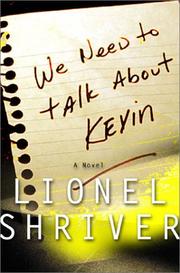
We Need to Talk About Kevin
2,041-word summary 9 min read 416 pages in the book
- First published
- 2003
- Publisher
- Counterpoint
- Pages
- 416
- ISBN
- 9781582432670
Reading options
What's inside (7 sections)
I put off reading We Need to Talk About Kevin for years because I knew, in outline, what it was: a novel about a mother whose son commits a school massacre. It sounded like 416 pages of punishment. What I found instead was stranger and harder to shake. Published in 2003 by Counterpoint, written entirely as letters from a mother to her husband, it won the Orange Prize and became one of those books people argue about at dinner parties. Not because it is unclear. Because it refuses to let anyone off the hook, including the reader.
A note on what this book is and is not. It is a work of fiction, an epistolary novel, narrated by Eva Khatchadourian in letters addressed to Franklin, the husband she is separated from. Everything we learn comes through Eva. Keep that in mind. It matters more here than in almost any novel I can name.
The woman before the boy
Eva starts her letters not with Kevin but with herself, and that choice is the whole book in miniature. Before motherhood she was someone: a writer of guides for shoestring travelers, a woman who built a small company out of her own restlessness, an Armenian American who married a cheerful, all American man named Franklin and traveled the world with him. She liked her life. She liked being competent and free.
Then Franklin wanted a child, and Eva, ambivalent to the bone, agreed. Her account of the decision is one of the most uncomfortable passages in modern fiction, not because anything dramatic happens but because she says out loud what many parents have felt and almost none admit. She did not want to be a mother. She went along. She carried the pregnancy in a state of low grade resentment, and she wonders, across hundreds of pages, whether Kevin felt that resentment in the womb and answered it.
Shriver is doing something brave and ugly here. Eva is not a monster. She is intelligent, funny in a dry way, and honest to the point of self destruction. But she hands you the weapon to use against her in the first fifty pages. If you believe a mother's coldness can deform a child, Eva has convicted herself before Kevin is even born. The question the rest of the book asks is whether that conviction is true or whether Eva, like the rest of us, is just telling the story backward from the ending, fitting causes to an effect that had no cause.
Franklin, as Eva paints him, is the opposite pole. He is warm, optimistic, endlessly reasonable, a man who believes every problem has a solution and every child is good underneath. Eva adored him and despaired of him in equal measure. As the marriage frays, you start to notice something. Franklin is not just kind. He is willfully blind. And Eva is not just honest. She is relentless. The letters are addressed to him, but he never answers, and after a while you understand that his silence is part of the story.
The letters themselves have a rhythm worth noticing. Eva writes from a cramped present, between visits to the detention center, and the past keeps ambushing her mid sentence. A description of a failed fund raiser at Kevin's school will collapse without warning into a memory of his infancy. Shriver handles these seams beautifully. The effect is of a mind that cannot keep its story in order because the ending has burned through every page around it.
A difficult child
Kevin arrives, and from Eva's telling he is wrong from the start. He screams without pause as an infant. He rejects the breast. He stares at her with what she experiences as hostility. Now, any honest parent or pediatrician will tell you that difficult babies exist and that exhausted mothers sometimes read malice into colic. Shriver knows this. She lets you hold both readings at once. Either Kevin was born strange, or Eva's dread of motherhood curdled into a story about her son that she then lived inside for fifteen years.
What makes the childhood chapters so unnerving is the pattern Eva describes. Around her, Kevin is sullen, unresponsive, and cruel in small precise ways. Around Franklin, he is a normal boy, even charming. Eva collects instances the way a prosecutor collects exhibits. Kevin resists toilet training until the day it suits him. He destroys things Eva loves. He speaks late, then speaks fluently when it serves him, suggesting the delays were choices. Each anecdote has an innocent explanation and a guilty one, and Eva always chooses guilty, and the terrible thing is that you often agree with her. The episodes accumulate through the childhood years: the performances of helplessness dropped the instant they stop working, the way Kevin seems to study his mother's breaking points the way another child might study spelling words. Franklin explains each one away. Boys will be boys. You are too hard on him. You imagine things. And because Franklin is so clearly, lovingly wrong about so much, Eva's version gains weight. Somebody in this house is misreading the child. The book never lets you settle comfortably on who.
Celia and the bow
Years pass, and the family changes shape. A second child arrives: Celia, sweet natured and open where Kevin is closed, a little girl who seems designed to prove that Eva is capable of tenderness after all. Eva adores her without complication, and Franklin dotes on both children, and for a while the household holds.
Then Celia is blinded in one eye by drain cleaner in an incident Kevin may have caused and certainly will not explain. This is the book's hinge for many readers. Up to now everything has been atmosphere and suspicion. Now there is a maimed child and a brother whose account of events does not hold together. Eva believes Kevin did it deliberately. Franklin accepts the accident story. The marriage, already cracked, splits along this fault line, and it never closes.
Around the same time Kevin finds his instrument. He takes up archery, and he is good at it, obsessively, unnaturally good. The choice of weapon hangs over the rest of the novel. In a country where a boy planning murder would reach for a gun, Kevin chooses the bow, the harder weapon, the one that requires strength and practice and patience. Eva reads this as vanity, a showman's choice. I read it as the book's coldest joke about American violence. Even the instrument of slaughter has to be special. Even mass murder has to be artisanal.
Adolescence makes Kevin worse in the specific way adolescence makes everything worse. He is bright and idle, contemptuous of school, cruel to his sister in ways that stop just short of proof. He collects grievances against a comfortable suburban life. He performs apathy the way other teenagers perform rebellion. Eva watches all of it with the terrible alertness of someone who has been watching for fifteen years and can no longer tell vigilance from obsession.
Thursday
The chapters approaching the massacre are almost unbearable, not because Shriver is graphic but because the shape of the day is so ordinary. Kevin, fifteen years old, goes to school on a Thursday. He has planned everything. He chains the gymnasium doors shut with bicycle locks so no one can get out. He carries in his bow. And he murders his classmates and teachers, methodically, at close range, in a room with no exits.
Shriver does not stage this as action. She stages it as Eva reconstructs it, secondhand, from news reports and trial testimony and the scenes she cannot stop imagining. The effect is worse than spectacle. A school gym full of trapped children, an archer taking his time: the plain sentences do the work, and your imagination, conscripted against your will, does the rest.
But the school is only half of Thursday, and the other half is the twist that readers still talk about. Kevin did not start at the school. He started at home. That morning, before the gym doors closed, Kevin murdered Franklin and little Celia with the same bow, in their own house, and then went off to school as if the day were otherwise normal. Eva comes home to find her husband and daughter dead. I knew this reveal was coming, it is the book's most famous turn, and it still landed like a door slamming. Everything Eva has been writing toward, every letter to the dead man she addresses as if he might answer, rearranges itself in a single paragraph.
Why did he do it? The book offers theories the way a crime scene offers fingerprints. Revenge against Eva. Contempt for Franklin's optimism. Boredom. A desire for fame, though Kevin seems to despise fame. Shriver lets each theory rise and then quietly drowns it. Kevin himself, when asked, offers nothing that holds still. That refusal is the point, and it infuriates some readers, which is also the point.
What is left
The final movement of the novel is quiet and nearly plotless. Kevin sits in a juvenile facility. Eva, stripped of her old life, her company, her house, her standing, lives alone in a small apartment in a town that hates her, and she visits him. She keeps writing the letters. The trial is over. The cameras have moved on. What remains is a mother and a son in a visiting room, performing a relationship neither of them understands.
These scenes are the best written in the book. Kevin without an audience is smaller and stranger than Kevin the schoolyard monster. He needles Eva, he postures, he retreats. And once or twice, for seconds at a time, something else surfaces, something that might be need or might be one more performance. Eva, who has spent fifteen years and four hundred pages building the case that her son is evil, finds herself unable to close the file. Love, it turns out, does not obey evidence.
Outside the visiting room, Eva's life is a study in consequences. Neighbors who once borrowed sugar now cross the street to avoid her. She takes work she would once have scorned and lives in rooms far smaller than the suburban house Franklin chose with such pride. Shriver does not milk any of this for pity. Eva records her reduced life the way she records everything else, with a dry unsparing clarity that makes you want to argue with her and put a hand on her shoulder at the same time.
The book ends without an answer and that is its answer. Eva never learns whether Kevin was born or made, whether she caused him or merely failed to save him, whether Franklin's blindness or her own vigilance did more damage. She keeps visiting. She keeps loving a child the world has decided is unlovable. Whether that is redemption or delusion, Shriver leaves for you to decide, and you will decide based on who you are, which is the most unsettling trick in the whole novel.
So my fair criticism, because this book earns serious objections. First, the deck is stacked. Franklin is written so relentlessly naive that Eva wins every argument by default, and a smarter counterweight might have made the nature versus nurture question genuinely open instead of leaning, always, toward Eva. Second, Kevin sometimes feels less like a person than a thesis in a black jacket. Real disturbed children are chaotic and contradictory. Kevin is too composed, too quotable, too perfectly designed to illustrate his mother's fears. Third, the letters format means every dramatic scene arrives secondhand, and some readers will feel the whole novel at one remove, told rather than shown.
And yet. The prose is sharp enough to cut, Eva's voice never wavers across hundreds of pages, and the central wound, a mother wondering if she made her child a killer, is explored with more honesty than almost anything else in contemporary fiction. I finished it angry at everyone in it and moved by it in ways I resented. That is a rare thing. This is not a book to enjoy. It is a book to survive, and then to argue with for years.
FAQ
When was We Need to Talk About Kevin published?
Counterpoint published it in the US in 2003, in a 416-page first edition with ISBN 9781582432670. It won the Orange Prize in 2005.
Is the book told in letters?
Yes, the whole novel is letters from Eva Khatchadourian to her husband Franklin, reconstructing Kevin's childhood and the massacre. Everything comes through her, so she may mislead.
Was there a film version?
Yes, Lynne Ramsay directed a 2011 film starring Tilda Swinton as Eva. It keeps the novel's core events including the Thursday massacre.
Similar books

Flight Behavior
Dellarobia Turnbow is stuck in a Tennessee farm marriage until a valley full of monarch butterflies, and the scientist who comes to study them, force her to…
2,051-word summary · 9 min read

The Story of Edgar Sawtelle
A mute boy on a Wisconsin dog-breeding farm relives Hamlet as his uncle returns, his father dies in the barn, and the dogs inherit what is left.
2,392-word summary · 11 min read
We Were the Mulvaneys
After a rape following a school dance, the Mulvaneys, a family that believed it was blessed, comes apart over fifteen years. Narrated by the youngest son.
2,094-word summary · 9 min read
The School for Good Mothers
A mother sent to a reform school fights to keep her daughter under cold surveillance and strict rules.
2,114-word summary · 9 min read

The Tenth Circle
After Trixie accuses Jason of rape and he dies off a bridge, parents Daniel and Laura hide guilt and grace in Alaska flight.
2,164-word summary · 10 min read
Handle with Care
Parents of brittle bone daughter Willow sue best friend OB for wrongful birth, splitting marriage and friendships.
2,231-word summary · 10 min read

The Bean Trees
Taylor Greer flees Kentucky, inherits Cherokee toddler Turtle, and roots with Tucson strays.
2,082-word summary · 9 min read
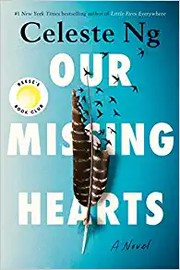
Our Missing Hearts
In a fearful future America, twelve-year-old Bird crosses the country to find the poet mother who left him.
2,434-word summary · 11 min read
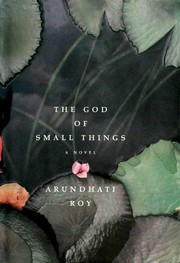
The God of Small Things
Twins Rahel and Estha grow up in Kerala in 1969, where family rules and caste lines shape a loss that follows them into adulthood.
2,646-word summary · 12 min read
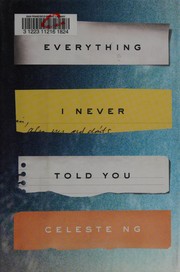
Everything I Never Told You
In 1977 Ohio, sixteen-year-old Lydia Lee is found dead in a lake, forcing her interracial family to face the secret pressures around race, school and duty that…
2,711-word summary · 12 min read
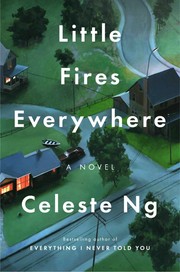
Little Fires Everywhere
In planned Shaker Heights, Elena Richardson rents to drifting artist Mia Warren, and a custody fight over baby May Ling splits friends and teens.
1,911-word summary · 8 min read

Revolutionary Road
A Connecticut couple who believe they are too good for the suburbs plan to move to Paris, and the plan slowly exposes everything they cannot say to each other.
2,085-word summary · 9 min read

Little Earthquakes
Four Philadelphia women meet during pregnancy and discover that new motherhood is nothing like the plan, while friendship becomes the thing that holds them…
1,997-word summary · 9 min read

Mrs. Everything
Two Jewish sisters in Detroit grow up, apart and together, across seven decades of American life, from the 1950s to the 2016 election.
2,362-word summary · 10 min read

Howards End
Forster's 1910 novel follows two families, a house in Hertfordshire, and a burned note, asking whether money and feeling can ever be connected.
2,187-word summary · 10 min read

Sophie's Choice
A young Southern writer in 1947 Brooklyn befriends a brilliant, unstable couple and slowly learns the story of the Polish Catholic woman at the center of their…
2,798-word summary · 12 min read

Fathers and Sons
Arkady brings the nihilist Bazarov home to his father's estate, and a generational argument turns into love, a duel, and an early death.
2,192-word summary · 10 min read

Unaccustomed Earth
Lahiri’s second story collection follows Bengali families in America and abroad, tracing the quiet distances between parents and children, spouses, and the…
2,333-word summary · 10 min read

The Age of Miracles
A California girl grows up while the Earth's rotation slows, and ordinary adolescence continues alongside slow catastrophe.
2,417-word summary · 11 min read
Peace Like a River
An asthmatic boy in the early 1960s narrates his family's search for his older brother, who is accused of two killings and has escaped custody.
1,969-word summary · 9 min read

We Are Okay
Marin fled San Francisco after her grandfather vanished and stopped answering anyone. When Mabel visits her college dorm, she has to say what happened.
2,253-word summary · 10 min read

The Chosen
A shattered pair of glasses in a 1944 Brooklyn softball game starts a friendship between a Hasidic boy and his Orthodox neighbor, and their fathers pull them…
2,443-word summary · 11 min read

Sing You Home
A music therapist, her new wife and an evangelical ex-husband end up in court over three frozen IVF embryos.
2,952-word summary · 13 min read

A Spool of Blue Thread
Four generations of the Whitshank family in Baltimore, and the silences, resentments and quiet love they hand down without ever saying so.
2,408-word summary · 11 min read
This Is How You Lose Her
Yunior cycles through love affairs and betrayals in nine linked stories, tracing the damage he does and the family history behind it.
2,195-word summary · 10 min read
The Overdue Life of Amy Byler
A burned-out school librarian gets a summer to herself when her estranged husband returns, and discovers that being a mother does not have to mean losing…
2,055-word summary · 9 min read
And Every Morning the Way Home Gets Longer and Longer
An elderly grandfather, his son, and his grandson share memories and fears as the old man's mind begins to fade, in a short novel about grief and love.
2,078-word summary · 9 min read
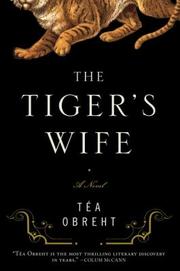
The Tiger's Wife
A young doctor in a war-scarred Balkan country chases the stories her grandfather left behind, including a deathless man and a deaf girl who loved an escaped…
2,232-word summary · 10 min read
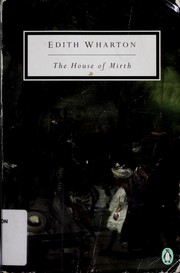
The House of Mirth
Lily Bart, beautiful and penniless at twenty-nine, navigates New York's marriage market until a Dorset yacht scandal strips her of the only currency she has.
2,468-word summary · 11 min read
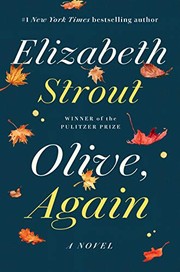
Olive, Again
Elizabeth Strout returns to Crosby, Maine, as Olive Kitteridge marries Jack Kennison, confronts her son, and faces old age, grief, and small-town judgment.
2,333-word summary · 10 min read