
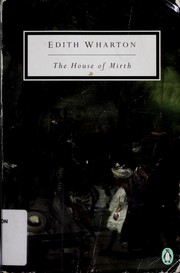
The House of Mirth
2,468-word summary 11 min read 368 pages in the book
- First published
- 1905
- Publisher
- Charles Scribner's Sons
- Pages
- 368
- ISBN
- 9780140187298
Reading options
What's inside (8 sections)
A Beautiful Asset in a Market Society
The first thing to know about Lily Bart is that she is late. She is twenty-nine, unmarried, and still beautiful enough to make a room turn, but her beauty has become a deadline rather than a promise. Edith Wharton's 1905 novel opens in Grand Central Station, where Lily has missed the train to the Trenors' country house and decides to spend the interval with Lawrence Selden. The scene establishes the terms of her life. She is always between places, dependent on invitations, and aware that her arrival is also a calculation. Her father lost his fortune and died; her mother died soon after, leaving Lily with expensive tastes, no home, and a small allowance from her aunt, Julia Peniston. Lily's mother had taught her that a girl's beauty was a form of capital, perhaps the only capital she would ever own. The lesson was not wrong about the world, only incomplete. It turned Lily into a woman who could read a room but not afford to leave it.
Wharton's New York is a market in which marriage is the principal transaction available to women. Hostesses like Judy Trenor collect pretty, well-connected guests; men like Percy Gryce collect Americana; Lily collects invitations and debts. Her position is paradoxical. She has the manners, wardrobe, and connections of the rich, but not the income that makes them effortless. She is useful to her friends because she ornaments their parties and absorbs their social labor. She is also expensive to maintain, and everyone knows it. The novel's title comes from Ecclesiastes: the heart of the wise is in the house of mourning, but the heart of fools is in the house of mirth. Wharton takes the phrase literally. The parties are bright, the people are bored, and the laughter has an edge of panic. Lily is the most brilliant ornament in the house, and ornaments can be put away when they fade. Wharton writes the social code as a set of prices. A dinner invitation has a value, a box at the opera has a value, and a woman's reputation can be quoted like a stock. Lily learns the market so well that she can predict its movements, but she cannot control them. Her tragedy begins in the gap between her skill at reading the market and her inability to own anything it values.
The Republic of the Spirit and the Gryce Opportunity
Selden's flat is small, shabby, and independent. That independence is the first thing Lily envies. He is a lawyer with modest means, a man who moves through the same drawing rooms without needing to sell himself into them. Over tea he describes his idea of success as personal freedom, a "republic of the spirit" free from money, poverty, ease, and anxiety. Lily responds with recognition. She has felt that country from a distance, but she cannot live there on her allowance. The phrase matters because it gives her a vocabulary for the self she might have been. It also exposes the limit of Selden's freedom. He can admire her from the outside; he cannot pay for her clothes, her cab fares, or her debts. Lily knows this, and the knowledge shapes every choice she makes.
At Bellomont, the Trenors' country house, she sets out to secure Percy Gryce. Gryce is wealthy, shy, and dull, a collector of rare books who might be managed by a wife with social skill. Lily studies his tastes, plans a walk to church, and imagines the proposal. The plan collapses in a way that is characteristic of her. She spends the afternoon with Selden instead, then misses the church outing, and Bertha Dorset quietly helps steer Gryce toward Evie Van Osburgh. The proposal never comes. Wharton does not present this as a simple failure of strategy. Lily's calculation is real, but so is her attraction to Selden, and the two impulses cannot be reconciled. She wants to be chosen for herself and to choose a fortune, and the market offers no way to do both.
The Bellomont visit also introduces her financial trouble. Lily plays bridge, loses, and borrows. Gus Trenor, Judy's heavy, red-faced husband, offers to invest for her. The arrangement begins as a favor and turns into a claim. She receives a thousand-dollar cheque, then a profit of five thousand, with four thousand reinvested; in time the total reaches nine thousand dollars. Lily tells herself the money is hers, the return on an investment, but Trenor has given it to her, and he expects gratitude in a form she will not provide. Simon Rosedale, the financier who wants a place in society, proposes marriage and is refused. Rosedale is crude, ambitious, and clear-eyed about the exchange he is offering. Lily's refusal is partly snobbery and partly self-respect. She will not sell herself outright, even as she accepts the smaller installments of the same bargain.
Tableaux, Loans, and the Dorset Yacht
The tableaux vivants at the Wellington Brys' house are the novel's most concentrated image of Lily's predicament. She poses as Joshua Reynolds's Mrs. Lloyd, dressed in pale drapery, her beauty arranged as a living picture. The audience gasps; Selden sees, for a moment, the real Lily behind the social performance. The triumph is real, but it is also exposure. She has made herself a spectacle, and a spectacle can be admired and discarded. After the entertainment, Selden finds her alone and tells her that the only way he can help her is by loving her. They kiss in the garden, and Lily answers, "Ah, love me, love me, but don't tell me so." The line is a plea and a warning. She wants the feeling without the public claim, because a public claim would require him to support her, and he is not ready to do that.
Selden leaves for Havana and the West Indies on business. He sends a note asking when he may come to her; Lily waits at four o'clock, but the visitor is Rosedale, not Selden. Rosedale proposes marriage, offering a union that would solve her debts and give him social legitimacy. She asks for time. Selden's absence is the hinge of the plot. If he had come, the novel might have turned toward a different ending; his failure to come confirms Lily's belief that the republic of the spirit is a country for other people. She accepts Bertha Dorset's invitation to cruise the Mediterranean on the Sabrina, partly to escape gossip about her dealings with Trenor, partly to escape the humiliation of waiting.
The yacht is a sealed world with its own economy of favors. Bertha is carrying on with Ned Silverton and uses Lily as a screen, inviting her to keep George Dorset occupied and to make the party look respectable. Lily understands the arrangement well enough, but she believes she can manage it. At Monte Carlo, the arrangement breaks. Bertha publicly announces that "Miss Bart is not going back to the yacht," a sentence that turns Lily into the guilty party in front of the very people whose opinion matters. The implication is that Lily has been pursuing George. Bertha makes the accusation to protect herself, and the accusation works because society prefers the wife's story to the unmarried woman's silence. Lily could defend herself, but she does not. She leaves the yacht, accepts Selden's help in finding a place to stay, and discovers that the scandal has preceded her.
The Price of Silence
The return to New York is a lesson in how quickly social capital can be converted into nothing. Aunt Peniston has died, and her will gives Lily ten thousand dollars while leaving the residue to Grace Stepney, the cousin who stayed home and listened. The will was made after the Dorset scandal, and its message is clear. Lily had been led to expect the Peniston fortune; instead she receives a sum that almost exactly matches her debt to Trenor. The coincidence is one of Wharton's cruelest jokes. Lily's dependence on relatives has always been her real condition, but the will makes it visible. She has no house, no income, and no protector. The ten thousand dollars is not a future; it is a chance to settle accounts.
Trenor demands repayment. His demand is not simply financial. He has decided that Lily owes him something more intimate, and when she refuses, he turns the debt into a weapon. Lily's gambling debts, the loans and gifts, the expensive clothes, the bridge losses: all of it becomes evidence that she is a woman who takes money from men. Rosedale, who might have helped, is ready to offer her a loan, though Lily knows the money carries a price. He is willing to back her pluck, but he will not renew his suit. Lily refuses the loan because another obligation would only repeat the trap. She also has one weapon of her own: Bertha Dorset's letters to Selden, which she bought from a charwoman. The letters would prove Bertha's adultery and clear Lily's name, but they would also expose Selden. Rosedale urges her to use them. Lily refuses, and when she visits Selden's flat she burns them in his fireplace. The act is generous, proud, and disastrous. It removes the last lever she might have used to re-enter the society that has condemned her.
Work follows, and it is not the kind of work for which Lily has been trained. She becomes secretary to Mrs. Hatch, a woman whose money and manners do not fit the old New York code, and then takes a job at Mme Regina's millinery. The hours are long, the pay is small, and her hands are slow. She is fired at the end of the season, when the demand for hats falls. The decline is physical as well as social. Lily sleeps badly, takes chloral, and increases the dose. The drug is both a symptom and a cause. It promises the oblivion she cannot find in religion, family, or love, and it erodes the beauty and energy that were once her capital. Wharton follows the downward sequence with clinical patience: the sold dresses, the boarding house, the diminished meals, the letters unanswered.
Nettie's Kitchen and the Last Night
Near the end, Lily meets Nettie Struther, a working-class woman she once helped send to a sanatorium. Nettie is now married to a motorman named George and has a baby girl. She invites Lily to her tenement flat, and Lily holds the child. The visit is brief, but it changes the novel's emotional scale. Nettie's home is small, poor, and warm. It has a future in it. Lily sees a life built on mutual faith rather than display, and she understands what she has missed. Nettie's husband knows her past and loves her anyway; Selden's love, by contrast, has always been fastidious, conditional, and afraid of scandal. The kitchen is the novel's true "house of mirth," a place where mirth means something ordinary and durable. Lily leaves it feeling both comforted and more alone.
The ten-thousand-dollar legacy arrives earlier than expected. Lily pays her bills, writes a cheque to Trenor for the balance, and encloses the bank letter. She also writes a short will leaving her small estate to her aunt's heirs, and places the envelope for Trenor beside it. The paperwork is an attempt to die solvent and honest, to settle the accounts that have defined her life. Then she takes the chloral. The novel is careful about the ambiguity. Lily wants sleep; she has not slept for two nights. She knows the dose is risky, but she thinks the risk is small. She is not shown forming a clear intention to die. Gerty later insists that it must have been a mistake. Yet Lily is also exhausted by a life that has no place for her, and the line between a fatal accident and a willing surrender is never firmly drawn. Wharton leaves the question open, and the openness is part of the tragedy.
Selden at the Bedside
Selden arrives the next morning to tell Lily that he loves her and to ask her to marry him. He is too late. Gerty meets him at the door, and he climbs the stairs to the small room where Lily lies dead. He sees the empty bottle and glass, the shabby furniture, the few traces of her old luxury. On the desk he finds the letters and the cheque book. The stubs show that the ten-thousand-dollar legacy has been spent: a few hundred dollars for bills, the rest in a cheque to Charles Augustus Trenor. He understands then that Lily has repaid the debt, that the rumors about her and Trenor were false, and that she has died with her honor intact. The will and the separate cheque complete the story he has been too proud to ask for. His final realization is not a solution but a confession. He had loved her, but he had loved his own detachment more. He had been willing to believe the world's version of Lily because it saved him from acting.
Wharton's irony is structural rather than decorative. The people who speak most about morality are the ones who arrange its exceptions. Bertha Dorset destroys Lily to protect an affair; Gus Trenor calls a gift a loan and then demands payment in shame; Rosedale talks about a fair business arrangement while measuring Lily's social price; Selden cherishes his independence and calls it principle. Lily is not innocent. She calculates, snubs, borrows, and enjoys the spectacle of her own beauty. But she is held to a standard that the married and the wealthy evade. Her best acts, the loyalty to Bertha on the yacht and the burning of the letters, have no market value. The market society Wharton describes does not simply punish vice; it punishes the refusal to be entirely venal.
The ending returns to the novel's central ambiguity. Lily does not marry. She dies from an overdose of chloral, and Selden finds her after she has died. The will she leaves gives her estate to her aunt's heirs, while the separate letter and cheque to Trenor repay the debt. Whether the overdose was accident or suicide remains unresolved, and that unresolved question is more honest than a verdict. Lily's life has been a series of transactions, and her death is the one event that cannot be priced. Selden's last word, the word that "made all clear," is never spoken aloud. Wharton lets the silence do the work. The house of mirth has become a house of mourning, and the reader is left with the cost of a society that could see Lily clearly only after she was gone.
FAQ
When was The House of Mirth published?
Charles Scribner's Sons published it in October 1905, after Scribner's Magazine serialized it earlier that year.
What happens to Lily Bart at the end?
She pays her debt to Gus Trenor with Aunt Peniston's ten-thousand-dollar legacy, writes her final letters, and dies of a chloral overdose; Selden finds her the next morning.
Does Lily Bart marry anyone in The House of Mirth?
No. She refuses Simon Rosedale and never marries Selden, and the novel ends with her death and Selden's late realization.
Similar books
Ethan Frome
In snowy Starkfield, farmer Ethan Frome falls for his wife's young cousin Mattie, and one sled ride ends any hope of escape.
2,558-word summary · 11 min read

Revolutionary Road
A Connecticut couple who believe they are too good for the suburbs plan to move to Paris, and the plan slowly exposes everything they cannot say to each other.
2,085-word summary · 9 min read
Vanity Fair
Becky Sharp schemes her way up Regency society while loyal Amelia waits, in Thackeray's witty novel without a hero.
2,698-word summary · 12 min read
Middlemarch
Idealistic Dorothea marries dry scholar Casaubon while ambitious doctor Lydgate marries Rosamond, and a Midlands town watches both marriages strain.
2,883-word summary · 13 min read
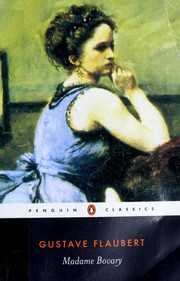
Madame Bovary
Emma Rouault marries Charles Bovary for romance, then seeks lovers and luxury until debts ruin them both.
2,400-word summary · 11 min read

Anna Karenina
Anna leaves Karenin for Vronsky while Levin seeks faith and farming outside Moscow.
3,942-word summary · 18 min read
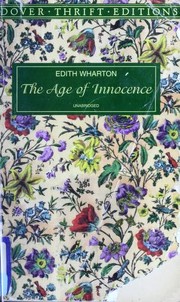
The Age of Innocence
Engaged New York lawyer Newland Archer falls for Ellen Olenska, his fiancee's cousin fleeing a bad marriage, and must choose between love and duty in 1870s old…
3,100-word summary · 14 min read

Howards End
Forster's 1910 novel follows two families, a house in Hertfordshire, and a burned note, asking whether money and feeling can ever be connected.
2,187-word summary · 10 min read

Sophie's Choice
A young Southern writer in 1947 Brooklyn befriends a brilliant, unstable couple and slowly learns the story of the Polish Catholic woman at the center of their…
2,798-word summary · 12 min read
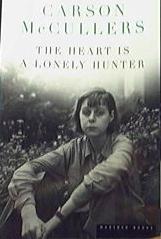
The Heart is a Lonely Hunter
A deaf man becomes the quiet center for lonely souls in a small Georgia mill town.
2,000-word summary · 9 min read
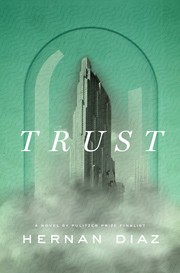
Trust
Four rival accounts of one Wall Street fortune collide: a 1930s novel, a tycoon's memoir, a secretary's story, and a wife's diary.
2,217-word summary · 10 min read
Lady Chatterley's Lover
A baronet's wife, starved in a marriage the war broke, takes the gamekeeper as her lover. Lawrence's banned 1928 novel of class and touch.
2,566-word summary · 11 min read
Tender Is the Night
Dick Diver marries his patient Nicole, and their Riviera marriage slowly breaks apart in Fitzgerald's 1934 novel of money, care, and drinking.
2,607-word summary · 12 min read
Stoner
William Stoner trades farm life for literature, then endures a cold marriage and petty campus wars in John Williams's quiet classic.
2,282-word summary · 10 min read
Wuthering Heights
Emily Bronte's Wuthering Heights retold: Heathcliff and Cathy on the moors, two houses, two generations.
2,056-word summary · 9 min read
The Great Gatsby
The Great Gatsby through Nick Carraway: Gatsby's parties, the green light, Daisy and Tom, and why Fitzgerald's 1925 novel ends as a judgment on the American…
2,501-word summary · 11 min read
The Guest
Cast out of her wealthy boyfriend's Hamptons house, twenty-two-year-old Alex spends five days talking her way through other people's homes and accounts.
2,165-word summary · 10 min read

The Crying of Lot 49
A California woman named executor of her ex-lover's estate follows a muted post horn into a possible centuries-old postal conspiracy, and Pynchon refuses to…
2,003-word summary · 9 min read
Silas Marner
A falsely accused weaver hoards gold in Raveloe until a stolen hoard and an abandoned child remake his narrow life.
2,699-word summary · 12 min read

Lisey's Story
Two years after her novelist husband dies, Lisey Landon follows a trail of clues into his childhood and the other world that made him a writer.
1,998-word summary · 9 min read

Fathers and Sons
Arkady brings the nihilist Bazarov home to his father's estate, and a generational argument turns into love, a duel, and an early death.
2,192-word summary · 10 min read
Naked Lunch
Burroughs's banned 1959 collage novel follows Bill Lee through addiction, Tangier, and the nightmare bureaucracy of the Interzone.
2,082-word summary · 9 min read

The Chosen
A shattered pair of glasses in a 1944 Brooklyn softball game starts a friendship between a Hasidic boy and his Orthodox neighbor, and their fathers pull them…
2,443-word summary · 11 min read

The Dharma Bums
Ray Smith rides freight trains, climbs Matterhorn Peak and argues about Zen with the poet Japhy Ryder in Kerouac's 1958 road novel.
2,729-word summary · 12 min read
On Chesil Beach
Two newlyweds spend one terrible night on Chesil Beach in 1962, and the rest of their lives is decided by it.
2,456-word summary · 11 min read

Ivanhoe
A disinherited Saxon knight, a great tournament, a besieged castle and a trial by combat. Scott's most famous novel, set in England in 1194.
2,834-word summary · 13 min read

A Spool of Blue Thread
Four generations of the Whitshank family in Baltimore, and the silences, resentments and quiet love they hand down without ever saying so.
2,408-word summary · 11 min read

Wide Sargasso Sea
Jean Rhys gives the first Mrs. Rochester a Caribbean childhood, a marriage built on money and suspicion, and a voice that Charlotte Bronte left in the attic.
2,021-word summary · 9 min read

The Pilot's Wife
Kathryn Lyons's husband dies in a plane crash, and the investigation reveals a secret life that forces her to rethink their marriage.
2,006-word summary · 9 min read

The Gift of the Magi
A young couple with almost no money each sells the thing they treasure most to buy a Christmas present for the other.
1,978-word summary · 9 min read