Tender Is the Night
2,607-word summary 12 min read 448 pages in the book
- First published
- 1934
- Publisher
- Charles Scribner's Sons
- Pages
- 448
- ISBN
- 9780684801544
Reading options
What's inside (8 sections)
I came to this one after Gatsby, the way most people do, and I expected something smaller. Fitzgerald published it in 1934 through Charles Scribner's Sons, nine years after Gatsby, and it is a much bigger book in every sense. The Scribner paperback I read runs 448 pages. It starts on the Riviera and ends in small towns in America that feel a long way from any beach. What caught me off guard was how sad and patient it is. Gatsby moves fast. This one watches a man lose his footing over years and lets you see each step.
The basic setup is simple enough to say out loud. Dick Diver is a young American psychiatrist with real promise. Nicole Warren is a wealthy young patient getting treatment in Switzerland. They marry. For a while they are the couple everyone wants to be near. Then the marriage thins out, Dick drinks more, Nicole gets stronger, and by the end they are not together at all. Telling it that way makes it sound neat. Reading it is anything but neat, because Fitzgerald tells the first third out of order and only later shows how the two of them met.
The beach at Gausse's
The book opens in June 1925 on the French Riviera, at Gausse's Hotel. Rosemary Hoyt arrives with her mother. Rosemary is a teenage film actress, fresh off a success in a picture called Daddy's Girl, polite and bright and still new enough to stare openly at people. She notices a group on the beach that seems to run the place without trying. That is the Divers and their friends.
Dick Diver is in his late thirties, good looking in a tired way, attentive to everyone. Nicole Diver is lovely and nervous and rich, the kind of person who can make a lunch feel like an event. Around them are Abe North and his wife Mary, a composer who drinks too much and a spirited woman who puts up with him, plus Tommy Barban, a Franco American soldier type with loud manners, plus the McKiscos, Albert, who writes novels, and Violet, who talks too much and listens too closely.
Fitzgerald spends a lot of time on beach manners. Who sits where. Who borrows a raft. Who is invited to dinner and who is not. It sounds light and it is not. Rosemary falls hard for Dick almost at once. He is kind to her in a way that feels fatherly and flirtatious at the same time, and she has no tools for sorting that out. Nicole sees it happening and does not make a scene. She has lived with fragile arrangements for a long time.
The dinner at the Divers' villa is the first set piece. Long table, lights, people talking over each other, Dick keeping it all afloat. Violet McKisco has seen something she should not have seen. In a bathroom during a party she walked in on Nicole in the middle of a breakdown, shouting and upset, not making sense. Violet repeats this at the table in a lowered voice. Tommy Barban tells her she is lying. The quarrel grows until Albert McKisco and Barban agree to a duel on the beach the next morning.
The duel itself is almost comic. They pace off, fire, miss, shake hands. Fitzgerald lets it play as farce, then shows the cost. Rosemary is shaken. She had wanted the Riviera to be glamorous and adult. Now she has seen that the adults are frightened and covering it with jokes. She clings closer to Dick after that, which is understandable and unwise.
Shortly after, the group breaks up. The Divers leave. Rosemary leaves with her mother. The season feeling ends. I liked how Fitzgerald does departures here. No big speeches. People just stop sharing meals.
Paris and a problem in a hotel room
The next stretch moves to Paris. Rosemary keeps finding her way back to Dick and Nicole. She is staying with her mother and working a little, still caught up in the idea of Dick. In her hotel room she tries to pull him into an affair. She is direct about it. Dick says no, though he admits he has feelings for her. He walks out. It is one of the few times in the first half where he sets a clear limit.
Then the plot turns strange in a way that feels true to expatriate life in the twenties. A man named Jules Peterson is found dead in Rosemary's bed at the hotel. Peterson had ties to Abe North and had been in trouble. His presence in her room is innocent in the worst way, the kind of accident that a newspaper would turn into a scandal and ruin a young actress. Dick steps in and moves the body, cleans up what he can, and helps shift the risk away from Rosemary. He does it calmly, as if he has done this sort of cleanup before for friends.
This is where Abe North starts to darken. Abe is a talented man who has stopped working and started drinking through his days. He borrows money. He picks fights. He leaves Paris for America and later word comes that he was beaten to death in a New York speakeasy. Fitzgerald does not linger on it, which makes it hit harder. One paragraph and a friend is gone.
Mary North, his wife, remarries and becomes a countess. That detail annoyed me the first time, because it feels tossed off. On a second pass it felt closer to how Fitzgerald saw that world. People survived by marrying money. Mary did. Dick, who married money himself, did not manage it the same way.
By the end of the Paris section Dick is tired in a visible way. He is still charming at dinner. He still remembers names and asks after people. But he drinks before he needs to, and Nicole watches him with a new alertness, as if she is taking notes on her own husband.
What happened in Zurich
About a third of the way in, Fitzgerald jumps back eight years and tells you how Dick and Nicole met. This is the famous break in the book. Readers in 1934 complained about it. Some still do. I struggled with it too, though I came around to why he did it. He wanted you to love the Divers first, then learn what their love was built on.
In the spring of 1917 Dick Diver is a young doctor, just out of New Haven and Oxford and Johns Hopkins, full of plans. He visits Zurich and meets Franz Gregorovius, a Swiss doctor working at Dohmler's clinic. Franz introduces him by letter to a patient, Nicole Warren, a young American woman from a very rich Chicago family. Nicole had been abused by her father, Devereux Warren, as a girl, and the shock fractured her health. She lives with diagnoses that shift by doctor, but the core is clear. She is bright, she is ill, and she is lonely.
They exchange letters. At first Dick writes as a kind of friendly doctor. Then the letters get warmer. Franz thinks the friendship helps Nicole, and in a narrow sense it does. She improves. She leaves the clinic for stretches. Dick convinces himself that marrying her will steady her for good, that his care can finish what treatment started. Her sister, Baby Warren, who everyone calls Baby, disapproves. Baby sees Dick as a bright young man reaching for Warren money and says so in plain terms. There is truth in that and also unfairness, which Fitzgerald leaves sitting there without resolving.
They marry. Nicole's money pays for Dick and Franz to buy into a clinic together. For a few years it works. Dick writes and works. He has ideas about treatment that colleagues respect. Nicole has children, a boy and a girl, and long stable periods. They buy and rent beautiful places. They collect friends. From the outside they look like proof that love can heal.
Fitzgerald does not let that reading stand. Even in the happy years there are signs that the arrangement costs Dick his independence. He spends his days managing Nicole's moods, managing money that is not his, managing a social circle that runs on Nicole's wealth. His own book stays unwritten. His promise narrows into charm. I found these chapters painful in a quiet way, because nobody is cruel. They are trying. It still goes wrong.
Rome and the slow undoing
After the Zurich history, the story picks up in the present again and follows Dick downward. His father dies in America. Dick sails home for the burial, a section Fitzgerald writes with unusual tenderness. His father had been a clergyman, modest and steady, the opposite of the Riviera crowd. Burying him seems to loosen something in Dick. He stops in Rome on the way back hoping to see Rosemary, who is now filming there and grown into a real star.
They do have a brief affair in Rome. Fitzgerald handles it without heat. It is affectionate and sad, two people misreading what they can give each other. Rosemary still idealizes him. Dick wants to feel wanted without the weight of being needed. It ends quickly. Rosemary moves on, as she should.
Then Dick gets drunk and gets into a fight with Italian police and taxi drivers. He is beaten badly and jailed. Baby Warren has to come and pay and pull strings to get him out. The humiliation is public. For a man who built his identity on control and courtesy, being locked up and bailed out by his sister in law is a turning point he never quite recovers from.
Back in Switzerland his drinking starts to interfere with work. He is late. He is sharp with patients and staff. Franz, who once admired him, suggests that American investors buy out Dick's share of the clinic. It is framed as business. Everyone knows it is an exit. Dick agrees. He tells himself it will free him to write. It frees him to drift instead.
There is a painful scene where Dick tries to lecture or socialize and cannot read the room. People laugh a beat too late. Nicole apologizes for him afterward in a way that makes it worse. Money, which once gave them freedom, now gives Nicole power and Dick shame. He feels owned by the Warrens and acts like it, rude one hour and overly grateful the next. Friends start inviting Nicole without Dick, then stop inviting either of them together.
Nicole gets well and lets go
The last part belongs to Nicole. As Dick shrinks, she grows. Treatment, time, and distance from her father help. So does Tommy Barban, in his blunt way. Tommy has always been fond of Nicole. He is not subtle and he does not try to manage her illness the way Dick does. He treats her as capable. For a woman who spent years being watched for signs of relapse, that feels like air.
Nicole starts an affair with Tommy. Fitzgerald does not frame it as revenge, though there is anger in it. It reads more like recognition. She sees that her marriage has become a clinic with no discharge date. Dick sees it too and cannot stop performing the doctor role. He questions her, warns her, forgives her in advance, all of which pushes her further off.
They divorce. Nicole marries Tommy. The legal part is quick. The emotional part has been happening for a hundred pages.
Dick tries to start over in America. He sets up practice in small towns in New York state, Geneva and Buffalo and elsewhere, depending on who is telling the story. The reports that filter back to Nicole and her circle get thinner each time. He drinks. He moves. He is kind to people and unable to stay. The final pages do not give him a death scene or a redemption scene. He simply recedes. Fitzgerald closes with other people hearing about him secondhand, which feels right for a man who spent his best years hosting other people.
I did not want Dick to end that way, which is probably why the ending stayed with me. He is not a villain. He gave years of real care to a sick wife at the cost of his work. He also made the classic mistake of thinking care gave him a claim. Nicole owed him gratitude, in his mind, and when gratitude did not come as obedience, he fell apart. Seeing that clearly does not make it easier to watch.
What wears thin
This is a strong book with obvious flaws, and they are worth naming before you pick it up.
The structure is the first problem. Holding back the Zurich meeting until midway creates mystery, but it also stalls momentum. Just as the Riviera story gathers force, Fitzgerald stops and teaches history for a hundred pages. Modern editions sometimes print the Cowley revision, which puts events in chronological order. I read the original 1934 order, the one Scribner's published, and I missed Rosemary for long stretches. Friends who read the chronological version say it flows better but loses the shock of learning what the marriage really is. Either way you lose something.
The second problem is Rosemary herself. She starts as the lens, young and open, then fades for much of the middle and returns as a star who feels more like an idea than a person. Fitzgerald based her in part on Lois Moran, a young actress he knew in Hollywood, and at times he writes her with affection that stops short of curiosity. We learn what men project onto her more than what she wants, apart from Dick. For a book so interested in how women heal, that is a gap.
Race is the third problem and the hardest to defend. The Paris hotel chapters use a Black character, Jules Peterson, mainly as a plot crisis for white characters. Peterson gets little interior life before he is found dead, and the scramble is all about protecting Rosemary's reputation. Abe North's talk around Peterson is ugly in ways Fitzgerald reports without enough challenge. You can call it period accuracy, and there is some truth to that, but the book does not give Peterson the attention it gives even minor white guests like the McKiscos. A modern reader will feel the imbalance.
The prose can also crowd itself. Fitzgerald writes beautiful sentences about money and light and drink, then adds one more clause when the sentence was already done. In Gatsby that control held. Here, especially in the middle clinic chapters, passages about psychiatry and wealth blur together. I skimmed a few pages on readmissions and fees and felt no guilt about it.
None of that stopped me from recommending it. The portrait of a marriage where one person gets well and the other cannot adjust is rare and careful. Nicole's recovery is the best thing in the book, gradual and believable, full of small refusals that add up to freedom. Dick's decline is the mirror, a man who was generous when he felt strong and ungenerous when he felt watched. If you have ever cared for someone through illness and felt your own life narrow, parts of this will sting in a useful way. Just go in knowing it moves slowly, it withholds, and it does not offer the clean final image Gatsby gives you. It leaves you with gossip about a doctor in upstate towns, getting fainter, which is exactly the point and exactly why it hurts.
FAQ
When was Tender Is the Night first published?
It was first published in 1934 by Charles Scribner's Sons, after serialization in Scribner's Magazine from January to April that year.
Do Dick and Nicole stay together?
No. Nicole recovers, has an affair with Tommy Barban, divorces Dick, and marries Tommy, while Dick drifts through small towns in America.
Is the 1934 order hard to follow?
It can be. The book opens on the Riviera and explains the Zurich meeting later, so some readers prefer the posthumous chronological revision made from Fitzgerald's notes.
Similar books

Revolutionary Road
A Connecticut couple who believe they are too good for the suburbs plan to move to Paris, and the plan slowly exposes everything they cannot say to each other.
2,085-word summary · 9 min read

Howards End
Forster's 1910 novel follows two families, a house in Hertfordshire, and a burned note, asking whether money and feeling can ever be connected.
2,187-word summary · 10 min read

The House of Mirth
Lily Bart, beautiful and penniless at twenty-nine, navigates New York's marriage market until a Dorset yacht scandal strips her of the only currency she has.
2,468-word summary · 11 min read

Lady Chatterley's Lover
A baronet's wife, starved in a marriage the war broke, takes the gamekeeper as her lover. Lawrence's banned 1928 novel of class and touch.
2,566-word summary · 11 min read
Ethan Frome
In snowy Starkfield, farmer Ethan Frome falls for his wife's young cousin Mattie, and one sled ride ends any hope of escape.
2,558-word summary · 11 min read
Middlemarch
Idealistic Dorothea marries dry scholar Casaubon while ambitious doctor Lydgate marries Rosamond, and a Midlands town watches both marriages strain.
2,883-word summary · 13 min read

Stoner
William Stoner trades farm life for literature, then endures a cold marriage and petty campus wars in John Williams's quiet classic.
2,282-word summary · 10 min read
Ask Again, Yes
Two neighboring police families in a New York suburb are shattered when illness turns violent, and the children torn apart find each other again decades later.
2,096-word summary · 9 min read
Madame Bovary
Emma Rouault marries Charles Bovary for romance, then seeks lovers and luxury until debts ruin them both.
2,400-word summary · 11 min read
The Great Gatsby
The Great Gatsby through Nick Carraway: Gatsby's parties, the green light, Daisy and Tom, and why Fitzgerald's 1925 novel ends as a judgment on the American…
2,501-word summary · 11 min read
The Crying of Lot 49
A California woman named executor of her ex-lover's estate follows a muted post horn into a possible centuries-old postal conspiracy, and Pynchon refuses to…
2,003-word summary · 9 min read
Silas Marner
A falsely accused weaver hoards gold in Raveloe until a stolen hoard and an abandoned child remake his narrow life.
2,699-word summary · 12 min read
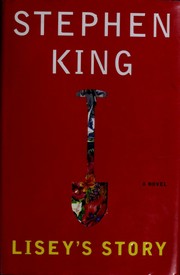
Lisey's Story
Two years after her novelist husband dies, Lisey Landon follows a trail of clues into his childhood and the other world that made him a writer.
1,998-word summary · 9 min read

Sophie's Choice
A young Southern writer in 1947 Brooklyn befriends a brilliant, unstable couple and slowly learns the story of the Polish Catholic woman at the center of their…
2,798-word summary · 12 min read

Fathers and Sons
Arkady brings the nihilist Bazarov home to his father's estate, and a generational argument turns into love, a duel, and an early death.
2,192-word summary · 10 min read
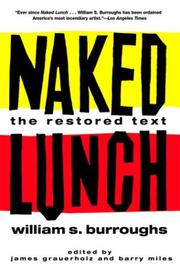
Naked Lunch
Burroughs's banned 1959 collage novel follows Bill Lee through addiction, Tangier, and the nightmare bureaucracy of the Interzone.
2,082-word summary · 9 min read

The Chosen
A shattered pair of glasses in a 1944 Brooklyn softball game starts a friendship between a Hasidic boy and his Orthodox neighbor, and their fathers pull them…
2,443-word summary · 11 min read

The Dharma Bums
Ray Smith rides freight trains, climbs Matterhorn Peak and argues about Zen with the poet Japhy Ryder in Kerouac's 1958 road novel.
2,729-word summary · 12 min read

On Chesil Beach
Two newlyweds spend one terrible night on Chesil Beach in 1962, and the rest of their lives is decided by it.
2,456-word summary · 11 min read

Ivanhoe
A disinherited Saxon knight, a great tournament, a besieged castle and a trial by combat. Scott's most famous novel, set in England in 1194.
2,834-word summary · 13 min read

A Spool of Blue Thread
Four generations of the Whitshank family in Baltimore, and the silences, resentments and quiet love they hand down without ever saying so.
2,408-word summary · 11 min read

Wide Sargasso Sea
Jean Rhys gives the first Mrs. Rochester a Caribbean childhood, a marriage built on money and suspicion, and a voice that Charlotte Bronte left in the attic.
2,021-word summary · 9 min read

The Pilot's Wife
Kathryn Lyons's husband dies in a plane crash, and the investigation reveals a secret life that forces her to rethink their marriage.
2,006-word summary · 9 min read

The Gift of the Magi
A young couple with almost no money each sells the thing they treasure most to buy a Christmas present for the other.
1,978-word summary · 9 min read

The Gambler
Dostoevsky's roulette novella: Alexei loses Polina, wins a fortune, loses everything, and promises himself one more bet tomorrow.
2,022-word summary · 9 min read

Orlando
A young Elizabethan nobleman becomes a woman and lives for centuries, moving through English history while writing a single poem about an oak tree.
2,030-word summary · 9 min read
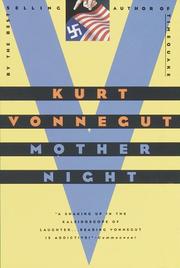
Mother Night
Howard W. Campbell Jr., a Nazi propagandist and American spy, tells the story of his double life from an Israeli prison cell while waiting to be tried for war…
1,988-word summary · 9 min read
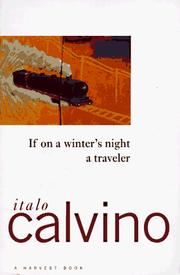
If on a Winter's Night a Traveler
You, the Reader, chase a defective novel through bookshops and translators while ten other novels keep interrupting. Calvino's famous puzzle about the act of…
2,173-word summary · 10 min read
The Most Fun We Ever Had
Four Sorenson sisters orbit perfect parents hiding old cracks.
2,590-word summary · 12 min read