
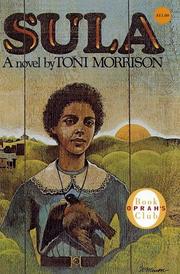
Sula
2,375-word summary 11 min read 192 pages in the book
- First published
- 1973
- Publisher
- Knopf
- Pages
- 192
- ISBN
- 9780375415357
Reading options
What's inside (8 sections)
I picked up Sula because Song of Solomon had stayed with me and I wanted to see what Morrison could do in a shorter book. This one was published in 1973 with Knopf and runs 192 pages in the edition I used, so I finished it in two sittings. It felt denser than its size. Every chapter lands like a stone dropped in water, and the ripples keep meeting each other across forty years.
A fair warning before I walk through it. This is not a warm friendship story where two girls forgive everything at the end. Sula Peace does things that hurt people she loves, and Morrison does not explain her away. Nel Wright, her best friend, makes safer choices that also cost her. The middle of the book jumps in time. People die fast, sometimes in half a page. I found that speed painful and also right, because the Bottom itself is being worn down year by year.
Shadrack, the Bottom, and 1919
The book opens in 1919 with Shadrack, a young Black man back from the war in France. He has seen too much dying in the trenches, and his mind will not settle. He wakes in a hospital bed, tied down, afraid of his own hands. He escapes when he can and walks to Medallion, Ohio, a river town with mills and white families in the valley and Black families up on the hills.
That hill neighborhood is called the Bottom, and the name comes from a trick. A white farmer once promised a freed slave good bottom land and gave him hill land instead, saying the hill was the bottom of heaven. The joke stuck. Black families built houses, a church, a pool hall, and Eva Peace's big boarding house up there. They look down at the valley where the jobs and the hospital sit.
Shadrack settles in a shack on the edge of the Bottom. He cannot hold steady work. He drinks, fishes, and keeps one ritual that gives the book its strange rhythm. He invents National Suicide Day, held every January 3. He walks through town with a rope and a bell, telling people that if they save all their dying for one day, the rest of the year will be safe. Children mock him. Adults give him room.
Helene, Nel, and the trip south
Nel Wright is born in 1920 to Helene Wright and Wiley Wright. Helene grew up in New Orleans under a strict Catholic grandmother, Cecile, who raised her to be proper and clean and guarded. Helene carries that training to Medallion like armor. She marries Wiley, a cook on a ship, keeps a spotless house, and raises Nel to fold napkins right and speak softly and avoid the wrong kind of attention.
Sula Peace is born around the same time in the other kind of house. Her grandmother Eva runs a large, crowded boarding house full of boarders, her daughter Hannah who loves men freely, and Hannah's two children Sula and Pearl. Doors stay open. People eat from the same pot. Eva lost a leg years before, and rumor says she put it under a train for insurance money to feed her children after her husband BoyBoy left. Morrison never proves it.
Nel and Sula meet as little girls and click in the way lonely children do. Nel is the neat one with the quiet mother. Sula is the wild one with the raw house. Together they feel complete. Morrison writes that each had found the other half of herself. They share a bed during visits. They trade dreams. They walk to school together past Shadrack's shack and learn to ignore the men who tease them.
When Nel is about ten, Helene takes her south by train to visit Cecile in New Orleans. The trip matters more than it looks. On the train, a white conductor treats them with open contempt and forces them to the colored car. Helene, so proud at home, bows and smiles and takes it. Nel watches her mother shrink and feels ashamed and then sorry. In New Orleans, Cecile dies, and Nel sees her grandmother's Creole world of incense and warnings. On the way home, Nel promises herself she will not live bent over like that.
That promise shapes her marriage later. She wants a home of her own where she stands straight. Sula wants something else entirely, though neither girl has words for it yet.
Chicken Little and the river
The center of the book, the event everything bends around, happens when the girls are about twelve. It is summer. Nel and Sula go down to the river with Chicken Little, a small neighborhood boy. They tease and play on the bank. Sula swings Chicken Little around by his hands, the way children do, and his wet fingers slip. He flies into the water and does not come up.
Morrison writes the scene plainly, which makes it worse. There is no long struggle. The boy is there, then gone. Nel and Sula stare at the water. They do not run for help. They do not tell anyone. They walk home and keep the secret.
They react in opposite ways. Nel feels guilt like a weight and tries to be extra good. Sula feels a different pull, a sense that she has touched something huge and gotten away with it. Soon after, she overhears her mother Hannah say she loves Sula but does not like her. The line cuts Sula open. She carries both the drowning and that sentence into her teens.
Around the same time, Sula proves how far she will go to protect herself. A gang of white Irish boys bullies Black children on the way to school. One day Sula pulls out a paring knife and cuts off the tip of her own thumb in front of them. Blood runs, and she asks them if they want to see more. The boys run. Nel watches, sick and thrilled. The thumb never heals straight, and the scar stays as a mark of that day.
Shadrack sees the drowning from his shack by the river. He was fishing and looked up at the wrong moment. He does not report it either. His silence links him to them, though they barely know him.
Eva, Hannah, Plum, and fire
To understand Sula, you have to understand Eva's house. Eva Peace is one of the great characters in American fiction, huge and rough and funny and frightening. After BoyBoy left her with three small children and no money, she went away for eighteen months and came back with one leg gone and money to build the boarding house. People whisper about the leg. Eva only laughs.
Her children grow up strange under that roof. Hannah, the daughter, loves sex without shame and without much care. Men come and go. Pearl, younger, marries young and leaves. Plum, the son, goes to war and comes back broken, hooked on drugs, sleeping in Eva's room like a baby though he is grown.
One winter night Eva finds Plum nodding in her bed with a spoon and needle nearby. She sees he will never get clean, that he wants to crawl back inside her and stay a child forever. She soaks him in kerosene while he sleeps and sets him on fire. She holds him while he burns, rocking him. The boarders smell smoke and pull him off her, but he dies. Eva survives with burns on her own hands and chest.
Morrison tells this without flinching. Eva later says she killed him to save him from the slow death he wanted, that she gave him the death of a man instead of a baby. You can hate the act and still hear the love in it. I sat with those pages a long time. It is the hardest scene in the book to judge, and Morrison knows it.
Fire comes again for Hannah. Hannah is lighting a fire in the yard when her dress catches. She runs screaming. Eva sees from an upstairs window, breaks the window with her body, and throws herself down to cover her daughter. Neighbors pour water. Hannah dies anyway in the hospital. And Sula, thirteen years old, stands on the porch and watches her mother burn with what looks like interest rather than horror.
Eva never forgets that look. Years later she will say Sula stood and watched. Sula will deny it or shrug. That stare becomes the proof, in Eva's mind, that something in Sula is off.
Ten years away and the return
In 1927 Sula leaves Medallion. She goes to Nashville for college, the first in her circle to leave for school. She watches white college girls and Black city life. She sleeps with men and leaves them. She drifts to other cities. Morrison covers ten years in a few sharp pages, which annoyed me at first. I wanted scenes. Then I saw the point. Sula is collecting experience without roots, and the quick summary feels like her postcards home, bright and thin.
Nel stays. She marries Jude Greene in 1927, a handsome young man who works as a waiter and hoped to be a Pullman porter until racism closed that door. Jude wants comfort and praise after facing rejection at work. Nel wants a clean house and steady love. They have three children. For a while they are happy in a tired way. Jude's disappointment curdles slowly. He feels trapped by the same domestic life Nel treasures.
Sula returns in 1937, wearing a fox stole and a black dress, stepping off the bus like a visitor from another world. The town reacts at once. A plague of robins crashes into the Bottom that summer, hundreds of birds falling and shitting on roofs. People blame Sula. Shadrack tips his hat to her, the only welcome she gets. Nel runs to hug her, and for a few weeks the old closeness flares back. They laugh in the kitchen. Sula holds Nel's children. It feels like twelve again.
Then Nel walks into her bedroom one afternoon and finds Sula naked with Jude on the floor. No fight. No apology that matters. Jude leaves Medallion. Sula says she did not mean to hurt Nel, that she only wanted to try Jude out the way you try a new coat. Nel hears cruelty in the casual tone. Sula hears honesty.
The friendship breaks on that floor. Morrison refuses to make it a simple love triangle. Jude was already pulling away. Sula does not love him and does not keep him. The betrayal is real, but its meaning is larger. Sula does not believe in ownership. Nel believes marriage is a promise that holds the world together.
After Jude leaves, Sula takes up with Ajax, whose real name is Albert Jacks, a pool hall man who treats her as an equal in bed and out. When she starts to feel soft toward him, to want to keep him, she panics and pulls away. Ajax leaves first, and Morrison shows that Sula cannot stand needing anyone.
Sula also puts Eva in a nursing home across the river, after a fight about money and about Chicken Little and about who burned whom. Both things are true. They part without forgiveness.
Sickness, death, and what Nel learns
By 1940 Sula is sick. She has a strange pain and a spreading infection. She lies in Eva's old house with no heat to speak of, visited by Shadrack, who brings food and sits with her because fellow outcasts recognize each other. Nel comes once, and they talk past each other. Sula says she never killed anyone on purpose and that her loneliness was her own doing. Nel says Sula is evil and lonely and will die alone. Both are half right.
Sula dies alone that fall. The town feels relief. Then things fall apart in small ways. The Bottom loses the fear that had held marriages and manners together. People drink more. Couples fight. Shadrack keeps marching on Suicide Day. Morrison suggests that evil, or the idea of it, had been doing quiet work.
Two set pieces close the public story. First, many Black workers hope for jobs on the tunnel being built across the river, work long denied to them. On the first Suicide Day after Sula's death, a crowd gathers at the tunnel and rushes it in a strange mix of protest and celebration. The tunnel mouth collapses. Chicken Little's name is long buried, but water and earth take more lives. Shadrack watches, still ringing his bell.
Second, Eva dies in the nursing home, still arguing. Hannah is long dead. Plum is long dead. Pearl lives far away. The big house stands empty. The Bottom itself begins to change as white developers eye the hill for golf courses and fancy houses, the same hill once mocked as poor land. Morrison ends the historical arc with that theft repeating in a new form.
The last chapter jumps to 1965. Nel visits Eva in the home before Eva dies, and Eva asks about Chicken Little. Nel denies it, then shakes. She realizes Eva saw something that day or guessed it. Walking home past the old places, Nel thinks about Sula with the old anger. Then grief breaks through in one line that has stayed famous. She thinks that it was Sula who made her laugh, who knew her, and that the loss she has mourned as her husband was really her friend. She cries out for Sula in the wind.
I found that ending earned rather than sentimental. Nel spent twenty five years calling herself the good woman and Sula the bad one. In one walk home she sees the split more truly. She chose safety and paid with narrowness. Sula chose freedom and paid with loneliness. Neither won.
Still, at 192 pages, this is a remarkable piece of compression. Morrison fits a town history, a war, a migration, two families, three fires, one drowning, and a friendship that outlives death. If you want plot speed, this may frustrate you. If you want a book that keeps opening after you close it, start here and then read Beloved and Song of Solomon after.
FAQ
When was Sula published and by whom?
Toni Morrison published Sula in 1973 with Knopf. The edition cited here runs 192 pages with ISBN 9780375415357.
What happens to Chicken Little?
Chicken Little, a neighborhood boy, slips from her hands when she swings him near the river. She and Nel tell no one, and the guilt shapes both girls for years.
Is Sula a straightforward story of friendship?
No. Morrison keeps the Bottom concrete and strange, with dates, wars, and work shaping each choice. Readers who want clear heroes or a tidy reunion will find the book cold in places.
Similar books

Song of Solomon
Milkman Dead leaves Michigan to hunt for family gold and finds instead the old song of his ancestor Solomon.
2,465-word summary · 11 min read
The Bluest Eye
Pecola prays for blue eyes while her parents repeat the racism that broke them, and the town looks away.
2,024-word summary · 9 min read

Wide Sargasso Sea
Jean Rhys gives the first Mrs. Rochester a Caribbean childhood, a marriage built on money and suspicion, and a voice that Charlotte Bronte left in the attic.
2,021-word summary · 9 min read
Ham on Rye
Henry Chinaski grows up rough in Depression Los Angeles and finds writing.
2,244-word summary · 10 min read

The Fall
A fallen Paris lawyer confesses in an Amsterdam bar, tracing guilt from Paris success to a bridge he failed to face.
2,220-word summary · 10 min read

Kin
Two motherless friends from Honeysuckle, Louisiana drift apart and reunite after tragedy in Tayari Jones funny, warm Oprah and Kirkus Prize novel.
2,642-word summary · 12 min read

Eleanor Oliphant Is Completely Fine
Eleanor keeps a rigid Glasgow routine until she and Raymond from IT help an old man who collapses in the street, and slowly remembers why.
2,277-word summary · 10 min read
The Catcher in the Rye
J. D. Salinger's The Catcher in the Rye explained: Holden's weekend in New York, the phony adults, Phoebe's carousel, and why readers keep coming back to him.
2,477-word summary · 11 min read
Beloved
Sethe lives with the memory of killing her child to save her from slavery until a young woman named Beloved arrives.
2,586-word summary · 11 min read
The Crying of Lot 49
A California woman named executor of her ex-lover's estate follows a muted post horn into a possible centuries-old postal conspiracy, and Pynchon refuses to…
2,003-word summary · 9 min read

Take My Hand
In 1973 Montgomery, a young nurse discovers that two sisters were sterilized without consent, and spends the rest of her life living with what she could not…
2,126-word summary · 9 min read

Silas Marner
A falsely accused weaver hoards gold in Raveloe until a stolen hoard and an abandoned child remake his narrow life.
2,699-word summary · 12 min read

Revolutionary Road
A Connecticut couple who believe they are too good for the suburbs plan to move to Paris, and the plan slowly exposes everything they cannot say to each other.
2,085-word summary · 9 min read
The Power of One
A boy in apartheid South Africa decides to become welterweight champion of the world, and the novel follows every mentor, fight, and loss that gets him there.
2,145-word summary · 10 min read

Little Earthquakes
Four Philadelphia women meet during pregnancy and discover that new motherhood is nothing like the plan, while friendship becomes the thing that holds them…
1,997-word summary · 9 min read

Howards End
Forster's 1910 novel follows two families, a house in Hertfordshire, and a burned note, asking whether money and feeling can ever be connected.
2,187-word summary · 10 min read

Sophie's Choice
A young Southern writer in 1947 Brooklyn befriends a brilliant, unstable couple and slowly learns the story of the Polish Catholic woman at the center of their…
2,798-word summary · 12 min read

James
Percival Everett retells Huckleberry Finn from Jim's side, giving him a library, a hidden school, and a voice the novel lets loose.
2,211-word summary · 10 min read

Fathers and Sons
Arkady brings the nihilist Bazarov home to his father's estate, and a generational argument turns into love, a duel, and an early death.
2,192-word summary · 10 min read

Clifford the Big Red Dog
Emily Elizabeth picks the smallest puppy in the litter, loves him as hard as she can, and wakes up to a dog the size of a house.
2,092-word summary · 9 min read
Naked Lunch
Burroughs's banned 1959 collage novel follows Bill Lee through addiction, Tangier, and the nightmare bureaucracy of the Interzone.
2,082-word summary · 9 min read

We Are Okay
Marin fled San Francisco after her grandfather vanished and stopped answering anyone. When Mabel visits her college dorm, she has to say what happened.
2,253-word summary · 10 min read

The Chosen
A shattered pair of glasses in a 1944 Brooklyn softball game starts a friendship between a Hasidic boy and his Orthodox neighbor, and their fathers pull them…
2,443-word summary · 11 min read

The Dharma Bums
Ray Smith rides freight trains, climbs Matterhorn Peak and argues about Zen with the poet Japhy Ryder in Kerouac's 1958 road novel.
2,729-word summary · 12 min read

Ivanhoe
A disinherited Saxon knight, a great tournament, a besieged castle and a trial by combat. Scott's most famous novel, set in England in 1194.
2,834-word summary · 13 min read

Big Swiss
A transcriptionist for a sex coach falls for one of his clients, the tall Swiss gynecologist she calls Big Swiss, in a funny novel about work and secrets.
2,523-word summary · 11 min read

This Is How You Lose Her
Yunior cycles through love affairs and betrayals in nine linked stories, tracing the damage he does and the family history behind it.
2,195-word summary · 10 min read

The Gambler
Dostoevsky's roulette novella: Alexei loses Polina, wins a fortune, loses everything, and promises himself one more bet tomorrow.
2,022-word summary · 9 min read

Orlando
A young Elizabethan nobleman becomes a woman and lives for centuries, moving through English history while writing a single poem about an oak tree.
2,030-word summary · 9 min read
Mother Night
Howard W. Campbell Jr., a Nazi propagandist and American spy, tells the story of his double life from an Israeli prison cell while waiting to be tried for war…
1,988-word summary · 9 min read