
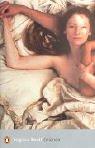
Orlando
2,030-word summary 9 min read 299 pages in the book
- First published
- 1928
- Publisher
- Hogarth Press
- Pages
- 299
- ISBN
- 9780141184272
Reading options
What's inside (9 sections)
Orlando is the strangest book Virginia Woolf wrote, and that is saying something. It begins as a biography of a young Elizabethan nobleman, turns into a fantasy about a person who lives for centuries, and ends as a meditation on poetry, gender, and the English imagination. It is also a love letter to Vita Sackville-West, Woolf's friend and lover. Once you know that, the book's playful, intimate quality makes more sense.
Woolf published Orlando on 11 October 1928 through the Hogarth Press, the publishing house she ran with her husband, Leonard. The first edition ran 299 pages. The Penguin Modern Classics edition I read runs 336 pages and includes notes and an introduction. The book is dedicated to Sackville-West, and its central character is based on her family history. The title page calls it "A Biography," which is a joke. It is a biography of a person who never existed, written by a biographer who keeps losing control of the story.
The novel opens in the Elizabethan era. Orlando is a handsome young nobleman, a favorite of Queen Elizabeth. He is also a poet. He writes a long poem called "The Oak Tree" and carries the manuscript with him through the centuries. He falls in love with Sasha, a Russian princess in the entourage of the Russian embassy. Their romance takes place during the Great Frost of 1608, when the Thames freezes and a fair is held on the ice. The scenes are among Woolf's most beautiful. The frozen river, the sleds, the Russian ships, the queen's procession: all of it is vivid and strange.
The Frost Fair
The Frost Fair is the book's first great set piece. Orlando and Sasha meet on the ice. They skate, they talk, they fall in love. Sasha is elusive and a little cruel. She is also a foreigner, which makes her exciting and dangerous. Orlando is young and earnest, and he believes that love can last forever. Sasha does not. When the ice begins to melt, she leaves him for Russia. The thaw is both literal and emotional. The river returns to its old shape, and Orlando is left alone with his poem.
The failure of the romance turns Orlando inward. He retreats to his estate, writes, reads, and tries to understand himself. He meets Nicholas Greene, a poet and critic who is based on a real historical figure. Greene is pompous, envious, and small-minded. He praises Orlando's hospitality and then lampoons him in print. The episode is a satire of literary London. Woolf knew the type, and she enjoys skewering it.
Orlando then meets the Archduchess Harriet, a tall, androgynous woman who becomes obsessed with him. She follows him, writes him letters, and refuses to take no for an answer. Orlando is baffled and increasingly uncomfortable. He decides to leave England. He is appointed ambassador to Constantinople, and he goes to the Ottoman court. The section is full of exotic detail, some of it imagined, some of it drawn from travel writing. Woolf is not trying to be accurate. She is trying to create a dream of the East.
The Change
In Constantinople, Orlando falls into a deep sleep during a night of riots. He sleeps for days. When he wakes, he is a woman. The transformation is not explained. The biographer is as surprised as the reader. Orlando accepts it with remarkable calm. She is the same person, with the same memories, the same tastes, and the same poem. The only thing that has changed is her body.
The change is the most famous thing about the book, and it is easy to read it as a simple statement about gender. Woolf is more subtle than that. Orlando does not become a different person. She becomes a person who is treated differently. The novel shows how the world responds to her new body. As a man, Orlando had freedom, property, and authority. As a woman, she is expected to be modest, dependent, and decorative. The change exposes the arbitrary nature of gender roles.
Orlando leaves Constantinople with a group of Romani people. She lives with them for a while, and she learns that their life is not a romantic escape. They are poor, vulnerable, and subject to prejudice. She also learns that she misses England. The Romani sections have been criticized for their exoticism, and the criticism is fair. Woolf's portrayal is romanticized and sometimes condescending. The book is a product of its time, and its treatment of race and empire is one of its weakest aspects.
The Return to England
Orlando returns to England as a woman. On the ship, she discovers the practical consequences of her new body. Her clothes are restrictive. A flash of her ankle nearly causes a sailor to fall overboard. She concludes that being a woman has advantages, but the advantages are not freedom. She spends the rest of the novel moving between genders, dressing as a man when it suits her and as a woman when it does not.
The Archduchess Harriet reappears. She is now the Archduke Harry, a man who has been in love with Orlando all along. The reveal is comic and a little unsettling. Orlando rejects him. She is not interested in the role of a wife, at least not yet. She wants to write, to think, and to live. The novel follows her through the eighteenth and nineteenth centuries. She hosts poets, attends salons, and becomes a fixture of English literary society.
The eighteenth-century sections are full of real historical figures. Alexander Pope, Joseph Addison, and Jonathan Swift appear as guests. Woolf satirizes their vanity and their gossip. Orlando is both inside and outside the literary world. She is a patron, a hostess, and a writer. She is also a woman, which means she is not taken as seriously as she should be. The novel shows how women's writing was dismissed and how women's lives were constrained.
The nineteenth century is described as a period of damp and repression. The weather is bad, and so are the morals. Orlando feels the weight of Victorian convention. She is expected to marry, settle down, and give up her independence. The novel's tone becomes darker, though it never loses its wit. Woolf is satirizing the idea that history is a story of progress. For Orlando, the centuries are not a march toward freedom. They are a series of rooms, some larger than others.
Shelmerdine and the Oak Tree
Orlando meets Marmaduke Bonthrop Shelmerdine, a sea captain, and marries him. Their marriage is unusual. Shelmerdine is often away at sea, and Orlando is often alone. They love each other, but they also need their freedom. Woolf suggests that a good marriage is one in which both people can be themselves. Shelmerdine is not a conventional husband. He is adventurous, emotional, and a little mysterious. He also accepts Orlando's past, including the fact that she used to be a man.
The poem "The Oak Tree" runs through the whole novel. Orlando starts it as a young man and finishes it centuries later. It is a symbol of persistence, of the self that survives change. When the poem is finally published, Orlando wins a prize. The recognition is sweet, but it is also a little hollow. The literary world has not changed as much as she has. The poem is hers, and that is what matters.
The ending takes place on 11 October 1928, the day the novel was published. Orlando is in her house, waiting for Shelmerdine to return. She hears a plane, and she sees a wild goose. The final image is one of flight and freedom. The novel ends on a note of possibility, but it is not a simple happy ending. Orlando has lived for centuries, and she has lost people she loved. She has also found a way to keep writing.
What the Book Is About
Orlando is about time, but not in the science-fiction sense. It is about the way the past remains present. Orlando carries her memories with her. She can walk through the rooms of her old house and see the people who lived there. The novel suggests that history is not a straight line. It is a layered experience, and the layers are always visible.
It is also about biography. Woolf's father, Leslie Stephen, was a biographer and a literary critic. The novel mocks the conventions of biography: the careful chronology, the authoritative narrator, the pretense of objectivity. Woolf's biographer is unreliable. He loses track of dates. He admits confusion. He is more interested in atmosphere than in facts. The joke is that all biographies are selective, and all of them are shaped by the biographer's imagination.
The book is about gender, but it is not a simple argument for androgyny. Orlando's change does not make her a better person. It makes her more aware of how gender works. She can pass as a man, and she can be treated as a woman. She sees both sides, and she refuses to choose one. Woolf is interested in the space between categories, not in replacing one set of rules with another.
It is also about England. Orlando loves her country, even when she criticizes it. The novel is full of English landscapes, English weather, and English literature. It is a love letter to a place and a tradition, written by someone who knew both intimately. The satire is affectionate. Woolf is not trying to destroy the canon. She is trying to make room in it for people who were left out.
Orlando is also a book about reading. It is full of poets, critics, publishers, and patrons, and it keeps asking what makes a writer worth remembering. Woolf's satire is aimed at the institutions that decide those questions: the prizes, the reviews, the salons, the reputations. The novel's fantasy allows her to step outside those institutions and look back. That is why it still feels fresh. It is not a realistic portrait of a life. It is a cartoon of literary history, drawn by someone who loved it and was tired of its rules.
The Problems
The book's treatment of race and empire is hard to ignore. The Romani people are exoticized. The Constantinople section is full of orientalism. There are racial slurs and stereotypes that were common in Woolf's time but are jarring now. Some critics argue that Woolf is satirizing these attitudes through her narrator. Others argue that the satire is not clear enough. I think both readings are possible, and the ambiguity does not excuse the discomfort.
The novel is also uneven. The Elizabethan and Victorian sections are stronger than the eighteenth-century salon scenes. The plot is thin, and the biographer's voice can be coy. Some readers find the book too precious. It is a novel about a person who lives for centuries and spends a lot of time thinking about poetry. If you want a conventional story, this is not it.
The prose is dense. Woolf's sentences are long, musical, and full of subordinate clauses. She loves lists and repetitions. She also loves to interrupt herself. The effect is dazzling, but it can be exhausting. I read the book slowly, and I had to reread some paragraphs. That is not a complaint. It is a warning.
Why It Lasts
Orlando is a book that rewards patience. It is funny, sad, and formally adventurous. It takes risks that most novels do not take. It is also deeply personal. Woolf wrote it for Sackville-West, and the love is visible on every page. The book is a gift, and it reads like one.
I would recommend it to readers who like Woolf, or who want to understand modernism without reading Ulysses. It is more accessible than The Waves and more playful than Mrs. Dalloway. It is not a good introduction to Woolf's style, but it is a good introduction to her imagination. I finished it wanting to read more about Vita Sackville-West, and more about Knole, the house that inspired Orlando's estate. That is the sign of a book that has done its work.
FAQ
Is Orlando a difficult book?
It is more playful than Woolf's other novels, but the prose is dense and the structure is unconventional.
Why does Orlando change sex?
Woolf never explains the change. It is a fantasy device that lets her explore gender roles and identity.
Is Orlando based on a real person?
Yes. The character is inspired by Vita Sackville-West and her family home, Knole.
Similar books
Brideshead Revisited
At Oxford Charles Ryder befriends Sebastian Flyte and falls into the Catholic Marchmain family, from Brideshead summers to Julia's affair and Lord Marchmain's…
2,353-word summary · 10 min read
Giovanni's Room
An American in Paris stalls between his fiancee in Spain and an Italian bartender who loves him. Baldwin's brief tragedy still stings.
2,264-word summary · 10 min read
The Master and Margarita
Devil Woland visits 1930s Moscow while Master writes Pilate and Margarita bargains.
2,535-word summary · 11 min read

The Crying of Lot 49
A California woman named executor of her ex-lover's estate follows a muted post horn into a possible centuries-old postal conspiracy, and Pynchon refuses to…
2,003-word summary · 9 min read
Silas Marner
A falsely accused weaver hoards gold in Raveloe until a stolen hoard and an abandoned child remake his narrow life.
2,699-word summary · 12 min read

Revolutionary Road
A Connecticut couple who believe they are too good for the suburbs plan to move to Paris, and the plan slowly exposes everything they cannot say to each other.
2,085-word summary · 9 min read

Howards End
Forster's 1910 novel follows two families, a house in Hertfordshire, and a burned note, asking whether money and feeling can ever be connected.
2,187-word summary · 10 min read

Sophie's Choice
A young Southern writer in 1947 Brooklyn befriends a brilliant, unstable couple and slowly learns the story of the Polish Catholic woman at the center of their…
2,798-word summary · 12 min read

Fathers and Sons
Arkady brings the nihilist Bazarov home to his father's estate, and a generational argument turns into love, a duel, and an early death.
2,192-word summary · 10 min read
Naked Lunch
Burroughs's banned 1959 collage novel follows Bill Lee through addiction, Tangier, and the nightmare bureaucracy of the Interzone.
2,082-word summary · 9 min read

We Are Okay
Marin fled San Francisco after her grandfather vanished and stopped answering anyone. When Mabel visits her college dorm, she has to say what happened.
2,253-word summary · 10 min read

The Chosen
A shattered pair of glasses in a 1944 Brooklyn softball game starts a friendship between a Hasidic boy and his Orthodox neighbor, and their fathers pull them…
2,443-word summary · 11 min read
Infinite Jest
A film that kills its viewers, a tennis academy, a halfway house for addicts, and a future America where corporations name the years, all tangled together.
2,084-word summary · 9 min read
The Dharma Bums
Ray Smith rides freight trains, climbs Matterhorn Peak and argues about Zen with the poet Japhy Ryder in Kerouac's 1958 road novel.
2,729-word summary · 12 min read

Ivanhoe
A disinherited Saxon knight, a great tournament, a besieged castle and a trial by combat. Scott's most famous novel, set in England in 1194.
2,834-word summary · 13 min read
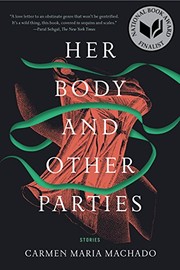
Her Body and Other Parties: Stories
Eight stories where bodies, medicine and old fairy tales get taken apart, with a green ribbon running through the whole book.
2,997-word summary · 13 min read

Big Swiss
A transcriptionist for a sex coach falls for one of his clients, the tall Swiss gynecologist she calls Big Swiss, in a funny novel about work and secrets.
2,523-word summary · 11 min read

Wide Sargasso Sea
Jean Rhys gives the first Mrs. Rochester a Caribbean childhood, a marriage built on money and suspicion, and a voice that Charlotte Bronte left in the attic.
2,021-word summary · 9 min read
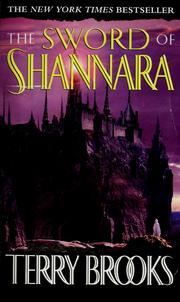
The Sword of Shannara
A young half-Elf and a company of companions set out to recover a magic sword before the Warlock Lord destroys the Four Lands.
2,474-word summary · 11 min read

The Gambler
Dostoevsky's roulette novella: Alexei loses Polina, wins a fortune, loses everything, and promises himself one more bet tomorrow.
2,022-word summary · 9 min read
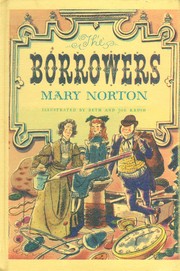
The Borrowers
A family of tiny people live under the floorboards of an English house, borrowing what they need until a lonely boy and a suspicious housekeeper change…
2,164-word summary · 10 min read

The Bone Clocks
A teenage runaway, a Cambridge con artist, a war reporter and a dying novelist circle a hidden war between immortals across sixty years, with Holly Sykes at…
2,125-word summary · 9 min read
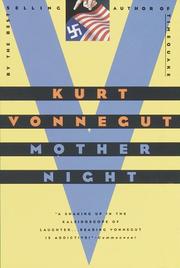
Mother Night
Howard W. Campbell Jr., a Nazi propagandist and American spy, tells the story of his double life from an Israeli prison cell while waiting to be tried for war…
1,988-word summary · 9 min read
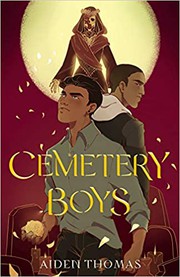
Cemetery Boys
A trans brujo in East Los Angeles summons the ghost of a boy who refuses to move on, and together they uncover a murder hidden beneath Día de los Muertos.
1,997-word summary · 9 min read
The House of Mirth
Lily Bart, beautiful and penniless at twenty-nine, navigates New York's marriage market until a Dorset yacht scandal strips her of the only currency she has.
2,468-word summary · 11 min read
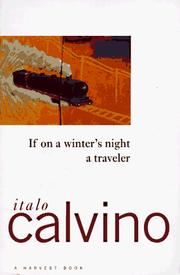
If on a Winter's Night a Traveler
You, the Reader, chase a defective novel through bookshops and translators while ten other novels keep interrupting. Calvino's famous puzzle about the act of…
2,173-word summary · 10 min read
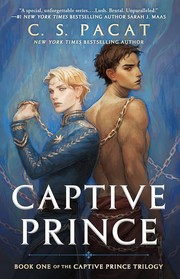
Captive Prince
Betrayed by his half-brother and sold to the enemy kingdom as a pleasure slave, Prince Damianos must survive in the court of Vere without revealing who he…
2,063-word summary · 9 min read
Wayward Son
Simon and Baz road trip America after the war to decide what normal means.
2,505-word summary · 11 min read
The Complete Fairy Tales
Mermaids, snow queens and tin soldiers in the full Andersen collection.
2,414-word summary · 11 min read
The Buried Giant
An old couple crosses a misty post Arthur Britain searching for a son.
2,593-word summary · 12 min read