
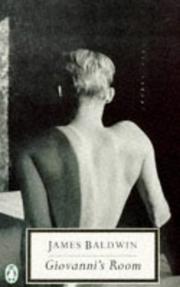
Giovanni's Room
2,264-word summary 10 min read 159 pages in the book
- First published
- 1956
- Publisher
- Dial Press
- Pages
- 159
- ISBN
- 9780140184129
Reading options
What's inside (8 sections)
I picked up Giovanni's Room because it is short. One hundred and fifty nine pages felt like a safe bet for a busy week, and I had heard for years that it was the rare classic people actually finish in two sittings. What I did not expect was how little it felt like homework. Baldwin writes Paris the way someone remembers a bad apartment, with total recall of the wallpaper, and David's voice grabbed me from the first page and never quite let go.
The setup is simple enough to fit on an index card. David is an American living in Paris. His fiancee Hella has gone to Spain to think about whether she really wants to marry him. While she is gone, David falls into an affair with Giovanni, an Italian bartender with almost nothing except a small rented room and a large capacity for feeling. Hella comes back. David has to choose. He chooses badly, and then he has to live inside that choice while the clock runs toward a dawn execution.
That sounds like a melodrama, and in weaker hands it would be one. What makes it land is how precisely Baldwin tracks the small lies that pile up before the big one. David never announces that he is afraid. He just stays out a little later, answers a little shorter, finds fault with the room, with Giovanni, with the maid, with anything except the one fact he cannot face. Reading it felt uncomfortably familiar, the way you recognize your own worst habits in someone else's story.
The summer Joey changed everything
David's trouble starts long before Paris. He grows up in Brooklyn with a father who drinks and blusters and means well in the clumsy way of men who have no language for tenderness. His mother is dead. His aunt Ellen keeps the house running and keeps an eye on David, and she sees more than David wishes she did. This is not a warm household. It is a loud one, full of performance, and David learns early how to perform the version of himself his father wants to see.
The hinge of his boyhood is Joey, a friend his own age, good looking and easy in his skin. One summer night when they are teenagers, something happens between them. Baldwin handles the scene with care rather than detail, and afterward David is flooded with a shame so total it rearranges him. He wakes up feeling that something in him has been exposed, and instead of sitting with that feeling he turns on Joey. He mocks him, freezes him out, and buries the whole night under a performance of normal boyish contempt.
That night becomes the template for the rest of David's life. Whenever desire points him somewhere his father's world calls shameful, David runs, and he calls the running common sense. He dates girls, plays the expected part, and tells himself the Joey night was a phase, a mistake, a thing boys do. Aunt Ellen watches all of this with a skepticism that David resents, mostly because she is right. By the time David leaves America, he has perfected the art of wanting something and punishing himself for wanting it at the same time.
Paris on borrowed money and borrowed time
In Paris, David lives the classic American abroad routine. He has little money of his own and relies on an allowance from his father, which arrives with letters full of advice and disappointment at his lack of direction. He tells his father he is thinking things over. What he is actually doing is drinking, staying up late, and circling the bars of a loose, knowing crowd that stays out past the hour when honest people go home.
The center of that crowd is Guillaume's bar, a gay bar run by its flamboyant owner, where wealthy men and kept boys and curious tourists mix under low light. David's guide to this world is Jacques, an older Belgian American with money and appetites and a weary view of everything that cuts close to the bone. Jacques likes David, teases him, lends him cash, and sees through him faster than David can stand. Their friendship is one of the best things in the book, because Jacques says out loud the truths David only thinks at three in the morning.
Hella, meanwhile, is in Spain. She went there to get distance and decide whether marrying David is what she actually wants, and her letters arrive with a cheerful strain that David can feel even across the distance. David proposed to her in a burst of resolve, telling himself that marriage would settle him, fix him, make him solid. The plan has a desperation humming under it that he refuses to hear. He waits for her answer the way a man waits for a train he is not sure he wants to catch.
The bartender with the bright laugh
Giovanni enters through Guillaume's bar, where he works pouring drinks. He is Italian, broke, stranded in Paris after sorrows back home that he talks about in fragments, a woman loved and lost, a grief tied to a child who did not live. David is drawn to him immediately and fights the pull for exactly as long as it takes to lose the fight. One night follows another, and soon David is spending his days in Giovanni's room, a small rented space on the edge of the city that becomes the emotional center of the whole novel.
Baldwin makes that room unforgettable. It is cramped and cluttered, full of Giovanni's few possessions, overlooked by a grumbling maid who disapproves of everything. The wallpaper, the narrow bed, the mess of bottles and clothes, all of it is rendered with a tenderness that tells you how David feels even when David will not say it. For a little while, the two of them play at domestic life. Giovanni shops and cooks with pride. David comes home to him. There is laughter in it, and jealousy, and the whole weather system of two people sharing too little space and too much feeling.
Giovanni loves without reservation, and that is exactly what terrifies David. Giovanni wants a life together, openly, and keeps asking David to admit what they both know. David keeps hedging. He talks about Hella's return as if it were weather, something happening to him rather than something he chose. He starts finding the room shabby. He starts staying out late with Jacques. The reader can see the exit being built plank by plank, even though David insists he is just being practical. The room is the one honest place in David's life, and he trashes it before he leaves it.
Sue and the slow work of betrayal
While Hella is still in Spain, David sleeps with a woman named Sue. She is a slightly sad habituée of the bars, and the encounter is joyless on both sides, two lonely people using each other for an evening. Baldwin does not linger on the scene itself. What matters is what it reveals. David reaches for Sue the way a man grabs a railing, trying to prove to himself that he wants the normal thing, the safe thing. It proves nothing except that he can be careless with someone who deserves better.
Around the same time, Giovanni loses his job at Guillaume's bar. The quarrel that ends it is ugly and tangled up with pride and money and the power Guillaume holds over boys like Giovanni. Suddenly the household has no income, and David, who has never supported anyone, feels the weight of it and resents feeling it. He starts spending more nights away. He lets Jacques buy his drinks. He tells himself he is giving Giovanni space, when he is really rehearsing his departure.
This middle stretch is painful because nothing dramatic happens. That is the point. David does not storm out. He leaks out, a little more each day, leaving Giovanni alone in the room with less money and more fear. Giovanni senses it and clings harder, which gives David the excuse he has been waiting for. He tells himself Giovanni is too needy, too emotional, too much. It is the oldest trick in the book, manufacturing a flaw in someone so you can leave them for a flaw instead of for your own fear.
Hella steps off the train
Then Hella comes back from Spain, and the waiting ends. David meets her full of resolution, or what he calls resolution. She has decided she will marry him, and he takes this as a sign, a rescue, a door swinging open onto a clean American future. He moves out of Giovanni's room and back into the life of restaurants and plans and wedding talk. He tells himself the whole Giovanni chapter is closed, a Paris interlude, something every young man goes through before settling down.
Giovanni does not accept the closing. He comes to David, pleads, rages, begs for honesty if not for love. These scenes are almost hard to read, because Giovanni says everything true and David answers with everything hollow. David gives him money, as if money settles it. He keeps the key to the room for a while, then gives it up in a gesture that is supposed to be final and feels instead like a man cutting off his own hand to prove he does not need it.
Hella, for her part, glows with the relief of a decision made. She talks about houses and children and the future with an eagerness that makes David's stomach turn, though he smiles through it. Jacques watches the reunion with open disgust and tells David, more or less, that he is trading something real for something approved. David hears him and hates him for it, which is usually a sign Jacques has landed a hit. The wedding plans move forward on rails while David stands on the track.
You think your pain and your heartbreak are unprecedented in the history of the world, but then you read.
I kept coming back to that Baldwin line while reading the Hella chapters. David is convinced his situation is uniquely impossible, that no one has ever been trapped between duty and desire the way he is. The novel gently and mercilessly shows otherwise. Jacques has lived it. Giovanni is living it. Hella is about to live the consequences of it. David's pain is real, but his belief that it excuses him is the lie that ruins everyone.
A death in a hotel room and a dawn in the south
What happens next happens mostly offstage, which makes it worse. Giovanni, broke and unraveling after David leaves him, drifts back toward Guillaume, who has work and money and a history of using both to get what he wants. The details come to David secondhand, in fragments he does not want to assemble. Guillaume is found murdered, strangled in his rooms, and the suspicion falls on Giovanni, who had quarreled with him and had nothing and nowhere. The arrest follows. Then the trial. Then the sentence.
Baldwin keeps the legal machinery at a distance on purpose. There are no courtroom fireworks, no last minute witnesses. Giovanni is tried and convicted, the death sentence follows, and David follows the news the way you follow news of a disaster in a country you used to live in, telling yourself it has nothing to do with you. But it has everything to do with him, and on some level he knows that his abandonment helped push Giovanni toward the despair that ended in a hotel room with a dead man.
Hella learns the truth, or enough of it. The exact mechanics of her discovery matter less than the result. She sees, finally, what David is, not a confused young man who needs patience but a man who will sacrifice anyone to keep his image of himself intact. She leaves him, and her leaving is the one clean moral action in a book full of muddy ones. David does not fight for her. He barely has the energy left to lie.
The novel frames all of this from a house in the south of France, where David is staying as the end approaches, counting down to the morning Giovanni will be executed. The famous closing finds David alone at dawn, haunted by Giovanni's face, confronting his own naked body in a mirror as if seeing himself for the first time. It is bleak and it is meant to be. There is no redemption offered, no lesson underlined, only a man left with the full knowledge of what his fear cost.
I should be honest about what frustrated me, because this is not a perfect book. David is passive to the point of exhaustion, and spending a whole novel inside the head of a man whose main action is refusal can wear you down. The bleakness never lifts, not once, and readers who need some crack of light will find none here. And Hella deserves better than Baldwin gives her. She is written largely as a function of David's dilemma, bright and game and then discarded, and the book's view of women in general feels thin and dated in places. None of that broke the spell for me, but it kept a great novel from being an easy one to love without reservation. Still, at a hundred and fifty nine pages, it earns its place. Few books say this much about shame, in this little space, without wasting a single scene.
FAQ
When was Giovanni's Room first published?
It was first published in 1956 by Dial Press, in a 159 page edition.
Who are the main characters?
David narrates. Hella is his fiancee, Giovanni the Italian bartender he loves, and Jacques and Guillaume anchor the Paris bar world around them.
Is the ending sad?
Yes. Giovanni murders Guillaume, Hella leaves David, and David is left alone in the south of France on the morning of Giovanni's execution.
Similar books

Orlando
A young Elizabethan nobleman becomes a woman and lives for centuries, moving through English history while writing a single poem about an oak tree.
2,030-word summary · 9 min read
Brideshead Revisited
At Oxford Charles Ryder befriends Sebastian Flyte and falls into the Catholic Marchmain family, from Brideshead summers to Julia's affair and Lord Marchmain's…
2,353-word summary · 10 min read

Steppenwolf
Harry Haller, half man and half wolf in his own mind, dances, loves, and enters a magic theatre in Hesse's strange 1927 novel.
3,181-word summary · 14 min read

The Idiot
A Turkish-American freshman at Harvard falls in love through email with a Hungarian math student and spends a summer in Hungary trying to turn correspondence…
2,019-word summary · 9 min read

The Crying of Lot 49
A California woman named executor of her ex-lover's estate follows a muted post horn into a possible centuries-old postal conspiracy, and Pynchon refuses to…
2,003-word summary · 9 min read
Silas Marner
A falsely accused weaver hoards gold in Raveloe until a stolen hoard and an abandoned child remake his narrow life.
2,699-word summary · 12 min read

Revolutionary Road
A Connecticut couple who believe they are too good for the suburbs plan to move to Paris, and the plan slowly exposes everything they cannot say to each other.
2,085-word summary · 9 min read

Howards End
Forster's 1910 novel follows two families, a house in Hertfordshire, and a burned note, asking whether money and feeling can ever be connected.
2,187-word summary · 10 min read

Sophie's Choice
A young Southern writer in 1947 Brooklyn befriends a brilliant, unstable couple and slowly learns the story of the Polish Catholic woman at the center of their…
2,798-word summary · 12 min read

Fathers and Sons
Arkady brings the nihilist Bazarov home to his father's estate, and a generational argument turns into love, a duel, and an early death.
2,192-word summary · 10 min read

Unaccustomed Earth
Lahiri’s second story collection follows Bengali families in America and abroad, tracing the quiet distances between parents and children, spouses, and the…
2,333-word summary · 10 min read
Naked Lunch
Burroughs's banned 1959 collage novel follows Bill Lee through addiction, Tangier, and the nightmare bureaucracy of the Interzone.
2,082-word summary · 9 min read

We Are Okay
Marin fled San Francisco after her grandfather vanished and stopped answering anyone. When Mabel visits her college dorm, she has to say what happened.
2,253-word summary · 10 min read

The Chosen
A shattered pair of glasses in a 1944 Brooklyn softball game starts a friendship between a Hasidic boy and his Orthodox neighbor, and their fathers pull them…
2,443-word summary · 11 min read

Infinite Jest
A film that kills its viewers, a tennis academy, a halfway house for addicts, and a future America where corporations name the years, all tangled together.
2,084-word summary · 9 min read

The Dharma Bums
Ray Smith rides freight trains, climbs Matterhorn Peak and argues about Zen with the poet Japhy Ryder in Kerouac's 1958 road novel.
2,729-word summary · 12 min read

Sing You Home
A music therapist, her new wife and an evangelical ex-husband end up in court over three frozen IVF embryos.
2,952-word summary · 13 min read

Ivanhoe
A disinherited Saxon knight, a great tournament, a besieged castle and a trial by combat. Scott's most famous novel, set in England in 1194.
2,834-word summary · 13 min read
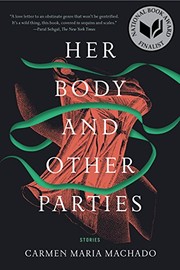
Her Body and Other Parties: Stories
Eight stories where bodies, medicine and old fairy tales get taken apart, with a green ribbon running through the whole book.
2,997-word summary · 13 min read

Big Swiss
A transcriptionist for a sex coach falls for one of his clients, the tall Swiss gynecologist she calls Big Swiss, in a funny novel about work and secrets.
2,523-word summary · 11 min read

Wide Sargasso Sea
Jean Rhys gives the first Mrs. Rochester a Caribbean childhood, a marriage built on money and suspicion, and a voice that Charlotte Bronte left in the attic.
2,021-word summary · 9 min read

The Gambler
Dostoevsky's roulette novella: Alexei loses Polina, wins a fortune, loses everything, and promises himself one more bet tomorrow.
2,022-word summary · 9 min read
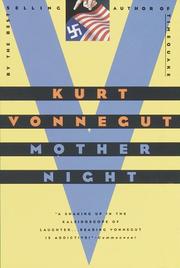
Mother Night
Howard W. Campbell Jr., a Nazi propagandist and American spy, tells the story of his double life from an Israeli prison cell while waiting to be tried for war…
1,988-word summary · 9 min read
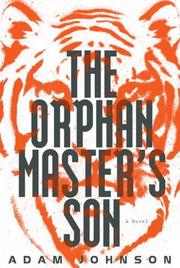
The Orphan Master's Son
Adam Johnson's Pulitzer-winning novel follows Pak Jun Do from a North Korean orphanage to a deadly identity swap, under a state whose loudspeakers never stop…
2,219-word summary · 10 min read
The House of Mirth
Lily Bart, beautiful and penniless at twenty-nine, navigates New York's marriage market until a Dorset yacht scandal strips her of the only currency she has.
2,468-word summary · 11 min read
If on a Winter's Night a Traveler
You, the Reader, chase a defective novel through bookshops and translators while ten other novels keep interrupting. Calvino's famous puzzle about the act of…
2,173-word summary · 10 min read
I Capture the Castle
Cassandra journals six months of love and money trouble in a castle.
2,402-word summary · 11 min read
Ham on Rye
Henry Chinaski grows up rough in Depression Los Angeles and finds writing.
2,244-word summary · 10 min read
Bleak House
Jarndyce and Jarndyce grinds through Chancery while Esther finds her family.
2,480-word summary · 11 min read