
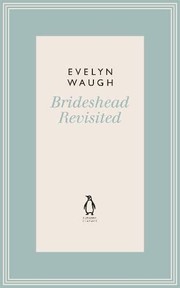
Brideshead Revisited
2,353-word summary 10 min read 402 pages in the book
- First published
- 1945
- Publisher
- Chapman & Hall
- Pages
- 402
- ISBN
- 9780141193489
Reading options
What's inside (7 sections)
I came to Brideshead Revisited late, after seeing clips of the old television version and hearing friends argue about whether it is a love story or a sermon. The novel was published in 1945 by Chapman & Hall under its full title, The Sacred and Profane Memories of Captain Charles Ryder, and it runs 402 pages. I read it on slow evenings, a few chapters at a time, and I kept changing my mind about what Waugh wanted me to feel. At first it felt like a memory of Oxford summers. By the end it felt like an argument about God that uses rich people and pretty buildings to make its case.
Charles Ryder is our guide, and he tells us at once that he is not grand. His father Edward is a dry, solitary widower in London who loves his routines and his jokes. Charles goes up to Oxford to read history, lives plainly, and then is swept up by Sebastian Flyte, the younger son of the Marquess of Marchmain. Sebastian is beautiful, funny, troubled, and drunk more often than he should be. He carries everywhere a teddy bear named Aloysius, talks to it, sets a place for it, and dares anyone to laugh. Charles laughs, then stops laughing, then loves the joke and the boy together. Through Sebastian, Charles is invited to Brideshead Castle in Wiltshire, the great house of the Marchmains, and the book never quite leaves that house even when the action moves elsewhere.
The Flytes are Catholic in a way Charles has never met up close. He grew up thinking religion was empty form. Lady Marchmain, Teresa, runs her household by the calendar of the Church, hears Mass, says the rosary, expects her children to marry within the faith and to live by its rules. Her eldest son, Bridey, the Earl of Brideshead, takes it all seriously and even thinks of the priesthood. Her younger daughter Cordelia believes with a clear, childlike firmness. Her elder daughter Julia is already testing the edges, lovely and headstrong and tired of being managed. Lord Marchmain himself, Alexander, converted to marry Teresa and then left both the marriage and the faith, living in Venice with his mistress Cara. Charles watches all this as an outsider who is half charmed and half baffled. Dinners at Brideshead stretch long. Talk turns to saints and sins without embarrassment. Servants and priests move through the same rooms as undergraduates with hangovers.
Oxford and the summer of Aloysius
The Oxford chapters are the ones people quote, and I see why. Charles and Sebastian meet in 1923, when Charles is nineteen and hungry for a wider life. Sebastian introduces him to Anthony Blanche, the flamboyant aesthete who recites poetry through a megaphone and sees through everyone, and to a circle of languid friends who drink and punt and stay up late. Charles spends a summer going between London and Brideshead, called back when Sebastian cracks a small bone in his foot and then kept on for weeks of idling. They lie on roofs. They drink wine in the garden. They drive. Sebastian takes Charles to Venice to meet Lord Marchmain and Cara, and Charles hears Cara explain, in her blunt continental way, that young Englishmen often love each other first before they learn to love women. The line lands without scandal in the novel, as observation rather than accusation.
Waugh writes these pages with unusual sweetness for him. Food is described plate by plate. Wine is named. Light on stone is lingered over. Charles paints a little, looks a lot, and feels he has entered a richer existence. His cousin Jasper warns him he is spending too much and mixing with the wrong sort. His father teases him by making home deliberately awkward so Charles will learn to budget. None of it works. Brideshead has him. What I liked here was the specificity. Aloysius losing an eye. Sebastian vomiting discreetly behind a hedge and then carrying on as if nothing happened. Lady Marchmain asking Charles, gently at first and then firmly, what he intends to do with his life. The charm is real, but Waugh plants small signs that it cannot last. Sebastian drinks to soften something. Julia watches Charles a beat too long. Bridey watches everyone with patient disapproval.
Brideshead deserted and the marriages that fail
The middle turn is handled quietly. Lady Marchmain decides Charles is a bad influence, or at least a pagan one, and freezes him out. He leaves thinking he will not return. Julia marries Rex Mottram, a Canadian businessman turned politician with money and appetite and little interest in anything he cannot buy. Rex agrees to convert to marry Julia in church, takes instruction, then founders on basic doctrine. He has been divorced, with a former wife alive in Canada, which makes a Catholic wedding impossible. Julia marries him anyway in a Protestant chapel, to her mother's grief. The marriage is showy and hollow. Rex wants the Marchmain name on his climb. Julia wants escape from her mother's house. Neither gets what they hoped.
Sebastian, meanwhile, slides. Waugh does not give us one crash but a long slope. After Oxford, Sebastian drinks through days in London, takes money from the family, quarrels, disappears to Morocco with a German friend named Kurt, a sad ex soldier with a septic foot whom Sebastian nurses out of guilt and loneliness as much as affection. Charles is asked by Julia to go find him because Lady Marchmain is ill. He tracks Sebastian to a monastery clinic in North Africa, thin and shaking and oddly at peace being useful to the monks as a porter. He will not come home. Charles returns to England, paints Marchmain House in London before it is pulled down, talks with Cordelia while he works, and learns how far the family has scattered. Lady Marchmain dies in 1926. The chapel at Brideshead is closed. The house feels mothballed.
I found this stretch the hardest to read fast, and that is partly the point and partly a flaw. Waugh jumps years in a few paragraphs. Charles becomes a successful architectural painter, travels to Latin America, marries Celia, Bridey's sister-in-law circle, has two children, grows cold. Celia is unfaithful and Charles feels relief more than anger. The prose stays elegant, but the emotional thread thins. We are told about decline rather than shown it day by day. Cordelia's letters and talk do a lot of heavy lifting, reporting on Sebastian's condition, on Julia's separation from Rex, on Bridey's engagement to an older widow. It reads like news from people we once knew well and now meet at funerals. That distance suits a book about memory, yet I missed the close texture of the Oxford summers. Waugh seems less interested in Charles the husband and father than in Charles the witness, so those years pass in summary.
Julia and the second chance that is not
Then Julia comes back into focus, and the book sharpens again. Separated from Rex, living more freely, she meets Charles again on a ship and they begin an affair that both treat as serious. They plan divorces. They imagine marrying and perhaps living at Brideshead, since Bridey's own marriage has removed him from succession talk and Lord Marchmain, old and ill, names Julia as heir. For a stretch Charles believes he has finally stepped inside the house rather than visiting it. He and Julia are happy in a guarded, adult way, renting, travelling, making plans. Waugh writes their intimacy well, especially the small negotiations about how to tell the children, how to handle priests, how to face friends who will smile in public and frown in private.
What blocks them is the same thing that made the Flytes interesting in the first place. Julia still believes, even after years of ignoring belief. She tells Charles she has lived in sin and cannot go on adding to it. The phrasing sounds stiff now, but in the novel it carries force because Julia is not repeating her mother. She is choosing against her own desire. Charles, who began as an unbeliever, has been moved without quite noticing, by Cordelia's steadiness, by Sebastian's end in charity, by the sight of faith working in flawed people rather than perfect ones. He does not argue Julia out of it. He sees the logic and hates it.
The deathbed scene that decides everything is famous and still startling. Lord Marchmain returns to Brideshead to die, ill and sharp tongued, refusing priests, enjoying the discomfort he causes. Bridey hovers. Julia waits. A priest is called. At the last, Marchmain makes the sign of the cross, accepts the rites, and dies reconciled. Waugh stages it without swelling the music. A nod. A movement of the hand. Julia weeps because she understands what it means for her. If her father, who lived apart for decades, could turn at the end, then grace is real and her own position is false. She tells Charles they cannot marry. He leaves. The house that seemed about to become his slips away.
The chapel lamp and the war frame
Waugh frames all of this with war. The prologue and epilogue put Charles in uniform in the early 1940s, middle aged, childless in effect if not in fact, loveless as he puts it, posted with his battalion to Brideshead itself, now requisitioned and scarred by soldiers. Hooper, his young platoon commander, represents a new England that cares nothing for old houses. Charles walks the grounds, finds the fountain working, finds the house battered, and finds the chapel reopened for troops after years shut. He kneels and says a prayer he has recently learned. The last lines suggest the builders labours were not wasted, that purpose can survive long frustration.
I was moved by that ending and also aware of being managed. Waugh, himself a Catholic convert, wrote that the book is about the operation of grace, the way God pulls souls one by one, often through crooked lines. Cordelia quotes Chesterton's Father Brown story about a thief caught with an unseen hook and an invisible line, brought back with a twitch upon the thread. That image governs the novel. Sebastian twitched to the monastery. Julia twitched away from Charles. Marchmain twitched at the last hour. Charles twitched to his knees. If you share the faith, the pattern feels profound. If you do not, it can feel like the plot was fixed from the start and the characters were moved like pieces. Both responses are fair. I sit somewhere between. The conversions are psychologically prepared, especially Julia's, yet the book wants you to assent, not only to observe.
What creaks after eighty years
Fair criticism belongs here, because Brideshead Revisited is easy to love in parts and hard to defend whole. The nostalgia politics are the clearest problem. Waugh writes as if England ruined itself by handing power to men like Hooper, decent and dull, and as if the great houses held a better order. The passage about deaths in the Great War making a world safe for the travelling salesman is meant to sting, and it does, but it also sneers. Charles's contempt for modern building, modern manners, modern officers can sound like snobbery dressed as sorrow. I felt that most in the war frame, where soldiers are sketched thinly so Charles can feel deep among them. A reader who did not grow up romanticizing country houses may find long stretches of wine and stonework cloying rather than elegiac.
The Catholic weight is the second issue. Waugh is honest about his theme, and the family is drawn with enough flaws to avoid plaster sainthood. Lady Marchmain is loving and controlling. Bridey is just and chilly. Cordelia is kind and absolute. Even so, the theology narrows as the book goes on. Julia's decision is presented as victory, but it reads to many now as self punishment. Charles's growth requires giving up the woman he loves for a Church he barely understands. Sebastian's ruin is redeemed because he scrubs floors for monks. The book allows little room to say the price is too high without seeming blind to grace. Anthony Blanche, the clearest eyed character, mostly vanishes after Oxford, which feels convenient. He would have asked rude questions of the later acts.
The pacing is the third. The Oxford opening and the deathbed close are sustained. The middle, with Latin America, marriage to Celia, success as a painter, passes too quickly, and the jump from infatuation with Sebastian to passion for Julia can feel asserted rather than earned. Waugh says through Cara and through Charles himself that Julia was the forerunner seen in Sebastian, that Charles loved the family through the brother and then through the sister. I accepted it while reading and doubted it after. Julia deserves more scenes before she becomes the great love. Rex deserves more than caricature, though his instruction scenes, where he cannot grasp doctrine and cheerfully misses the point, are very funny.
Even with those complaints, I would not call the book dead or merely pretty. The sentences are superb without showing off too often. The character writing at its best is exact. Edward Ryder fencing with his son over money and mourning. Cara in Venice, kind and unsparing. Cordelia reporting from Spain after nursing the wounded, still able to joke. The dying Marchmain, furious and childish and then still. The 1945 Chapman & Hall first edition set all this down when the war it describes was barely over, which gives the prologue an odd immediacy. Waugh later said he disliked the rich ornament of the book and would cut it if he could. I am glad he cannot. The ornament is part of the meaning. A man who worshipped beautiful things learns to kneel in a small chapel while an army camped in the park. That image holds, whether or not you share the creed behind it. The 402 pages ask patience in the middle and repay it at both ends, which seems a fair trade for a novel about learning late.
FAQ
Who is Sebastian Flyte in Brideshead Revisited?
Waugh presents him as charming, troubled, and alcoholic, carrying his teddy bear Aloysius. He drifts to Morocco and ends in service at a Tunisian monastery.
Why do Charles and Julia not marry?
She separates from Rex Mottram and plans to marry Charles, then leaves him after her father's deathbed conversion. She decides a church wedding to Charles would deny her faith.
Is the novel slow or very religious?
Yes, in the sense that manners, houses, and faith carry the story. Readers who want fast plot often find the middle years and the theology slow.
Similar books

Fathers and Sons
Arkady brings the nihilist Bazarov home to his father's estate, and a generational argument turns into love, a duel, and an early death.
2,192-word summary · 10 min read

The Chosen
A shattered pair of glasses in a 1944 Brooklyn softball game starts a friendship between a Hasidic boy and his Orthodox neighbor, and their fathers pull them…
2,443-word summary · 11 min read
Orlando
A young Elizabethan nobleman becomes a woman and lives for centuries, moving through English history while writing a single poem about an oak tree.
2,030-word summary · 9 min read
Giovanni's Room
An American in Paris stalls between his fiancee in Spain and an Italian bartender who loves him. Baldwin's brief tragedy still stings.
2,264-word summary · 10 min read
Blood Meridian
A teenage runaway joins a scalp hunting gang in 1849 Mexico under the strange Judge Holden. McCarthy writes brutal biblical prose about violence and power on…
3,524-word summary · 16 min read
The Crying of Lot 49
A California woman named executor of her ex-lover's estate follows a muted post horn into a possible centuries-old postal conspiracy, and Pynchon refuses to…
2,003-word summary · 9 min read
Silas Marner
A falsely accused weaver hoards gold in Raveloe until a stolen hoard and an abandoned child remake his narrow life.
2,699-word summary · 12 min read
Revolutionary Road
A Connecticut couple who believe they are too good for the suburbs plan to move to Paris, and the plan slowly exposes everything they cannot say to each other.
2,085-word summary · 9 min read

Howards End
Forster's 1910 novel follows two families, a house in Hertfordshire, and a burned note, asking whether money and feeling can ever be connected.
2,187-word summary · 10 min read

Sophie's Choice
A young Southern writer in 1947 Brooklyn befriends a brilliant, unstable couple and slowly learns the story of the Polish Catholic woman at the center of their…
2,798-word summary · 12 min read
Naked Lunch
Burroughs's banned 1959 collage novel follows Bill Lee through addiction, Tangier, and the nightmare bureaucracy of the Interzone.
2,082-word summary · 9 min read

We Are Okay
Marin fled San Francisco after her grandfather vanished and stopped answering anyone. When Mabel visits her college dorm, she has to say what happened.
2,253-word summary · 10 min read
Infinite Jest
A film that kills its viewers, a tennis academy, a halfway house for addicts, and a future America where corporations name the years, all tangled together.
2,084-word summary · 9 min read
The Dharma Bums
Ray Smith rides freight trains, climbs Matterhorn Peak and argues about Zen with the poet Japhy Ryder in Kerouac's 1958 road novel.
2,729-word summary · 12 min read

Ivanhoe
A disinherited Saxon knight, a great tournament, a besieged castle and a trial by combat. Scott's most famous novel, set in England in 1194.
2,834-word summary · 13 min read
Her Body and Other Parties: Stories
Eight stories where bodies, medicine and old fairy tales get taken apart, with a green ribbon running through the whole book.
2,997-word summary · 13 min read

Big Swiss
A transcriptionist for a sex coach falls for one of his clients, the tall Swiss gynecologist she calls Big Swiss, in a funny novel about work and secrets.
2,523-word summary · 11 min read

Wide Sargasso Sea
Jean Rhys gives the first Mrs. Rochester a Caribbean childhood, a marriage built on money and suspicion, and a voice that Charlotte Bronte left in the attic.
2,021-word summary · 9 min read
The Gambler
Dostoevsky's roulette novella: Alexei loses Polina, wins a fortune, loses everything, and promises himself one more bet tomorrow.
2,022-word summary · 9 min read
The Birth of Venus
A Florentine merchant's daughter trains as an artist, marries a man who hides a secret, and survives Savonarola's bonfire of the vanities.
2,404-word summary · 11 min read
Mother Night
Howard W. Campbell Jr., a Nazi propagandist and American spy, tells the story of his double life from an Israeli prison cell while waiting to be tried for war…
1,988-word summary · 9 min read
The House of Mirth
Lily Bart, beautiful and penniless at twenty-nine, navigates New York's marriage market until a Dorset yacht scandal strips her of the only currency she has.
2,468-word summary · 11 min read
If on a Winter's Night a Traveler
You, the Reader, chase a defective novel through bookshops and translators while ten other novels keep interrupting. Calvino's famous puzzle about the act of…
2,173-word summary · 10 min read
By the River Piedra I Sat Down and Wept
Pilar, 29, meets her childhood friend again in Madrid and finds a rumored miracle worker. One winter week through the Pyrenees to the river Piedra, and the…
2,845-word summary · 13 min read
The Fire Next Time
Baldwin writes his nephew and faith on race in America.
2,463-word summary · 11 min read
I Capture the Castle
Cassandra journals six months of love and money trouble in a castle.
2,402-word summary · 11 min read
Ham on Rye
Henry Chinaski grows up rough in Depression Los Angeles and finds writing.
2,244-word summary · 10 min read
Bleak House
Jarndyce and Jarndyce grinds through Chancery while Esther finds her family.
2,480-word summary · 11 min read
A Canticle for Leibowitz
After nuclear war, monks save books across centuries while the world rebuilds and falls again.
2,381-word summary · 11 min read