
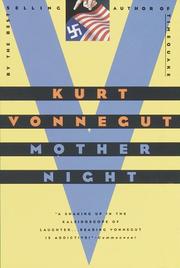
Mother Night
1,988-word summary 9 min read 288 pages in the book
- First published
- 1962
- Publisher
- Dial Press
- Pages
- 288
- ISBN
- 9780385334143
Reading options
What's inside (2 sections)
Mother Night is a short novel about a man who spends his life pretending to be something he is not, and then discovers that the pretending has become the truth. Kurt Vonnegut published it in 1962, early in his career, before Slaughterhouse-Five made him famous. It is a spy story, a war story, and a confession, but it is mostly a book about identity. The narrator is Howard W. Campbell Jr., an American who became a Nazi propagandist and an American spy at the same time. He is writing his memoirs in an Israeli prison while waiting to be tried for war crimes. He is not sorry for what he did. He is sorry for what he became.
The novel opens with an author's note. Vonnegut says that this is the only story of his whose moral he knows. The moral is: "We are what we pretend to be, so we must be careful about what we pretend to be." That line is famous, and it is the key to the book. Campbell pretends to be a Nazi so that he can spy for the Americans. He pretends to love the regime so that he can survive. He pretends to be a good husband so that he can keep his wife. By the end, he does not know which of his selves is real. The book does not let him off the hook. It also does not let the reader off the hook.
Campbell was born in the United States, but his family moved to Germany when he was eleven. He grew up speaking German. He became a playwright, and a successful one. His plays were produced in Berlin. He married Helga, an actress who starred in all of his plays. He was not political. He was not a Nazi. He was an artist who wanted to make art, and the Nazis were willing to let him do that as long as he did not cause trouble. That is the first compromise. It is a small one, and it leads to all the others.
When the war starts, Campbell is approached by Frank Wirtanen, an agent of the U.S. War Department. Wirtanen wants Campbell to spy for the Americans. Campbell refuses at first. He says he is not a spy. He says he does not believe in the war. Wirtanen tells him to think about it. Campbell thinks about it, and he says yes. He becomes a double agent. He broadcasts Nazi propaganda to America, and he hides coded messages in the broadcasts. The pauses, the coughs, the idiosyncrasies of his speech, all of it is designed to pass information to the OSS. He never knows what information he is sending. He never knows if it is helping.
The broadcasts make him famous. He becomes the voice of the Nazi cause in America, a traitor to his own country. He is hated by the Allies and celebrated by the Nazis. He is also, in his own mind, a patriot. He tells himself that he is doing something noble. He tells himself that he is sacrificing his reputation for a good cause. The book does not confirm that he is right. It does not confirm that he is wrong. It just shows him living with the contradiction, and slowly being eaten by it.
His wife, Helga, is the one person who makes the contradiction bearable. She is not political either. She loves him, and she loves the life they have. When she goes to the Eastern Front to entertain German troops, she is reported dead. Campbell is devastated. He never fully recovers. Her absence becomes the center of his life. He keeps her memory alive by talking to her, by writing about her, by imagining what she would say. That grief is the most human thing about him, and it is also the thing that makes him vulnerable.
Helga's younger sister, Resi, is the other woman in the book. She is not a replacement for Helga. She is a reminder of what Campbell lost. She has a conversation with him before the war ends that stays with him for years. She tells him that he is a good man. He does not believe her. He does not believe anyone who says that. He has spent too long pretending to be a monster to accept that he might not be one.
After the war, Campbell is captured by American forces. Wirtanen arranges for him to be released and sent to New York. He lives there for fifteen years, alone, under a false name. He does not work. He does not make friends. He spends his days in his apartment, remembering Helga, waiting for something to happen. His only friend is George Kraft, a neighbor who is also lonely. Kraft is charming, cultured, and attentive. He is also a Soviet intelligence agent. Campbell does not know that. He does not know that he is being watched.
The plot thickens when a white supremacist group discovers who Campbell is. The group is led by a dentist named Lionel Jones. They want to use Campbell as a symbol. They bring him to a meeting, and they introduce him to a woman who claims to be Helga. Campbell knows immediately that she is not Helga. She is Resi, Helga's sister. But he wants to believe. He wants it so badly that he plays along. He lets Resi pretend to be Helga, and he pretends to be the man she remembers. It is another performance, and it is the most dangerous one yet.
Kraft and Resi convince Campbell to flee to Mexico City. They tell him that the FBI is closing in. They tell him that he will be safe there. They are lying. They are working for the Soviets, and they want to use Campbell as a propaganda tool. Wirtanen appears at the last minute and warns Campbell. Campbell confronts Kraft and Resi. Resi admits that she loves him, or says she does. The FBI raids the meeting. Resi takes a cyanide capsule and dies. Campbell is arrested, then released again. Wirtanen has saved him once more.
Campbell goes back to his apartment and realizes that he has nothing left. He has no wife, no country, no art, no friends. He has been kept alive by other people's plans. He decides to turn himself in to the Israelis. He wants to stand trial. He wants someone to judge him. He wants the story to end.
In prison, he meets Adolf Eichmann. The meeting is brief, but it is important. Campbell gives Eichmann advice on how to write an autobiography. He tells him to be honest. It is a dark joke, and it is also a moment of recognition. Campbell sees himself in Eichmann, and he does not like what he sees. He is not a Nazi, but he has spent years helping the Nazis. He is not a monster, but he has done monstrous things. The line between the two is thinner than he thought.
At the very end, Campbell receives a letter from Wirtanen. The letter confirms that Campbell was an American spy. Wirtanen says he will testify on Campbell's behalf. The evidence that would save his life has finally arrived. Campbell is not relieved. He is disgusted. He realizes that he will be saved only when he is too old and too broken to enjoy freedom. The timing is cruel, and it is also just. He decides to hang himself. He says he will do it not for crimes against humanity, but for "crimes against myself." The last line is one of the most famous in Vonnegut's work, and it is earned.
The novel is also a product of its time. Vonnegut served in World War II, was captured, and survived the bombing of Dresden. He knew what it was like to be inside a catastrophe and to come out the other side with a story that did not make sense. Mother Night is not a memoir, but it has the texture of one. The details are small and specific: the smell of the prison, the sound of the broadcasts, the way Campbell remembers Helga's hands. Those details make the book feel true even when the plot is implausible. Vonnegut understood that the biggest lies are often told in the most ordinary voice.
The women in the novel are less developed than the men, and that is a real limitation. Helga is an idea of love more than a person. Resi is a plot device with a tragic ending. The book is interested in Campbell's interiority, and it does not give the women the same attention. That is a shame, because Helga's story could have been its own novel. She is an actress who married a man she did not fully understand, and she went to the Eastern Front to entertain soldiers. What did she think about the war? What did she think about her husband's broadcasts? The book does not tell us, and that absence is felt.
The ending is one of the best in Vonnegut's work. Campbell receives the letter that proves he was a spy, and instead of feeling vindicated, he feels mocked by fate. The timing is too late to give him a life. He has already lost everything. His suicide is not a confession of guilt. It is a refusal to accept a pardon that comes with no real freedom. The phrase "crimes against myself" is a way of saying that he has betrayed his own soul, and that no court can punish him for it. It is a bleak ending, but it is also a honest one. Campbell does not deserve our pity. He deserves our attention.
What makes Mother Night so good is its refusal to moralize. Campbell is a liar, a coward, and a collaborator. He is also a man who loved his wife, who tried to serve his country, and who was used by everyone around him. The book does not ask us to forgive him. It asks us to understand how someone like him could happen. It asks us to look at the ways we all pretend to be things we are not, and to think about what those performances do to us. The spy story is exciting, but the moral story is what stays.
Vonnegut's prose is plain and fast. He does not waste words. The novel is only about 200 pages, and it can be read in a single sitting. The frame device, a memoir with an author's note, is a little dated, but it works. The voice is cynical and wounded, and it is very funny in places. The comedy does not undercut the tragedy. It makes the tragedy more bearable, and more human.
The weaknesses are the weaknesses of Vonnegut's early work. The female characters are thin. Helga and Resi exist mostly to reflect Campbell's grief and desire. The political background is sketched rather than explored. The ending is abrupt, and some readers will find Campbell's suicide too neat. The book also has a tendency to explain its own themes, which can feel heavy-handed. But those are small complaints about a novel that is trying to do something difficult. It is trying to make a monster sympathetic without making him innocent, and it succeeds.
I read Mother Night in two days, and I thought about it for weeks. It is not a comfortable book. It is a book about the stories we tell to survive, and the price of believing them. It is also a book about love, which is not usually what people remember about Vonnegut. Campbell's love for Helga is the one thing in his life that is not a performance. It is also the thing that destroys him. That is the tragedy. He spent his whole life pretending, and the only real thing he had was taken away.
FAQ
What is the meaning of the title Mother Night?
It comes from Goethe's Faust, where Mother Night is the primordial darkness that existed before creation and is expected to return.
Was Howard W. Campbell Jr. a real person?
No. He is a fictional character, though Vonnegut drew on real Nazi broadcasters and spies for inspiration.
Why does Campbell kill himself?
He receives proof that he was an American spy, but the pardon comes too late to give him a life, and he chooses death for what he calls crimes against himself.
Similar books
Silas Marner
A falsely accused weaver hoards gold in Raveloe until a stolen hoard and an abandoned child remake his narrow life.
2,699-word summary · 12 min read

Sophie's Choice
A young Southern writer in 1947 Brooklyn befriends a brilliant, unstable couple and slowly learns the story of the Polish Catholic woman at the center of their…
2,798-word summary · 12 min read
Stones from the River
Trudi Montag is born a dwarf in a small German river town in 1915 and grows up to keep the town's library and its secrets, from the First World War to the…
2,818-word summary · 13 min read

Ivanhoe
A disinherited Saxon knight, a great tournament, a besieged castle and a trial by combat. Scott's most famous novel, set in England in 1194.
2,834-word summary · 13 min read

Wide Sargasso Sea
Jean Rhys gives the first Mrs. Rochester a Caribbean childhood, a marriage built on money and suspicion, and a voice that Charlotte Bronte left in the attic.
2,021-word summary · 9 min read
The Lost Girls of Paris
In 1946, a war widow finds an abandoned suitcase in Grand Central holding photographs of twelve women who vanished in the war, and follows their story back to…
2,668-word summary · 12 min read
Bleak House
Jarndyce and Jarndyce grinds through Chancery while Esther finds her family.
2,480-word summary · 11 min read
Song of Solomon
Milkman Dead leaves Michigan to hunt for family gold and finds instead the old song of his ancestor Solomon.
2,465-word summary · 11 min read
Code Name Verity
In 1943 France, captured agent Verity writes a confession for von Linden to buy time. Her pilot friend Maddie survives the crash and searches for her by…
2,690-word summary · 12 min read
The Sympathizer
Double agent captain spies in Saigon fall and LA exile while confessing to commandant.
2,169-word summary · 10 min read
The English Patient
In a ruined Italian villa in 1945, a burned man, a nurse, a thief, and a sapper trade pasts shaped by desert love and war.
2,006-word summary · 9 min read
All the Pretty Horses
John Grady and Rawlins ride to Mexico for ranch work, finding love, prison, and a code that costs all.
2,677-word summary · 12 min read
Middlemarch
Idealistic Dorothea marries dry scholar Casaubon while ambitious doctor Lydgate marries Rosamond, and a Midlands town watches both marriages strain.
2,883-word summary · 13 min read
Things Fall Apart
Proud Igbo wrestler Okonkwo rises in 1890s Umuofia, then loses standing through hard exile, a son's conversion, and British missionaries and courts remaking…
2,518-word summary · 11 min read
Beloved
Sethe lives with the memory of killing her child to save her from slavery until a young woman named Beloved arrives.
2,586-word summary · 11 min read
All Quiet on the Western Front
Paul Bäumer enlists at nineteen and faces the trenches of World War I in Remarque's 1929 classic, told from the German side of the wire.
2,543-word summary · 11 min read
The Book Thief
Markus Zusak's The Book Thief retold: Liesel in Molching, Hans and Rosa, Max in the basement, and Death as narrator.
2,560-word summary · 11 min read
All the Light We Cannot See
Doerr's All the Light We Cannot See retold: blind Marie-Laure, Werner the radio boy, and Saint-Malo.
1,962-word summary · 9 min read
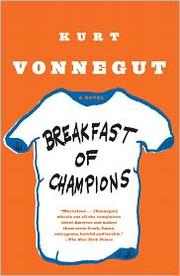
Breakfast of Champions
A Pontiac dealer breaks down while a broke sci-fi writer brings the book that tells him others are robots.
2,013-word summary · 9 min read

Violeta
A woman born in 1920 writes her life story to her grandson, from one pandemic to another, through wealth, ruin, passion, and dictatorship in South America.
2,555-word summary · 11 min read
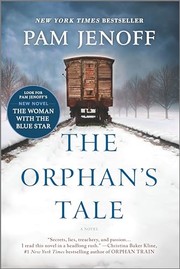
The Orphan's Tale
A Dutch teenager rescues a Jewish baby from a death train and joins a German circus, where a Jewish aerialist teaches her to fly.
2,943-word summary · 13 min read

The Long Winter
Dakota Territory, 1880: seven months of blizzards cut a town off from the railroad, and a family survives on twisted hay, ground wheat, and a dangerous wheat…
2,210-word summary · 10 min read

The Japanese Lover
A Polish refugee and the son of a Japanese gardener fall in love in San Francisco in 1939, then keep the affair secret for nearly seventy years.
2,286-word summary · 10 min read

The Crying of Lot 49
A California woman named executor of her ex-lover's estate follows a muted post horn into a possible centuries-old postal conspiracy, and Pynchon refuses to…
2,003-word summary · 9 min read

Revolutionary Road
A Connecticut couple who believe they are too good for the suburbs plan to move to Paris, and the plan slowly exposes everything they cannot say to each other.
2,085-word summary · 9 min read
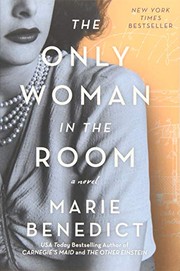
The Only Woman in the Room
A novel about Hedy Lamarr's escape from an arms-dealer husband, her Hollywood career, and the frequency-hopping patent the Navy ignored.
2,067-word summary · 9 min read

Little Town on the Prairie
In the spring after the Long Winter, fifteen-year-old Laura sews shirts, studies for a teaching certificate, and helps send her blind sister Mary to college.
2,071-word summary · 9 min read

Howards End
Forster's 1910 novel follows two families, a house in Hertfordshire, and a burned note, asking whether money and feeling can ever be connected.
2,187-word summary · 10 min read
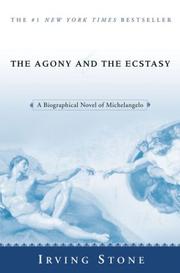
The Agony and the Ecstasy
Irving Stone turns Michelangelo's seventy years of carving, painting, and arguing with popes into a novel about the cost of making something that outlives you.
2,260-word summary · 10 min read

Fathers and Sons
Arkady brings the nihilist Bazarov home to his father's estate, and a generational argument turns into love, a duel, and an early death.
2,192-word summary · 10 min read