
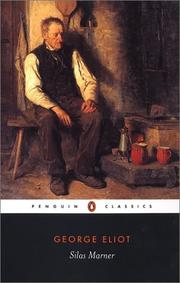
Silas Marner
2,699-word summary 12 min read 238 pages in the book
- First published
- 1861
- Publisher
- William Blackwood and Sons
- Pages
- 238
- ISBN
- 9780141439754
Reading options
What's inside (10 sections)
The loom is the first thing you hear. Before George Eliot explains anything about her weaver's past, she puts you outside a stone cottage near a worked-out quarry and lets the handloom do the introduction: a steady thud and click that the village boys can hear from the road. They come and press their faces to the window to look at the pale man with the big short-sighted eyes, and he glares back until they run. That is Silas Marner at the start: a sound at the edge of Raveloe, a man the village has decided is either a miser or a witch, and a door that is never quite shut.
Eliot published the novel in 1861, her third, with William Blackwood and Sons, and it is a much shorter book than the two that came before it. She wrote it quickly, between the autumn of 1860 and the following spring, setting aside the historical novel Romola, and she prefixed three lines from Wordsworth's "Michael" about what a child brings to a declining man. The story has the shape of a fable, but the best of it is the ordinary furniture: chipped cups, muddy boots, a roast joint left too long on the spit.
What happened at Lantern Yard
The novel does not stay in Raveloe long before it goes back. Fifteen years earlier Silas was a young man in a northern manufacturing town, a member of a small dissenting congregation that met in a narrow street called Lantern Yard. He was devout, trusted, engaged to a servant named Sarah, and given to fits that his fellow believers took for signs of grace. His best friend was William Dane, who was cleverer than Silas and had the knack of sounding right.
Then the senior deacon fell ill, and Silas sat up with him one night. He was supposed to be relieved before dawn by William, who never came. Silas came out of one of his trances to find the old man dead and the church's money gone from the room. Silas's own pocketknife turned up in the bureau where the money had been kept. The empty bag turned up in Silas's house.
The congregation did what such congregations did when the evidence was confusing. They drew lots, expecting God to settle it. The lot said Silas was guilty. He was cut off from the chapel and from the only community he had, and Sarah, after some hesitation, broke the engagement. Within a month she married William Dane. Silas told them what he thought of their God and left.
That scene is the engine of everything that follows, and Eliot is smart about it. She does not make Silas a saint who forgives. He comes out of Lantern Yard with a wound he cannot reason his way past, and the novel takes it seriously: a man can lose his faith in people and in heaven in the same week.
The hoard under the floorboards
Raveloe is the opposite of Lantern Yard: a fat, easy Midland village, well off, off the main road, Church of England, more interested in a good dinner than in doctrine. Silas arrives with his loom, sets himself up in a cottage by the stone-pits, and works. He has no employer and no chapel to give a share to, so for the first time in his life the money is his.
At first the money is just money. Then it becomes company. He keeps the coins in an iron pot under the floor beneath his loom, takes them out at night, and handles them. When the pot fills, he moves the hoard into two leather bags. Eliot makes this sad rather than grotesque: he is not cruel or actively greedy, he has simply narrowed his life to a few square feet of floor and the sound of metal.
One early episode complicates the village's picture of him. He gives foxglove tea to Sally Oates, the cobbler's wife, because her swollen legs remind him of his mother. She improves. Raveloe decides he has dealings with the devil, or possibly a gift for healing, and starts bringing him sick children. Silas, being honest and irritable, sends them away. The rumor hardens. He is now the man with the evil eye, which is worse for him than being merely strange.
The villagers are not villains, though. They are generous when they understand what they are looking at, and useless when they do not.
Dunstan Cass and the unlocked door
Part One also has to introduce the Cass family, and here the book slows down. Squire Cass is the biggest man in Raveloe, a widower with a violent temper and three sons who have not turned out well. The eldest, Godfrey, is handsome and weak. The second, Dunstan, is a sneering young man who gambles, drinks, and has his brother exactly where he wants him.
The hold is a secret marriage. Godfrey, some years back, married Molly Farren, a working-class woman with an opium habit, and has regretted it every day since. Dunstan arranged the marriage, more or less, in order to have something to hold over his brother. Now Dunstan wants money. Godfrey has already given him a hundred pounds of the Squire's rent, and the tenant is complaining. Dunstan suggests Godfrey sell Wildfire, his horse, at the hunt.
Godfrey agrees, because he is the kind of man who agrees to things. The next day Dunstan rides Wildfire, shows off at a fence, and the horse impales itself on a stake and dies. Dunstan, unhurt and out of pocket, walks home in the fog. He passes Silas's cottage, sees the fire through the window, and remembers the rumors about the hoard. The door is unlocked. Silas is out. There is pork roasting and a warm hearth, and under the bricks in the floor there are two bags of gold.
Dunstan takes them and walks off into the dark. It is the second theft in the book, and the second time Silas loses his savings while he is not watching.
Silas comes home, looks for his money, and screams. Then he does something new: he goes to the Rainbow, the village inn, to ask for help. The scene at the Rainbow is famous and it is also where some readers get stuck. The local men are mid-argument about a cow, then a ghost, then the wording of a wedding service, and none of them can stop talking long enough to listen to the frantic weaver in the doorway. They think he is a ghost at first. Then they hear him out.
Silas accuses Jem Rodney, the poacher, on no evidence except that Jem is the sort of man who might. Jem has an alibi, and Silas is ashamed. The constable is fetched, a tinder-box is found near the cottage, and the village decides a peddler did it. A peddler is looked for and not found. Nobody thinks to connect the robbery with Dunstan Cass, who has vanished before and will presumably vanish again.
The chapters that follow are the weakest stretch. There is parish business, a lot of Mr. Macey, and a long build-up to the New Year's party. Eliot is enjoying her rustics, and some of the enjoyment is contagious, but the plot is idling. What works is Silas's grief. He has lost the only thing he arranged his days around, and neighbors who have never had a civil conversation with him start leaving offerings and speaking gently. He does not know what to do with kindness.
Dolly Winthrop, the wheelwright's wife, comes with her little boy Aaron and a plate of lard cakes, and tells him to come to church. He does not. He spends Christmas alone.
The child on the hearth
The party at the Red House is in full swing when the second story arrives at Silas's door. Godfrey is there, trying to behave well enough to deserve Nancy Lammeter. Nancy is there with her father and her plain, funny, unmarried sister Priscilla, and she is torn between wanting Godfrey and not trusting him. The Squire is drunk and loud. The fiddler is tuning up.
Out in the snow, Molly Farren is walking toward Raveloe with her two-year-old daughter in her arms. She has been walking all day. She means to arrive at the party and announce who she is, which would ruin Godfrey. But she is exhausted and addicted, and she takes opium to keep going, and then lies down in the snow and dies.
The child gets up and follows a light. It is the fire in Silas's cottage, where the door stands open because Silas has got into the habit of looking out for his gold. He is standing in the doorway in one of his fits, unaware, when she toddles past him. When he comes to himself and turns back inside, his bad eyes see a heap of gold on the floor by the fire. It is her hair.
He feeds her porridge with brown sugar, which he has never allowed himself. Then he notices her wet boots and goes out to follow the tracks, and finds the mother.
What happens next is the moral center of the book, and it happens in a rich man's hallway. Silas carries the child to the Red House and asks for the doctor. Godfrey sees his daughter in the weaver's arms and says nothing. Dr. Kimble goes out to the snow and confirms that Molly is dead. Mrs. Kimble offers to take the child. Silas refuses, with the stubbornness of a man who has just been given something. Godfrey gives him money for clothes and goes back to the dance, relieved in a way that should disgust us and mostly does.
Eppie
Silas keeps her. He names her Hephzibah, after his mother and his little sister, and calls her Eppie. Dolly Winthrop teaches him how to wash her, feed her, and dress her, and becomes her godmother when Silas has her christened. The christening matters to him even though he no longer believes what Lantern Yard taught him; he wants the child to have whatever the village has.
There is a wonderful comic passage about discipline. Eppie is mischievous and Silas cannot bring himself to punish her. Dolly recommends the coal-hole, which is what she does with Aaron. Silas tries it, hears her crying, and takes her out almost immediately. He is not a firm parent and the book knows it.
The arrival of Eppie does what the gold never could: it drags Silas into the village. He has to ask for help, accept advice, lend his cart, and stand in other people's kitchens. The neighbors stop seeing a witch and start seeing a widower with a child. Meanwhile Godfrey marries Nancy, and for a while the two households run in parallel: one rich and childless, one poor and full.
Sixteen years pass. Eppie is eighteen, pretty, warm, and entirely devoted to Silas. Aaron Winthrop, Dolly's son, is a gardener now and wants to marry her; Eppie wants a garden of her own and intends to keep her father in the house. Godfrey and Nancy have lost their only baby and have no other children. Godfrey, a few years earlier, suggested adopting a child, meaning Eppie, but Nancy refused, on the grounds that it would be wrong to try to arrange a family that Providence had denied them. She did not know she was refusing her husband's daughter. That ignorance is the quiet cruelty at the center of Part Two.
The pit gives up its dead
The stone-pits behind Silas's cottage have been draining, and one afternoon the water is low enough for the men to find a skeleton at the bottom, with Silas's two bags of money beside it and enough on the body to identify Dunstan Cass. He fell in the fog on the night of the theft. He has been down there ever since, a short walk from the door he had walked out of.
Godfrey hears the news and understands that buried things come up. He confesses to Nancy: Molly was his wife, Eppie is his daughter, and he has known it for sixteen years. Nancy's reaction is not the one he braced for. She is sorry, and she is angry, but mostly she is grieved that he did not tell her sooner, because she would have agreed to adopt Eppie then. They go together to the cottage to claim her.
Eppie refuses. She is polite about it, and firm. Godfrey, frustrated, plays his last card and tells her that he is her father. She takes it in and refuses again. Silas, who has been dreading this, does not bully her either way; he says the choice is hers. Eppie says she cannot think of any happiness without him.
Godfrey and Nancy go home. He accepts that this is the shape of his punishment, and they decide to keep the story quiet. He will pay for Eppie's wedding and for the cottage to be enlarged, and he will not be at the wedding. The book is hard on him in a way that is morally tidy and slightly uncomfortable: the concealment is bad, and the sixteen years of letting another man do the work is worse.
The visit to Lantern Yard
With the money back, Silas does the thing he has wanted to do since the beginning. He takes Eppie to the north to find Lantern Yard and ask whether anyone ever learned he was innocent. They find a factory. The narrow street, the chapel, the people, all gone. He asks after the old minister, Mr. Paston, and nobody can tell him what became of him. The question he carried for thirty years has no answer and no audience.
He goes home to Raveloe and tells Dolly that this is his home now, and that he can live without the answer. It is the least dramatic resolution in the book and the most believable. Eliot does not give him a trial or a vindication. She gives him a daughter, a son-in-law, and a garden to go with them, and lets the old injustice stay unjust.
Eppie marries Aaron in the spring. The village turns out. Nancy sends the dress. Godfrey pays for the feast at the Rainbow and stays away. Eppie, Aaron, and Silas move into the improved cottage together, and Eppie says that nobody could be happier than they are. The last page is not an argument; it is a room with a fire in it and three people in it.
What to expect
If you come expecting a Victorian triple-decker, you will be surprised by how small it is, closer to a novella with a subplot. The prose is full of direct address, sly jokes, and long sentences that loop back on themselves, and the dialect is thick enough that some readers will want notes. That is a fair reason to bounce off it.
The bigger problem is the machinery. Dunstan finds an unlocked door, the pit is drained at the right moment, Molly dies within sight of the cottage, and Godfrey's confession arrives exactly when the plot needs it. Eliot dresses this as Providence, but a modern reader may feel the gears turning. The villagers are sometimes treated as exhibits, and the novel's fondness for them has a patronizing edge it never quite examines.
And Eppie is too good: a golden-haired emblem of everything Silas lost, loved so openly that she is rarely allowed to be difficult. Molly gets even less. She is disposed of in a paragraph or two, an addict whose death clears the way for two better-placed people, and the novel does not linger on what that costs.
Still, the central relationship earns its ending. Silas is not cured, exactly. He is occupied, needed, and known by name in a place that once thought he had the evil eye. The gold comes back and it does not matter much; the child stays and it does. That is the whole book, and it is enough.
FAQ
When was Silas Marner published?
It appeared in 1861, published by William Blackwood and Sons. It was Eliot's third novel.
Is Silas Marner hard to read?
It is shorter than Eliot's other novels but uses dense Victorian prose and thick dialect. The fable plot is simple once you adjust.
What happens to Eppie at the end?
She marries Aaron Winthrop and stays with Silas in the enlarged cottage, refusing Godfrey's offer to live as his daughter.
Similar books
Mother Night
Howard W. Campbell Jr., a Nazi propagandist and American spy, tells the story of his double life from an Israeli prison cell while waiting to be tried for war…
1,988-word summary · 9 min read
Bleak House
Jarndyce and Jarndyce grinds through Chancery while Esther finds her family.
2,480-word summary · 11 min read
Far from the Madding Crowd
Bathsheba inherits a farm and chooses badly among three loves before seeing clearly.
1,988-word summary · 9 min read
Middlemarch
Idealistic Dorothea marries dry scholar Casaubon while ambitious doctor Lydgate marries Rosamond, and a Midlands town watches both marriages strain.
2,883-word summary · 13 min read
The Crying of Lot 49
A California woman named executor of her ex-lover's estate follows a muted post horn into a possible centuries-old postal conspiracy, and Pynchon refuses to…
2,003-word summary · 9 min read

Revolutionary Road
A Connecticut couple who believe they are too good for the suburbs plan to move to Paris, and the plan slowly exposes everything they cannot say to each other.
2,085-word summary · 9 min read

Howards End
Forster's 1910 novel follows two families, a house in Hertfordshire, and a burned note, asking whether money and feeling can ever be connected.
2,187-word summary · 10 min read

Sophie's Choice
A young Southern writer in 1947 Brooklyn befriends a brilliant, unstable couple and slowly learns the story of the Polish Catholic woman at the center of their…
2,798-word summary · 12 min read

Fathers and Sons
Arkady brings the nihilist Bazarov home to his father's estate, and a generational argument turns into love, a duel, and an early death.
2,192-word summary · 10 min read

Naked Lunch
Burroughs's banned 1959 collage novel follows Bill Lee through addiction, Tangier, and the nightmare bureaucracy of the Interzone.
2,082-word summary · 9 min read
The Moonstone
A cursed yellow diamond vanishes on the night of a birthday party, and eight witnesses tell what they saw.
2,603-word summary · 12 min read

The Chosen
A shattered pair of glasses in a 1944 Brooklyn softball game starts a friendship between a Hasidic boy and his Orthodox neighbor, and their fathers pull them…
2,443-word summary · 11 min read
The Lottery
In Jackson's 1948 story, a village draws lots to keep the corn heavy, and the chosen person is stoned by her neighbors.
3,080-word summary · 14 min read

The Dharma Bums
Ray Smith rides freight trains, climbs Matterhorn Peak and argues about Zen with the poet Japhy Ryder in Kerouac's 1958 road novel.
2,729-word summary · 12 min read

Ivanhoe
A disinherited Saxon knight, a great tournament, a besieged castle and a trial by combat. Scott's most famous novel, set in England in 1194.
2,834-word summary · 13 min read

Wide Sargasso Sea
Jean Rhys gives the first Mrs. Rochester a Caribbean childhood, a marriage built on money and suspicion, and a voice that Charlotte Bronte left in the attic.
2,021-word summary · 9 min read

The Gambler
Dostoevsky's roulette novella: Alexei loses Polina, wins a fortune, loses everything, and promises himself one more bet tomorrow.
2,022-word summary · 9 min read

Orlando
A young Elizabethan nobleman becomes a woman and lives for centuries, moving through English history while writing a single poem about an oak tree.
2,030-word summary · 9 min read

Flight Behavior
Dellarobia Turnbow is stuck in a Tennessee farm marriage until a valley full of monarch butterflies, and the scientist who comes to study them, force her to…
2,051-word summary · 9 min read
The Memoirs of Sherlock Holmes
Doyle's second Holmes collection gathers twelve Strand stories, including the early case of the Gloria Scott and the confrontation with Moriarty at Reichenbach…
2,390-word summary · 11 min read
The House of Mirth
Lily Bart, beautiful and penniless at twenty-nine, navigates New York's marriage market until a Dorset yacht scandal strips her of the only currency she has.
2,468-word summary · 11 min read

Beyond Good and Evil: Prelude to a Philosophy of the Future
A guide to Friedrich Nietzsche's Beyond Good and Evil: its attack on moral prejudice, the will to power, master and slave morality, and the philosopher of the…
2,597-word summary · 12 min read
If on a Winter's Night a Traveler
You, the Reader, chase a defective novel through bookshops and translators while ten other novels keep interrupting. Calvino's famous puzzle about the act of…
2,173-word summary · 10 min read
I Capture the Castle
Cassandra journals six months of love and money trouble in a castle.
2,402-word summary · 11 min read
Ham on Rye
Henry Chinaski grows up rough in Depression Los Angeles and finds writing.
2,244-word summary · 10 min read
Disgrace
A professor falls after an affair, then faces violence at his daughter farm.
2,533-word summary · 11 min read
The Heart is a Lonely Hunter
A deaf man becomes the quiet center for lonely souls in a small Georgia mill town.
2,000-word summary · 9 min read

The Fall
A fallen Paris lawyer confesses in an Amsterdam bar, tracing guilt from Paris success to a bridge he failed to face.
2,220-word summary · 10 min read
Song of Solomon
Milkman Dead leaves Michigan to hunt for family gold and finds instead the old song of his ancestor Solomon.
2,465-word summary · 11 min read