
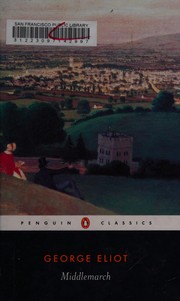
Middlemarch
2,883-word summary 13 min read 880 pages in the book
- First published
- 1871
- Publisher
- William Blackwood and Sons
- Pages
- 880
- ISBN
- 9780141439549
Reading options
What's inside (8 sections)
I kept Middlemarch on my shelf for years without opening it. It looked like homework. Eight hundred and eighty pages in my Penguin Classics copy, small print, a lot of names I could not keep straight, and everyone calling it the greatest English novel ever written. That kind of praise usually puts me off.
What finally got me to start was a bad winter cold and nothing else to read. I told myself I would try fifty pages and quit if I got bored. I did not quit, though I did get lost more than once. This is a book about a whole town, set around 1829 to 1832, and it first came out in eight parts in 1871 and 1872 from William Blackwood and Sons. It follows two young people who marry the wrong person for almost the right reasons, plus about thirty neighbors who gossip, lend money, run for office, and get sick.
If you want the short version before we walk through it: Dorothea Brooke wants a useful, serious life and marries a dry older scholar. Tertius Lydgate wants to change medicine and marries a pretty girl who wants a comfortable house. Both learn that good intentions do not pay bills or fix a cold marriage. Around them, a banker hides an old crime, a young idler tries to grow up, and a plain, funny girl holds out for someone worth marrying.
Why I finally stopped avoiding it
My copy uses the text of the 1874 second edition, edited for Penguin Classics with an introduction by Rosemary Ashton, 880 pages. That sounds heavy, and it is. But the opening is easier than I expected.
We meet Dorothea and her younger sister Celia living with their uncle, Mr Brooke, at Tipton Grange. Dorothea is nineteen, tall, earnest, plain in dress on purpose. She gives away jewelry, plans cottages for poor tenants, and talks about wanting to do something important. Celia is practical and sweet and thinks her sister takes herself too seriously. Their neighbor Sir James Chettam likes Dorothea and starts visiting with plans for the estate. He is decent, rich, loves dogs and land management.
Dorothea ignores him completely. She fixes instead on the Reverend Edward Casaubon, a middle aged rector from Lowick who quotes Latin and is writing a book called the Key to All Mythologies. To her he looks like Milton or Pascal. To everyone else he looks like a man who eats cold mutton and files notes.
I laughed at first, then felt uneasy. I knew a version of this at nineteen or twenty, that hunger to find a teacher who will give your life shape. Eliot gets that hunger exactly. She also shows, without rushing, why it is dangerous to marry it.
The other thread starts when Tertius Lydgate rides into town. He is twenty seven or so, well connected, trained in London and Paris, full of plans. He wants a new hospital in Middlemarch, better study of fever, cleaner practice, and time for research. He tells himself he will stay clear of love and folly. Then he meets Rosamond Vincy at a dance, and all that resolve wobbles.
Rosamond is the mayor's daughter, tall, blonde, very good at the piano, and very sure she will marry well and live in London one day. Fred Vincy, her brother, is the town ne'er do well, in debt, sweet when sober, always expecting old Peter Featherstone to leave him money. Mary Garth, who nurses Featherstone and writes his letters, watches Fred with a mix of affection and irritation. Caleb Garth, Mary's father, is a surveyor and land agent who is honest to the point of losing work.
You also meet Nicholas Bulstrode, the banker who funds chapels and the new hospital. You meet the Reverend Camden Farebrother, poor, clever, kind. You meet Mrs Cadwallader, who says sharp things about everyone and is usually right.
So many people. The first hundred pages felt like moving to a new street and learning who lives where. I kept a little list on paper. After a while I did not need it.
Dorothea and the scholar who wanted admiration
This is the part that hurt to read.
Dorothea marries Casaubon against almost everyone's advice. Celia cries. Sir James is stunned. Mr Brooke, her uncle, who collects papers and rambles about everything, gives a vague consent because he cannot be bothered to argue. Mrs Cadwallader jokes about it in a way that is not really a joke.
The honeymoon in Rome is awful. Casaubon works in the Vatican library and leaves Dorothea to stare at statues with their young cousin Will Ladislaw as a reluctant guide. Will is maybe twenty two, bright, poor, no profession, good at looking at pictures and talking. He likes Dorothea at once, and she likes having someone to talk to who actually answers.
Back at Lowick Manor, married life settles into a pattern. Casaubon reads, writes notes, asks Dorothea to copy and fetch. He corrects her German. He dislikes her questions. She tries hard to be a good wife. She asks about his work, offers to learn, sits up late. Slowly she sees that the Key to All Mythologies is going nowhere. He has read a lot but will not read the German scholars who have moved past him. He is afraid of being shown to be out of date, so he keeps adding notes instead of finishing chapters.
Eliot is patient here. She does not make Casaubon a monster. He is jealous, small minded in his work, and unable to say he is sorry. He is also lonely and frightened of dying without leaving anything behind. When Will visits Lowick, Casaubon watches them talk and decides Will is an enemy. He writes Will to stay away. He works longer hours even though his heart is bad. The town doctor and Lydgate both warn him.
There is a scene I kept thinking about after. Casaubon asks Dorothea to promise that if he dies, she will carry on his research and publish it as he left it. She does not want to promise. She sleeps badly, walks in the garden, tries to pray, tries to be loyal. She says she will think. That night he dies in the summerhouse of heart disease before she answers.
You would think that frees her. In a way it locks her tighter. Casaubon's will leaves her his property but with a codicil. If she marries Will Ladislaw, she loses it all. The town talks. Celia, now married to Sir James, worries. Mrs Cadwallader spreads the story with extra spice. Dorothea is rich, widowed at twenty one, and tied to a dead man's suspicion.
Will leaves for a while, works for Mr Brooke's radical paper the Pioneer, comes back, argues about politics and art, tells Dorothea plainly that her husband's work was empty. That sounds cruel, and it is partly pride on Will's side. But Dorothea has already seen it herself in those long evenings copying pages that led nowhere.
Their love story is slow and mostly about talking. Walks, letters, a shared worry for Lydgate later on. She knows marrying him will look foolish to Middlemarch and cost her a fortune. She does it anyway near the end.
Lydgate, Rosamond, and money trouble in Middlemarch
If Dorothea's story is about marrying an idea, Lydgate's is about marrying a picture.
Lydgate arrives with real skill. He spots typhus where others see vague fever. He pushes for clean wards, careful records, post mortems when useful. He quarrels with older doctors who bleed and dose by habit. He gets Bulstrode to back a new fever hospital. He treats poor patients for little or nothing. People respect him even when they dislike his pride.
He also spends. New house in a good street. Good furniture bought on credit. A manservant. Instruments and books ordered from London. He assumes his practice will grow fast enough to cover it. It does not.
Rosamond encourages the spending without meaning harm, at least at first. She was raised to expect a certain life. She plays well, sings a little, rides, keeps a neat house, and believes a clever husband will soon be rich. When Lydgate tries to explain they must economize, she smiles and agrees and then orders the extra curtains anyway. When he is out all day seeing patients who pay late or never, she is home bored and disappointed.
Their fights are quiet and awful. Not shouting. He explains the debt. She cries prettily and says her father will help, or that surely Dr Lydgate will soon be asked to London. He pawns things without telling her. She writes to his rich uncle without telling him. He asks her to go slow on calling in the new house. She invites guests because a doctor's wife must entertain.
I dreaded these chapters and also could not stop reading them. Debt narrows him week by week. He stops writing up research, takes on dull paying visits, borrows against furniture. Rosamond, who loves him in her way, cannot imagine changing her idea of marriage.
Two side plots tighten the knot. First, Lydgate votes for Bulstrode's hospital plans and takes Bulstrode's support, which makes rivals say he is bought. Second, when Bulstrode is in trouble, he presses a thousand pound loan on Lydgate just when bailiffs are near. Lydgate takes it to pay the most urgent debts. Later, when Bulstrode's past comes out, the town assumes the loan was a bribe for covering a death. It was not, but mud sticks.
The saddest part for me was how good Lydgate could have been. He has the mind and the hands. He lacks the habit of saying no. By the end he leaves Middlemarch, builds a fashionable London practice, and dies at fifty, still talking about work he never got to do.
Fred, Mary, Bulstrode, and the rest of the town
What saves Middlemarch from feeling like two sad marriages on repeat is the town around them.
Fred Vincy starts as the boy every parent warns about. He owes money to Caleb Garth, he fails his exams, he hunts and dances and waits for old Peter Featherstone to die and leave him Stone Court farm. Featherstone is a miser with two wills and a love of teasing heirs. He keeps Mary Garth as his nurse and scribe because she will not flatter him.
There is a famous bit where Featherstone asks Mary to burn one of the wills and she refuses flat. She will not do a secret, underhand thing even for Fred's sake. Featherstone dies, the expected money goes elsewhere, Fred is left with debts and no degree. I liked Mary at once for that refusal. She is plain, as Eliot keeps telling us, but she is funny in a dry way, good with children, and clear about what she will and will not do.
Fred has to earn her. That takes most of the book. He works for Caleb Garth learning surveying, gets muddy, learns to keep account books, fails, tries again. Farebrother, who loves Mary quietly himself, helps Fred find work and then steps back. That generosity from Farebrother moved me more than the grander love scenes.
Bulstrode's fall is the engine of the last third. For years he has been the serious evangelical banker, strict about Sunday, generous to chapels, always ready to judge. Young, under another name, he worked for a London dealer, married the widow, kept the daughter's inheritance when the mother died, and built his fortune on that silence. John Raffles, a loud, drinking, ruined man who knew him then, follows the trail to Middlemarch and asks for money to keep quiet.
Bulstrode pays, lies to his wife Harriet, tries to buy respectability by funding the hospital. When Raffles turns up ill at Stone Court, Lydgate is called. Bulstrode gives strict orders about opium and brandy and then leaves the servant to manage while Raffles begs for drink. Raffles dies. At a public meeting the old London facts come out through gossip and a letter. The town turns.
Eliot does not let Bulstrode off, but she does not flatten him either. He prays, he bargains with God, he tells himself his wealth serves religion. When he loses everything and leaves Middlemarch with Harriet, who stays with him out of duty and old affection, I felt pity rather than triumph. That surprised me.
Smaller people kept me company through the slow parts. Mr Brooke with his endless talk and his botched speech on the hustings. Mrs Cadwallader dealing out verdicts over tea. Sir James marrying Celia and becoming a good landlord. Caleb turning down work he thinks is sharp practice even when his family needs the money.
What Eliot is actually doing with all these marriages
After a while I stopped reading for plot and started reading for pattern. Every couple is a bargain, and Eliot wants us to watch the terms.
Dorothea trades youth and money for purpose and gets silence at breakfast. Lydgate trades focus for comfort and gets bills that chain him to dull work. Fred wants Mary without changing, and learns he cannot have her that way. Bulstrode wants respect without honesty, and learns the past charges interest.
The town is always watching and pricing these bargains. Who called on whom. Who paid cash. Reputation works like credit. A good name lets you borrow and marry well. A bad rumor calls in all loans at once.
Medicine and politics run deeper than background here. Lydgate's fight over the fever hospital is about whether doctors should learn from bodies and numbers or stick to old habits. Mr Brooke's run for Parliament and the talk of the Reform Bill, the railway surveyors on Caleb's fields, the Pioneer newspaper articles Will writes, all show a country shifting from squire rule to something new.
One thing she does better than almost anyone I have read: she lets good people cause harm without meaning to. Dorothea wounds Casaubon by being young and hopeful near his failure. Lydgate wounds Rosamond by marrying her without telling her how poor his prospects really are. Farebrother wounds himself by helping Fred win Mary. Bulstrode wounds Harriet by trying to protect her from a truth she had a right to know. No villain with a knife. Just ordinary blindness, repeated daily.
What drags and who should still read it
I should be honest about the hard parts, because this book asks a lot.
It is slow. There are long stretches on church parties, town meetings, and Mr Brooke's sentences that go nowhere on purpose. The medical arguments matter but can feel like lectures. The political talk assumes you know about the Reform Bill and rotten boroughs and Dissenters and the Church. I did not, and I had to look things up. The Finale, where Eliot tells us what happens to everyone years later, feels rushed after so much patience, and a little moralizing. Ladislaw never quite becomes real for me. He talks well about art and freedom, but next to Lydgate's tired hands or Caleb's muddy boots, he stays pale.
The length is real too. Even at a good pace, 880 pages takes weeks. I read about thirty or forty pages a night and finished in just under a month. Some nights I only managed ten because a chapter on Bulstrode's banking past or Casaubon's notes needed a fresh head.
So who should try it? If you liked long Victorian novels with marriage trouble and town life, like Jane Austen grown older and sadder, or Tolstoy without the war, you will likely stay. If you work in medicine, teaching, or any helping job, Lydgate's slide from research dreams to paying the rent may hit close. If you are young and tempted to marry someone for their mind or their promise, Dorothea and Rosamond offer two clear warnings without easy answers.
How I would read it if I did it again: keep the list of names for the first 150 pages, read in small sittings, skip nothing but allow yourself to skim Mr Brooke when he rambles (he always rambles, that is the point). Pay attention to Mary Garth's dialogue. She says the plain truth when everyone else is being polite, and she is often the funniest person in the room. Notice Caleb at work. Notice Farebrother giving things up without telling anyone.
I closed the book thinking less about greatness and more about attention. Eliot asks you to notice why people do what they do, even when they hurt you, even when they bore you. Dorothea checking on Rosamond when she has every reason to hate her. Lydgate sitting up with a dying man who can ruin him. Caleb hiring Fred when Fred has already cost him money. Those small choices, repeated, are what the title means to me now. Not a grand study from above. Just a close look at ordinary lives in one Midlands town, drawn out long enough that you start to recognize yourself in people you swore you were nothing like.
If you try it and stall around page 200, that is normal. Put it down for a week and come back to Lydgate. He carried me through the middle, and Dorothea carried me home.
FAQ
When was Middlemarch first published?
It first appeared in eight parts in 1871 to 1872 from William Blackwood and Sons, set in the years around the 1832 Reform Bill. Most modern copies, including the 880-page Penguin Classics text, follow the revised 1874 text.
Is Middlemarch hard to read?
Yes, it is long and crowded with town politics, church argument, and medical debate. The Dorothea, Lydgate, Fred Vincy, and Bulstrode plots carry the slow stretches if you read in smaller sittings.
Do Dorothea Brooke and Tertius Lydgate end up together?
No. Dorothea first marries Edward Casaubon and later marries Will Ladislaw, while Lydgate marries Rosamond Vincy. Their stories run side by side and comment on each other, but they do not become a couple.
Similar books
The House of Mirth
Lily Bart, beautiful and penniless at twenty-nine, navigates New York's marriage market until a Dorset yacht scandal strips her of the only currency she has.
2,468-word summary · 11 min read
Vanity Fair
Becky Sharp schemes her way up Regency society while loyal Amelia waits, in Thackeray's witty novel without a hero.
2,698-word summary · 12 min read

Revolutionary Road
A Connecticut couple who believe they are too good for the suburbs plan to move to Paris, and the plan slowly exposes everything they cannot say to each other.
2,085-word summary · 9 min read

Howards End
Forster's 1910 novel follows two families, a house in Hertfordshire, and a burned note, asking whether money and feeling can ever be connected.
2,187-word summary · 10 min read

Sophie's Choice
A young Southern writer in 1947 Brooklyn befriends a brilliant, unstable couple and slowly learns the story of the Polish Catholic woman at the center of their…
2,798-word summary · 12 min read

Ivanhoe
A disinherited Saxon knight, a great tournament, a besieged castle and a trial by combat. Scott's most famous novel, set in England in 1194.
2,834-word summary · 13 min read

Wide Sargasso Sea
Jean Rhys gives the first Mrs. Rochester a Caribbean childhood, a marriage built on money and suspicion, and a voice that Charlotte Bronte left in the attic.
2,021-word summary · 9 min read
Mother Night
Howard W. Campbell Jr., a Nazi propagandist and American spy, tells the story of his double life from an Israeli prison cell while waiting to be tried for war…
1,988-word summary · 9 min read
Bleak House
Jarndyce and Jarndyce grinds through Chancery while Esther finds her family.
2,480-word summary · 11 min read
Song of Solomon
Milkman Dead leaves Michigan to hunt for family gold and finds instead the old song of his ancestor Solomon.
2,465-word summary · 11 min read
Trust
Four rival accounts of one Wall Street fortune collide: a 1930s novel, a tycoon's memoir, a secretary's story, and a wife's diary.
2,217-word summary · 10 min read
Lady Chatterley's Lover
A baronet's wife, starved in a marriage the war broke, takes the gamekeeper as her lover. Lawrence's banned 1928 novel of class and touch.
2,566-word summary · 11 min read
Ethan Frome
In snowy Starkfield, farmer Ethan Frome falls for his wife's young cousin Mattie, and one sled ride ends any hope of escape.
2,558-word summary · 11 min read
All the Pretty Horses
John Grady and Rawlins ride to Mexico for ranch work, finding love, prison, and a code that costs all.
2,677-word summary · 12 min read
Tender Is the Night
Dick Diver marries his patient Nicole, and their Riviera marriage slowly breaks apart in Fitzgerald's 1934 novel of money, care, and drinking.
2,607-word summary · 12 min read
The Age of Innocence
Engaged New York lawyer Newland Archer falls for Ellen Olenska, his fiancee's cousin fleeing a bad marriage, and must choose between love and duty in 1870s old…
3,100-word summary · 14 min read

The Story of a New Name
Married Lila and student Elena grow apart and collide again across shops, Ischia, and Pisa.
2,523-word summary · 11 min read

Stoner
William Stoner trades farm life for literature, then endures a cold marriage and petty campus wars in John Williams's quiet classic.
2,282-word summary · 10 min read
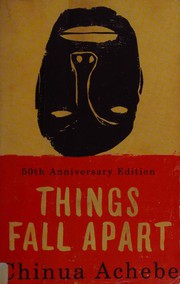
Things Fall Apart
Proud Igbo wrestler Okonkwo rises in 1890s Umuofia, then loses standing through hard exile, a son's conversion, and British missionaries and courts remaking…
2,518-word summary · 11 min read
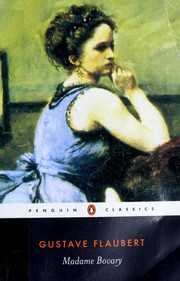
Madame Bovary
Emma Rouault marries Charles Bovary for romance, then seeks lovers and luxury until debts ruin them both.
2,400-word summary · 11 min read
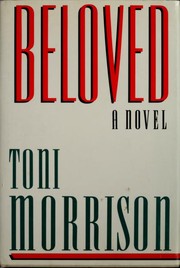
Beloved
Sethe lives with the memory of killing her child to save her from slavery until a young woman named Beloved arrives.
2,586-word summary · 11 min read
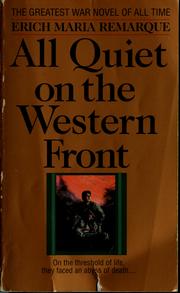
All Quiet on the Western Front
Paul Bäumer enlists at nineteen and faces the trenches of World War I in Remarque's 1929 classic, told from the German side of the wire.
2,543-word summary · 11 min read
Anna Karenina
Anna leaves Karenin for Vronsky while Levin seeks faith and farming outside Moscow.
3,942-word summary · 18 min read
Silas Marner
A falsely accused weaver hoards gold in Raveloe until a stolen hoard and an abandoned child remake his narrow life.
2,699-word summary · 12 min read
Violeta
A woman born in 1920 writes her life story to her grandson, from one pandemic to another, through wealth, ruin, passion, and dictatorship in South America.
2,555-word summary · 11 min read
The Long Winter
Dakota Territory, 1880: seven months of blizzards cut a town off from the railroad, and a family survives on twisted hay, ground wheat, and a dangerous wheat…
2,210-word summary · 10 min read

The Crying of Lot 49
A California woman named executor of her ex-lover's estate follows a muted post horn into a possible centuries-old postal conspiracy, and Pynchon refuses to…
2,003-word summary · 9 min read

Lisey's Story
Two years after her novelist husband dies, Lisey Landon follows a trail of clues into his childhood and the other world that made him a writer.
1,998-word summary · 9 min read

Little Town on the Prairie
In the spring after the Long Winter, fifteen-year-old Laura sews shirts, studies for a teaching certificate, and helps send her blind sister Mary to college.
2,071-word summary · 9 min read
The Boleyn Inheritance
Three women narrate Henry VIII's fourth and fifth marriages: a foreign bride who survives, a teenage queen who does not, and the widow who opens the door.
2,391-word summary · 11 min read