
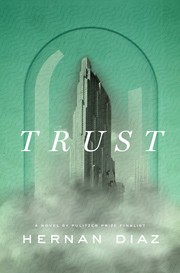
Trust
2,217-word summary 10 min read 416 pages in the book
- First published
- 2022
- Publisher
- Riverhead Books
- Pages
- 416
- ISBN
- 9780593420317
Reading options
What's inside (9 sections)
I picked up Trust because a friend would not stop talking about the ending, and because it won the Pulitzer Prize for Fiction in 2023 and kept showing up on best-of-the-year lists. I expected a Wall Street novel about the 1929 crash, suits and tickers and men shouting on the floor. What I got was stranger and better: four documents that tell the same marriage and the same fortune four different ways, and each one makes you doubt the last. I read the final eighty pages twice in one sitting, then went back to page one to check who had been lying to me.
The setup sounds like homework but reads like a puzzle box. Riverhead Books published it in 2022, and the first American edition runs 416 pages. The ISBN of that hardcover is 9780593420317. The book is built from four parts that look unrelated until they start snapping together. A novel from the 1930s. A rich man's dictated autobiography. A secretary's memoir written decades later. A dying woman's private diary. Together they ask one question from four angles: who actually made the money, and who paid for it.
Bonds, the novel inside the novel
The book opens with a complete short novel called Bonds, credited to a writer named Harold Vanner. It reads like something from the 1930s, cool and polished, and it follows Benjamin Rask, a Wall Street financier with an almost supernatural gift for markets, and his wife Helen, the daughter of faded aristocrats who loves music and quiet rooms more than parties.
Rask inherits money and multiplies it through calm contrarian bets. When other men panic, he waits. When the market collapses in 1929, he gets richer, because he shorted stocks and bought assets at fire sale prices while the city fell apart around him. Vanner writes him as a man made of arithmetic, polite in public and hollow at home, someone who understands prices better than people.
Helen is the sadder half of the pair. She has money, taste, and nothing to do. She funds young composers, sits through bad concerts out of duty, and slowly comes apart. There are hints of eccentricity that harden into real illness. She retreats to sanatoriums. Rask pays for the best doctors and keeps trading. By the end of Bonds, Helen is gone, Rask is alone with his fortune, and the moral seems plain: money eats the soul, and the rich are cursed by their own luck.
I almost put the book down here, because Bonds is good but familiar, the kind of period piece where every sentence gleams and nobody feels alive. That turns out to be the point. Diaz wants you to feel the smoothness of it, the way a tidy story about a genius and his fragile wife explains away everything uncomfortable. Keep that suspicion warm. You will need it.
Andrew Bevel answers back
Part two is called My Life, and it is the unfinished autobiography of Andrew Bevel, a real financier inside the world of the novel who claims Harold Vanner stole his life and smeared it. Bevel hires a young secretary to take dictation, and the tone changes completely. Where Vanner was sleek, Bevel is vain, fussy, and funny without meaning to be. He corrects dates, brags about his patriotism, and insists he never shorted the American people during the crash but saved the market through confidence and common sense.
The comedy here is dry and sharp. Bevel dictates sentences about his own greatness and then revises them into even greater greatness. He describes his wife Mildred as charming and supportive and then barely mentions her for fifty pages. He feuds with Vanner on the page, calling Bonds libel dressed up as fiction, and announces that his memoir will set the record straight. His version of 1929 is a heroic fable: while cowards sold, he believed in America and bought.
What makes this section sing is the secretary taking it all down. Ida Partenza is young, smart, the daughter of an Italian anarchist printer, and broke enough to need the job. She sits across from this puffed-up old man, types his whoppers, and slips in small dry notes about what the office looks like and what Bevel refuses to say. You start reading Bevel for the finance and staying for Ida, who hears every contradiction and files it away.
The money details repay attention. Bevel explains cornering bond issues, reading order flow, and leaning against panics, always painting himself as the steady hand. But the numbers never quite add up to the legend, and the gaps cluster around one person. Every time Mildred should enter the story, Bevel changes the subject to a house, a donation, or a hunting trip. After a while the evasions form their own shape, like a silhouette where someone has been cut out.
Ida Partenza and the typewriter
Part three jumps forward decades. Ida is now old, a writer with her own career, and she is composing a memoir called A Memoir, Remembered about the months she spent typing Bevel's book. This is my favorite stretch of Trust, because Ida is frank about things Bevel never noticed: the stale air of his mansion office, the way he tipped too much and listened too little, the stack of newspaper clippings he kept to prove Vanner had robbed him.
Ida also tells her own story, which widens the book considerably. Her father ran a radical print shop. She grew up around men who argued about capital at the kitchen table and then asked her to wash the cups. She took the Bevel job for cash, told herself she would stay detached, and then got pulled into the archive. Bevel let her read his papers. She found letters, ledgers, and drafts that did not match the story he was dictating. She started asking questions he did not want asked.
There is a fine thread here about class and access. Ida can type eighty words a minute and read Italian, French, and account books, but Bevel still treats her as furniture. That blindness becomes his undoing, because Ida remembers everything. She recalls the names of clerks, the color of file folders, the afternoons Mildred's name surfaced and sank again. Her memoir does what Bevel's could not: it admits uncertainty. She tells you where her memory thins, where documents conflict, and where she filled gaps with guesses at the time.
If Bonds was a polished myth and My Life was a rich man's correction, Ida's section is the first one that feels like a person thinking on the page. It also reframes the crash. Through her father's eyes and her own research, the 1929 collapse stops looking like a single genius outsmarting the crowd and starts looking like a system paying out to whoever was already closest to the controls. Bevel was close to the controls. The question Ida leaves hanging is whether he even understood the machine he claimed to steer.
Mildred Bevel gets the last word
Then comes Futures, the shortest part and the one that rearranges everything. It is a set of diary fragments by Mildred Bevel, Andrew's wife, written mostly from sanitariums in Switzerland and the United States. The dates jump. Some entries are a paragraph. Some break off mid-thought. But a clear picture forms fast, and it floored me.
Mildred was not the decorative invalid of the earlier versions. She was the mind behind much of the fortune. In her telling, she read balance sheets the way other people read novels, spotted patterns in trading data before her husband did, and designed the cautious contrarian strategy that made them rich: small probes, long patience, big bets only when the odds tilted hard. Andrew supplied the capital, the connections, and the confidence. Mildred supplied the method. When the crash came, her notes show her tracking forced selling and margin calls with cold clarity while Andrew preened for reporters.
Her illness is rendered without melodrama, which makes it worse. She describes fatigue, confusion, treatments that sound barbaric now, and long afternoons staring at lake water. She knows Andrew is rewriting her out of the story. She writes about it plainly, without self pity, and keeps working through figures in the margins. The diary also explains the philanthropy that looked like window dressing earlier: her music patronage was not a rich wife's hobby but the one place she could spend freely and be taken seriously, commissioning work and paying musicians properly.
I do not want to oversell the twist, because Diaz plays fair. The clues were there from page one if you read skeptically. Vanner's Helen was too perfectly tragic. Bevel's Mildred was too conveniently blank. Ida's files had too many locked drawers. Mildred's diary does not just correct the record. It shows why the record got bent in the first place: money buys paper, paper buys print, and print tells whoever pays for it that the man signed the checks and therefore had the ideas.
The money talk is the point, not the decoration
One reason Trust lasts past its puzzle structure is that Diaz actually understands finance and refuses to dumb it down into villains twirling mustaches. The trading passages describe real mechanics: how short sellers borrow shares and buy them back cheaper, how margin loans force selling into falling prices, how a calm buyer with cash becomes king during a panic. He shows wealth as a kind of gravity that bends facts toward itself. Vanner's novel bends toward a good story. Bevel's memoir bends toward a good name. Only Mildred's private pages, never meant for print, bend toward the numbers as she saw them.
That theme lands harder now than a straight crash narrative would. The book keeps asking who gets called a genius when a system pays off, and how often that label follows the signature on the account rather than the brain behind the trade. Ida's father, shouting about capital from his print shop, sounds crude next to Bevel's mahogany office, but the book lets his crudeness stand as a question Bevel never answers. If the game is fixed to reward people who start with chips, what exactly did the winner prove.
Readers who love clear heroes may bounce off this. Nobody here is clean. Vanner borrows a life and calls it invention. Bevel buys a book and calls it truth. Ida keeps secrets of her own and admits it. Even Mildred, the most sympathetic figure by far, chose silence for years to protect a life she had already decided to leave. The book respects you enough to let that discomfort sit.
What annoyed me anyway
For all my admiration, parts of Trust drag. The middle of Bevel's dictation repeats its joke: vain man says vain thing, smart secretary notices. After the fourth or fifth correction I wanted Ida to confront him outright instead of filing everything for later. A few finance explanations circle the same ground, and one long stretch about office routine could have been cut by twenty pages without losing anything.
The coldness is deliberate but still costs something. Diaz writes beautifully controlled prose, and every section voice is distinct, yet I rarely felt the gut-level pull I get from messier novels. Helen and Mildred suffer mostly offstage. Bevel never cracks open. Ida keeps her deepest griefs summarized rather than shown. The final diary hits hard partly because the rest of the book holds feeling at arm's length. If you need to love a character to finish a novel, this one may test you.
I also wished the ending gave Ida slightly more room. Her memoir sets up a reckoning with her own compromises, including what she typed for pay and what she later sold as story, and then the book hurries past it to reach Mildred's pages. The hurry is understandable, since Mildred earns the finale, but Ida deserved one more scene where she says plainly what the whole job cost her.
None of that broke the book for me. It is the rare literary puzzle where the solution deepens the people instead of flattening them. But go in knowing the first hundred pages are intentionally slick and the second hundred are intentionally stuffy. The payoff starts when Ida begins her memoir and never really stops.
Who should actually pick it up
Trust suits readers who like nested stories, unreliable narrators, and books about money that treat money as a system rather than a prop. If you liked novels that make you reread the opening with new eyes, or histories that ask whose papers survived and why, this will feed you well. It also works as a book club pick, because every section hands the next reader a different villain and the diary scrambles all of it.
Skip it for now if you want a straight historical saga or a warm marriage story. This is a cool book about hot subjects, precise where other novels go lush. Read it when you have the patience for four voices and the pleasure of watching three of them fall apart under the fourth. I closed it thinking less about 1929 and more about the present: whose name sits on the work, who typed the pages, and which diary nobody has found yet.
FAQ
When was Trust published and by whom?
Riverhead Books published it on May 3, 2022. The first American hardcover runs 416 pages and its ISBN-13 is 9780593420317.
Did Trust win the Pulitzer Prize?
Yes, it won the 2023 Pulitzer Prize for Fiction, shared with Barbara Kingsolver's Demon Copperhead. It was also longlisted for the Booker Prize.
Is Trust part of a series?
No. Its four parts share characters but it is a standalone novel, not part of a series.
Similar books
Bring Up the Bodies
Thomas Cromwell sets out to destroy Anne Boleyn, building a case from rumor and revenge while Henry VIII waits to marry Jane Seymour.
2,066-word summary · 9 min read
The House of Mirth
Lily Bart, beautiful and penniless at twenty-nine, navigates New York's marriage market until a Dorset yacht scandal strips her of the only currency she has.
2,468-word summary · 11 min read
Vanity Fair
Becky Sharp schemes her way up Regency society while loyal Amelia waits, in Thackeray's witty novel without a hero.
2,698-word summary · 12 min read
Middlemarch
Idealistic Dorothea marries dry scholar Casaubon while ambitious doctor Lydgate marries Rosamond, and a Midlands town watches both marriages strain.
2,883-word summary · 13 min read
The Story of a New Name
Married Lila and student Elena grow apart and collide again across shops, Ischia, and Pisa.
2,523-word summary · 11 min read
The Nickel Boys
Idealist Elwood and skeptic Turner endure Nickel reform school beatings, ledgers, and graves.
2,023-word summary · 9 min read
Violeta
A woman born in 1920 writes her life story to her grandson, from one pandemic to another, through wealth, ruin, passion, and dictatorship in South America.
2,555-word summary · 11 min read
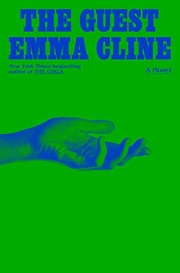
The Guest
Cast out of her wealthy boyfriend's Hamptons house, twenty-two-year-old Alex spends five days talking her way through other people's homes and accounts.
2,165-word summary · 10 min read

Revolutionary Road
A Connecticut couple who believe they are too good for the suburbs plan to move to Paris, and the plan slowly exposes everything they cannot say to each other.
2,085-word summary · 9 min read
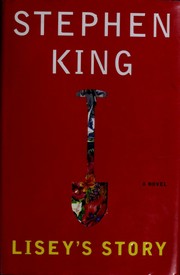
Lisey's Story
Two years after her novelist husband dies, Lisey Landon follows a trail of clues into his childhood and the other world that made him a writer.
1,998-word summary · 9 min read

Howards End
Forster's 1910 novel follows two families, a house in Hertfordshire, and a burned note, asking whether money and feeling can ever be connected.
2,187-word summary · 10 min read
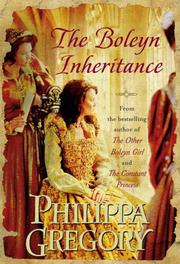
The Boleyn Inheritance
Three women narrate Henry VIII's fourth and fifth marriages: a foreign bride who survives, a teenage queen who does not, and the widow who opens the door.
2,391-word summary · 11 min read

Sophie's Choice
A young Southern writer in 1947 Brooklyn befriends a brilliant, unstable couple and slowly learns the story of the Polish Catholic woman at the center of their…
2,798-word summary · 12 min read
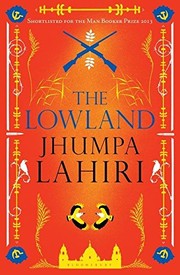
The Lowland
Two brothers grow up beside a marshy lowland in Calcutta, and the choices of the younger one draw the older into a life of duty, distance, and quiet grief that…
2,213-word summary · 10 min read
The Storyteller's Secret
A New York journalist goes to India to learn why her grandmother loved a British officer, and why a family servant kept the truth for forty years.
2,270-word summary · 10 min read
Stones from the River
Trudi Montag is born a dwarf in a small German river town in 1915 and grows up to keep the town's library and its secrets, from the First World War to the…
2,818-word summary · 13 min read
On Chesil Beach
Two newlyweds spend one terrible night on Chesil Beach in 1962, and the rest of their lives is decided by it.
2,456-word summary · 11 min read

Ivanhoe
A disinherited Saxon knight, a great tournament, a besieged castle and a trial by combat. Scott's most famous novel, set in England in 1194.
2,834-word summary · 13 min read
Euphoria
Three anthropologists in 1930s New Guinea turn fieldwork into a love triangle, and a real history breathes behind them.
2,048-word summary · 9 min read

A Spool of Blue Thread
Four generations of the Whitshank family in Baltimore, and the silences, resentments and quiet love they hand down without ever saying so.
2,408-word summary · 11 min read

Wide Sargasso Sea
Jean Rhys gives the first Mrs. Rochester a Caribbean childhood, a marriage built on money and suspicion, and a voice that Charlotte Bronte left in the attic.
2,021-word summary · 9 min read
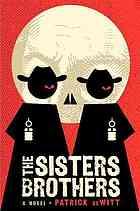
The Sisters Brothers
Two hired killers ride from Oregon to Gold Rush California to murder a prospector, and find their trade, their brotherhood, and the frontier myth coming apart.
2,095-word summary · 9 min read
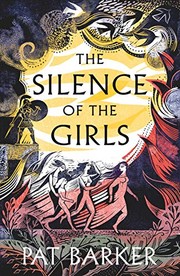
The Silence of the Girls
Briseis, queen of Lyrnessus, is captured by Achilles and narrates the Trojan War from inside the Greek camp, where women are prizes and survival is its own…
2,098-word summary · 9 min read
The Pilot's Wife
Kathryn Lyons's husband dies in a plane crash, and the investigation reveals a secret life that forces her to rethink their marriage.
2,006-word summary · 9 min read
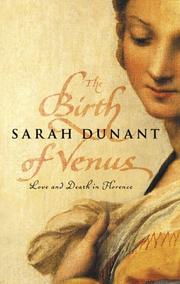
The Birth of Venus
A Florentine merchant's daughter trains as an artist, marries a man who hides a secret, and survives Savonarola's bonfire of the vanities.
2,404-word summary · 11 min read
Mother Night
Howard W. Campbell Jr., a Nazi propagandist and American spy, tells the story of his double life from an Israeli prison cell while waiting to be tried for war…
1,988-word summary · 9 min read
Loving Frank
Mamah Borthwick Cheney leaves her family for Frank Lloyd Wright, and their affair becomes a public scandal that ends in tragedy at Taliesin.
2,034-word summary · 9 min read
The Orphan Master's Son
Adam Johnson's Pulitzer-winning novel follows Pak Jun Do from a North Korean orphanage to a deadly identity swap, under a state whose loudspeakers never stop…
2,219-word summary · 10 min read
The Prisoner of Heaven
Fermin Christmas past returns with a stranger and a prison debt.
2,388-word summary · 11 min read
The Most Fun We Ever Had
Four Sorenson sisters orbit perfect parents hiding old cracks.
2,590-word summary · 12 min read