
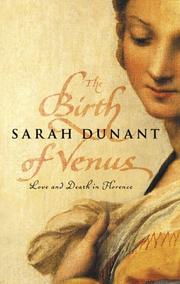
The Birth of Venus
2,404-word summary 11 min read 412 pages in the book
- First published
- 2003
- Publisher
- Little, Brown
- Pages
- 412
- ISBN
- 9780316725491
Reading options
What's inside (11 sections)
I bought The Birth of Venus because I wanted to read a novel about Florence that was not written by a historian. I had just come back from a week in the city, and I was tired of guidebooks that treated the fifteenth century as a list of dates and patrons. Sarah Dunant's novel promised something else: a first-person account from inside a Florentine household, with art and politics pressing in on a young woman's life. The book delivers that, though not always in the way I expected.
Dunant published the novel in 2003. Little, Brown brought out the first edition in the United Kingdom under the title The Birth of Venus: Love and Death in Florence. The American edition followed from Random House in 2004. The edition I read runs 412 pages. The story is set between 1492 and 1528, during the last years of Medici power and the rise and fall of the friar Girolamo Savonarola. It is a historical novel, but it is also a book about art, desire, and the limited options available to a clever girl in a society that has no use for clever girls.
Florence and the chapel
Alessandra Cecchi is not quite fifteen when the novel begins. Her father, Paolo Cecchi, is a wealthy cloth merchant. He has built a new palazzo with a private chapel, and he wants the walls painted. He brings home a young painter from northern Europe, an orphan raised in a monastery, and gives him the job. Alessandra is fascinated by the painter's work and furious that she cannot do what he does. She draws constantly, criticizes his frescoes, and sneaks into his quarters to look at his sketches. The household treats her talent as a phase, something to be tolerated until she marries.
The Cecchi household is full of people who are more conventional than Alessandra. Her mother is intelligent and practical, and she has decided that her daughter's future depends on a good marriage. Her older sister, Plautilla, is sweet and conventional. Her brother Tomaso is vain and cruel. Her brother Luca is a glutton who later finds a purpose in Savonarola's militia. The family is not poor, but it is not secure either. Their fortune depends on trade, and trade depends on political stability. In Florence in the 1490s, stability is the one thing nobody can promise.
Dunant is very good at the texture of the city. The novel is full of heat, dust, church bells, bad smells, and the constant presence of other people. Alessandra cannot walk down the street without being seen. Her reputation is a public possession. That pressure is the engine of the plot. Every decision she makes is shaped by the knowledge that a woman's life can be ruined by a rumor.
The painter
The painter is never named. That is deliberate, and it is also a little frustrating. He is a young man with extraordinary skill and almost no social presence. He speaks rarely, works constantly, and seems more comfortable with corpses than with people. Alessandra falls for him because he takes her seriously as an artist, which no one else does. Their early conversations are about perspective, color, and the human body. They are also about power. He can leave the house whenever he wants. She cannot.
The painter's secret is not a love affair. It is anatomy. He has been visiting the hospital of Santo Spirito at night to dissect unclaimed bodies, a practice that is illegal and dangerous. The novel uses his studies to explore the relationship between art and death. To paint a body accurately, he needs to know what is under the skin. To know what is under the skin, he has to break a taboo. Alessandra finds a sketch of a dissected corpse and realizes that her brother Tomaso's gossip about prostitutes is wrong. The painter is not visiting women. He is visiting the dead.
There is a subplot about mutilated bodies appearing around the city, and it is the weakest part of the book. It gestures toward a thriller, but it never quite coheres. The painter's crisis of faith is more interesting than the mystery. He becomes convinced that his anatomical work has allied him with something evil, and he barricades himself in the chapel. When Alessandra forces her way in, she finds him emaciated, with self-inflicted wounds on his palms. He has painted a fresco in which the Devil sits where God should be, with Christ and Mary stuffed between his teeth. It is a startling image, and Dunant writes it with real conviction.
Marriage to Cristoforo
Alessandra's parents arrange a marriage to Cristoforo Langella, a wealthy art collector and poet who is much older than she is. Alessandra agrees because marriage looks like freedom. She will have her own house, her own household, and access to Cristoforo's library of classical texts and his collection of paintings. She imagines that she will be able to continue drawing. She is half right.
On their wedding night, Cristoforo tells her the truth. He desires men, not women. The marriage was arranged as a cover for his sexuality, which is dangerous in a city that has begun to police sin with increasing violence. Worse, his lover is Tomaso, Alessandra's brother. It was Tomaso who suggested the match, telling Cristoforo that Alessandra wanted freedom more than she wanted a husband. Alessandra is devastated, but she accepts the bargain. Cristoforo gives her the run of his house, his library, and his art collection in exchange for an heir and discretion.
The marriage is one of the novel's best inventions. Cristoforo is not a villain. He is kind, cultured, and honest about his limits. He gives Alessandra the room and materials she needs to paint, and he does not ask her to pretend to be a conventional wife. Their relationship becomes a partnership of mutual convenience, and then something closer to friendship. Dunant resists the temptation to make him a martyr or a monster. He is a man trapped by his time, doing what he can to make a life that the city will allow.
Tomaso is the opposite. He is a cartoon villain, and the novel never gives him enough complexity to justify his presence. He is cruel to Alessandra, jealous of the painter, and willing to betray anyone to save himself. When he is arrested for sodomy and tortured, he names the painter, which sets off the final chain of events. The betrayal is dramatic, but it is also predictable. Tomaso has been signaling it since his first scene.
Savonarola
The historical backdrop is Savonarola's campaign against luxury, corruption, and art. The friar arrives in Florence preaching that the city has become a new Sodom. He gains followers, organizes boy militias, and pushes for the expulsion of the Medici. Lorenzo de' Medici dies in 1492, and the political order begins to crack. The French invade in 1494, and Piero de' Medici, Lorenzo's son, flees. Savonarola fills the vacuum.
Dunant shows the appeal of Savonarola as well as his danger. Alessandra is drawn to his moral seriousness, even as she resents his restrictions on women. His sermons give the city a language for its anxieties. The bonfire of the vanities, where books, paintings, and mirrors are burned, is a scene that could easily become a lecture about censorship. Dunant keeps it personal. Alessandra watches objects she loves go up in smoke, and she understands that the city's idea of virtue requires the destruction of beauty.
The novel's timeline is compressed, and some of the political transitions feel rushed. Savonarola's fall is handled quickly: the ordeal by fire, the thunderstorm, the arrest, the execution. The execution is set on May 10, 1498, the same day Alessandra leaves Florence for the convent. The symbolism is heavy, but it works. The city that made her is burning its own past, and she leaves with a daughter, a servant, and a stolen Botticelli manuscript.
The affair and the baby
Alessandra nurses the painter back to health after his breakdown. She reads him Dante, encourages him to draw, and eventually initiates a sexual relationship. The scene is written with a frankness that is unusual for a historical novel, and it is also a little uncomfortable, because the painter is still fragile and dependent on her. Dunant does not ignore the power imbalance. She makes it part of the story.
Alessandra becomes pregnant. Erila, her servant and closest friend, understands the danger immediately. She tells Alessandra to sleep with Cristoforo as soon as possible so that the timing of the pregnancy will not expose the affair. Alessandra does. The plan works, at least for a while. When Cristoforo asks whether he is the father, Alessandra tells him the truth: she does not know. He leaves. The novel treats this moment as a moral reckoning, but it is also a practical one. Alessandra has been living inside a set of lies that were designed to protect her, and the lies have finally run out.
The painter finishes the chapel before he is arrested. He replaces the Devil on the ceiling with a Madonna whose face resembles Alessandra. At the consecration, he lets her paint a small figure of Saint Catherine directly on the wall. It is the only public record of her talent, and it is hidden in plain sight. The scene is one of the novel's best, because it shows what Alessandra has been fighting for: not fame, but the chance to make something that lasts.
The convent and the ending
Cristoforo fakes his death and leaves Florence with Tomaso, giving Alessandra his estate. Her mother reveals that Alessandra was conceived during an affair with Lorenzo de' Medici, which explains her intelligence and her stubbornness. Alessandra names her daughter Plautilla, after her sister, who dies in childbirth. She enters the convent of Santa Vitella and takes the name Sister Lucrezia.
The convent is not a prison in this novel. It is a community of creative women, and Alessandra is able to paint frescoes and raise her daughter. The painter returns years later, now confident and successful, and they resume their affair. He paints a serpent on her body, a silver-green image with a man's face at its head. When the paint begins to fade, Erila tattoos the image permanently using techniques she learned from the dyers of Santa Croce. The serpent becomes the mark of Alessandra's secret life, and it is also the image that opens the novel, when the nuns strip her body after her death.
The ending is ambitious and a little overstuffed. Plautilla leaves with the painter to train in Rome and eventually travels to England. The letters stop. Alessandra grows old, loses her sight, and decides to end her life. She has Erila simulate a fatal tumor with a pig's bladder and bring her poison. She entrusts her manuscript to Erila for delivery to Plautilla. The novel we have been reading is that manuscript. The frame closes, and the serpent on her skin is explained.
The final chapters are moving, but they are also rushed. The painter's return, the tattoo, the departure of Plautilla, and Alessandra's assisted suicide all happen in a short space. After the slow accumulation of the middle chapters, the ending feels like a summary. I wanted more time with the older Alessandra, and I wanted more scenes of her painting in the convent. The novel is more interested in getting to the frame than in living inside it.
What works and what does not
The voice is the book's greatest strength. Alessandra is intelligent, impatient, and honest about her own mistakes. She is not a modern woman dropped into the past. She is a product of her time who finds ways to carve out a life within its limits. Dunant lets her be difficult. She is jealous, reckless, and sometimes cruel to the people who love her. That complexity is what makes her believable.
The historical detail is also excellent. The novel is full of specific objects: pigments, brushes, panels, chapel walls, the smell of plaster, the weight of a good piece of cloth. Dunant clearly did her research, but she wears it lightly. The reader learns how frescoes are made without feeling like they are reading a manual.
The relationship between art and religion is handled with care. Savonarola is not simply a fanatic, and the painter is not simply a genius. Both are responding to a world that feels unstable. The novel asks whether beauty is a form of devotion or a form of vanity, and it refuses to give a simple answer.
What does not work
The thriller subplot about the mutilated bodies is underdeveloped. It creates atmosphere, but it does not pay off. The painter's crisis is explained by his anatomy work, and the murders become a distraction. The novel would have been stronger without them.
Tomaso is too flat. He is cruel from beginning to end, with no inner life and no convincing motive. His betrayal of the painter is necessary for the plot, but it does not feel like a choice a real person would make. He is a device, not a character.
The ending is also uneven. The convent years are summarized rather than dramatized, and the assisted suicide is handled too quickly to have the weight it deserves. The frame is clever, but it costs the story some of its immediacy.
Who it is for
This is a book for readers who love historical fiction with a strong first-person voice. It is for people who are interested in the Renaissance, in Florence, and in the lives of women who found ways to make art in a world that did not want them to. It is not a reliable history of Savonarola, and it is not a mystery. It is a novel about a woman who wants to be seen, and who pays a high price for being seen on her own terms.
I am glad I read it. It made Florence feel less like a museum and more like a city where people argued, schemed, and fell in love. The book has flaws, but its central character is worth spending four hundred pages with. Alessandra is the kind of narrator who makes you want to argue with her, which is the next best thing to agreeing with her.
FAQ
Is The Birth of Venus based on a real person?
No. Alessandra Cecchi is fictional, though the novel uses real figures and events from Renaissance Florence.
What is The Birth of Venus about?
It follows a young woman who wants to be an artist in a society that restricts women, and who survives Savonarola's campaign against art and luxury.
Does The Birth of Venus have a happy ending?
It ends with Alessandra in a convent, free to paint but nearing the end of her life. The tone is bittersweet rather than happy.
Similar books
The Agony and the Ecstasy
Irving Stone turns Michelangelo's seventy years of carving, painting, and arguing with popes into a novel about the cost of making something that outlives you.
2,260-word summary · 10 min read
Wide Sargasso Sea
Jean Rhys gives the first Mrs. Rochester a Caribbean childhood, a marriage built on money and suspicion, and a voice that Charlotte Bronte left in the attic.
2,021-word summary · 9 min read
The Silence of the Girls
Briseis, queen of Lyrnessus, is captured by Achilles and narrates the Trojan War from inside the Greek camp, where women are prizes and survival is its own…
2,098-word summary · 9 min read
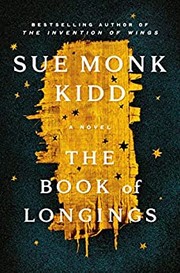
The Book of Longings
In first-century Galilee, Ana marries Jesus of Nazareth and fights to write women's stories in a world set against her voice.
2,368-word summary · 11 min read
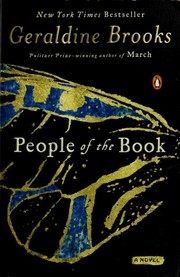
People of the Book
Conservator Hanna traces Sarajevo Haggadah stains back to 1480 Seville.
2,479-word summary · 11 min read
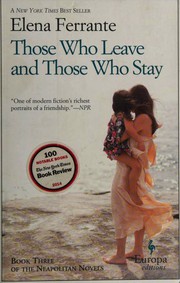
Those Who Leave and Those Who Stay
Elena publishes into Florence salons while Lila labors through Naples factories across the 1970s.
2,034-word summary · 9 min read
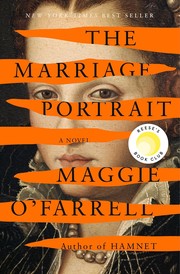
The Marriage Portrait
Fifteen year old Lucrezia Medici marries Ferrara's duke and sits for a portrait shadowed by menace.
2,031-word summary · 9 min read
The Story of a New Name
Married Lila and student Elena grow apart and collide again across shops, Ischia, and Pisa.
2,523-word summary · 11 min read
My Brilliant Friend
Elena and Lila grow up in 1950s Naples bound by rivalry and love.
2,584-word summary · 11 min read
Violeta
A woman born in 1920 writes her life story to her grandson, from one pandemic to another, through wealth, ruin, passion, and dictatorship in South America.
2,555-word summary · 11 min read
The Art Forger
A disgraced Boston painter agrees to copy a Degas stolen from the Gardner Museum, then begins to suspect the original she is copying is itself a forgery.
2,117-word summary · 9 min read
The Once and Future Witches
Three estranged sisters bring witchcraft back to an 1893 city where magic hides in nursery rhymes and the fight for the vote is also a fight for power.
2,132-word summary · 9 min read

Infidel
Ayaan Hirsi Ali's memoir of a Somali childhood, a forced marriage, a Dutch asylum claim, and the political fight that followed the murder of Theo van Gogh.
2,041-word summary · 9 min read

Sophie's Choice
A young Southern writer in 1947 Brooklyn befriends a brilliant, unstable couple and slowly learns the story of the Polish Catholic woman at the center of their…
2,798-word summary · 12 min read
The Lowland
Two brothers grow up beside a marshy lowland in Calcutta, and the choices of the younger one draw the older into a life of duty, distance, and quiet grief that…
2,213-word summary · 10 min read

The Chosen
A shattered pair of glasses in a 1944 Brooklyn softball game starts a friendship between a Hasidic boy and his Orthodox neighbor, and their fathers pull them…
2,443-word summary · 11 min read
The Storyteller's Secret
A New York journalist goes to India to learn why her grandmother loved a British officer, and why a family servant kept the truth for forty years.
2,270-word summary · 10 min read
Stones from the River
Trudi Montag is born a dwarf in a small German river town in 1915 and grows up to keep the town's library and its secrets, from the First World War to the…
2,818-word summary · 13 min read

Ivanhoe
A disinherited Saxon knight, a great tournament, a besieged castle and a trial by combat. Scott's most famous novel, set in England in 1194.
2,834-word summary · 13 min read
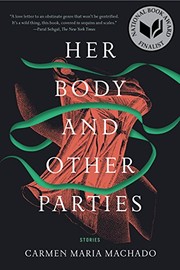
Her Body and Other Parties: Stories
Eight stories where bodies, medicine and old fairy tales get taken apart, with a green ribbon running through the whole book.
2,997-word summary · 13 min read
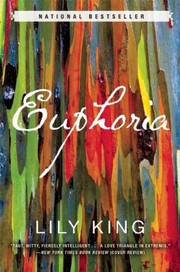
Euphoria
Three anthropologists in 1930s New Guinea turn fieldwork into a love triangle, and a real history breathes behind them.
2,048-word summary · 9 min read
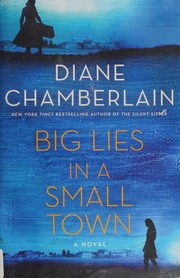
Big Lies in a Small Town
A 22-year-old woman leaves prison to restore a 1940 mural, and Edenton, North Carolina, starts talking.
2,187-word summary · 10 min read
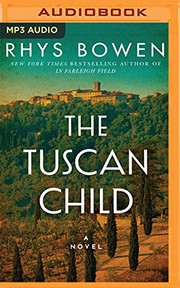
The Tuscan Child
After her father's death, Joanna follows a returned letter to Tuscany and uncovers his wartime love, a hidden painting and a village secret. A dual-timeline…
2,095-word summary · 9 min read
The Sisters Brothers
Two hired killers ride from Oregon to Gold Rush California to murder a prospector, and find their trade, their brotherhood, and the frontier myth coming apart.
2,095-word summary · 9 min read
The Queen's Fool
A young Jewish refugee with second sight becomes a court fool to Edward VI, Mary I, and Elizabeth, and learns what it costs to tell the truth.
2,412-word summary · 11 min read
Mother Night
Howard W. Campbell Jr., a Nazi propagandist and American spy, tells the story of his double life from an Israeli prison cell while waiting to be tried for war…
1,988-word summary · 9 min read
Loving Frank
Mamah Borthwick Cheney leaves her family for Frank Lloyd Wright, and their affair becomes a public scandal that ends in tragedy at Taliesin.
2,034-word summary · 9 min read
I Who Have Never Known Men
Forty women in a cage, one child who remembers nothing, and a nearly empty world above the bunker. Harpman's quiet, unexplained dystopia.
2,025-word summary · 9 min read
Bring Up the Bodies
Thomas Cromwell sets out to destroy Anne Boleyn, building a case from rumor and revenge while Henry VIII waits to marry Jane Seymour.
2,066-word summary · 9 min read
A Voice in the Wind
A young Christian slave in Rome serves a spoiled patrician daughter and catches the eye of her brother, while a captured German gladiator fights for freedom.
2,322-word summary · 10 min read