
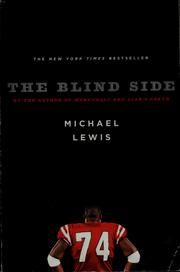
The Blind Side: Evolution of a Game
2,038-word summary 9 min read 304 pages in the book
- First published
- 2006
- Publisher
- W. W. Norton
- Pages
- 304
- ISBN
- 9780393061239
Reading options
What's inside (8 sections)
The Blind Side begins with a broken leg. On November 18, 1985, Lawrence Taylor of the New York Giants came around the right side of the Washington Redskins' offensive line and hit quarterback Joe Theismann from behind. Theismann's leg snapped. The replay is still hard to watch. The injury ended his career and changed how coaches thought about the position that was supposed to protect him. That is the book's opening argument: the left tackle, the man who guards a right-handed quarterback's blind side, became one of the most valuable players in football because the game had become too fast and too violent for the old way of blocking.
Michael Lewis uses that argument to frame the story of Michael Oher, a homeless Black teenager in Memphis who became a high school football star, then a college recruit, then an NFL player. The book alternates between the history of the position and the story of the boy. The two strands are connected by the idea that a rare combination of size, speed, and aggression can be worth a fortune, and that the people who recognize that value early can change a life. It is a sports book, but it is also a book about poverty, race, education, and the strange economy of American athletics.
The football history is the easier part to summarize. In the 1980s, the San Francisco 49ers under Bill Walsh built an offense around short, quick passes. The quarterback had to release the ball fast, and the defense had to find a way to disrupt him. Lawrence Taylor was the best at that. He was too fast for most linemen, and he could hit the quarterback before the play developed. The response was to find a left tackle who could handle him one-on-one, without help from a tight end or a running back. That player had to be big enough to stop a pass rusher, quick enough to move with him, and smart enough to read the defense. The position became a specialty, and the salary followed.
Michael Lewis is good at explaining why the market undervalued the position for so long, and why it eventually corrected. He talks to coaches, scouts, and players. He explains the difference between a right tackle and a left tackle, and why the left side matters more for a right-handed quarterback. He also explains how the passing game changed the economics of the sport. The left tackle went from a useful player to a franchise investment. That is the context that makes Oher's story more than a human-interest piece. He is not merely a kid who got lucky. He is a kid who happened to fit a market that was just learning how much it needed him.
Michael Oher
Oher's childhood is the hard part of the book. He was one of thirteen children born to a mother who was addicted to crack cocaine. He did not know his father. He was shuffled between homes, sometimes sleeping on the street, sometimes staying with relatives, sometimes going hungry. He was large and quiet, and he learned to keep his head down. By the time he reached high school, he had attended nine schools in nine years. He was functionally illiterate. He had never played organized football.
A friend's father helped him get into Briarcrest Christian School, a private school in Memphis with a mostly white student body and a serious sports program. The football coach, Hugh Freeze, saw Oher's size and athleticism and wanted him on the team. The school was not sure it could handle a student with Oher's academic background, but Freeze pushed. Oher was enrolled, and he started playing. He was raw, but he was impossible to miss. He could move like a much smaller man, and he had a natural aggression that coaches love.
The Tuohy family enters the story when Leigh Anne Tuohy, a strong-willed interior designer, sees Oher walking in the rain and offers him a ride. Her husband, Sean, is a former Ole Miss basketball player who made a fortune in fast-food franchises. Their daughter, Collins, and son, S.J., are roughly Oher's age. The family takes him in, first for a night, then for longer. Eventually, they become his legal guardians. The book presents this as an act of generosity, and it clearly was. It also presents it as a collision of worlds. The Tuohys are wealthy, white, Evangelical, and connected. Oher is poor, Black, quiet, and completely unused to being cared for.
Lewis is careful to show that the relationship is not simple. Oher is not a passive object. He is suspicious, proud, and sometimes angry. He does not want to be a charity case. He is also a teenager who wants a family, and the Tuohys provide one. The book's best scenes are the domestic ones, where the cultures clash in small ways. Leigh Anne takes Oher shopping and argues with him about clothes. Sean teaches him how to drive. S.J. treats him like a brother and also like a novelty. The family jokes about race in a way that is meant to be affectionate, and sometimes it is, and sometimes it is not. Lewis reports it without much commentary, which leaves the reader to decide.
The recruitment
Oher becomes a highly recruited left tackle. Colleges across the country want him. The recruitment is where the book's critique of college sports becomes sharp. Oher's grades are poor, and his test scores are low. He needs to qualify academically, and the system is not designed for someone with his background. The Tuohys hire tutors. Oher takes online courses. There are questions about whether the courses are legitimate and whether the NCAA will accept them. The book shows how the adults around Oher work the system to get him eligible, and how the system itself is a maze of rules that can be gamed by people with resources.
Oher chooses Ole Miss, the Tuohys' alma mater. That decision triggers an NCAA investigation. The Tuohys are boosters, and Oher has been living with them. The NCAA wants to know whether the family provided improper benefits. The investigation is intrusive and frightening. Oher is interviewed. The Tuohys are interviewed. The school is nervous. In the end, Oher is cleared, but the process leaves a mark. The book is sympathetic to Oher and the Tuohys, and it is critical of the NCAA. It argues that the rules are designed to protect the institution, not the player, and that a kid from Oher's background is at a disadvantage before he ever steps on a field.
The football sections are exciting. Lewis knows how to write a game. He explains blocking schemes, pass protection, and the mental work of playing left tackle. He shows how Oher's physical gifts translate into success, and how much he still has to learn. The book does not pretend that Oher is a finished product. He is a project, and the people around him know it. The NFL is interested because the position is so important, and because a player with Oher's combination of size and speed is rare. The book ends before his professional career, but the direction is clear.
What the book gets right
The Blind Side is very good at showing how sports and poverty intersect. Oher's story is about more than talent. It is about luck, timing, and the people who happen to notice him. If he had not met the Tuohys, he might have disappeared. If he had not been built like a left tackle, the Tuohys might not have noticed him. The book does not pretend that the system is fair. It shows that the system is a lottery, and Oher won. That is a more honest message than the movie version, which turns the story into a simple tale of a kind family saving a boy.
Lewis is also good at the economics. He explains why left tackles are paid so much, and why the market took so long to catch up. He shows how the passing game created a demand for a specific kind of athlete, and how that demand changed the lives of the people who fit it. The football history is not padding. It is the reason the story matters to the sport. The book is about a position as much as it is about a person.
The writing is clear and fast. Lewis has a knack for explaining complicated things without condescending. He uses concrete examples and memorable characters. The book reads like a long magazine feature, which is what it originally was. That is not a criticism. It is a compliment. The pacing is excellent, and the story is hard to put down.
What the book gets wrong
The biggest criticism is that the book tells the story from the Tuohys' point of view. Oher is the subject, but he is not the narrator. We see him through the eyes of the family, the coaches, and the scouts. We do not get much of his interior life. He is quiet in the book, and his quietness is interpreted by the people around him. That is a real limitation. The reader learns what the Tuohys think about Oher, but not always what Oher thinks about himself.
The book also has a savior narrative problem. The Tuohys are presented as generous and heroic, and they may well be, but the story is shaped to make them look good. The movie made this worse. It turned a complicated story about race and class into a story about white people helping a Black kid. The book is more complicated than the film, but it still leans in that direction. It does not spend enough time on the structural reasons why Oher was homeless, or on the other kids who did not get saved.
Later events complicate the story further. In 2023, Oher filed a lawsuit against the Tuohys, alleging that they had never actually adopted him and that they had used a conservatorship to control his affairs and profit from his story. The Tuohys disputed the claims. That legal fight is outside the book, which was published in 2006, but it is relevant to any reader who wants to understand the full picture. The book's version of the family is not the whole story. It is one version, told at a particular moment.
The movie
The 2009 film adaptation is the version most people know, and it is worth separating from the book. The movie is warmer, simpler, and more focused on Leigh Anne. It turns Oher into a passive figure who is rescued by a determined white mother. The book gives more space to football, to the NCAA, and to the adults who were competing for Oher's future. It also gives more space to Oher's own silences. The film is entertaining, but it sanded down the parts of the story that were critical of the system. If you have only seen the movie, the book will feel like a different account of the same events.
Who should read it
I would recommend The Blind Side to readers who like sports journalism, stories about poverty and education, and books that explain how systems work. It is a good introduction to the economics of football, and it is a moving portrait of a teenager who had almost nothing and found a way out. It is also a book that should be read with a critical eye. The Tuohys are not saints, and Oher is not a symbol. He is a person, and his story is more complicated than the feel-good version suggests.
The book's real subject is the way America turns athletic talent into a commodity. Oher is valuable because he can protect a quarterback. That value is real, but it is also precarious. One injury could end it. One bad decision could end it. The people who invest in him know that, and so does he. The Blind Side is about the moment when a boy becomes an asset, and the adults around him realize what he is worth. That is a fascinating and uncomfortable story, and Lewis tells it well.
FAQ
Who is Michael Oher?
He is the Memphis teenager at the center of the book, a homeless student who became a top college football recruit and later an NFL left tackle.
Why is the left tackle so important in the book?
The left tackle protects a right-handed quarterback's blind side, and the rise of fast pass rushers made that protection one of the most valuable jobs in football.
Did the Tuohys adopt Michael Oher?
The book presents them as his legal guardians and later family. In 2023 Oher disputed the adoption account in a lawsuit, which the Tuohys contested.
Similar books
The Warmth of Other Suns
Three migrants ride north out of Jim Crow toward Chicago and LA.
2,561-word summary · 11 min read
Hidden Figures
Black women computers at Langley launch rockets past Jim Crow.
2,385-word summary · 11 min read
Open
Tennis star Andre Agassi recalls hating tennis, falling to No. 141, and rebuilding his life on his own terms.
2,352-word summary · 10 min read
Moneyball
Oakland buys walks and patience to win 103 games on a small payroll in Lewis's 2003 baseball story.
2,955-word summary · 13 min read
Sybil
A 1973 case study of a woman treated for multiple personalities, and the book that made dissociative identity disorder a household phrase.
2,054-word summary · 9 min read

Long Walk to Freedom
Mandela's account of a Thembu childhood, a law practice, a banned movement, twenty-seven years in prison, and the negotiation that ended apartheid.
2,454-word summary · 11 min read
The Power of One
A boy in apartheid South Africa decides to become welterweight champion of the world, and the novel follows every mentor, fight, and loss that gets him there.
2,145-word summary · 10 min read
Nothing to Envy
Barbara Demick follows six defectors from Chongjin through the North Korean famine, showing how ordinary people lived, believed, and finally left.
2,068-word summary · 9 min read
Same Kind of Different as Me
An art dealer and a formerly homeless sharecropper tell the story of the friendship that began at a Fort Worth mission and the woman who insisted on it.
2,023-word summary · 9 min read

Infidel
Ayaan Hirsi Ali's memoir of a Somali childhood, a forced marriage, a Dutch asylum claim, and the political fight that followed the murder of Theo van Gogh.
2,041-word summary · 9 min read

Down and Out in Paris and London
Orwell's account of washing dishes in Paris hotels and tramping through London does not ask for pity, only for a clear look at how poverty actually works.
2,282-word summary · 10 min read

The Girl with Seven Names: A North Korean Defector's Story
Hyeonseo Lee crossed the frozen Yalu River at seventeen, spent years hidden in China, escaped to South Korea, and later returned to rescue her family.
2,404-word summary · 11 min read
The Wright Brothers
David McCullough tells the story of two self-taught Ohio brothers, working largely alone and out of a bicycle shop, who solved the problem of flight before…
2,027-word summary · 9 min read
Life
The Rolling Stones guitarist tells his own story: a Dartford childhood, the band's first gigs, the drug raids, the tax years and Patti Hansen.
2,761-word summary · 12 min read

Why I'm No Longer Talking to White People About Race
Reni Eddo-Lodge traces black British history and shows how institutions, culture, and everyday assumptions keep producing racial inequality.
2,071-word summary · 9 min read
The Letters of Vincent van Gogh
Vincent van Gogh's letters to his brother Theo, in a Penguin Classics selection edited by Ronald de Leeuw, trace a decade of work, faith, and obsession.
2,611-word summary · 12 min read
The Stranger Beside Me
Ann Rule's classic memoir of her friendship with Ted Bundy, written by the true-crime author who knew him long before the world learned what he had done.
2,481-word summary · 11 min read
Maid: Hard Work, Low Pay, and a Mother's Will to Survive
Stephanie Land's memoir of cleaning houses as a single mother on the poverty line, and of the paperwork that made every step forward cost something else.
2,039-word summary · 9 min read
Evicted: Poverty and Profit in the American City
Desmond follows eight Milwaukee families and two landlords through a year of evictions, showing how losing a home causes poverty rather than just reflecting it.
2,032-word summary · 9 min read
Catherine the Great: Portrait of a Woman
A German princess survives a miserable marriage and a coup to rule Russia for thirty-four years, torn between Enlightenment ideas and absolute power.
2,065-word summary · 9 min read
The New Jim Crow: Mass Incarceration in the Age of Colorblindness
How mass incarceration became a racial caste system after civil rights.
2,413-word summary · 11 min read
The Fire Next Time
Baldwin writes his nephew and faith on race in America.
2,463-word summary · 11 min read
The Emperor of All Maladies
A biography of cancer from Galen to chemo through one doctor cases.
2,255-word summary · 10 min read
So You Want to Talk About Race
Oluo gives plain rules for talking about race at work and home.
2,597-word summary · 12 min read
Killing Lincoln
Booth plots as Lincoln pushes war end and reunion in 1865.
2,486-word summary · 11 min read
Behind the Beautiful Forevers: Life, Death, and Hope in a Mumbai Undercity
Life in a Mumbai slum near the airport, where families hustle for a better future.
2,406-word summary · 11 min read
Wild Swans
Three generations of women survive warlords, revolution, and the Cultural Revolution in Jung Chang's family memoir.
2,356-word summary · 10 min read
How to Be an Antiracist
Kendi blends memoir and history to argue that fair policy, not self fixing, creates an equal society.
2,513-word summary · 11 min read
The Surgeon of Crowthorne
James Murray built the Oxford dictionary with Broadmoor inmate William Minor, whose thousands of slips shaped this 1998 HarperCollins story of murder, madness…
2,775-word summary · 12 min read
Cleopatra: A Life
Pulitzer winner Schiff restores Cleopatra as a capable ruler, from Ptolemy debts and Caesar to Antony, Actium, and her death in 30 BC, built from coins and…
3,586-word summary · 16 min read