
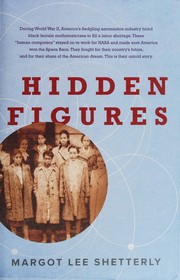
Hidden Figures
2,385-word summary 11 min read 368 pages in the book
- First published
- 2016
- Publisher
- HarperCollins
- Pages
- 368
- ISBN
- 9780062363596
Reading options
What's inside (8 sections)
I picked up Hidden Figures after seeing the film, expecting the book to be the same story with footnotes. It is not. Margot Lee Shetterly published it in 2016 with HarperCollins, and the edition I read runs 368 pages. The film follows three women. The book follows dozens, with cousins and teachers and church mothers and carpools woven in, and it stretches from the Depression through Apollo. I liked that wider view, even when it slowed me down. It felt less like a movie tie in and more like someone going home to ask who else was in the room.
Shetterly grew up in Hampton, Virginia. Her father worked as a scientist at Langley. She knew as a girl that Black women worked there as computers, because her Sunday school teacher had been one. She started work on the book in 2010, interviewed families, pulled memos and flight reports, and tried to put names to work that had been signed off as NACA or NASA. That personal link shows. She writes about Hampton streets, school choices, and bus routes the way people write about places they walked.
The core term needs explaining. A computer, in the 1940s, was a person who computed. At the Langley Memorial Aeronautical Laboratory, which belonged to the National Advisory Committee for Aeronautics before NASA existed, hundreds of women did the math that engineers needed to design planes and later spacecraft. They sat with mechanical calculators, slide rules, and paper, and they checked each other's work by hand. The Black women were grouped separately as the West Area Computers because Virginia law required segregated offices, bathrooms, and lunch tables.
War work and a door cracked open
The book opens in the early 1940s. America needs planes, and Langley needs math. White computers are already there, many of them young women from colleges. The labor pool runs thin as men go to war. In 1941 President Roosevelt signs Executive Order 8802, which bars discrimination in defense industry hiring. It does not end Jim Crow, not close, but it cracks a door. Langley starts hiring Black women with math degrees in 1943.
Shetterly spends time on what those degrees cost. Dorothy Vaughan finishes college in 1929 and teaches math at a Black high school in Farmville for years. Katherine Johnson, born in West Virginia in 1918, counts everything as a child and finishes high school early, then college by eighteen. Mary Jackson grows up in Hampton, studies math and physics, takes teaching and office jobs, and keeps looking for better work. None of them walk straight into Langley. They teach, they raise kids, they wait for a bus that never comes on time, they fill out applications that sit in piles.
When the calls come, the details are plain and telling. Pay is better than teaching but the conditions sting. Black computers use a separate bathroom, and one is far from their building, so they lose time just walking. They eat apart. They borrow books from a separate shelf or ask a white colleague to check one out for them. Their calculations go into reports under a supervisor's name. Shetterly does not rush past this. She lists the room numbers, the building names, the way the West Area office looked, because those small facts make the insult concrete.
I found these early chapters the most alive. Not the equations, which I skimmed when they piled up, but the logistics. How do you carpool from Hampton to Langley when gas is rationed. Who watches the kids when both parents work shifts. What do you wear when you want to be taken seriously and also have to walk a mile in Virginia heat to a bathroom you are allowed to use. Those are the kinds of details Shetterly gets right.
Dorothy Vaughan sees what is coming
Dorothy Vaughan arrives at Langley in 1943 and becomes, over time, the first Black supervisor there. She leads the West Area group. She assigns work, trains newcomers, and fights for promotions and raises that white supervisors hand out more easily to others. Her section handles flight test data, stability calculations, and the long dull math that keeps planes from falling apart.
Vaughan has the clearest arc in the book, to me. In the mid 1950s she reads about electronic computers coming to Langley. Many human computers treat the IBM machines as someone else's worry. Vaughan does not. She teaches herself the new methods, signs up for programming classes, and brings her staff along. When the IBM 7090 arrives and the offices reorganize into integrated analysis groups, her women are ready to move into programming jobs instead of being let go. She learns FORTRAN, a language that looks clumsy now but was a lifeline then, and she makes sure her group can write and debug it.
There is a scene I kept thinking about where Vaughan drives her staff to a class or lends a textbook or stays late to check code. Shetterly tells it without drama, which makes it land harder. No speech about the future. Just a woman who saw the machines in the hall and understood that math on paper was ending, so she changed skills at forty something while raising a family and leading a segregated team.
The cost is that Vaughan rarely gets credit in print at the time. Her name appears on some memos, not on many reports. Shetterly digs out personnel files and phone lists to show how central she was. I wished for more of Vaughan's own voice here. We get letters and recollections from children and coworkers, but not much in her own words. That is a source problem, not a writing failure. Still, I felt the gap.
Mary Jackson insists on the classroom
Mary Jackson joins Langley in 1951, assigned at first to Dorothy Vaughan's group. She is restless in a good way. She asks why a number looks off. She volunteers for wind tunnel work with engineers who are not used to a Black woman questioning their data. She moves into engineering and then hits a wall built of school rules.
To earn an engineering title she needs graduate level courses in math and physics. The classes are offered at a segregated Hampton high school at night, for white students. Shetterly walks through what Jackson does next. She petitions the city for permission to attend. She goes to court, or to the school board process that stood in for court, and she wins leave to sit in those classes. She finishes them after full work days, with kids at home, and becomes NASA's first Black woman engineer in 1958.
I loved Jackson's bluntness as Shetterly presents it. She tells a child she mentors that she is no good at being patient with nonsense. She helps start science clubs. She works with kids at church and at community centers. At Langley she tests models in tunnels, writes about airflow, and pushes for authorship when she earned it. Later in her career she takes a demotion to manage diversity programs because she thinks she can open more doors that way than by staying in a lab where she has already proved herself. That choice puzzled me at first. Shetterly frames it as practical rather than saintly. Jackson saw where the hiring stalled and went to sit at that desk.
Her husband and family appear often, which I liked. The book does not pretend these women worked in a vacuum. There are husbands who build wind tunnel models at the dinner table, kids who wait in cars, neighbors who share rides. Hampton's Black middle class, teachers and principals and funeral home owners and club women, holds the whole story up. Without that network, night classes and late shifts would have been impossible.
Katherine Johnson and the flight path
Katherine Johnson is the name most readers know, and Shetterly gives her a full portrait without turning her into a symbol. Johnson arrives at Langley in 1953, assigned to the Flight Research Division. She is quick, sure, and unwilling to stay quiet in meetings. When engineers from the all male flight group talk through a trajectory problem, she asks to see the numbers. When they hedge, she asks again.
Her big work, as the book explains it, moves from planes to space. She calculates gust loads and flight paths, co authors a report on orbital flight that matters because a Black woman's name on such a paper was rare, and then works the Mercury missions. In 1962 John Glenn, before his orbital flight, asks for Johnson to check the electronic computer's numbers by hand. Shetterly treats that moment with care. It happened, and it mattered for trust, but Johnson had already done years of work that should have earned that trust without a famous astronaut asking.
The math here gets thick. Shetterly explains orbital mechanics, reentry windows, and splashdown targets in plain terms, then adds the equations and correction terms that made my eyes glaze. I skimmed some pages on least squares and trajectory shaping. Readers who like technical detail will enjoy it. I cared more about the office scenes. Johnson standing at a chalkboard while men twice her age watch. Johnson editing a memo to remove hedging so an engineer will act. Johnson signing her first report with her married name after remarrying during a long review cycle.
What stayed with me was her insistence on being in the room. Langley had briefings where computers dropped off numbers and left. Johnson stayed. She asked for the briefing packet. She learned the rocket as well as the math. That habit, more than raw speed with figures, is why she moved from the pool to the flight group and then to Apollo work on lunar paths and rendezvous methods.
Mercury to Apollo, and Jim Crow alongside
One strength of the book is that Shetterly never lets the space story float free from the civil rights story. While Langley calculates orbits, Hampton enforces segregation. While Glenn circles Earth, Black families in Virginia fight for school funding. Shetterly cuts between launch pads and lunch counters without forcing the link, because the link was daily life.
The 1960s chapters cover the shift from NACA to NASA in 1958, the Mercury flights, and the long build to Apollo. The West Area as a segregated unit ends. Electronic machines take over routine calculation. Some human computers retire. Some become programmers. Some, like Christine Darden, who enters later and carries the story past the Moon landing into shuttle and sonic boom research, show what a fuller career could look like when hiring opened a bit wider. Darden's path, from teacher to computer to engineer to manager with a doctorate, reads like a second generation answer to Vaughan's first push.
Shetterly also shows the friction that success did not erase. Promotions lag. Authorship lags. A white engineer with less experience rises faster. A Black woman trains newcomers who then outrank her. Pay stays uneven. The women notice, and they keep records, and they push through personnel offices that were not built for them. The tone here is steady rather than angry. Shetterly lets the files speak. A memo denying a promotion. A performance review praising work while holding the grade. I found that restraint effective, though readers wanting fire may find it cool.
The Moon landing chapter surprised me by being quiet. No long flag planting scene. Instead, Shetterly notes who watched where, who had retired by then, who stayed up with kids to see the broadcast. The point is not that these three women put Apollo on the Moon alone. They did not, and the book does not claim it. The point is that without their years of hand checked math, programming, and tunnel testing, the path there would have been slower and rougher.
What holds and what drags
The research carries the book. Shetterly names names beyond the famous three, pulls flight reports and school records, and maps Hampton block by block. The portrait of Dorothy Vaughan learning programming to save her team's jobs is worth the price alone. Mary Jackson's night classes and later diversity work show two kinds of courage, one to break a rule and one to sit at a dull desk to fix hiring. Katherine Johnson's board work shows what happens when talent refuses to leave the room.
The fair criticism is shape. The book tries to be three biographies, a lab history, a city history, and a civil rights history at once. The cast swells past easy tracking. Cousins, supervisors, astronauts, teachers, and children cycle in and out. Timelines jump. A chapter starts in 1943, flashes to 1969, then returns to 1955 for another woman's schooling. I had to flip back several times to place people. Readers who want a tight triple portrait like the film may find the middle baggy.
The technical passages also vary. Some explanations sing. The John Glenn check, the reentry math, the switch to FORTRAN, all read clearly. Other stretches list report numbers and tunnel runs that blur together. I skimmed those without losing the thread, but I wished Shetterly had cut a few tables of data and kept more office dialogue. The notes and bibliography are strong, so scholars can chase numbers there.
Who should read it. Readers who liked the film and want the fuller record should start here. Students of science history, teaching, or engineering will find models for how skill and organizing work together. Younger readers may prefer the young readers edition, which trims the math and keeps the three main stories. Adults comfortable with some slow chapters will get a Hampton community portrait they will not find elsewhere.
I finished with more respect for Vaughan than when I started, and I started with plenty. Johnson's brilliance was never hidden from her colleagues, only from the public. Jackson's fight for a classroom seat felt close to home for anyone who has asked for permission to learn. Shetterly's line, offered through the facts rather than stated outright, is that progress came because capable women kept showing up with pencils, then with punch cards, then with code, until the room had to make space. That lands harder than any single launch scene, and it stayed with me after I closed the book.
FAQ
What is Hidden Figures about?
It traces Black women computers at Langley from the 1940s through Apollo, centering Dorothy Vaughan, Mary Jackson, and Katherine Johnson under segregation.
When was Hidden Figures published and by whom?
Margot Lee Shetterly published it in 2016 with HarperCollins. The edition cited here runs 368 pages.
Who should read Hidden Figures?
Readers interested in NASA, civil rights history, and science careers will get the most from it. Younger readers may prefer the young readers edition.
Similar books
The Warmth of Other Suns
Three migrants ride north out of Jim Crow toward Chicago and LA.
2,561-word summary · 11 min read

The Emperor of All Maladies
A biography of cancer from Galen to chemo through one doctor cases.
2,255-word summary · 10 min read
A Beautiful Mind
Mathematician John Nash's brilliant game theory rise, schizophrenia collapse, and Nobel return, with wife Alicia's care.
2,142-word summary · 10 min read
Einstein: His Life and Universe
Isaacson traces Einstein from patent clerk to world fame using newly opened papers, through 1905, relativity, exile, and the long unified theory search.
2,773-word summary · 12 min read

Long Walk to Freedom
Mandela's account of a Thembu childhood, a law practice, a banned movement, twenty-seven years in prison, and the negotiation that ended apartheid.
2,454-word summary · 11 min read
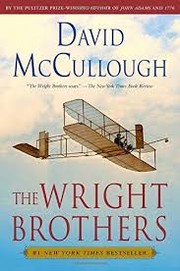
The Wright Brothers
David McCullough tells the story of two self-taught Ohio brothers, working largely alone and out of a bicycle shop, who solved the problem of flight before…
2,027-word summary · 9 min read
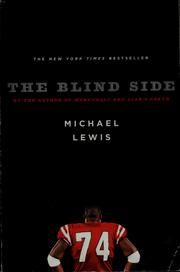
The Blind Side: Evolution of a Game
Michael Lewis traces how the left tackle became a premium position and tells the story of Michael Oher, a homeless Memphis teenager whose size and speed made…
2,038-word summary · 9 min read

The Letters of Vincent van Gogh
Vincent van Gogh's letters to his brother Theo, in a Penguin Classics selection edited by Ronald de Leeuw, trace a decade of work, faith, and obsession.
2,611-word summary · 12 min read
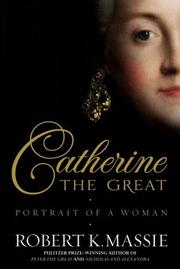
Catherine the Great: Portrait of a Woman
A German princess survives a miserable marriage and a coup to rule Russia for thirty-four years, torn between Enlightenment ideas and absolute power.
2,065-word summary · 9 min read
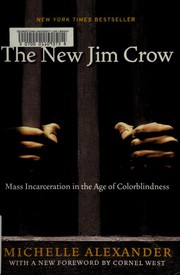
The New Jim Crow: Mass Incarceration in the Age of Colorblindness
How mass incarceration became a racial caste system after civil rights.
2,413-word summary · 11 min read
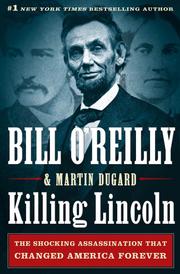
Killing Lincoln
Booth plots as Lincoln pushes war end and reunion in 1865.
2,486-word summary · 11 min read
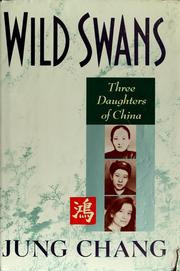
Wild Swans
Three generations of women survive warlords, revolution, and the Cultural Revolution in Jung Chang's family memoir.
2,356-word summary · 10 min read

The Hot Zone
Ebola and Marburg move from African outbreaks to a Virginia monkey house and an Army response in suits.
2,291-word summary · 10 min read
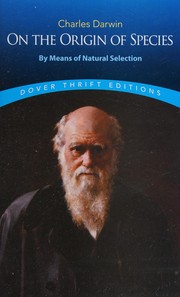
On the Origin of Species
Darwin's 1859 case for evolution by natural selection, from Beagle finches and breeding pigeons to fossils and anatomy.
2,589-word summary · 12 min read

How to Be an Antiracist
Kendi blends memoir and history to argue that fair policy, not self fixing, creates an equal society.
2,513-word summary · 11 min read
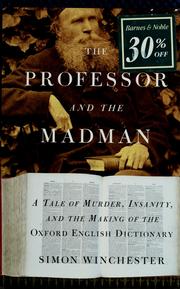
The Surgeon of Crowthorne
James Murray built the Oxford dictionary with Broadmoor inmate William Minor, whose thousands of slips shaped this 1998 HarperCollins story of murder, madness…
2,775-word summary · 12 min read
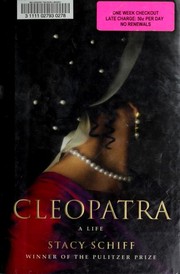
Cleopatra: A Life
Pulitzer winner Schiff restores Cleopatra as a capable ruler, from Ptolemy debts and Caesar to Antony, Actium, and her death in 30 BC, built from coins and…
3,586-word summary · 16 min read
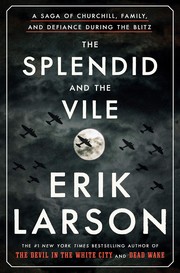
The Splendid and the Vile
Larson follows Churchill circle through Blitz year with diaries and bombing nights.
2,038-word summary · 9 min read
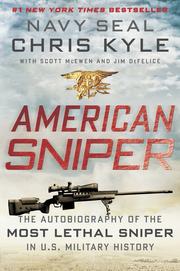
American Sniper: The Autobiography of the Most Lethal Sniper in U.S. Military History
Navy SEAL sniper Chris Kyle recounts Texas roots, SEAL training, four Iraq tours, and the strain combat placed on his marriage and health.
2,011-word summary · 9 min read
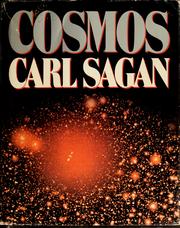
Cosmos
Sagan tours galaxies, evolution, and Alexandria to argue for science.
2,416-word summary · 11 min read
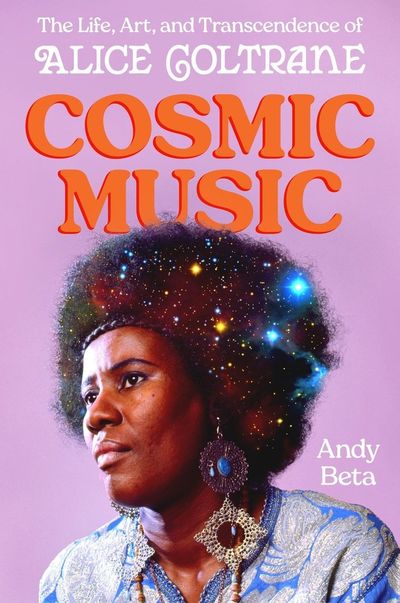
Cosmic Music
The first full biography of Alice Coltrane, from Detroit church piano to ashram guru.
2,048-word summary · 9 min read
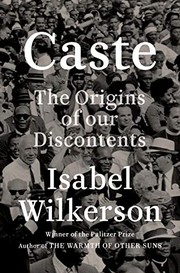
Caste: The Origins of Our Discontents
Wilkerson argues America runs on a hidden caste system, tracing eight pillars across the US, India, and Nazi Germany.
2,629-word summary · 12 min read
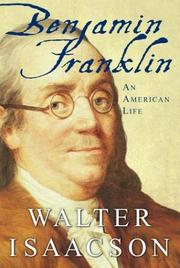
Benjamin Franklin: An American Life
Isaacson traces Franklin from Boston runaway to printer, scientist, London agent, Paris diplomat, and founder across 590 vivid pages.
2,149-word summary · 10 min read
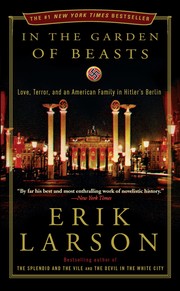
In the Garden of Beasts
Ambassador Dodd takes his family to 1933 Berlin and watches charm curdle into terror.
1,927-word summary · 9 min read
1776
Washington's amateur army from Boston siege to Trenton through mud and doubt.
2,139-word summary · 10 min read
John Adams
McCullough follows Adams from Braintree lawyer to second president.
2,515-word summary · 11 min read
Between the World and Me
Coates writes to his son about the Black body in America, from Howard to the loss of Prince Jones.
2,234-word summary · 10 min read

Guns, Germs, and Steel: The Fates of Human Societies
Diamond argues geography and crops explain why some societies expanded faster than others.
3,432-word summary · 15 min read
The Immortal Life of Henrietta Lacks
The cells of a poor Black tobacco farmer revolutionized medicine, taken without her knowledge in 1951.
2,139-word summary · 10 min read
Unbroken
Louis Zamperini survives a Pacific crash, sharks and POW camps after running in the Berlin Olympics.
3,263-word summary · 15 min read