
Reading options
What's inside (8 sections)
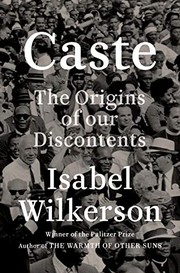
A coworker left this on my desk with a sticky note that said only "read the pillar chapters." I expected a sociology lecture. What I got instead was a book that rearranged furniture in my head. Caste: The Origins of Our Discontents, first published in 2020, Random House hardcover running 496 pages, ISBN 9780593230251, is Isabel Wilkerson's argument that America runs on a hidden caste system. Wilkerson won the Pulitzer Prize for her reporting and wrote The Warmth of Other Suns a decade earlier, so she came to this with serious research habits. This one took her years of travel and interviews across countries. It reads like it.
The basic claim sounds simple and sits uneasily the longer you hold it. Race, Wilkerson says, is what we see. Caste is the structure underneath that decides where everyone stands. She spends the whole book proving those two things are related but different, and that confusing them keeps us from fixing either one.
The house you live in but never built
Wilkerson opens with a scene she calls the man in the crowd. She is covering a political rally, standing in a press area, and a stranger singles her out with hostility that has nothing to do with anything she did that day. It is about what she represents in his ranking of people. That small ugly moment becomes the doorway into everything else. She felt something old moving under something new, and she spent the rest of the book naming it.
Her main image is a house. America is an old house, she says, and caste is part of its frame. The studs and joists we cannot see in the physical buildings we call home still hold the whole thing up. Caste is the infrastructure of our divisions. It is the architecture of human hierarchy. I kept returning to that image while reading because it explains why progress feels so wobbly. You can repaint rooms all you want. If the frame stays crooked, the doors still jam.
Then comes the line everyone quotes, and it deserves the fame:
Race, in the United States, is the visible agent of the unseen force of caste. Caste is the bones, race the skin.
Read that twice. Skin is what you notice. Bones decide how the body moves. Wilkerson is saying that class, politics, even personal prejudice all move inside a skeleton laid down centuries ago. Laws changed. The skeleton did not get X-rayed until she did it here.
One thing to know going in: this is not a memoir with some history sprinkled on top, and it is not a textbook either. It moves between personal stories, historical episodes, and straight argument. Some chapters read like narrative. Others read like a lecture you wish all lectures were. That switching keeps almost five hundred pages moving better than you would expect.
Germany, India, and Mississippi
The boldest move in the book is the comparison. Wilkerson sets three caste systems side by side: India, Nazi Germany, and the United States. She traveled, interviewed scholars and ordinary people, and read deep into how each system ranked human beings and kept them ranked.
India gets serious attention because its caste system is the oldest and most formal, with rankings inherited at birth that shaped marriage, work, and worship for millennia. Wilkerson went there, talked with people across castes, and describes moments of her own confusion as an American encountering rules she could not see but everyone around her obeyed. Those scenes do real work. They let an American reader feel what it is like to be illiterate in a hierarchy everyone else reads fluently. Then she turns the mirror around.
The Germany chapters hit hardest for most readers. Nazi officials in the 1930s studied American racial law closely while drafting their own codes against Jews. Let that sit. The regime the world treats as the ultimate warning was taking notes on Mississippi and Virginia. Wilkerson walks through what the Nazis borrowed, including definitions of blood and belonging, and what they found too extreme even for them. American one-drop statutes went further than some Nazi drafts wanted to go. That detail lands like a slap because it reverses the usual story. America was not the contrast to that history. In this area of law, America was the rough draft.
American material fills the rest: slavery, Jim Crow, redlining, and the everyday machinery of ranking that survived the civil rights laws. She tells stories about Martin Luther King Jr. navigating indignities that had nothing to do with his fame, about the baseball star Satchel Paige performing greatness inside a system built to deny it, about a single father and his small son on a plane, about her own encounters in airports and interviews. These are not decorations. Each one shows a pillar or a consequence in a human body before she names it in theory.
Fair question to ask here, and reviewers did: does lining up three different countries flatten real differences? India, Germany, and America had different economies, religions, and timelines. Wilkerson knows that and says so, but her momentum sometimes carries her past the caveats. The comparison illuminates, as one critic put it, and it also collapses. Keep both verbs in mind while reading. The pattern she finds is real. The local details still matter.
Eight pillars holding the roof up
The center of the book is its longest section, eight chapters laying out what she calls the eight pillars of caste. These are the load-bearing features that show up in every caste system she studied. Read slowly here. Everything later in the book hangs on this frame.
Pillar one is divine will and the laws of nature. Every caste system claims God or nature ordered it. In America that meant sermons and scriptures bent to defend slavery, including the old story of the curse of Ham used to mark Black people as born for servitude. When inequality is holy, questioning it becomes sin. That lock held for centuries.
Pillar two is heritability. You are born into your rank and cannot earn your way out. America's version included the one-drop rule, under which any known African ancestry made a person Black for legal purposes. Status passed like property through blood. No achievement, wealth, or character could override the assignment.
Pillar three is endogamy, the control of marriage and mating. American anti-miscegenation laws punished marriage across the color line well into living memory. Wilkerson treats this pillar as the panic room of caste. Everything else can bend a little, but the group must control who has children with whom, because children decide whether the hierarchy reproduces itself.
Pillar four is purity versus pollution. The dominant group calls itself clean and treats contact with the lower group as contamination. Jim Crow turned this belief into separate wells, pools, Bibles in courtrooms, and waiting rooms. The point was never hygiene. It was daily theater proving who could soil whom.
Pillar five is occupational hierarchy. The best work is reserved upstairs and the stigmatized work assigned downstairs. Under Jim Crow, law and custom pressed Black workers toward farm and domestic labor no matter their skill. Wilkerson shows how this outlived the laws. Resumes with identical qualifications still sort by perceived rank, and whole job categories still carry the smell of the old assignments.
Pillar six is dehumanization and stigma. Lower-caste people are denied full individuality through mockery, dress codes, punishments, and public humiliation. She describes racist carnival games where white fairgoers paid to throw balls at Black faces, and the everyday rules that punished Black drivers for displaying status, like owning a fine car. The message repeats everywhere: you are a type, not a person.
Pillar seven is terror and cruelty as enforcement. Whippings under slavery. Lynchings after it. The point of the violence was always partly the audience. Wilkerson is direct about this and the chapters are grim. Terror taught everyone, including people who never suffered it personally, exactly where the lines sat.
Pillar eight is the belief in inherent superiority and inferiority. The ranking is not about what anyone did. It is about what everyone supposedly is. This pillar lives in assumptions: who looks like a doctor, who gets followed in a store, whose resume needs extra proof.
That is a lot of framework, and honestly this section drags in spots. Each pillar chapter follows a similar path from India to Germany to America, and by pillar six you can predict the turns. I started skimming the German passages and slowing down for the American ones, which probably proves her point about where my attention lives. Still, the repetition is doing structural work. She is showing the same shape in three places until you cannot unsee it. Worth pushing through, but bring coffee.
The price everyone pays
After the pillars, the book turns to what caste does to people living inside it, including the people on top. This is where Caste stopped feeling like history and started feeling like diagnosis.
One hard idea is the necessity of a bottom rung. People in the middle of a hierarchy need someone below them to measure against, so they will defend the bottom rung even when the whole staircase is sinking. That explains behavior that looks crazy from the outside, like struggling communities opposing programs that would help them, because those programs might help the group below them more. Status pays wages that money cannot replace.
Related to that is scapegoating. When things go wrong, blame flows downhill by design. Wilkerson shows how dominant groups point the middle castes at the bottom whenever pressure builds. It works because the hierarchy trained everyone to look down instead of up.
She also examines why lower-caste people sometimes enforce the system against each other. Caste rewards compliance. A few people from the bottom get small privileges for keeping order, and those examples get held up as proof the system is fair. She discusses Jewish kapos in the camps and Black officers policing Black neighborhoods as versions of this trap. People will read those pages differently, and some will object to the pairing. Her point is about structure, not blame: systems divide the bottom to protect the top, and survival choices inside a trap should not be confused with endorsements of it.
Then there is the damage report. Lower-caste people carry stress in their bodies that shortens lives. Dominant-caste people pay too, living with vigilance, resentment, and a culture that revolves around defending rank instead of solving problems. She calls one pattern the narcissism of caste, where the whole culture orbits the feelings of the top group. Whole news cycles make sense once you see that orbit.
This section convinced me more than any other part. It takes the framework out of the past and sets it down in traffic stops, hiring meetings, and doctor visits. You will catch yourself testing her claims against your own week. That test is uncomfortable. Keep going.
Backlash, flags, and fever
Wilkerson argues that backlash follows every step the bottom takes upward. Her big example is recent. The first Black president is followed by a successor who promised, in effect, restoration of the old ranking. She reads that election as caste responding to a breach, millions of voters answering a threat to the hierarchy rather than any single policy. You do not have to agree with every line of that reading to feel its pull. Something beyond normal partisanship was clearly moving.
Symbols get a chapter because symbols do policing work. Flags, statues, and slogans mark territory and tell everyone the ranking still stands. She puts Confederate emblems and swastikas in the same analysis as announcements of intent. A flag over a statehouse carries a message in her telling. It is a sign on the old house saying the frame has not changed.
Then the bill comes due for everyone. Societies gripped by caste build harsh criminal justice systems and thin public supports, because helping the bottom feels like violating the order. The result is less health and safety for nearly everyone except the most insulated. She wrote these chapters as the pandemic arrived, and the virus became her closing exhibit. The disease struck along the exact lines caste had drawn, through crowded housing, exposed jobs, and unequal care. The skeleton showed through the skin again.
Short version of this whole stretch: hierarchy feels good to the people it lifts and charges them anyway. Resentment is expensive. Contempt has maintenance costs. Nobody gets out without paying.
The exit, the movie, and my gripes
The last part asks whether a world without caste is possible. Wilkerson's answer is careful. Yes, she says, but only with enormous collective effort, and the dominant group has to do most of the lifting since it built and benefits from the frame. Her example is Germany after the war, which faced its crimes through education, memorials, and law in ways America never matched for slavery and Jim Crow. The comparison stings on purpose. One country dismantled its ranking machinery in public. The other changed the laws and kept the reflexes.
She closes with scenes of people crossing caste lines at personal cost, and an appeal that reads like a sermon in the best sense. No new program is unveiled. No ten-point plan. The ask starts with seeing the beams clearly, then telling the truth about them and repairing what they broke.
Reception tells you how hard this landed. Oprah picked it for her book club and called it essential. It topped bestseller lists, won major prizes, and drew long reviews everywhere. Years later Ava DuVernay turned it into the film Origin, which follows Wilkerson herself trying to write the book while grieving. A nonfiction argument becoming a feature film almost never happens. That tells you the stories carried as much weight as the theory.
Now my complaints, because the book earns criticism alongside praise.
First, the middle really is repetitive. The pillar chapters prove the pattern so thoroughly that the proof becomes the problem. By the later pillars I wanted fewer illustrations and more forward motion. Readers with limited time could read pillars one through three, skim four through eight, and lose little.
Second, the prescription is thin next to the diagnosis. Five hundred pages of devastating analysis end with awareness and goodwill doing heavy lifting. Awareness matters, but readers who want policy, organizing strategy, or institutional redesign will close the book hungry. She gestures at repair without specifying who does what on Monday morning.
Third, the Germany comparison, for all its power, sometimes runs ahead of its evidence. Legal borrowing is documented and chilling. But societies differ, and at moments the book treats parallel features as identical machinery. Specialists in each history raised this objection, and it is fair. Pattern recognition is her gift. Precision about differences is the price of it.
Who should read it anyway? Anyone who talks about race in America and feels the current vocabulary failing. Teachers, managers, medical workers, and journalists will find tools here that survive contact with real rooms. Who should skip it for now? Anyone needing a short book or a plan. This is long, heavy, and diagnostic. It names the disease better than it prescribes the cure.
I finished it late on a Sunday and sat quiet for a while. Then I started noticing frames. A hiring conversation. A news segment. A joke at a dinner table. The house image does that. Once someone shows you the joists, every room looks different. Read it for that changed vision, argue with the stretches, forgive the repetitions, and pass it to someone with a sticky note of your own.
FAQ
When was Caste published and how long is it?
It was first published August 4, 2020 by Random House. The first edition hardcover runs 496 pages with ISBN 9780593230251.
What is the difference between race and caste in the book?
Race is the visible marker while caste is the hidden ranking underneath. In her famous image, caste is the bones and race is the skin.
Was Caste adapted into a film?
Yes, Ava DuVernay directed Origin, released in 2023, which follows Wilkerson researching and writing the book. It stars Aunjanue Ellis-Taylor.
Similar books
The Warmth of Other Suns
Three migrants ride north out of Jim Crow toward Chicago and LA.
2,561-word summary · 11 min read
The New Jim Crow: Mass Incarceration in the Age of Colorblindness
How mass incarceration became a racial caste system after civil rights.
2,413-word summary · 11 min read
Killing Lincoln
Booth plots as Lincoln pushes war end and reunion in 1865.
2,486-word summary · 11 min read
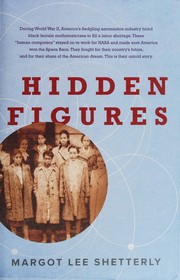
Hidden Figures
Black women computers at Langley launch rockets past Jim Crow.
2,385-word summary · 11 min read

How to Be an Antiracist
Kendi blends memoir and history to argue that fair policy, not self fixing, creates an equal society.
2,513-word summary · 11 min read
A People's History of the United States
A bottom-up history of the United States from Columbus to Clinton, told through workers, women, Native nations and Black voices against elite rule.
2,398-word summary · 11 min read
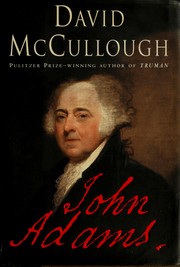
John Adams
McCullough follows Adams from Braintree lawyer to second president.
2,515-word summary · 11 min read
Between the World and Me
Coates writes to his son about the Black body in America, from Howard to the loss of Prince Jones.
2,234-word summary · 10 min read
The Zookeeper's Wife: A War Story
The directors of the Warsaw Zoo hid roughly three hundred Jews in empty cages and outbuildings after the German invasion, while Jan worked for the resistance.
2,065-word summary · 9 min read

Long Walk to Freedom
Mandela's account of a Thembu childhood, a law practice, a banned movement, twenty-seven years in prison, and the negotiation that ended apartheid.
2,454-word summary · 11 min read
1491: New Revelations of the Americas Before Columbus
Charles C. Mann gathers archaeology, ecology, and demography to argue that the Americas before Columbus were older, fuller, and more deliberately shaped than…
2,712-word summary · 12 min read
The DaVinci Code: A Quest for Answers
A short 2006 dialogue in which three friends test Dan Brown's claims about Jesus, Mary Magdalene, Nicaea, and the canon.
2,088-word summary · 9 min read
Nothing to Envy
Barbara Demick follows six defectors from Chongjin through the North Korean famine, showing how ordinary people lived, believed, and finally left.
2,068-word summary · 9 min read
Down and Out in Paris and London
Orwell's account of washing dishes in Paris hotels and tramping through London does not ask for pity, only for a clear look at how poverty actually works.
2,282-word summary · 10 min read
The Wright Brothers
David McCullough tells the story of two self-taught Ohio brothers, working largely alone and out of a bicycle shop, who solved the problem of flight before…
2,027-word summary · 9 min read
Lone Survivor: The Eyewitness Account of Operation Redwing and the Lost Heroes of SEAL Team 10
Marcus Luttrell's account of the 2005 SEAL mission in Afghanistan that killed three of his team and left him alone.
2,144-word summary · 10 min read

Bury My Heart at Wounded Knee: An Indian History of the American West
Dee Brown's 1970 retelling of the American West from the point of view of the people it destroyed.
2,233-word summary · 10 min read
At Home: A Short History of Private Life
Bill Bryson tours his own Norfolk rectory room by room to explain how private life and the modern home got built.
2,334-word summary · 10 min read
America (The Book): A Citizen's Guide to Democracy Inaction
Jon Stewart and the Daily Show writers turn a high school civics textbook inside out, with a foreword from beyond the grave.
2,511-word summary · 11 min read

Why I'm No Longer Talking to White People About Race
Reni Eddo-Lodge traces black British history and shows how institutions, culture, and everyday assumptions keep producing racial inequality.
2,071-word summary · 9 min read
Travels with Charley
Steinbeck drives across America with his poodle Charley, looking for the country he remembers and finding a place that has changed.
2,039-word summary · 9 min read
The Blind Side: Evolution of a Game
Michael Lewis traces how the left tackle became a premium position and tells the story of Michael Oher, a homeless Memphis teenager whose size and speed made…
2,038-word summary · 9 min read
Prisoners of Geography: Ten Maps That Tell You Everything You Need to Know About Global Politics
Tim Marshall explains how mountains, rivers, coasts, and resources shape the choices of nations, from Russia's flat borders to the chokepoints of the South…
2,328-word summary · 10 min read
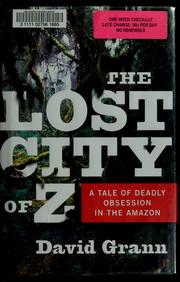
The Lost City of Z: A Tale of Deadly Obsession in the Amazon
David Grann retraces Percy Fawcett's 1925 disappearance in the Amazon and finds that the lost city he sought was not entirely a fantasy.
2,493-word summary · 11 min read

The Letters of Vincent van Gogh
Vincent van Gogh's letters to his brother Theo, in a Penguin Classics selection edited by Ronald de Leeuw, trace a decade of work, faith, and obsession.
2,611-word summary · 12 min read

The World Is Flat: A Brief History of the Twenty-first Century
Thomas L. Friedman's 2005 bestseller argues that technology, trade, and open borders leveled the global playing field, and it names the ten forces that did it.
2,369-word summary · 11 min read
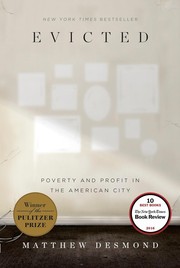
Evicted: Poverty and Profit in the American City
Desmond follows eight Milwaukee families and two landlords through a year of evictions, showing how losing a home causes poverty rather than just reflecting it.
2,032-word summary · 9 min read
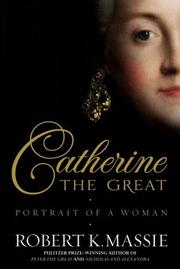
Catherine the Great: Portrait of a Woman
A German princess survives a miserable marriage and a coup to rule Russia for thirty-four years, torn between Enlightenment ideas and absolute power.
2,065-word summary · 9 min read
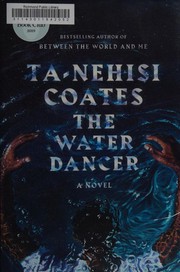
The Water Dancer
An enslaved man with a strange power for travel fights to free himself and rescue those he loves.
2,910-word summary · 13 min read

The History of the Hobbit, Part One: Mr. Baggins
Rateliff traces every draft of Bilbo from 1930 notes to print.
2,410-word summary · 11 min read