
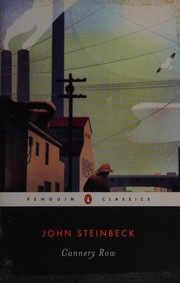
Cannery Row
2,880-word summary 13 min read 224 pages in the book
- First published
- 1945
- Publisher
- Viking Press
- Pages
- 224
- ISBN
- 9780140187373
- Series
- Cannery Row (#1)
Reading options
What's inside (8 sections)
I came to Cannery Row sideways. After the big Steinbeck books I wanted something I could finish in a few sittings, and a friend who once worked a summer in Monterey kept talking about Doc and Mack like they were neighbors. I expected a light break. What I got was shorter but stranger, funnier in spots and sadder underneath than I had braced for.
The facts first, since they matter for finding the right edition. Cannery Row was published in 1945 by Viking Press. It runs 224 pages in the Penguin Classics edition I read, the one with the introduction by Susan Shillinglaw. It is the first book in the Cannery Row series, followed years later by Sweet Thursday. Steinbeck wrote it in New York in 1944 while thinking about Monterey, about Ed Ricketts, about the canneries and the people around them during the Depression.
There is a plot, but it keeps wandering off. Mack and his boys want to throw a party for Doc. They try, they fail badly, they try again. Between those attempts Steinbeck walks down the street, opens doors, watches tide pools, sits with people who will never be central to the party and lets them have a chapter anyway. If you need a tight story that moves every page, this will test you.
The street first, people second
Steinbeck starts with the place itself, not a person.
Cannery Row in Monterey in California is a poem, a stink, a grating noise, a quality of light, a tone, a habit, a nostalgia, a dream.
He lists tin and iron and rust and splintered wood, weedy lots and junk heaps, sardine canneries of corrugated iron, honky tonks and restaurants and whore houses, little groceries and laboratories and flophouses. Then the line people still quote:
Its inhabitants are, as the man once said, "whores, pimps, gamblers, and sons of bitches," by which he meant Everybody. Had the man looked through another peephole he might have said, "Saints and angels and martyrs and holy men," and he would have meant the same thing.
Mornings belong to work. When the sardine fleet comes in, purse seiners waddle into the bay blowing whistles. Cannery whistles scream. Men and women run down in rubber coats and oilcloth aprons to clean and cut and pack and cook and can the fish. The street rumbles while silver rivers of fish pour out of the boats.
Then the fish run out. Workers climb back up the hill. The Row goes quiet and turns back into itself. Bums come out to sit on rusty pipes in the vacant lot. Girls from Dora's come out for sun. Doc crosses to Lee Chong's for beer. Henri hunts the junk lot for wood for his boat. The lamp in front of Dora's clicks on and makes what Steinbeck calls perpetual moonlight.
Steinbeck compares writing the book to collecting flat worms so delicate they tear if you grab them. You have to let them crawl onto the knife by themselves. He says perhaps that is the way to write this book, to open the page and let the stories crawl in by themselves.
So he does. Some chapters push the party plot. Others stand almost alone. An old Chinaman crosses daily on unknown business. A gopher gets a short biography. You can feel Steinbeck refusing to rank these moments. A frog hunt counts as much as a death.
Does it always work? Not for me. A few pauses stopped the book cold on first read. I liked them more on second pass, but he still lets atmosphere carry pages that needed people in them.
Lee Chong and the Palace Flophouse
Lee Chong runs the grocery. Crowded, dusty, somehow holding everything. Rope, tobacco, beans, fishing gear, whiskey by the pint, vegetables going soft. Everybody shops there. Almost nobody pays on time. He extends credit because he must, remembers every cent, charges what the traffic will bear.
The Palace comes through death and debt. Horace Abbeville owned a fishmeal shack in the vacant lot. He walks into Lee's store, settles his account by signing the shack over, walks out and kills himself. Mack hears fast. He asks if he and his friends can move into the empty building. His argument is plain. If nobody lives there, kids will break windows or set it on fire. Lee understands the hint. Refuse, and Mack and the boys will prove the point themselves.
They settle on five dollars rent. Lee never sees it. They move in and name it the Palace Flophouse and Grill. Stove, mattresses, crates for chairs, pride far beyond the furniture.
Mack leads. Smart, smooth talking, able to charm a meal or a ride from a stranger. Hazel is big and good hearted and full of questions. Eddie tends bar part time at La Ida. Hughie and Jones fill out the crew. Gay is the mechanic, gifted with engines, swinging between the Palace and fights with his wife and spells in jail.
Steinbeck calls them men with no families, no money, and no ambitions beyond food and drink and contentment. They share everything. They look after strays. They also connive constantly. They shortchange Lee, sweet talk Dora, spend Doc's goodwill.
Doc later says the successful men up the hill have bad stomachs and bad souls while Mack and the boys are healthy and oddly clean. I wanted to agree. At times I did. At other times the jokes about cadging drinks repeated too often. Steinbeck loves these men. I am not sure he always sees how they wear on others.
Still, without that lopsided house, the Row would be scenery. With them, it has appetite and noise.
Doc and the lab at the center
If Mack is appetite, Doc is the center.
Doc runs Western Biological Laboratories. He collects tide pool animals and sells them to schools and museums. You can order anything living, Steinbeck says, and sooner or later you will get it. The lab is also his home. Tanks and microscopes below, cot and books and records above, a phonograph used late at night.
He is based on Ed Ricketts, Steinbeck's close friend who ran Pacific Biological Laboratories in Monterey. You feel the affection. Doc is wiry and bearded, reads widely, drinks beer, listens to classical music, walks the reef with buckets. He treats people who cannot pay. He patches dogs and hands out advice better than the clinic for loneliness.
Hazel loves going out with him. Tide pooling means nets and questions about starfish arms and octopus memory. Doc answers straight and Hazel carries the answers home like shells.
Then there is Frankie. A boy who shows up and stays. Doc lets him sleep in a small box in the lab. Frankie wants to help the way a kid helps in a kitchen, close and clumsy. At one small gathering, Frankie brings a woman a beer. She thanks him. Doc says yes, Frankie is a great help to me. Frankie glows. Next time he tries a whole tray, spills it across a guest, panics and hides in the basement.
That scene stayed with me. It shows Doc at his best and the limit of best. He can be kind. He cannot fix what Frankie faces outside.
Doc has his own ache. Educated, curious, alone. He dates little, drinks a fair amount, stays up with records. Women like him. Men trust him. He still walks home by himself. Collecting helps. Parties help for a night. Then quiet returns. Steinbeck never explains it fully, which I appreciated. Here Doc gets work and friends and music and still feels set apart.
That is why the party idea catches. Everybody feels they owe Doc something.
One complaint. Steinbeck makes Doc too good. Patient, generous, brave, smart, funny. Ricketts himself was more complicated. I wished for one chapter where Doc acted small and sat with it. The punch he later throws at Mack is the closest we get, and it passes fast.
Dora, Henri, and the side doors
Dora Flood runs the Bear Flag Restaurant. Everyone knows it is a brothel. Steinbeck calls it a decent, clean, honest, old fashioned sporting house where a man can take a glass of beer among friends.
Dora is big, with orange hair and bright evening dresses. She runs a tight house. Girls see doctors. Prices are fair. Drunks get cut off. The Bear Flag gives to charity and behaves better than many respectable businesses.
The girls come and go. They tease, fight, make up, save money, send money home. Steinbeck treats them gently. Too gently, I thought. We learn nicknames and habits more than inner lives. They provide warmth when the book needs it, comedy when it needs that.
Alfred is the watchman now, liked by all. The last watchman, William, was lonesome and could not join in. He sat once with Mack and the boys and talk dried up. He told Dora he felt lousy and might bump himself off. She told him to do it on his own time and not mess the rugs. He asked a girl, got little comfort, asked the Greek cook, who said people who talk about it never do it. William took the cook's ice pick and drove it into his own heart.
Steinbeck tells it flat. It lands because of the flatness. It sets the pattern too. Death sits next to comedy all through this book. A suicide, a drowned girl, a sick puppy, a jail term. Laughter, then a cold touch.
Henri the painter lives in the vacant lot. He is building a boat to sail far away, though it keeps changing shape as he rethinks the design. He tears out and rebuilds. He hunts junk for parts. Everyone knows he will never launch. Henri knows too.
I liked him more than expected. His boat is a joke and not a joke. Anyone who has restarted a project five times will recognize him.
There are smaller portraits. Sam Malloy and his wife live in a boiler and rent bedrooms in pipes. An old Chinaman shuffles to the beach. Two boys trade cruel jokes near the lab about babies in jars and about one's father who took rat poison when work ran out.
Some sing. Some read like filler. The boys joking about suicide goes too long and earns little insight. And this is my main criticism. Poverty here looks picturesque more than grinding. Hunger is mentioned. Fear of the cannery closing is mentioned. But the Palace boys always eat and drink and find a trick. Real Monterey in the Depression had more edge. Steinbeck knew it and wrote it elsewhere. Here he chose affection. I went along, then thought about who pays for the whiskey and the rent that never comes, and the charm thinned.
Frogs, La Jolla, and the party that falls apart
Mack decides Doc deserves a party. The boys agree. Then money.
Doc always needs frogs. Schools order them. Doc says he can use three or four hundred at a nickel apiece. Mack sees whiskey and gifts.
He asks to borrow Doc's car. Doc leaves that night for La Jolla to collect baby octopi and needs it himself. He also knows Mack's deals rarely profit him. He agrees to the frogs but gives no advance.
So Mack asks Lee Chong for the old Model T truck. Broken. Mack promises Gay can fix it. Gay can when focused. Lee agrees, knowing he is being worked.
The two trips make the middle. Mack and the boys drive inland. The truck breaks. Gay walks for a part and vanishes into events landing him in Salinas jail. Eddie finds a part and they roll on. They camp on private land. A man tells them to leave. Mack talks, notices the man's pointer dog has a bad wound, offers ointment, wins him over. The Captain lets them take frogs from his pond and gives Mack a puppy. They fill sacks. The puppy, later Darling, rides back like a mascot.
Doc drives south alone. He stops for food and drink, picks up a hitchhiker, drops him after a scolding about drinking. He orders a beer milkshake just to taste it. He gathers octopi at La Jolla. Then, peering off the reef, he sees a girl's face floating through algae, pale with dark hair, eyes open. Dead. No story, no rescue. He cannot shake it.
Back in Monterey, Mack hauls frogs to Lee and talks him into credit for supplies. Lee overcharges on decorations and whiskey. The boys set up in Doc's lab while he is gone, planning to be ready when he walks in.
Doc is late. Waiting turns to drinking. Drinking turns to a party without its guest. Records play. Neighbors drift in. Someone forgets the packing case latch. Frogs hop out one by one, then dozens, until the Row crawls with frogs. By dawn the lab is wrecked. Door hanging by one hinge. Floors littered with broken glass. Records cracked and strewn. Dishes piled greasy. Frogs gone.
Doc walks into that. Mack tries to apologize. Doc punches him in the mouth. Mack does not fight back. Doc pours him a beer and asks what happened, but damage is done.
I laughed at the escape and felt sick at the homecoming. Both felt intended. Those records mattered. That lab was his living. Mack meant love and made a mess.
Afterward the Row sinks into what Steinbeck calls a malaise. People bicker. Business sours. Flu moves through. The boys are outcasts even to themselves. Consequences last, which I respected. Too many cozy books would forgive by next chapter.
Sickness, a puppy, and a birthday that works
What lifts the Row is small care, repeated.
Darling falls ill. The boys panic and carry her to Doc, still cool toward them. He looks, treats, does not lecture. She recovers. Ice thins a fraction.
Mack asks Dora what to do. She says throw a party Doc can attend. No break in. Invite him. Feed people. Let the town come.
They plan a birthday. Mack tricks Doc into naming his birthday. Doc suspects a scheme and gives a false date. Word spreads anyway. The Row starts making gifts.
This is my favorite stretch, for making. The boys collect twenty one tomcats, which Doc always needs. Girls at the Bear Flag sew a patchwork quilt from silk underthings and evening dresses to replace Doc's ratty blanket. Lee picks China lily bulbs and firecrackers. Someone eats the bulbs by eleven, but firecrackers last. Henri makes a pincushion. Sam Malloy picks a vintage auto part. People argue about shifts so the Bear Flag stays open.
Frankie wants to give something magnificent. He fixes on an onyx clock in a jeweler's window, topped with a figure like Doc. He cannot buy it. He breaks in. Police catch him. Doc is called since Frankie's mother says the boy lives with him. Doc tries to get him paroled to his care. The chief refuses. Doctors say Frankie nears puberty and may turn aggressive, so the charge is reason to put him away. When Doc asks why, Frankie says he loves him. Doc walks to the beach to collect. He does not cry on the page. He does not need to.
That chapter hurts. It shows limit and strength together. Steinbeck loves Frankie and uses him hard for feeling. The system is sketched quick and cold. I wished he had stayed longer with the hearing. Tenderness is real. Shortcut is real too.
Doc hears about the party from a drunk. He hides breakables, lays in steak and whiskey since Mack will forget food. On the night he pretends surprise. Party starts slow. Speech, cats, gifts trickling in. Eddie does a tap dance. Mack minds the phonograph. Doc feels better as night wears on. He reads a love poem aloud. Room goes quiet. People remember old loves. Steinbeck calls it a sweet sadness.
Then sailors bang up looking for the whorehouse. They think the lab is the Bear Flag. Argument, fight. Mack swings. Doc swings too. Police roar down. Sailors hide. Officers circle back and join the fun. Party erupts again.
Morning is quiet. No one goes by. Doc hears music in his head, violas and cellos. He cleans, pauses to read the poem again, stays with it while trouble holds off.
I did not want a moral stamped on that ending and Steinbeck does not stamp one. What stays is simpler. People with little still try to give. They botch it, learn enough to botch it less badly, feed each other between. Doc stays alone but less sealed. Mack stays conniving but more aware of cost.
Would I press this on a friend? Yes, with warnings. Expect wandering chapters and a soft eye toward hard times. Expect women drawn with fondness more than depth. Expect science and beer and classical music to share pages with bums and madams. Expect to laugh at Palace schemes and sit with Frankie and the dead girl and Darling breathing hard in a box.
It reads like a long afternoon. You drift, listen, eat and drink a little too much, walk home thoughtful. For me that was enough, even when I wished he had looked harder at corners left in warm shadow.
FAQ
When was Cannery Row published, and is it part of a series?
It was first published in 1945 by Viking Press. It is the first book in the Cannery Row series, followed by Sweet Thursday in 1954.
Who is Doc based on?
Doc is based on Ed Ricketts, Steinbeck's friend and Monterey marine biologist. Western Biological mirrors Ricketts' Pacific Biological Laboratories.
Do Mack and the boys ever throw Doc a successful party?
Yes. The first surprise party ends with a trashed lab and escaped frogs. The second birthday party, planned with Dora's advice and handmade gifts, lasts through the night.
Similar books
More from Cannery Row first, then related titles.
Of Mice and Men
Steinbeck's Of Mice and Men retold: George and Lennie on a California ranch, the dream farm, and why mercy ends it.
2,237-word summary · 10 min read
East of Eden
In California's Salinas Valley, the Trasks and Hamiltons replay Cain and Abel through love, betrayal, and the hard choice to rise above the past across two…
2,734-word summary · 12 min read

Clifford the Big Red Dog
Emily Elizabeth picks the smallest puppy in the litter, loves him as hard as she can, and wakes up to a dog the size of a house.
2,092-word summary · 9 min read
Harriet the Spy
Eleven year old Harriet Welsch fills notebooks with honest, often cruel observations about her neighbors, until her classmates read one and turn her spy route…
2,510-word summary · 11 min read
Roll of Thunder, Hear My Cry
In Depression-era Mississippi, nine-year-old Cassie Logan learns what her Black family's land costs and why they keep it.
2,273-word summary · 10 min read
Dead Poets Society
Keating tells Welton boys to seize the day and his secret club costs more than grades.
2,031-word summary · 9 min read

My Ántonia
Jim Burden recalls his Nebraska boyhood beside Bohemian friend Antonia Shimerda, from prairie farms to town work and a late return.
2,918-word summary · 13 min read
Walk Two Moons
Sal rides west with her grandparents telling Phoebe's story while facing her own mother's absence in Idaho.
2,554-word summary · 11 min read

Anne of the Island
Anne leaves Avonlea for Redmond College, shares Patty's Place with friends, and learns to tell admiration apart from love.
2,766-word summary · 12 min read
Pippi Longstocking
A super-strong nine-year-old lives alone in Villa Villekulla, upending school, circus and town rules with neighbors Tommy and Annika.
3,115-word summary · 14 min read

Heidi
Orphan Heidi blooms with her grandfather in the Swiss Alps, wilts in Frankfurt as a companion, then helps Klara walk.
2,952-word summary · 13 min read
A Little Princess
Rich Sara Crewe loses her father and fortune at boarding school, survives the attic on stories and kindness, and is rescued from next door.
2,867-word summary · 13 min read
The Three Musketeers
Young dArtagnan joins Athos, Porthos and Aramis to recover the queens diamonds and face Milady.
2,569-word summary · 11 min read

Bridge to Terabithia
Katherine Paterson's Bridge to Terabithia retold: Jess Aarons and Leslie Burke build an imagined kingdom and face sudden loss.
2,673-word summary · 12 min read

Winnie-the-Pooh
Edward Bear comes downstairs bump-bump-bump and into the Hundred Acre Wood for honey, hunneys, and heffalumps.
2,068-word summary · 9 min read
The Secret History
A California outsider joins six classics students whose Greek rite ends in murder.
2,735-word summary · 12 min read
The House at Pooh Corner
Tigger bounces into the Hundred Acre Wood while Pooh builds Eeyore a house and Piglet does a grand thing.
2,022-word summary · 9 min read

The Secret Garden
Sour Mary Lennox lands at Misselthwaite Moor from India, finds a locked garden with Dickon, and pulls sickly Colin to his feet.
2,036-word summary · 9 min read
The Outsiders
Outsiders retold: Ponyboy and greasers vs Socs, church fire, rumble, stay gold ache.
2,067-word summary · 9 min read

Charlotte's Web
E. B. White's Charlotte's Web retold: Wilbur the pig, Charlotte the spider, and the words that save him.
2,059-word summary · 9 min read
The Pearl
Off La Paz, poor diver Kino finds a great pearl for his baby son Coyotito, but cheating dealers and greed force a flight ending in loss.
2,364-word summary · 11 min read
The Grapes of Wrath
The Joads lose their Oklahoma farm and drive to California for work that is not there.
3,400-word summary · 15 min read

The Orphan's Tale
A Dutch teenager rescues a Jewish baby from a death train and joins a German circus, where a Jewish aerialist teaches her to fly.
2,943-word summary · 13 min read

The Long Winter
Dakota Territory, 1880: seven months of blizzards cut a town off from the railroad, and a family survives on twisted hay, ground wheat, and a dangerous wheat…
2,210-word summary · 10 min read

The Crying of Lot 49
A California woman named executor of her ex-lover's estate follows a muted post horn into a possible centuries-old postal conspiracy, and Pynchon refuses to…
2,003-word summary · 9 min read
Silas Marner
A falsely accused weaver hoards gold in Raveloe until a stolen hoard and an abandoned child remake his narrow life.
2,699-word summary · 12 min read

Revolutionary Road
A Connecticut couple who believe they are too good for the suburbs plan to move to Paris, and the plan slowly exposes everything they cannot say to each other.
2,085-word summary · 9 min read

Make Way for Ducklings
A pair of mallards raise eight ducklings on the Charles River and lead them across Boston to the Public Garden, with a little help from a friendly policeman.
2,044-word summary · 9 min read

Anya's Ghost
A lonely Russian immigrant falls into a well, befriends the ghost trapped there, and discovers that the ghost's help comes with a dangerous price.
2,001-word summary · 9 min read