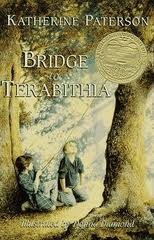
Bridge to Terabithia
2,673-word summary 12 min read 163 pages in the book
- First published
- 1977
- Publisher
- Thomas Y. Crowell Company
- Pages
- 163
- ISBN
- 9780064401845
Reading options
What's inside (8 sections)
I came to Bridge to Terabithia expecting a light fantasy for kids and found something harder and kinder. The book was first published in 1977 by Thomas Y. Crowell Company and runs 163 pages in the standard hardcover edition. Katherine Paterson wrote it after a boy close to her family died in an accident, and that loss sits inside every chapter. It reads fast in two sittings, yet it asks a lot. The early school scenes are funny, the woods scenes are bright, and the last third is very sad in a way that still feels honest.
Jess Aarons is ten and starting fifth grade in rural Virginia. He lives on a farm that never has quite enough money. His father works long hours and worries about bills. His mother is tired from raising five children. Jess has two older sisters who tease him, a younger sister May Belle who follows him, and a baby sister. He milks cows, picks beans, and tries to stay out of the way. He has two private goals. He wants to be the fastest runner in fifth grade, and he wants to keep drawing even though his father sees art as a waste for a boy. Only Miss Edmunds, the music teacher, tells him his drawings show real skill.
The opening moves slowly on purpose. Paterson spends pages on chores, bus rides, lunch tables, and tired parents. Lark Creek feels small and fixed. Jess knows where he stands. He is poor but not the poorest. He is quiet but not picked on. He trains all summer by running the pasture each morning. He pictures the September races. He knows Gary Fulcher brags. He believes work will make him first. Running gives him a clear goal in a house where he often feels unseen. Drawing gives him private joy. He hides his notebooks because praise is rare at home.
Jess Aarons Trains to Run
Jess wants the title of fastest boy because it is a prize he can earn without money. He rises early in August heat and runs till his chest burns. May Belle cheers and counts loud. He likes it but tells her not to tell his sisters.
At school the plan breaks on the first day. A new family has moved into the old Perkins place next door. Their daughter stands on the playground in cut off jeans and a blue shirt with no socks. She asks to run with the boys. The boys laugh. The monitor says yes. The girl runs and wins heat after heat. She beats Gary Fulcher. She beats Jess too. Jess stands stunned in the dust. All summer he pictured himself first, and a stranger takes it without strain. He eats lunch alone and presses hard lines into his notebook.
His anger does not harden into hate, which is why Jess holds the reader. He watches the new girl in class. She raises her hand. She talks about books. She does not follow the dress rules of the other girls. She writes essays that make Mrs. Myers pause. He learns her name is Leslie Burke. Her parents are writers who moved from Arlington for quiet. They fix the old house with paint and shelves. They speak to Leslie with respect. Jess has never seen a family talk that way. He grows curious, then friendly, almost without deciding.
Leslie Burke Beats Him
Leslie is new in every way that counts at Lark Creek Elementary. She is city bred, book fed, and unafraid to seem odd. She wears shorts when other girls wear skirts. She asks straight questions. She does not know who sits where or who may laugh at whom. That freedom costs her. Girls like Wanda Kay Moore mark her as strange. Boys try to test her. Leslie answers with calm humor instead of tears, which leaves bullies unsure what to do next.
Jess becomes her guide to fields and barns, and she becomes his spark for ideas. He shows her the tobacco sheds, the pasture paths, and the creek. She shows him how to answer boredom with stories. When he says his family lacks money, she does not pity him. She asks what pencils he would buy if he could. When he says his father scoffs at music, she invites him to hear her parents records. Step by step he borrows courage. He sings louder in music class. He stays after to show Miss Edmunds a drawing. He stands steadier near bullies because Leslie stands beside him without shaking.
Home stays tight for Jess. His father sleeps after work and gives short praise. His mother cooks and snaps when cash runs short. Ellie and Brenda care about clothes and shows. May Belle, age six, adores Jess and copies him. She waits after school. She begs for stories. She wants to join games too old for her. Jess loves her but often waves her off because ten feels far from six. Those small refusals look normal at the time and ache later. Paterson plants them early without pointing.
Mrs. Myers likes neat papers and quiet rows. Miss Edmunds wears bright skirts and plays guitar. Janice Avery, a seventh grader, rules the bus with threats and takes treats from small kids.
Terabithia in the Woods
The heart of the book sits across a narrow creek in woods Jess always liked but never named. Leslie names it Terabithia after islands in the Narnia books, said her own way. They reach it by swinging on an old rope tied to a crab apple tree. In late summer the water runs low, and the crossing feels safe and thrilling. Past the bank the trees close in. Light falls in shafts. Logs make walls. A high rock makes a throne place. Leslie calls it a secret kingdom. Jess agrees at once.
There they rule as king and queen. Jess is the strong king who guards the gates. Leslie is the queen who names dangers first. Together they fight foes that stand in for real ones. Giants look like Janice Avery. Dark spirits sound like shouting fathers and school bells. Lost creatures need mercy, like tired horses from Jess's sketches. They build a castle of branches and string. They keep a sacred grove where they speak low. They set laws. None may enter without asking. None may tell. They speak of small pine folk who need guarding from enemies in the pines.
The play lets both children practice power they lack elsewhere. At home Jess cannot fix money or win easy praise. At school Leslie cannot force welcome. In the woods they decide. They pardon. They lock gates. They plan battles and choose peace when it suits them. Leslie feeds the game with books and rites. Jess feeds it with craft. He carves bark crowns. He draws maps. He shapes a fence from limbs. Their afternoons take a sweet shape. Run home, change fast, grab a snack, meet at the fence, swing across, rule till supper calls.
Paterson writes these hours with clear senses. Cold water on ankles. Rough rope on palms. Pine smell after rain. Mud at sneakers. Leslie laughing mid swing with hair back. Jess landing hard and rolling. They argue over laws and laugh when laws fail. May Belle begs to follow, and they bar her as too young and likely to tell. That bar feels normal for kids with a secret, and it also stores guilt for later. The joy is real, and the exclusion is real too.
Janice Avery and Miss Edmunds
Two threads pull Jess before the turn. One is Janice Avery. One is Miss Edmunds. Both test what Leslie taught him about courage and kindness.
The Janice thread starts with theft. Janice takes May Belle's Twinkies on the bus while big kids laugh and Jess freezes. He hates his freeze. Leslie does not scold. She plans a calm revenge. They write a false love note as if from a boy Janice likes and slip it in her desk. Janice glows, then learns it is false when the boy laughs before others. She hides in the girls bathroom and cries. Jess hears her while washing boards late. He knocks. He asks if she is okay. She says in short bursts that her father beats her and her friends told all. Jess sits by the stall and listens. He lends tissue. He walks with her till stares fade. After that Janice softens to small kids. She even smiles once at May Belle. Jess learns meanness often covers pain, and listening can do more than hitting back.
The Miss Edmunds thread is warmer and more tangled. Miss Edmunds praises his art and lets him stay after to draw. She invites him to join her on a Saturday trip to Washington to see the National Gallery. Jess never saw a museum. His mother agrees because the ride is free. His sisters tease that the teacher favors him. Jess glows for days. He asks Leslie if she minds his going without her. Leslie tells him to have fun and bring back news. She means it. She likes Miss Edmunds too.
Museum day dawns bright and cool. Jess rides in her car, walks wide marble halls, sees paintings larger than his bedroom wall, eats in a cafeteria, and feels for hours like a boy in a larger world. Miss Edmunds gives him time and talk, not gifts. She tells him to draw each day. He stores each room to tell Leslie in order, which frame looked like a gate, which horse she would love. He rides home proud and tired, ready to run to her house with news.
That same Saturday, while Jess is away, Leslie goes to the woods alone. Rain has fed the creek for days. The old rope is wet and worn. Paterson does not stage the fall as drama. She shows Jess waking glad, hearing the phone ring, seeing his parents change. Cars park by the Burke house. Word passes that Leslie tried to swing, the rope broke, she struck her head, and fast water took her. She drowned in the creek she loved. Jess hears the words and cannot join them to the bright morning of marble and paint.
The Rope Breaks
The death shocks because Paterson made Leslie vivid for half the book. Readers who hoped for a quest may feel angry. That shock is the point, and it explains why some parents find the book heavy for young readers. No spell saves her. The rope is mere rope. The creek is mere water after rain. Leslie, brave and bright, is still ten and alone in high water. Paterson refuses to soften it with fate or signs. She lets it be sudden and final, as real accidents feel.
Jess denies it first. He runs to the creek and sees the frayed rope end. He runs to the woods and finds the kingdom empty. He tells himself Leslie will step from behind a tree laughing at a fine trick. She does not. He lies at home and says she is fine. His father holds him and weeps, which scares Jess more than shouting. His mother makes soup none eat. May Belle asks where Leslie is, and Jess snaps. Brenda and Ellie turn quiet, which is rare. A loud house goes still.
School Monday is worse. Mrs. Myers weeps. Kids stare at Jess. Jess hears no lessons. Grief leaves him numb and raw at once.
The service is small and plain. The Burke family holds it without church pomp. Leslie's father, calm and bookish, weeps and speaks of her love for books and woods. Her mother stands pale. Few neighbors come because few knew them. Jess hangs back, mad at soft words like passed when the truth is drowned and dead. He will not enter till his father coaxes him. Inside he leaves a pine wreath with paper flowers made for Terabithia. He feels foolish and sad and a little proud to mark her as queen.
Grief, Guilt, and the Bridge
After the service Jess sinks in guilt as much as sorrow. He replays each choice and finds blame. He went to town without Leslie. He let her go alone. He barred May Belle and fears he barred love itself. He recalls flashes when he was short with Leslie or wished for a day free of her talk. He reads those normal flashes as cause. He fears sleep for dreams of water. He fears waking for the empty fence. He strikes May Belle once in anger, then sobs because he turned into one he does not know.
His father helps with presence, not speeches. He holds Jess when he shakes. He says tears and anger are allowed. He spends scarce cash on art supplies. He runs with Jess round the pasture at dawn. Jess learns his father is worn, not cold. His mother cooks his favorite. Brenda lends paint. May Belle stays close.
Leslie's father tells Jess that Leslie loved him and he made her glad in a new town. He gives Jess her books and a paint set. He thanks him for friendship. Jess stops waiting for a trick return.
Jess must face the woods again, though he dreads the bank. The broke rope hangs as blame. The creek runs brown and fast. At first he cannot cross. Then memory of Leslie's nerve and his father's tread push him to build rather than swing. He drags planks from the shed, hauls them with May Belle's help, and frames a footbridge above the old crossing. He hammers nails. He tests weight. He rails it with limbs. The labor blisters his hands. Plain work, not magic, brings him back to use.
When the bridge holds, Jess leads May Belle across and crowns her queen of Terabithia. It is brave and tender. May Belle, once shut out, now steps in with wide eyes and a paper crown. Jess shows her the grove, the throne rock, the castle lines. He speaks the laws in Leslie's voice joined to his own. He charges her to guard the small folk and keep gates shut to meanness. She vows with full heart and sings on the way home. Jess feels Leslie near, not as a ghost but as sight and speech kept inside him.
What stays bright is clear. Paterson writes children who sound like children and grown folk who sound tired and true. Their bond grows in small trusted steps. Swing, laugh, plan, argue, make up. That trust makes loss strike hard. The game stays play. No portal opens. The point is two lonely kids naming fear and ruling it an hour before supper.
The faults need plain note. The start is slow, with many pages on chores and lunchrooms before Terabithia gains its name. Young readers used to fast hooks may drift. The last third is heavy for kids, full of shock, tears, and blame. Teachers often read it aloud in fourth or fifth grade, and some children will need time and talk after.
Keep the facts straight from the 1977 Thomas Y. Crowell Company text. Jess is in fifth grade. Leslie is ten and new from Arlington. Rain swells the creek. The rope breaks on museum Saturday while Jess rides with Miss Edmunds. Jess nails a plank bridge and names May Belle queen.
I closed the book thinking of the bridge more than the rope. Rope asks nerve and luck. Bridge asks work and care. Jess cannot fetch Leslie back. He cannot mend rain or old fiber or his choice to go to town. He can lay boards so his sister crosses safe. He can keep the kingdom by sharing it. He can draw and run and sing, bearing Leslie's bright speech inside his plainer voice. That close does not wipe sorrow. It gives sorrow shape and purpose. For a children's classic just 163 pages long, that is a large gift, and it tells why this sad bright book from 1977 stays on shelves while louder books fade.
FAQ
When was Bridge to Terabithia published and who published it?
It was first published in 1977 by Thomas Y. Crowell Company. The hardcover runs 163 pages with ISBN 9780064401845.
Who are the two main children?
Jess Aarons, a fifth grade farm boy who loves to run and draw, and Leslie Burke, the new girl from Arlington who becomes his best friend.
Is it part of a series?
No. It is a standalone novel inspired by a real loss in the author's family circle.
Similar books
More like Bridge to Terabithia →
The Horse and His Boy
Shasta and Bree flee Calormen to Narnia with Aravis and Hwin.
2,594-word summary · 12 min read

Peter Pan
Wendy, John and Michael fly to Neverland with Peter, face Hook, and learn what growing up costs.
2,502-word summary · 11 min read

The Witches
A boy and his grandmother face the Grand High Witch's plan to turn England's children into mice.
2,738-word summary · 12 min read

The Wonderful Wizard of Oz
Dorothy is carried to Oz by a cyclone and walks the yellow brick road with Scarecrow, Tin Woodman, and Lion.
3,297-word summary · 15 min read

The Voyage of the Dawn Treader
Lewis sends Lucy, Edmund and Eustace aboard Caspian's Dawn Treader to find seven lost lords, past dragon gold, dark dreams and the world's edge.
2,330-word summary · 10 min read

The BFG
Orphan Sophie is taken by the Big Friendly Giant, who blows happy dreams and eats vile snozzcumbers, and helps her stop nine man eating giants.
2,812-word summary · 12 min read