
Reading options
What's inside (9 sections)
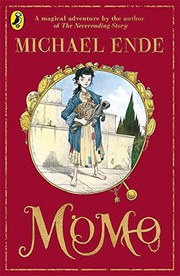
I started Momo expecting a quick children's book I would finish in an afternoon, and I ended up four days later, rereading parts. It was first published in German in 1973 by Thienemann, and the English text most readers know is J. Maxwell Brownjohn's translation, published by Puffin. My copy is the 240 page Puffin paperback. It is a short book, but it is built like a machine, with every part doing a job. By the last page I was irritated at how neatly it all clicked into place and still moved by the same thing. I think that is the honest reaction to it.
A girl with nothing, and a gift for listening
Momo appears out of nowhere at the edge of a large city, in the ruins of an old amphitheater. Nobody knows where she came from. She has nothing but the patched, oversized clothes on her back and a talent that changes everyone she meets. She listens. Not the polite waiting while someone else talks kind of listening, but a full attention that makes a person hear their own thoughts clearly, often for the first time in years. Ende takes his time showing how this works. A worker who has had a bad day sits with Momo and ends up explaining his own trouble to himself, then goes home with a plan. People start dropping by the amphitheater, and Momo never asks them to leave and never offers advice. She simply stays with them, and they leave lighter.
The neighbors notice. These are poor people, not wealthy, but content in a way that matters, and they decide the girl needs looking after. They pool what they have, fix up a small room for her in the amphitheater, and bring her food and clothes. In return she gives them the one thing they cannot buy, which is her time. That exchange is the book's quiet engine. Momo owns nothing, and because she owns nothing she can afford to be generous with the only thing she has.
Her closest friends are Beppo, an old street sweeper, and Gigi, a young guide and storyteller who wants to be famous. Beppo is the one I remember most. He sweeps the long street slowly, and his rule is to think only about the next stroke of the broom, because thinking about the whole street at once will only tire you and never get it done. Ende clearly loves this man. Gigi is louder and more restless. He tells the children splendid stories and dreams of an audience beyond the neighborhood. There is also Nino the innkeeper, whose restaurant is a place of warmth and good food. These people are not complicated. Ende draws them in a few strokes, each with one defining habit, and it works because the book is about what happens to ordinary lives when their time is taken away.
The children of the neighborhood come to the amphitheater to play, and Momo makes their games extraordinary. She does not organize them or tell them what to do. A game of make-believe under her attention turns into something vast, with rules the children invent as they go, and Gigi likes to join in and feed their imaginations. This part of the book is gentle and a little nostalgic, and I found myself slowing down to enjoy it. It also sets up what is at stake. The happiness here is not fancy. It is made of conversation and long, unhurried afternoons. That is exactly what the grey gentlemen have come to take.
The men in grey and the art of saving time
They arrive quietly. The men in grey are pale, bald, dressed in grey, and always smoking small grey cigars. They present themselves as agents of the Timesavings Bank, and their pitch sounds reasonable at first. They tell people that time can be saved, deposited, and drawn out later with interest. The trick is that nobody ever gets to draw it out. Once a person agrees to save time, they start hurrying through everything they used to enjoy. Visits get shorter. Meals get faster. Sleep and music and sitting in the sun become wastes. Ende shows this through a barber named Figaro, who is talked into believing he is throwing his life away by taking breaks, and who soon drives himself and his customers at a brutal pace.
What the grey gentlemen actually want is the time itself. The time people save is not stored for them. It is stolen, dried into the petals of hour-lilies, and rolled into the cigars the grey men smoke to stay alive. They are parasites, and their wealth is made of other people's hours. The more time a person saves, the less time that person has, and the more the grey men have. Ende explains this slowly and clearly, because the book wants children to follow the logic and does not insult their intelligence. I appreciated that. The idea is strange but not vague.
As the city changes, Momo is the only one who sees it plainly. Her friends stop coming by. The children grow sullen and bored, because nobody has time for them anymore. Momo visits Nino's restaurant and finds him rushed and stretched thin, and her listening brings him briefly back to himself. Then one of the grey agents, numbered BLW/553/c, tries to win her over. He offers her a beautiful doll that will always be new and never need care. Momo refuses, and her peculiar gift does something the agent cannot handle. She listens to him, really listens, and he starts talking. He tells her the truth about who the grey gentlemen are and what they do. It is a confession forced by attention, and it is one of the best scenes in the book, because it shows the power of Momo's gift turned into a weapon. The agent flees in panic.
A protest that goes nowhere, and a tortoise
Momo tells Beppo and Gigi what she has learned. Gigi, ever the showman, decides to expose the grey gentlemen in public. He rallies the children, they make posters, and they march through the streets calling a meeting at the amphitheater where the whole city will hear the truth. It is a fine image, children marching to save their town, and I wanted it to work. It does not. The grey gentlemen simply make sure no adult has a spare minute to attend, and the square stays empty. The failed demonstration teaches Momo something the book keeps returning to, which is that you cannot wake people who believe they have no time to listen.
That night Beppo follows the grey men and watches a secret tribunal. They judge agent BLW/553/c guilty of betrayal for telling Momo their secrets, and they sentence him to be deprived of all time. He shrivels and disappears. Then they resolve to capture Momo herself, because her listening makes her dangerous. Beppo runs to warn her. Before he can arrive, a tortoise appears in the amphitheater with words glowing on her shell: FOLLOW ME. The tortoise is Cassiopeia, and she can see thirty minutes into the future, which makes her useful when people are hunting you. Momo goes.
Nowhere House and the hour-lilies
Cassiopeia leads Momo through a part of the city where time runs backward, so the grey men chasing them keep arriving where she has already been. They reach a strange house that seems larger inside than out, the home of Professor Secundus Minutus Hora, the keeper of all human time. Hora is an old man with a long beard and a great ledger, and he explains what Momo has already guessed. People's lives are their time, and the grey men live by stealing it. Hora guards the source. He takes Momo down to a dark lake beneath a golden dome, where a giant pendulum swings and, with every swing, an hour-lily blooms and fades on the water. Each flower is a moment of a person's life. Momo is allowed to look, and in the lake she sees her own heart, which is where her time comes from. It is a beautiful passage, the closest the book comes to wonder for its own sake.
Hora warns her that she must not stay. Time in his house moves differently, and a visit that feels like an hour can be a year outside. Momo, being Momo, stays longer than she should, because there is so much to see. When she returns to the amphitheater, a year and a day have gone by.
A year later, in a city that has forgotten her
This is the part that surprised me with how sad it is. In Momo's absence the grey gentlemen have finished their work. The city is unrecognizable. Children are shut in depots and taught only useful things, and they have forgotten how to play. Gigi is rich and famous, a celebrated storyteller, but he is hollow and miserable, and he is forced to do the grey men's bidding. Beppo believes Momo has been captured and is working himself to death to raise a ransom of a hundred thousand hours. Nino's warm restaurant has become a fast food place where people eat in silence and leave. Momo walks through all of this almost unseen.
She finds a letter Gigi wrote a year ago and goes to his villa, where he is about to leave for the airport. Their reunion is brief and frantic. He begs her to come with him, and she refuses, because staying would not save him. He is swept away. A grey gentleman then offers her a bargain: lead them to Professor Hora and her friends will be freed. Momo says no, because only Cassiopeia knows the way. This is the moment the story turns from a girl who notices that something is wrong into a girl who chooses to bear the cost of setting it right. She spends a stretch of real loneliness here, and Ende does not hurry past it.
The hour that stops the world
Cassiopeia comes back, and Momo follows her toward Nowhere House with the whole army of grey men trailing behind, certain the tortoise will lead them to their enemy. Hora tells Momo they are under siege. The grey men have learned to make a fog of dead time from their cigars, and that fog will poison the time Hora sends out, causing an epidemic of deadly tedium. His plan is drastic. He will fall asleep, and when Master Hora sleeps, all time stops. He gives Momo a single hour-lily, which grants her one hour of movement in the frozen world. In that hour she must follow the grey men to their underground storehouse, seal them inside, and release the stolen time so that he can wake.
Time stops, and Momo follows the panicking grey men through a city frozen mid-motion. She passes Beppo, caught in the middle of his sweeping, and the sight steadies her. At their lair she watches them thin their own ranks with coin tosses to stretch their supply of cigars, a grim little scene that shows how a system built on taking from others eventually eats its own. Momo uses her hour-lily to move what nothing else can move in the still world, and she shuts and locks the great steel door of the vault. The last grey man's cigar goes out and he dissolves. With her last minute she throws the vault open again, and millions of hour-lilies burst out. A storm of flowers carries her back to the city as time starts again.
What Ende is getting at, and where it grates
The city wakes up changed. People have time again, and they spend it being with each other. Momo and Beppo return to the amphitheater and find all their friends gathered for a celebration that runs late into the night. It is a happy ending, and it is earned in the sense that Momo has paid for it with a year of loneliness and one terrible hour. Ende does not pretend the victory came cheap.
Still, the book has a heavy hand in places. The grey gentlemen are pure appetite, with no inner life, and they are rounded up and wiped out with a tidiness that feels more like a moral diagram than a story. Some of the lessons get stated twice, once in the action and once by a character who spells them out. The ending is so complete that it leaves nothing unresolved, and I found myself wanting a little messiness, some of the doubt that makes a fable feel true rather than instructive. Ende also has a habit of describing Momo's goodness rather than showing it, and a few passages lean on that goodness as if it were evidence.
And yet the central idea holds up well. The men in grey do not take time by force. They convince people to give it up willingly, in the name of efficiency, and they promise a payoff that never arrives. Ende wrote in 1973, before anyone had heard of smartphones, and the book reads like a warning about what came next. We hurry through meals and messages and scroll ourselves into a state where we have no time to sit with a friend, and we tell ourselves we are saving time. Momo's gift is to listen until a person hears their own life again. That is a small, stubborn thing, and the book's best argument is that it is enough. I closed it annoyed at the neatness and glad I had read it.
FAQ
What is Momo about?
A mysterious girl with a gift for listening saves her city from the men in grey, parasites who steal people's time by convincing them to save it. Her only tools are her attention, a tortoise named Cassiopeia and one hour-lily.
Is Momo a children's book?
It was first published in German in 1973 by Thienemann and is usually shelved as children's fiction. The English text most readers know is J. Maxwell Brownjohn's translation, published by Puffin, and its critique of a life of pure efficiency speaks to adults as well.
Who are the grey gentlemen?
They are agents of the Timesavings Bank who smoke cigars rolled from the dried petals of hour-lilies, each of which is a moment of a person's life. Without those cigars they cannot exist, so they live by taking time from others.
Similar books
The Little Prince
Saint-Exupery's The Little Prince retold: a pilot, a rose, the fox, and what matters is invisible.
2,492-word summary · 11 min read
The Neverending Story
Bastian steals a book about Fantastica dying and learns he must name and wish to save it.
1,941-word summary · 9 min read
The Book of Three
A restless assistant pig-keeper in mythical Wales chases his escaped oracle pig and finds himself beside Prince Gwydion in a war against the Lord of Annuvin.
2,019-word summary · 9 min read
Pinocchio
A wooden puppet with a talent for trouble gets chance after chance to become a real boy. Collodi's 1883 original is stranger, darker and funnier than the…
2,600-word summary · 12 min read
The Borrowers
A family of tiny people live under the floorboards of an English house, borrowing what they need until a lonely boy and a suspicious housekeeper change…
2,164-word summary · 10 min read
Charlie and the Great Glass Elevator
Charlie and Wonka overshoot Earth in the glass elevator, meet alien Knids, then risk age pills and Minusland.
2,514-word summary · 11 min read
Aesop's Fables
Short animal tales of hares, foxes, ants, and wolves that still sting: old fables in plain modern English.
2,916-word summary · 13 min read
The Silver Chair
Eustace and Jill retold: four signs, a lost prince, Puddleglum the Marsh-wiggle, giants at Harfang, and the Lady below.
2,940-word summary · 13 min read
The Phantom Tollbooth
A bored boy drives a toy car through a magic tollbooth into the Kingdom of Wisdom and learns to care about words, numbers and time.
2,765-word summary · 12 min read
The Last Battle
Lewis ends Narnia: Shift ape false Aslan, King Tirian last stand, Jill and Eustace at Stable Hill, and a morning beyond the world.
3,037-word summary · 13 min read
The Horse and His Boy
Shasta and Bree flee Calormen to Narnia with Aravis and Hwin.
2,594-word summary · 12 min read
Peter Pan
Wendy, John and Michael fly to Neverland with Peter, face Hook, and learn what growing up costs.
2,502-word summary · 11 min read
The Witches
A boy and his grandmother face the Grand High Witch's plan to turn England's children into mice.
2,738-word summary · 12 min read
The Wonderful Wizard of Oz
Dorothy is carried to Oz by a cyclone and walks the yellow brick road with Scarecrow, Tin Woodman, and Lion.
3,297-word summary · 15 min read
The Voyage of the Dawn Treader
Lewis sends Lucy, Edmund and Eustace aboard Caspian's Dawn Treader to find seven lost lords, past dragon gold, dark dreams and the world's edge.
2,330-word summary · 10 min read
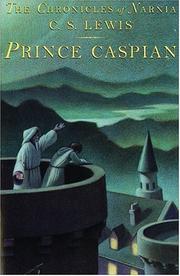
Prince Caspian
The Pevensies return to ruins at Cair Paravel and help Caspian take back Narnia from Miraz.
2,304-word summary · 10 min read
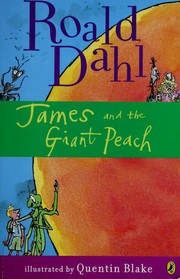
James and the Giant Peach
Lonely James escapes two cruel aunts inside a giant peach with huge insect friends, rolling to the sea and floating on gulls to New York City.
2,384-word summary · 11 min read
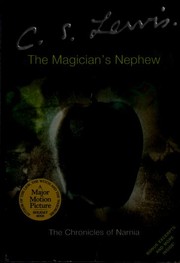
The Magician's Nephew
C. S. Lewis's Narnia origin story retold: Digory and Polly, the Wood between the Worlds, the waking of Jadis in Charn, Aslan's singing creation, and the apple…
2,528-word summary · 11 min read
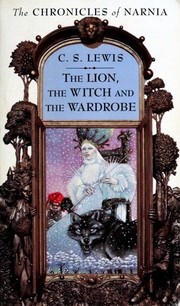
The Lion, the Witch and the Wardrobe
C. S. Lewis's Narnia opener retold: four Pevensies, the White Witch's winter, Aslan's sacrifice, and the crowning at Cair Paravel.
2,502-word summary · 11 min read

The Secret of the Old Clock
The first Nancy Drew novel: a sixteen-year-old detective follows a clue hidden in a clock to overturn a will and restore a family's inheritance.
2,011-word summary · 9 min read

The Mouse and the Motorcycle
A bored mouse named Ralph finds a boy's toy motorcycle in a hotel room and starts a secret life of night rides, mishaps, and unlikely friendship.
2,254-word summary · 10 min read
Pyramids
A prince raised by assassins comes home to a desert kingdom where the high priest rules and a spitefully huge pyramid starts bending time.
2,441-word summary · 11 min read

Invisible Cities
Marco Polo describes fifty-five impossible cities to Kublai Khan, and each one turns out to be a way of talking about memory, desire and the place we call home.
2,465-word summary · 11 min read
The Field Guide
Three siblings move into a creepy Maine estate, anger a brownie, and find a forbidden guide to the fairy world in the first Spiderwick book.
2,033-word summary · 9 min read
The Story of Ferdinand
A gentle Spanish bull would rather smell flowers than fight, and when he is taken to the bullring he simply sits down among the flowers in the ladies' hats.
2,135-word summary · 9 min read

The Sword of Shannara
A young half-Elf and a company of companions set out to recover a magic sword before the Warlock Lord destroys the Four Lands.
2,474-word summary · 11 min read
Out of the Silent Planet
A Cambridge philologist is kidnapped and taken to Mars, where the natives are civilized and the humans are the dangerous invaders.
2,612-word summary · 12 min read
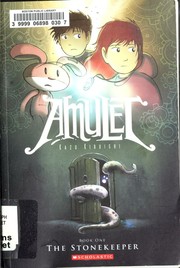
The Stonekeeper
After their father's death, Emily and Navin chase a monster into a hidden world to save their mother, and Emily's great-grandfather's amulet offers power at a…
2,753-word summary · 12 min read
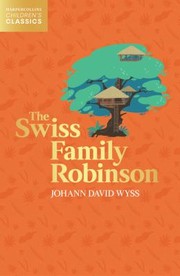
The Swiss Family Robinson
Shipwrecked Robinsons build treehouses and tame island beasts.
2,400-word summary · 11 min read
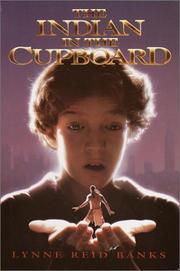
The Indian in the Cupboard
Omri learns a key turns plastic Little Bear into a live Iroquois man.
2,228-word summary · 10 min read