
Reading options
What's inside (9 sections)
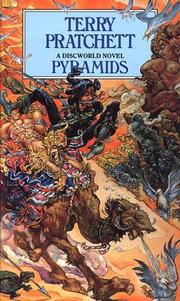
I picked this one up because it has a reputation among Discworld readers as the book you can hand to somebody who has never met the series before. It is novel number seven, first published by Gollancz in June 1989, 272 pages in that first edition, and it won the BSFA Award for Best Novel that same year. It also carries a strange subtitle on some editions, "The Book of Going Forth", which tells you Pratchett is going to have fun with Egyptian funerals. What I did not expect was how angry and how tender the book is underneath the jokes. The surface is all pyramids, sacred crocodiles, marching mummies and philosophers who argue for a living. Underneath it is a story about a young man trying to work out whether he can become anything other than what his family and his country have already decided he should be.
The opening line is pure Pratchett, and it sets the scale.
Nothing but stars, scattered across the blackness as though the Creator had smashed the windscreen of his car and hadn't bothered to stop to sweep up the pieces.
That is the view as Teppic falls through the air at the start, and it tells you two things at once. The universe is vast and roughly assembled, and one young man is about to land in a very small place with very large problems.
A prince with the wrong education
Teppic is short for Pteppicymon, and by the time the story starts he is Pteppicymon the Twenty Eighth, crown prince of Djelibeybi. He has spent seven years away at the Assassins Guild in Ankh-Morpork, sent there by his father to bring some revenue into the kingdom. Think about what that means for a moment. A ruler is educated in a distant city by people who teach knife work, poisons, etiquette and the careful art of not being noticed, and he is expected to come home knowing how to govern a desert kingdom. Teppic regards himself as more Morporkian than Djelibeybian. He has friends like Chidder, the son of a wealthy smuggler, and Arthur Ludorum, whose father is a famous assassin. He even passes his final exam more by luck than by design, which is a nice early sign that the qualifications he has collected may not be the ones he needs.
Then he feels his father die. It is not a message or a dream with instructions. It is a sudden certainty that Pteppicymon the Twenty Seventh is gone, and that Teppic has to go home.
Djelibeybi is one of Pratchett's best jokes and one of his most precise pieces of world building. The name is a pun on a jelly baby, and it means child of the Djel, the river that runs through the kingdom. The place was founded seven thousand years ago and was once a great empire that dominated the continent of Klatch. Now it is two miles wide, strung out along a river that runs for a hundred and fifty miles, and it is deep in debt. The reason is pyramids. Generation after generation of pharaohs were buried under enormous structures built on the best farmland, until there was hardly any farmland left and no money to pay for anything else. It is a small country with an enormous architectural habit, and the habit is slowly killing it.
The man who is never really king
Dios is the high priest, and he runs Djelibeybi in everything but name. He is a stickler for tradition, which in this country means that the pharaoh is allowed to look like a king but not to do very much. The real power sits with the priesthood, with the gods, and with a collection of rules that nobody remembers inventing. There is a Mask of the Sun, and a pharaoh counts as king only while wearing it. That detail matters later, in a way that feels both absurd and perfectly logical inside the book.
When it comes time to bury the old king, Teppic says something that nobody in his family seems to have said before. His father did not want a pyramid. Dios will not hear of it. Tradition demands a tomb, and tradition in Djelibeybi is not a suggestion. Teppic, angry and grieving and not especially good at keeping his mouth shut, orders a pyramid twice the size of the largest one ever built there. It is a childish act of spite, and it sets the entire plot in motion.
The Ptaclusp family, a dynasty of pyramid builders made up of Ptaclusp the First and his sons Ptaclusp Two A and Two B, have to work out how to build this monster on time and on budget. Pratchett spends real pages on the mechanics of quarrying, ramps, logistics and the impossible arithmetic of a tomb that should not be possible. The builders notice something strange as the structure rises. An unfinished pyramid starts bending time before it is finished. Tools behave oddly. Small distortions leak out. The Ptaclusps, being practical men, decide to make use of this rather than complain about it.
Meanwhile the late king is still around, observing his own embalming with the dry interest of a man who never expected to be consulted about his own funeral. Dil and Gurn, the master embalmer and his apprentice, go about their work while the dead man watches them and starts taking an interest in their lives. This is one of the gentler threads in the book, and it is the part that surprised me most. Pratchett could have made the dead king a ghost with a grievance. Instead he makes him curious, almost embarrassed, and quietly fond of the people preparing his body.
Ptraci, and the price of a pardon
Ptraci is a handmaiden in the palace, condemned to die so that she can serve the dead pharaoh in the afterlife. She does not want to die. That is her crime. Teppic, who has spent seven years learning that rules are made by people and can be questioned, wants to pardon her. He assumes that being king means he can do such a thing. He is wrong, and the way he is wrong is the sharpest political joke in the novel.
Dios points out that the King, with a capital K, exists only while wearing the Mask of the Sun. Teppic's attempt to save Ptraci is not the act of the King, because the King would never do a thing like that. Therefore Teppic has murdered the King, and the punishment for murder is death. It is reasoning that would make a lawyer proud and a decent person shudder. Teppic and Ptraci run, and the palace turns into a place where anyone who might have seen something is suddenly dangerous.
By now the giant pyramid is doing more than leaking oddities into the workshop. It is warping space and time so badly that Djelibeybi rotates out of alignment with the rest of the Disc by ninety degrees. The country is no longer where it used to be. A whole kingdom has been knocked sideways by a building project, which may be the most Pratchett image in a book full of them.
Ephebe, and a kingdom out of joint
Teppic and Ptraci escape to Ephebe to ask the philosophers there how to get home. Ephebe is the Disc's version of ancient Greece, full of people who can turn a simple question into three days of argument. Pratchett clearly enjoys writing them. They debate, they contradict each other, and they are very good at explaining why a problem is difficult without ever solving it. I liked this section, though I can see why some readers find it a slog. The jokes about philosophy are clever, but they arrive in a crowd, and the pace drops while Teppic is away from the palace.
Back in Djelibeybi, everything comes loose at once. The country's many gods, several of them doing roughly the same job as Supreme God or God of the Sun or God of the Djel, descend among the people and start competing for attention. All the dead rulers of Djelibeybi come back to life, which makes the streets crowded with people who have been dead for centuries and have strong opinions about how things used to be. Sacred crocodiles wander where they should not. Mummies march. The place is a tourist brochure written by somebody having a nervous breakdown.
There is a real strategic consequence too. Djelibeybi has long sat between Ephebe and Tsort as a buffer zone. With the country rotated out of alignment, that buffer is gone, and Ephebe and Tsort begin preparing for war. Even the farce has a geopolitical edge.
This is where the book's central idea becomes clear. A scholar called Stefan Ekman has described the setting as a kind of time polder, a bubble holding one slice of history and one patch of geography in place. History repeats inside that bubble because Dios has been quietly running the same country for seven thousand years. The whole novel is about what happens when somebody tries to leave that bubble, or to burst it. Teppic wants out of a role he never chose. Dios wants nothing to change, ever. Ptraci wants the mundane freedom of not being sacrificed. Those three wants pull against each other, and the pyramid is the thing holding them all in place.
Every ancestor at once
Teppic eventually goes back into Djelibeybi, and he does not go alone. The resurrected ancestors, thousands of years of them, are on his side, or at least on the side of not being kept dead to serve a priesthood. The plan is to destroy the Great Pyramid, because the pyramid is what rotated the country and what Dios has been using for far longer than anyone realised.
Dios turns out to be as old as the kingdom itself. He has advised every pharaoh in Djelibeybi's history, and he has used the time bending properties of the pyramids to extend his own life again and again. He is not a villain who wants to rule the world. He wants Djelibeybi to stay exactly as it is, with him at the centre of it, forever. His argument is not even entirely ridiculous. He knows what happens when countries change. He has watched empires fall and traditions rot. His answer is to freeze everything, and he has paid for that freedom with his own endless, joyless life.
The destruction of the pyramid returns Djelibeybi to the real world. Dios is thrown back through time, loses his memories along the way, and meets the original founder of the kingdom, which starts the whole cycle over again. It is a bootstrap paradox played as a punchline, and it is the right ending for a book about a country trapped in a loop. The man who fought change becomes the man who begins the story that makes change impossible. Pratchett does not bother explaining the mechanics of the time travel, and he is right not to. The joke is about the pattern, not the physics.
What I admire here is that Teppic wins by breaking a thing, not by winning an argument. He cannot out-argue Dios, because Dios has had seven thousand years to practise. He cannot out-priest him. He can only knock the kingdom back into the world and let people see it clearly again. That feels like a more honest answer than a courtroom victory would have been.
What Teppic walks away from
Once the pyramid is gone, Teppic does the last surprising thing in the book. He is offered the throne, and he refuses it. He abdicates in favour of Ptraci, who is revealed to be his half sister, and she sets about making the changes the country has needed for generations. Teppic leaves to travel the Disc. Death arrives to ferry the former rulers of Djelibeybi into the afterlife, which is a piece of quiet bookkeeping after all the noise. Dil and Gurn have to work out what embalmers do when nobody wants a pyramid any more. The Ptaclusps, likewise, face a future without enormous tomb contracts.
The half sister reveal is the one part of the ending that felt thin to me. It arrives late, and it is used mainly to make Ptraci's accession tidy. The book has spent so long building Ptraci as a person with her own sharp sense of what she wants that reducing her claim to blood felt like a shortcut. I also think the final pages tie things up rather neatly after a story that has been cheerfully chaotic for two hundred pages. Gods, wars, resurrections and a ninety degree rotation all get sorted in a hurry.
But those complaints are small beside what the book gets right. The dead king watching his own embalming, the builders exploiting a flaw in their own unfinished work, the priest who has mistaken permanence for peace, the girl who refuses to die on principle, all of it hangs together. And Teppic's refusal matters. He does not save Djelibeybi so that he can rule it. He saves it so that he can leave, and so that somebody else can change it. For a prince raised to kill quietly in a foreign city, that is a strange and decent kind of victory.
Why it still works
The question I keep coming back to is not about pyramids at all. It is about whether you can step outside the shape other people have cut for you, when that shape is called tradition, or family, or the way things have always been done. Teppic answers by going home, destroying the enormous stone thing that keeps the past in place, and then declining the crown. Dios answers by trying to live forever. Ptraci answers by wanting an ordinary life and then taking the extraordinary one that is offered.
Pratchett's jokes about quantum physics and ancient Egypt do not all survive equally well, and a few pages of mathematical enthusiasm feel like the author showing off. The philosophy chapters ask for patience. Yet the central image holds: a whole country rotated ninety degrees out of joint because a grieving prince ordered a building too big for the world to contain. I closed the book thinking about the small people in the corners, the embalmers and the builders and the handmaiden, and how quickly their lives altered when the stone came down. That is the sort of thing this writer does best. He makes the huge joke, then remembers to leave someone a kettle and a future.
FAQ
Is Pyramids a good place to start Discworld?
Yes. It is the seventh Discworld novel, but it is the first full story that works on its own, with no regular cast you need to meet first.
What is Djelibeybi and why does it matter?
It is a small desert kingdom based on ancient Egypt, two miles wide and deep in debt because generations of pharaohs built pyramids on its farmland.
How does the book end for Teppic and Dios?
Teppic destroys the Great Pyramid, refuses the throne, and lets his half sister Ptraci rule, while Dios is sent back through time to repeat the cycle.
Similar books
More from Discworld first, then related titles.
The Color of Magic
A failed wizard guides a tourist across a flat world on a turtle, with comic fantasy chaos.
2,032-word summary · 9 min read
The Light Fantastic
Rincewind and Twoflower fall off the world while wizards race a red star.
1,974-word summary · 9 min read
Equal Rites
A dying wizard passes his staff to a baby girl, and Granny Weatherwax escorts Esk to Unseen University in Pratchett's third Discworld book.
2,871-word summary · 13 min read
Mort
Death hires apprentice Mort in this 1987 Discworld comedy, where a spared princess splits reality and duty bends for love, with no Rincewind.
2,386-word summary · 11 min read
Sourcery
A dying wizard hides his soul in a staff, his eighth son becomes a sourcerer strong enough to break the world, and Rincewind is sent to stop him with a sock.…
2,404-word summary · 11 min read
Wyrd Sisters
Three Lancre witches rescue a murdered king's baby, hide Lancre's future, and trap a guilty duke with a play in Ankh-Morpork.
3,085-word summary · 14 min read
Guards! Guards!
A drunk captain, his last two guards, and an earnest recruit face a summoned dragon in Ankh-Morpork in Pratchett's funny eighth Discworld book.
2,307-word summary · 10 min read
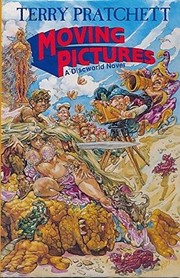
Moving Pictures
When the alchemists invent the movies, a dropout and a waitress chase stardom in Holy Wood while a talking dog watches belief tear open the fabric of Discworld.
2,370-word summary · 11 min read
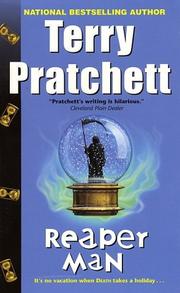
Reaper Man
Death gets fired and farms while Windle Poons refuses to die.
2,579-word summary · 11 min read
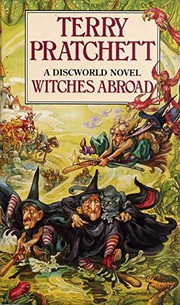
Witches Abroad
Three Lancre witches fly to Genua to stop a fairy godmother from forcing a servant girl into a storybook marriage, and find a city arranged around a happy…
2,651-word summary · 12 min read
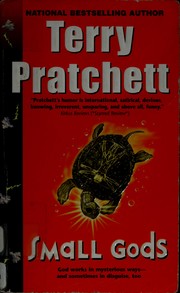
Small Gods
God Om trapped as a tortoise must convince novice Brutha to save Omnia from its own church.
2,063-word summary · 9 min read
Lords and Ladies
The elves are coming and Lancre is not ready. Pratchett's 1992 novel sends Granny, Nanny and Magrat into a cruel, glittering invasion that spoofs A Midsummer…
2,476-word summary · 11 min read
Men at Arms
The City Watch gets new recruits and a murder case when the Disc's only handgun turns up in Ankh-Morpork, in the fifteenth Discworld novel.
2,216-word summary · 10 min read
Soul Music
A harpist from Llamedos brings rock music to Ankh-Morpork, and a primordial force takes hold of the city, pulling Susan Sto Helit and Death into a fight over…
2,406-word summary · 11 min read
Feet of Clay
A clay golem goes mad and a Patrician is poisoned as Vimes and the Watch untangle a murder plot in the nineteenth Discworld novel.
2,308-word summary · 10 min read
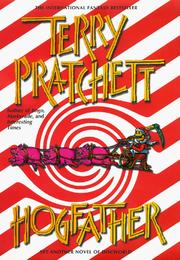
Hogfather
Death fills in for a missing Father Christmas, Susan Sto Helit hunts the Hogfather, and the twentieth Discworld novel turns Santa into a management problem.
2,871-word summary · 13 min read
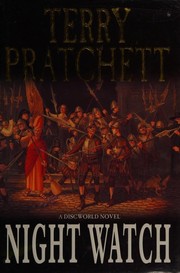
Night Watch
Vimes is thrown back in time and must train his young self through a revolution.
2,003-word summary · 9 min read
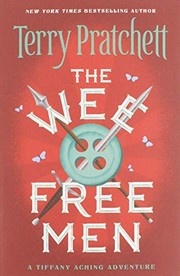
The Wee Free Men
Nine-year-old Tiffany Aching teams with the Nac Mac Feegle to rescue her brother from the Fairy Queen.
2,600-word summary · 12 min read
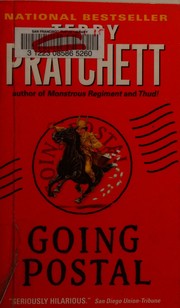
Going Postal
A hanged con artist must revive Ankh-Morpork's dead Post Office and outwit a murderous rival in Pratchett's 33rd Discworld novel.
2,228-word summary · 10 min read
Nettle & Bone
Marra, a princess in a convent, leaves to save her abused sister, but first she must finish three impossible tasks: a bone dog, a nettle cloak, moonlight in a…
2,061-word summary · 9 min read
The Magician's Land
Exiled from Fillory, Quentin takes a teaching job at Brakebills, joins a crew of magical thieves, and must help rebuild a dying world to finish the trilogy.
2,204-word summary · 10 min read
The Demon King
A thief steals an amulet once owned by a legendary sorcerer, while a princess flees a forced marriage in the first volume of Cinda Williams Chima's high…
2,371-word summary · 11 min read
Jade City
On an island where jade grants power, two clans fight over the mineral, the family name, and the right to decide what loyalty costs.
2,403-word summary · 11 min read
This Kingdom Will Not Kill Me
A grocery delivery driver wakes in a fantasy capital she knows from an unfinished trilogy, only to discover she cannot die.
2,339-word summary · 10 min read
The Woman Who Rides Like a Man
Newly knighted, Alanna heads south into Tortall's desert, where a broken sword and a dead shaman leave her responsible for a rebel tribe and three Gifted…
2,894-word summary · 13 min read
The Sorceress
Flamel takes the twins to London to find Gilgamesh, while Perenelle fights for her life on Alcatraz and an older threat wakes.
2,684-word summary · 12 min read
The Lost Metal
Wax Ladrian returns to stop his sister's plot to smuggle a magical bomb into Elendel, in the conclusion of Mistborn's second era.
2,038-word summary · 9 min read
The Girl of Fire and Thorns
Rae Carson's debut follows Elisa, an insecure princess born with a godstone in her navel, who is married to a foreign king and must grow into the leader a…
2,331-word summary · 10 min read
The Devils
A monk inherits a church agency full of dangerous prisoners while a street thief is claimed as Troy's heir. Abercrombie's grimdark fantasy begins with monsters…
2,314-word summary · 10 min read
The Book of Three
A restless assistant pig-keeper in mythical Wales chases his escaped oracle pig and finds himself beside Prince Gwydion in a war against the Lord of Annuvin.
2,019-word summary · 9 min read