
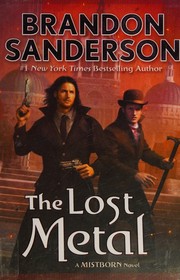
Reading options
What's inside (7 sections)
A world that has moved on
Six years after the events of The Bands of Mourning, the Elendel Basin is a place of trains, factories and Allomancy. Sanderson's second Mistborn era has always been his western one, and by the seventh novel the frontier has become almost ordinary. The old magic still works, but it now coexists with industry, politics and a growing gap between the cities of the Basin and the Southern Scadrials who supply them.
Waxillium Ladrian, called Wax, has retired from lawman work and become a senator. He is the "Lawman Senator of the Roughs," a Twinborn who can push steel and store weight, and he is deeply uncomfortable in his new role. His wife Steris works alongside him in politics, and they are raising two young children, Maxillium and Tindwyl. The domestic scenes are some of the best in the book. Wax is a man built for action who keeps being asked to attend meetings, and the friction between those two lives gives the early chapters a warmth that the conspiracy plot does not always have.
The senator storyline is a shrewd choice. Wax's authority in the Roughs came from his willingness to act alone, and the Senate requires him to do the opposite: to argue, to wait and to accept that other people have legitimate interests. Steris understands this better than he does, and their marriage is presented as a partnership in which she is often the one holding the pieces together. The children are not decorative. Wax's fears about the world he is leaving them are part of what drives him back into the fight.
That makes his reluctance to become Harmony's Sword more complicated than simple avoidance. He has built a life that he values, and the role Harmony wants would ask him to set it aside again. The book does not treat this as cowardice. It treats it as the legitimate claim of a person who has already given a great deal. When he finally accepts, it is because the threat has become personal rather than because a god asked him to.
Wayne, Wax's oldest friend, is now a full Elendel constable. He is a Twinborn who can create speed bubbles and heal himself with goldminds, and he provides much of the book's comedy. Marasi Colms, Steris's half-sister, has been promoted to detective. She is a Pulser who slows time inside her bubbles, often delivered by chromium grenade. Together the three form the core of the story, and the book is at its best when they are working as a team.
I picked this up because the site has several Mistborn books and this is the conclusion of the Wax and Wayne sequence. It is the fourth and final book of that subseries and the seventh Mistborn novel overall. You really do need the earlier books. This is not a jumping-on point.
The Set
Relations are tense between the northern Basin and the Southern Scadrials, and between Elendel and the neighboring Outer Cities, including Bilming. Into that tension Sanderson inserts the Set, a shadowy terrorist organization that has been kidnapping people with Allomantic bloodlines for years. Wax has been hunting them without success. The group is led in part by his own sister, Telsin, and their uncle.
Telsin has become an avatar of Autonomy, a Shard worshipped under the name Trell. Her plan is to smuggle a magical bomb into Elendel, a weapon with the destructive power of a nuclear device. That raises the stakes well beyond the personal, and it forces Wax to consider whether he can set aside his rocky relationship with God and become again the "Sword" that Harmony groomed him to be.
The Set's kidnappings are given a grim logic. They target people with Allomantic bloodlines, which means they are harvesting the ability to use magic itself. That makes the organization more than a political enemy. It is a force trying to own the source of power in Scadrial, and the fact that Wax's own sister is involved turns the investigation into a family matter. Telsin's transformation into an avatar of Autonomy is handled as a slow replacement rather than a single dramatic moment, which is more unsettling. She is still his sister when he is fighting her.
The book is careful to give the Southern Scadrials a real grievance. They are the ones who supply the Basin, and they are treated as lesser partners in a system that depends on them. The Malwish Consortium's resentment is not invented for the plot. It grows out of the world the earlier books built, and it gives the political tension a foundation. Sanderson does not resolve it here, which is honest. A treaty would be too easy.
The religious thread is one of the more interesting parts of the book. Wax has spent years avoiding the role Harmony wanted for him, and the crisis forces a reckoning. A kandra servant of Harmony reveals that his power is blocked in Bilming, which has fallen under Trell's influence, and that Harmony's visions of the future now end in blackness. That last detail gives the book a genuine sense of dread. A god who can no longer see what comes next is a powerful image, and Sanderson uses it well.
Marasi's storyline brings in the Ghostbloods, the offworld organization led by Kelsier, who claim they want to protect Scadrial at any cost. Marasi works to stop Autonomy's invasion through a portal. The involvement of Kelsier and Harmony connects the Era 2 books back to the original trilogy, and the arguments between them about introducing technology to Scadrial's people are left deliberately open. That argument is one of the book's most thought-provoking threads.
The bomb
Wax discovers a new explosive of unprecedented destructive power and realizes the Set already has it. He and Wayne assault the Set's base and kill several members, only to find that the bomb is not there. It has been shipped on a boat heading for the city. The pacing in these chapters is excellent. Sanderson is very good at the moment a plan succeeds in one respect and fails in another, and he keeps the machinery of the investigation clear even when several groups are moving at once.
Marasi and her allies intercept the enemies in time and disable the portal, preventing the invasion. Wax and Wayne board the ship and find the bomb. It can be defused, but the person who defuses it will die. That is the setup for the book's emotional climax, and it works because Sanderson has spent four novels making Wayne the man who would do it without hesitation.
The sequence on the ship is built with the precision of a heist novel. Wax and Wayne get aboard, find the bomb, and work out what it would take to stop it. The realization that someone has to stay behind arrives as a practical fact rather than a speech. Wayne does not deliver a grand declaration. He makes a joke, does the work, and sends Wax away. That is exactly how this character should end, and it is why the loss lands as hard as it does.
Sanderson then refuses to give us a moment of clean heroism. The bomb is stopped, but Telsin dies because her patron withdraws from her, and the victory feels contaminated. Wax returns to a life that cannot be restored to what it was, and the statue in Wayne's honor is a public object that does nothing to repair the private absence. The book understands that saving a city and losing a friend are not opposite outcomes. They happen at the same time.
Wayne sacrifices himself, defusing the bomb and saving Wax. It is a shocking moment even for a series that has killed off major characters before, and the book gives it the space it needs. Telsin's overloaded body dies when Autonomy withdraws her influence, which closes her storyline abruptly but fittingly. A person who traded herself for power finds that the power was the whole price.
In the aftermath, Wax lives quietly with Steris and the children, and the city erects a statue honoring Wayne. That statue is the book's way of measuring what was lost. A city that has just been saved builds a monument to a man nobody would have described as a hero. Sanderson does not soften the loss with a last-minute rescue.
There are several threads in the final chapters. Marsh, also known as Ironeyes and Death, appears as a mythical figure whose atium supply is nearly exhausted. Kelsier and Harmony continue their argument about technology. Wax has to decide what kind of man he will be now that the immediate threat is gone. The book chooses to leave several questions open, which is the correct decision for a series that has always had a larger world beyond its immediate conflicts.
The book's scale
The Lost Metal runs to over five hundred pages, and it uses the length. There are multiple factions, a cross-country pursuit, a domestic storyline, a religious argument and a supernatural invasion. Sanderson manages all of them, though not always with the same grace. The opening chapters, which involve Wax's Senate work and his family, are slow in a way that rewards patience. The middle accelerates into a thriller. The ending is partly an epilogue that ties up two eras of worldbuilding.
That structure is the book's main weakness. It is trying to conclude a subseries, resolve a four-book conspiracy, set up future books and deliver a satisfying arc for Wax all at once. Some threads get short shrift as a result. The Southern Scadrials and their political grievances are established as important and then largely disappear. The Outer Cities are more setting than character. Readers who have followed the series will recognize these as setup for later stories. Readers looking for a self-contained conclusion may feel that the book ends with several doors still open.
The prose is functional and clear. Sanderson is not interested in literary flourishes, and he is very good at making complex magical systems legible. The Allomancy and Feruchemy in this book are more intricate than in the first trilogy, and the book never stops to lecture. You learn what a chromium grenade does because someone uses one in a fight.
One more thing about the title. The lost metal is the atium that Marsh is running out of, the source of a death-god's power in a world where the old gods are changing. It is also the explosive that the Set smuggles into Elendel, and the material out of which Wayne's statue will eventually be cast. The phrase holds several meanings at once, which is typical of a series that has always treated metals as both magic and industry.
What it achieves
The book debuted at number two on both the New York Times combined print and e-book list and the hardcover fiction list, which tells you how large this series had become by 2022. Kirkus called it a fast-paced and entirely satisfying conclusion to Mistborn's second era, and that seems right. It is satisfying in the way a long-planned conclusion should be: the heroes get where they are going, the villain is defeated, and the cost is real.
The publication history is worth noting. The book was announced in 2014 and originally scheduled for 2018, then pushed to 2019 and finally to 2022 because of the Skyward novels. The first printing was five hundred thousand copies. That long gestation shows in the book's scale, and it also explains why some threads feel like they were written with an eye to what comes next.
I finished it with a real sense of loss over Wayne. Sanderson has always understood that the relationship between Wax and Wayne is the heart of the second era, and he uses it without sentiment in the final chapters. The weirdness of the magic, the density of the politics and the enormous scope of the threat are all memorable. What stays with me is a constable who runs toward a bomb because his friend is on the other side of it.
FAQ
Where does The Lost Metal fit in the Mistborn series?
It is book seven overall and the fourth and final Wax and Wayne book, concluding Mistborn's second era. You need the earlier books; it is not a jumping-on point.
Who is Trell?
Trell is the name given to the Shard Autonomy in the novel. Wax's sister Telsin becomes one of its avatars and plots to smuggle a magical bomb into Elendel.
Why was the book delayed so long?
It was announced in 2014 for a 2018 release, then pushed to 2019 and finally to 2022 because Sanderson was writing the Skyward novels. Its first printing was 500,000 copies.
Similar books
More from Mistborn first, then related titles.
The Final Empire
A street thief with rare powers joins a crew planning the impossible: overthrowing the immortal Lord Ruler.
2,150-word summary · 10 min read
The Well of Ascension
After the Lord Ruler falls, Vin and Elend must hold Luthadel against three armies while a mist spirit hunts Vin and the Well of Ascension calls.
2,395-word summary · 11 min read
The Hero of Ages
Vin and Elend face ash, mist, and Ruin itself as the prophecies fail and Sazed searches old faiths for answers.
2,559-word summary · 11 min read
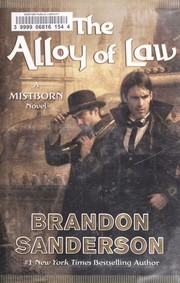
The Alloy of Law
Wax and Wayne chase Vanishers by rail in a gunpowder Mistborn city 300 years later.
2,535-word summary · 11 min read
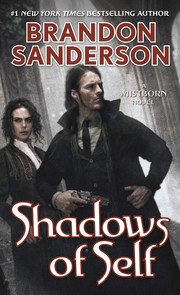
Shadows of Self
Wax and Wayne hunt a rogue kandra through Elendel as labor riots rise and old grief returns.
2,643-word summary · 12 min read
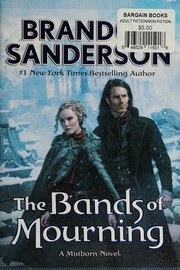
The Bands of Mourning
Wax and Wayne hunt a mythical metalmind while southern visitors and the Set close in.
2,461-word summary · 11 min read
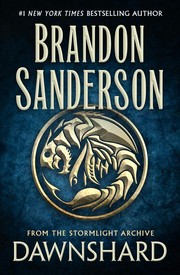
Dawnshard
Rysn sails toward forbidden Akinah to save her dying larkin and finds a Dawnshard guarded by the Sleepless.
3,229-word summary · 14 min read
The Emperor's Soul
Forger Shai must stamp a new soul for the dying emperor in 100 days.
2,313-word summary · 10 min read
Edgedancer
Hungry street thief Lift and her vine-like friend Wyndle cross the Herald Nale in Tashikk when a child emperor shows Radiant signs and she refuses to step…
2,328-word summary · 10 min read
The Magician's Land
Exiled from Fillory, Quentin takes a teaching job at Brakebills, joins a crew of magical thieves, and must help rebuild a dying world to finish the trilogy.
2,204-word summary · 10 min read
The Demon King
A thief steals an amulet once owned by a legendary sorcerer, while a princess flees a forced marriage in the first volume of Cinda Williams Chima's high…
2,371-word summary · 11 min read

Jade City
On an island where jade grants power, two clans fight over the mineral, the family name, and the right to decide what loyalty costs.
2,403-word summary · 11 min read
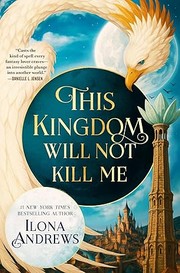
This Kingdom Will Not Kill Me
A grocery delivery driver wakes in a fantasy capital she knows from an unfinished trilogy, only to discover she cannot die.
2,339-word summary · 10 min read
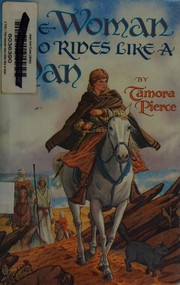
The Woman Who Rides Like a Man
Newly knighted, Alanna heads south into Tortall's desert, where a broken sword and a dead shaman leave her responsible for a rebel tribe and three Gifted…
2,894-word summary · 13 min read
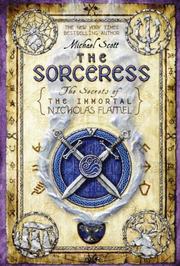
The Sorceress
Flamel takes the twins to London to find Gilgamesh, while Perenelle fights for her life on Alcatraz and an older threat wakes.
2,684-word summary · 12 min read
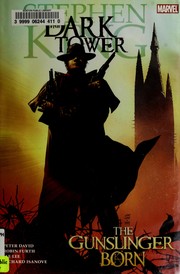
The Gunslinger Born
A Marvel graphic novel adapting the flashback of Wizard and Glass: a fourteen-year-old Roland earns his guns, loves Susan Delgado and first sees the Dark Tower.
2,010-word summary · 9 min read
The Girl of Fire and Thorns
Rae Carson's debut follows Elisa, an insecure princess born with a godstone in her navel, who is married to a foreign king and must grow into the leader a…
2,331-word summary · 10 min read
The Devils
A monk inherits a church agency full of dangerous prisoners while a street thief is claimed as Troy's heir. Abercrombie's grimdark fantasy begins with monsters…
2,314-word summary · 10 min read
The Book of Three
A restless assistant pig-keeper in mythical Wales chases his escaped oracle pig and finds himself beside Prince Gwydion in a war against the Lord of Annuvin.
2,019-word summary · 9 min read
The Book of Lost Things
A twelve-year-old boy grieving his mother's death slips through a crack in the garden wall into Elsewhere, where fairy tales and a fading king guard the secret…
2,441-word summary · 11 min read
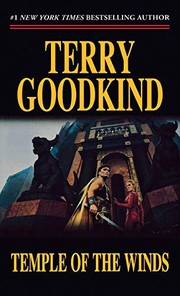
Temple of the Winds
In Sword of Truth book four, a magical plague sweeps the Midlands and prophecy demands that Richard enter the Temple of the Winds, but only through an…
2,962-word summary · 13 min read

Magic Study
Sentenced to die in Ixia, Yelena returns to the land she was stolen from to learn the magic that made her an outlaw.
2,542-word summary · 11 min read
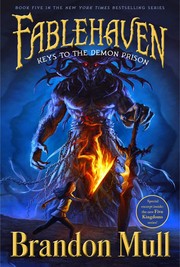
Keys to the Demon Prison
The fifth and final Fablehaven book sends Kendra and Seth Sorenson across secret preserves to keep the last keys to the demon prison out of rival hands.
2,251-word summary · 10 min read
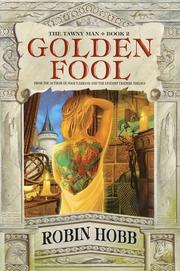
Golden Fool
FitzChivalry Farseer returns to Buckkeep as a servant and a grieving Skillmaster, teaching Prince Dutiful while court intrigue, the Piebalds and a…
2,583-word summary · 11 min read
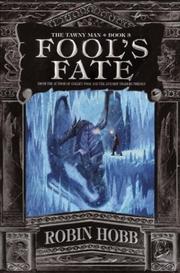
Fool's Fate
Prince Dutiful must kill a dragon to secure his betrothal, and FitzChivalry Farseer is caught between the Fool and Chade over Icefyre's fate.
2,247-word summary · 10 min read
Dragon Rider
A silver dragon, a sharp-tongued brownie and a lonely orphan boy cross deserts and seas to find the dragons' lost homeland, pursued by a golden killer made by…
3,188-word summary · 14 min read
Blood of the Fold
In Sword of Truth book three, Richard Rahl takes command of Aydindril while a zealot army and an emperor who walks in dreams threaten everything he loves.
2,321-word summary · 10 min read
The Wind Through the Keyhole
Sheltering from a killing storm, Roland tells his ka-tet a tale of his youth, then a boy's fairy tale that mirrors his own loss.
2,504-word summary · 11 min read
The Lady of the Lake
Ciri is trapped by the Aen Elle while Geralt winters in Toussaint, and the Witcher saga closes with the siege of Stygga and a fog-bound farewell.
2,445-word summary · 11 min read
Pyramids
A prince raised by assassins comes home to a desert kingdom where the high priest rules and a spitefully huge pyramid starts bending time.
2,441-word summary · 11 min read